.png)


















- Obecnie brak na stanie
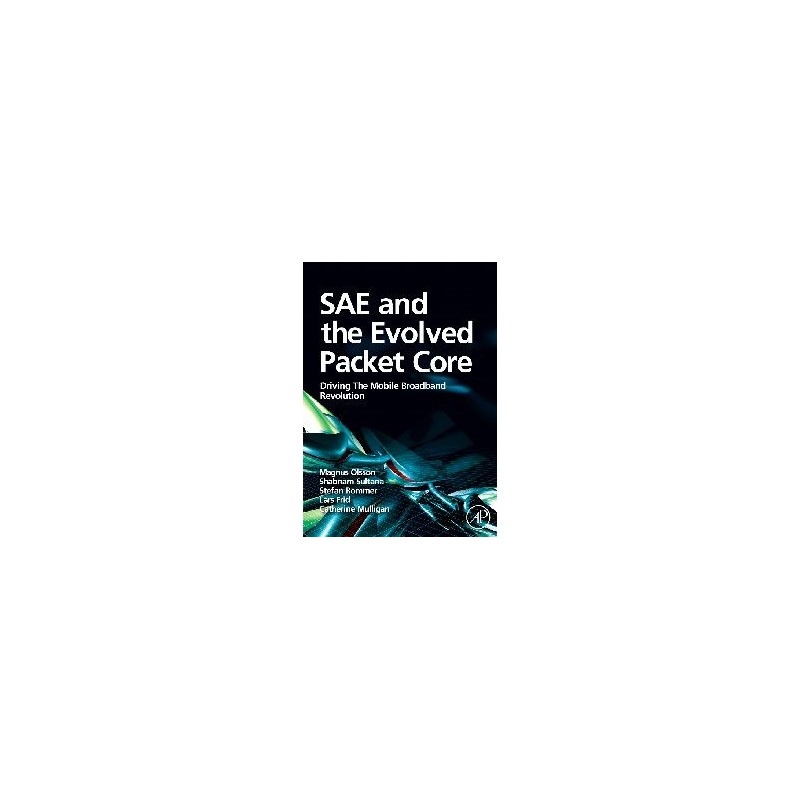
This book provides a clear, concise, complete and authoritative introduction to System Architecture Evolution (SAE) standardization work and its main outcome: the Evolved Packet Core (EPC), including potential services and operational scenarios. After providing an insightful overview of SAE's historical development, the book gives detailed explanations of the EPC architecture and key concepts as an introduction. In-depth technical descriptions of EPC follow, including thorough functional accounts of the different components of EPC, protocols, network entities and procedures. Case studies of deployment scenarios show how the functions described within EPC are placed within a live network context, while a description of the services that are predicted to be used shows what EPC as a core network can enable.
This book is an essential resource for professionals and students who need to understand the latest developments in SAE and EPC, the 'engine' that connects broadband access to the internet.
All of the authors have from their positions with Ericsson been actively involved in GPRS, SAE and 3GPP from a business and technical perspective for many years. Several of the authors have also been actively driving the standardization efforts within 3GPP.
"There is no doubt that this book, which appears just when the mobile industry starts its transition away from legacy GSM/GPRS and UMTS networks into the future will become the reference work on SAE/LTE. There are no better qualified persons than the authors of this book to provide both communication professionals and an interested general public with insights into the inner workings of SAE/LTE. Not only are they associated with one of the largest mobile network equipment vendors in the world, they have all actively contributed to and, in some cases, been the driving forces behind the development of SAE/LTE within 3GPP." - from the foreword by Dr. Ulf Nilsson, TeliaSonera R&D, Mobility Core and Connectivity
"The authors have done an excellent job in writing this book. Their familiarity with the requirements, concepts and solution alternatives, as well as the standardization work allows them to present the material in a way that provides easy communication between Architecture and Standards groups and Planning/ Operational groups within service provider organizations." - from the foreword by Dr. Kalyani Bogineni, Principal Architect, Verizon
Brak towaru
Brak towaru
Brak towaru
Brak towaru
Brak towaru
Brak towaru
Brak towaru
Brak towaru
Brak towaru
Brak towaru
Brak towaru
Brak towaru
Brak towaru
Brak towaru
Brak towaru
Brak towaru