.png)



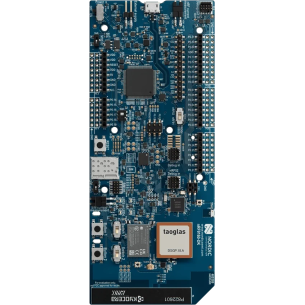

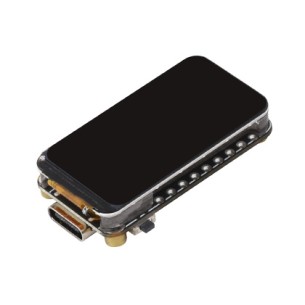

- Obecnie brak na stanie


This new handbook contains the most comprehensive account of sample surveys theory and practice to date. It is a second volume on sample surveys, with the goal of updating and extending the sampling volume published as volume 6 of the Handbook of Statistics in 1988. The present handbook is divided into two volumes (29A and 29B), with a total of 41 chapters, covering current developments in almost every aspect of sample surveys, with references to important contributions and available software. It can serve as a self contained guide to researchers and practitioners, with appropriate balance between theory and real life applications.
Each of the two volumes is divided into three parts, with each part preceded by an introduction, summarizing the main developments in the areas covered in that part. Volume 29A deals with methods of sample selection and data processing, with the later including editing and imputation, handling of outliers and measurement errors, and methods of disclosure control. The volume contains also a large variety of applications in specialized areas such as household and business surveys, marketing research, opinion polls and censuses. Volume 29B is concerned with inference, distinguishing between design-based and model-based methods and focusing on specific problems such as small area estimation, analysis of longitudinal data, categorical data analysis and inference on distribution functions. The volume contains also chapters dealing with case-control studies, asymptotic properties of estimators and decision theoretic aspects.
Part 1. Sampling and Survey Design
Introduction to Part 1
Ch. 1. Introduction to Survey Sampling
Ch. 2. Sampling with Unequal Probabilities
Ch. 3. Two-Phase Sampling
Ch. 4. Multiple-Frame Surveys
Ch. 5. Designs for Surveys over Time
Ch. 6. Sampling of Rare Populations
Ch. 7. Design, Conduct, and Analysis of Random-Digit Dialing Surveys
Part 2. Survey Processing
Introduction to Part 2
Ch. 8. Nonresponse andWeighting
Ch. 9. Statistical Data Editing
Ch. 10. Imputation and Inference in the Presence of Missing Data
Ch. 11. Dealing with Outliers in Survey Data
Ch. 12. Measurement Errors in Sample Surveys
Ch. 13. Computer Software for Sample Surveys
Ch. 14. Record Linkage
Ch. 15. Statistical Disclosure Control for Survey Data
Part 3. Survey Applications
Introduction to Part 3
Ch. 16. Sampling and Estimation in Household Surveys
Ch. 17. Sampling and Estimation in Business Surveys
Ch. 18. Sampling, Data Collection, and Estimation in Agricultural Surveys
Ch. 19. Sampling and Inference in Environmental Surveys
Ch. 20. Survey Sampling Methods in Marketing Research: A Review of Telephone,
Mall Intercept, Panel, andWeb Surveys
Ch. 21. Sample Surveys and Censuses
Ch. 22. Opinion and Election Polls
Volume 29B: Inference and Analysis
Part 4. Alternative Approaches to Inference from
Introduction to Part 4
Ch. 23. Model-Based Prediction of Finite Population Totals
Ch. 24. Design- and Model-Based Inference for Model Parameters
Ch. 25. CalibrationWeighting: Combining Probability Samples and Linear Prediction Models
Ch. 26. Estimating Functions and Survey Sampling
Ch. 27. Nonparametric and Semiparametric Estimation in Complex Surveys
Ch. 28. Resampling Methods in Surveys
Ch. 29. Bayesian Developments in Survey Sampling
Ch. 30. Empirical Likelihood Methods
Part 5. Special Estimation and Inference Problems
Ch. 31. Design-based Methods of Estimation for Domains and Small Areas
Ch. 32. Model-Based Approach to Small Area Estimation
Ch. 33. Design and Analysis of Surveys Repeated over Time
Ch. 34. The Analysis of Longitudinal Surveys
Ch. 35. Categorical Data Analysis for Simple and Complex Surveys
Ch. 36. Inference on Distribution Functions and Quantiles
Ch. 37. Scatterplots with Survey Data
Part 6. Informative Sampling and Theoretical Aspects
Ch. 38. Population-Based Case-Control Studies
Ch. 39. Inference under Informative Sampling
Ch. 40. Asymptotics in Finite Population Sampling
Ch. 41. Some Decision-Theoretic Aspects of Finite Population Sampling
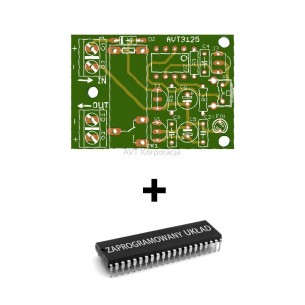
PCB i zaprogramowany układ do włącznika sterowanego dowolnym pilotem. AVT3125 A+
Brak towaru
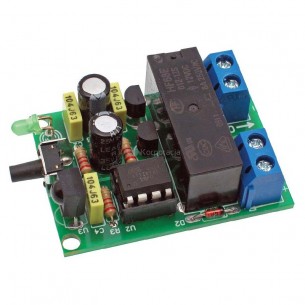
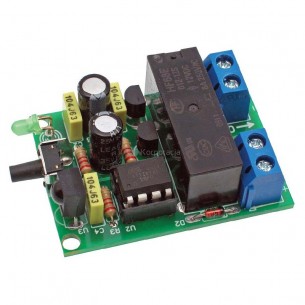
Zestaw AVT do samodzielnego montażu włącznika sterowanego dowolnym pilotem na podczerwień. AVT3125 B
Brak towaru
Zmontowany włącznik sterowany dowolnym pilotem na podczerwień. AVT3125 C
Brak towaru
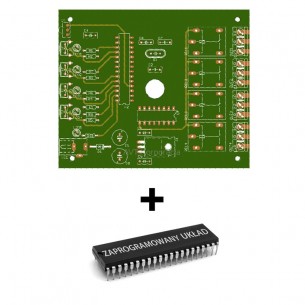
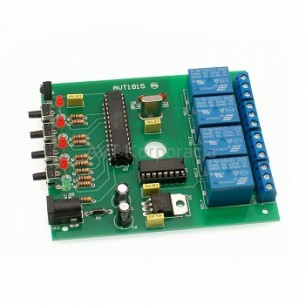
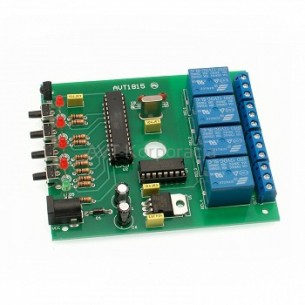
PCB i zaprogramowany układ do 4-kanałowe przełącznika na podczerwień sterowanego dowolnym pilotem IR. AVT1815 A+
Brak towaru
PCB i zaprogramowany układ do 4-kanałowe przełącznika na podczerwień sterowanego dowolnym pilotem IR. AVT1815 B
Brak towaru
Zmontowany 4-kanałowy przełącznik na podczerwień sterowany dowolnym pilotem IR. AVT1815 C
Brak towaru
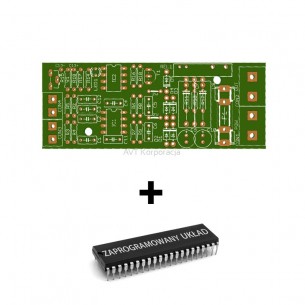
Płytka drukowana i zaprogramowany układ do mikroprocesorowego włącznika akustycznego. AVT1835 A+
Brak towaru
Zestaw AVT do samodzielnego montażu mikroprocesorowego włącznika akustycznego. AVT1835 B
Brak towaru
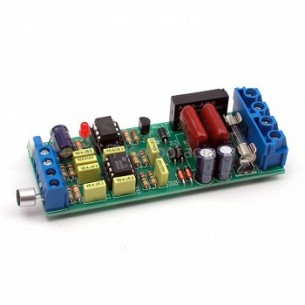
Zmontowany mikroprocesorowy włącznik akustyczny typu klaskacz. AVT1835 C
Brak towaru
PCB i zaprogramowany układ do centralki alarmowej. AVT5466 A+
Brak towaru
Zestaw AVT do samodzielnego montażu centralki alarmowej. AVT5466 B
Brak towaru
Zmontowana centralka alarmowa. AVT5466 C
Brak towaru
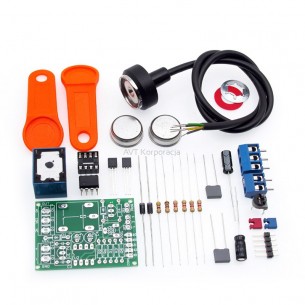
Zestaw AVT do samodzielnego montażu uniwersalnego zamka elektronicznego/immobilizer. AVT3129 B
Brak towaru
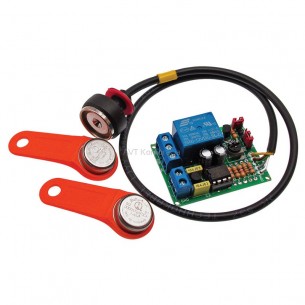
Zmontowany, uniwersalny zamek elektroniczny/immobilizer. AVT3129 C
Brak towaru
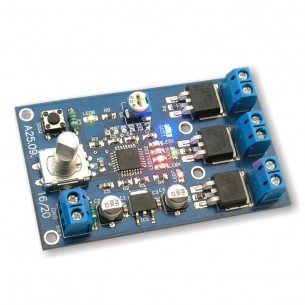
Zmontowany i uruchomiony moduł przeznaczony jest do sterowania różnokolorowych diod LED. AVTMOD02
Brak towaru
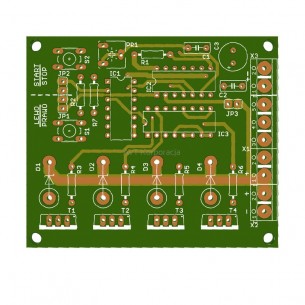
Płytka PCB i zaprogramowany układ do prostego sterownika unipolarnego silnika krokowego. AVT1814 A
Brak towaru