






- Obecnie brak na stanie

.png)











Alan Katritzky, Christopher Ramsden, Eric Scriven, Richard Taylor
Comprehensive Heterocyclic Chemistry III (CHEC-III) is a new 15-volume reference work which provides the first point of entry to the literature for all scientists interested in heterocyclic ring systems. Since publishing in 1984, Comprehensive Heterocyclic Chemistry (CHEC) has become the standard work on the subject, indispensable to all serious readers in the interdisciplinary areas where heterocycles are employed. CHEC-III builds on and complements the material in CHEC and CHEC-II and is designed to be used both alone and in conjunction with these two works. Written by leading scientists who have evaluated and summarized the most important data published over the last decade, Comprehensive Heterocyclic Chemistry III will be an invaluable addition to the reference library of those working with heterocyclic ring systems.
· Reviews advances in the properties, structure, synthesis, reactivity and applications of the most important heterocyclic ring systems
· Contains over 250 specialist reviews, logically organized by size and heteroatom content of the heterocyclic ring
· Saves researchers valuable time and effort through carefully structured critical reviews of the literature by experts.
CHEC III is organized in 15 Volumes and closely follows the organization used in the previous edition:
Volumes 1 and 2: Cover respectively three- and four-membered heterocycles, together with all fused systems containing a three- or four-membered heterocyclic ring.
Volume 3: Five-membered rings with one heteroatom together with their benzo- and other carbocyclic-fused derivatives.
Volumes 4, 5 and 6: Cover five-membered rings with two heteroatoms, and three or more heteroatoms, respectively, each with their fused carbocyclic compounds.
Volumes 7, 8 and 9: Dedicated to six-membered rings with one, two, and more than two heteroatoms, respectively, again with the corresponding fused carbocylic compounds.
Volumes 10, 11 and 12: Cover systems containing at least two directly fused heterocyclic five- and/or six-membered rings: of these Volume 10 deals with bi-heterocyclic rings without a ring junction heteroatom, and Volume 11 deals with 5:5 and 5:6 fused rings systems with at least one ring junction nitrogen, while Volume 12 is devoted to all other systems of five and/or six-membered fused or spiro heterocyclic rings with ring junction heteroatoms.
Volumes 13 and 14: Seven-membered and larger heterocyclic rings including all their fused derivatives (except those containing three- or four-membered heterocyclic rings which are included in Volume 1 and 2, respectively).
Volume 15: Author, ring and subject indexes.
Stacja lutownicza kolbowa o mocy 75W, temperatura 200-480°C
Brak towaru
Podwójna lutownica kolbowa WEP 938D+ ze specjalną podstawką pod dwie kolby. Kolba 907L posiada grzałkę o mocy 50 W, możliwa jest płynna regulacja temperatury w zakresie 100-480 °C.
Brak towaru
Stacja lutownicza z lutownicą kolbową oraz termopęsetą. Urządzenie wyposażone w pamięć 3 ustawień/profili. Urządzenie ułatwia demontaż elementów SMD i DIL
Brak towaru
Stacja lutownicza hotair 100-480°C z lutownicą kolbową o mocy 75W. Pamięć trzech ustawień/profili. Ustawienia wyświetlane są na wyświetlaczu LCD
Brak towaru
Stacja lutownicza hotair 100-480 °C, lutownica grotowa 75W 200-480 °C. Ustawienia wyświetlane są na wyświetlaczach LED
Brak towaru
Stacja lutownicza 5w1: hotair 100..480 st. C, lutownica grotowa 75W, zasilacz serwisowy 0..15V/1A, tester sygnału RF, miernik napięcia. W zestawie m.in. komplet dysz oraz przewody do zasilacza
Brak towaru
Brak towaru
Brak towaru
Zasilacz laboratoryjny KA3005P z programowalną pamięcią, regulacją napięcia 0–30 V i prądu 0–5 A, oferuje pracę w trybach C.V. i C.C. oraz zabezpieczenia OVP i OCP. Umożliwia zapis 5 ustawień parametrów oraz ich zdalną obsługę przez USB i RS-232. Charakteryzuje się wysoką precyzją ustawień (1 mA / 10 mV), rozbudowanym sterowaniem oraz funkcją blokady przycisków. Przeznaczony do zastosowań wymagających dokładnego sterowania zasilaniem, m.in. w laboratoriach, instytutach badawczych, przemyśle elektronicznym, edukacji i warsztatach serwisowych. Korad KA3005P
Brak towaru
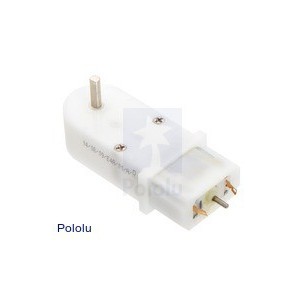
Niewielki silnik Pololu z plastikową przekładnią 120:1, napięciem pracy 4,5 V, prędkością 120 rpm i momentem obrotowym 1,4 kg*cm (20 oz-in), D-kształtnym wałem pod kątem 90° względem obustronnych osi silnika. Pololu 1519
Brak towaru
Zintegrowany optyczny sensor odległości, koloru RGB, natężenia światła, detektor gestów 3D z wbudowanym oświetlaczem IrED.
Brak towaru
Brak towaru
Zintegrowany układ analogowy stacji bazowej RFID (front-end) firmy EM Microelectronic o częstotliwości 13.56MHz. Układ ma obudowę SOP20
Brak towaru
Obudowa z wentylatorem do komputera Raspberry Pi 3, Raspberry Pi 2 model B oraz Raspberry Pi 1 model B+ w kolorze ciemno-niebieskim z tworzywa sztucznego
Brak towaru
Obudowa do komputerów Raspberry: Pi 3 model B+, Pi 3 model B, Pi 2 model B oraz Pi 1 model B+ przezroczysta z tworzywa sztucznego
Brak towaru
Brak towaru
Alan Katritzky, Christopher Ramsden, Eric Scriven, Richard Taylor