.png)



- Obecnie brak na stanie

Progress in Heterocyclic Chemistry (PHC) is an annual review series commissioned by the International Society of Heterocyclic Chemistry (ISHC). Volumes in the series contain both highlights of the previous year's literature on heterocyclic chemistry and articles on emerging topics of particular interest to heterocyclic chemists. The chapters in Volume 22 constitute a systematic survey of the important original material reported in the literature of heterocyclic chemistry in 2009.
As with previous volumes in the series, Volume 22 apprises academic/industrial chemists and advanced students of developments in heterocyclic chemistry in a convenient format.
Ch. 1 Recent advances in the C-2 regioselective direct arylation of indoles, Tanya C. Boorman and Igor Larrosa
Ch. 2 Heterocyclic dyes: preparation, properties, and applications,S. Shaun Murphree
Ch. 3 Three-Membered Ring Systems, Stephen C. Bergmeier and David J. Lapinsky
Ch. 4 Four-Membered Ring Systems, Benito Alcaide and Pedro Almendros
Ch. 5 Five-Membered Ring Systems:
Ch. 5.1 Thiophenes and Se/Te analogues, Edward R. Biehl
Ch. 5.2 Pyrroles and benzo analogs
Ch. 5.3 Furans and Benzofurans, Kap-Sun Yeung, Zhen Yang, Xiao-Shui Peng and Xue-Long Hou
Ch. 5.4 With More than One N Atom, Larry Yet
Ch. 5.5 With N and S (Se) atoms, Yong-Jin Wu and Bingwei V. Yang
Ch. 5.6 With O & S (Se, Te) atoms, R. Alan Aitken and Lynn A. Power
Ch. 5.7 With O and/or S atoms
Ch. 6 Six-membered ring systems:
Ch. 6.1 Pyridine and benzo derivatives
Ch. 6.2 Diazines and benzo derivatives
Ch. 6.3 Triazines, tetrazines and fused ring polyaza systems, Dmitry N. Kozhevnikov and Anton M. Prokhorov
Ch. 6.4 With O & N atoms, John D. Hepworth and B. Mark Heron
Ch. 7 Seven-membered rings
Ch. 8 Eight-Membered and Larger Rings, George R. Newkome
Dioda prostokątna LED 5x2 mm YELLOW milk diffused, kąt 160 stopni; światłość 60 mcd (20mA) (2,1V); d.f. 588nm
Brak towaru
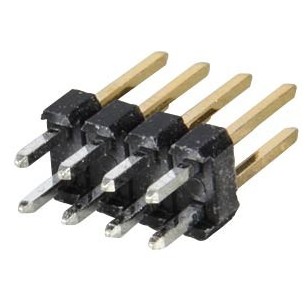
Złącze listwowe goldpin czarne 2x4 piny. Proste do montażu przewlekanego. Raster 1,27 mm. PBHD08S
Brak towaru
Brak towaru
Brak towaru
Hall Effect Linear Current Sensor with Overcurrent Fault Output for <100 V Isolation Applications, 25A, SOIC8, RoHS
Brak towaru
Brak towaru
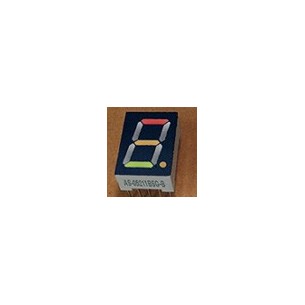
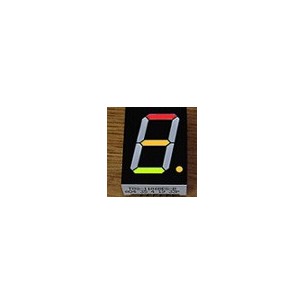
Wyświetlacz 7-segmentowy LED, 1 cyfra 13,20mm, kolor zielony (575nm), 5 mcd (10mA), wspólna anoda, kolor czerwony (630nm), 6 mcd (10mA), wspólna anoda. Pb-free. LED1-AS-05211BMRMG-B
Brak towaru
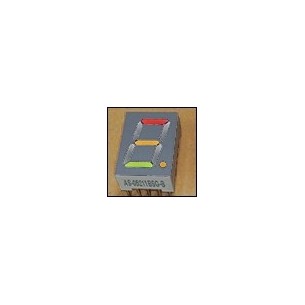
Wyświetlacz 7-segmentowy LED, 1 cyfra 13,20mm, szare tło, kolor zielony jasny (575nm), 12 mcd (10mA), wspólna anoda, kolor czerwony jasny (630nm), 9 mcd (10mA), wspólna anoda. Pb-free. LED1-AS-05211BMRMG-N
Brak towaru
Wyświetlacz 7-segmentowy LED, 1 cyfra 13,20mm, kolor żółty jasny (593nm), 12 mcd/seg (10mA), wspólna anoda, Pb-free. LED1-AS-05211BMY-B
Brak towaru
Wyświetlacz 7-segmentowy LED, 1 cyfra 13,20mm, kolor czerwony (660nm), 6 mcd/seg (10mA), wspólna anoda, Pb-free. LED1-AS-05211BS-B
Brak towaru
Wyświetlacz 7-segmentowy LED, 1 cyfra 14,20mm, szare tło, kolor czerwony (640nm), 6000 ucd (10mA), wspólna katoda, Pb-free. LED1-AS-05613AS-N
Brak towaru
Wyświetlacz 7-segmentowy LED, 1 cyfra 14,20mm, kolor zielony (570nm), 4000 ucd (10mA), wspólna anoda, Pb-free. LED1-AS-05613BG-B
Brak towaru
Wyświetlacz 7-segmentowy LED, 1 cyfra 20,40mm, kolor zielony jasny (573nm), 40 mcd (20mA), wspólna anoda, kolor czerwony jasny (635nm), 10 mcd (4mA), wspólna anoda. Pb-free. LED1-AS-08011BMRMG-B
Brak towaru
Brak towaru
Brak towaru
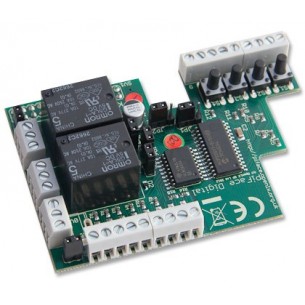
Expansion Board for Raspberry Pi, 2x Relays, 4x Switchs, 8x Digital Inputs, 8x Outputs, 8x LEDs, RoHS
Brak towaru