.png)


















- Out-of-Stock

About the book
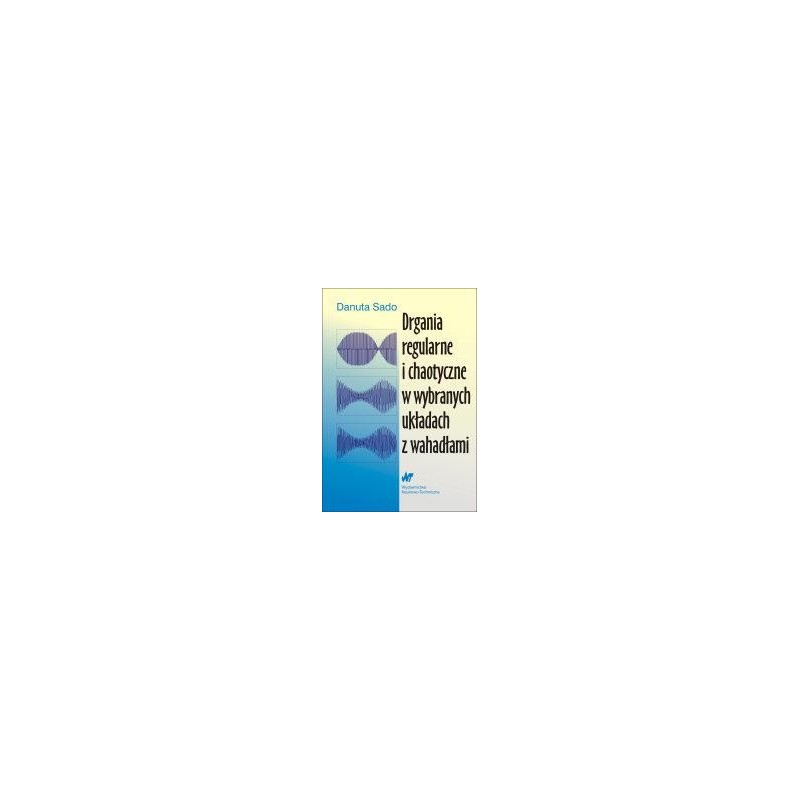
The book is devoted to the phenomena of transferring vibrations between elements of work machines containing pendulums. The problem of transmission of vibrations is important, because the system set in vibrations of a certain form can arouse vibrations of another form, sometimes difficult to predict, which can lead to machine failure.Table of Contents
1. PRELIMINARY NEWS
1.1. Introduction
1.2. Test methods for systems containing pendulums
1.2.1. The method of many time scales.
1.2.2. Examination of the nature of vibrations - regular and chaotic vibrations
2. VIBRATION OF CIRCUIT ARRANGEMENTS WITH TWO DEGREES
FREEDOMS, WHICH CONTAINS THE PENDANTS
2.1 .. A springy pendulum
2.1.1. Model of the system. Traffic equations
2.1.2. Analytical studies using a multiple time scale
2.1.3 Numerical research
2.1.3.1. Free vibrations of the springing pendulum
2.1.3.2. The oscillation of the springing pendulum is forced by horizontal harmonic force
2.2. Two pendulums connected in series (double pendulum)
2.2.1. Model of the system. Traffic equations
2.2.2. Analytical studies using a multiple time scale
2.2.3. Numerical research
2.2.3.1. Energy transfer conditions for free vibrations
2.2.3.2. Regular and chaotic vibrations of a system forced by horizontal force
harmonic
2.3. Two pendulums connected by a spring
2.3.1. Model of the system. Traffic equations
2.3.2. Analytical studies using a multiple time scale
2.3.3. Numerical research
2.3.3.1. Numerical tests of free vibrations
2.3.3.2. Numerical tests of forced vibrations - regular and chaotic vibrations
2.4. Oscillator 7 suspended pendulum
2.4.1. Model of the system. Traffic equations
2.4.2. Analytical studies using a multiple time scale
2.4.2.1. External resonance p, = 1 and internal resonance β = 0.5
2.4.3. Numerical research
2.4.3.1. Numerical tests of free vibrations
2.4.3.2. Numerical research of vibrations forced by vertical harmonic force
2.4.3.3. Numerical research of vibrations forced by horizontal harmonic force
3. MODELING OF FORCE - FORGOT IDEAL OR
FORCED EXTREME
3.1. Introduction
3.2. System description. Traffic equations
3.2.1. Equations of motion of the system with perfect excitation
3.2.2. Equations of system motion with non-ideal extortion
3.3. Analytical studies using a multiple time scale
3.4. Numerical research
3.4.1. Free vibrations of the ideal system
3.4.2. Vibrations forced by the ideal system
3.4.3. Forced vibrations of the non-ideal system
4. VIBRATION OF AUTOPARAMETRIC ARRANGEMENTS WITH THREE DEGREES
FREEDOM
4.1. Oscillator with a spring pendulum
4.1.1. System description. Traffic equations
4.1.2. Numerical research
4.1.2.1. Numerical tests of free vibrations
4.1.2.2. Numerical studies of regular and chaotic vibrations
4.2. Vibrations of a system consisting of an oscilator and a double pendulum
4.2.1. Model of the system. Traffic equations
4.2.2. Analytical studies using a multiple time scale
4.2.2.1. Method of solution
4.2.2.2. Analysis of vibrations for internal resonances 2 «2 = 1 / ah-o> 2 = 1 and
external resonance / 7 = 1
4.2.3. Numerical research
4.2.3.1. Numerical examination of free vibrations
4.2.3.2. Numerical examination of regular and chaotic vibrations
4.3. Vibrations of the autoparametric system with two pendulums connected by a spring
4.3.1. Model of the system. Traffic equations
4.3.2. Analytical studies using a multiple time scale
4.3.3. Numerical research
4.3.3.1. Numerical tests of free vibrations
4.3.3.2. Numerical research of vibrations forced by vertical harmonic force
5. APPLICATION OF MATERIALS WITH MEMORIAL MEMORY (SMA) W.
AUTOPARAMETRIC ARRANGEMENTS
5.1. Introduction
5.2. Use of shape memory (SMA) materials to control vibrations
in autoparametric systems
5.2.1. Model of the system. Traffic equations
5.2.2. Numerical research
5.2.2.1. Influence of spring with SMA on free vibrations
5.2.2.2. Influence of spring with SMA on forced vibrations
5.3. Pseudo-elastic effect in the autoparametric system with a spring with SMA
5.3.1. System description. Traffic equations
5.3.2. Numerical research _
5.3.2.1. The pseudo-elastic effect in free vibrations
5.3.2.2. The pseudo elasticity effect in forced oscillations
BIBLIOGRAPHY
INDEX
No product available!
No product available!
No product available!
No product available!
No product available!
No product available!
No product available!
No product available!
No product available!
No product available!
No product available!
No product available!
No product available!
No product available!
No product available!
No product available!