


zł71.18 tax excl.
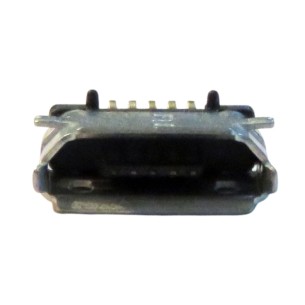
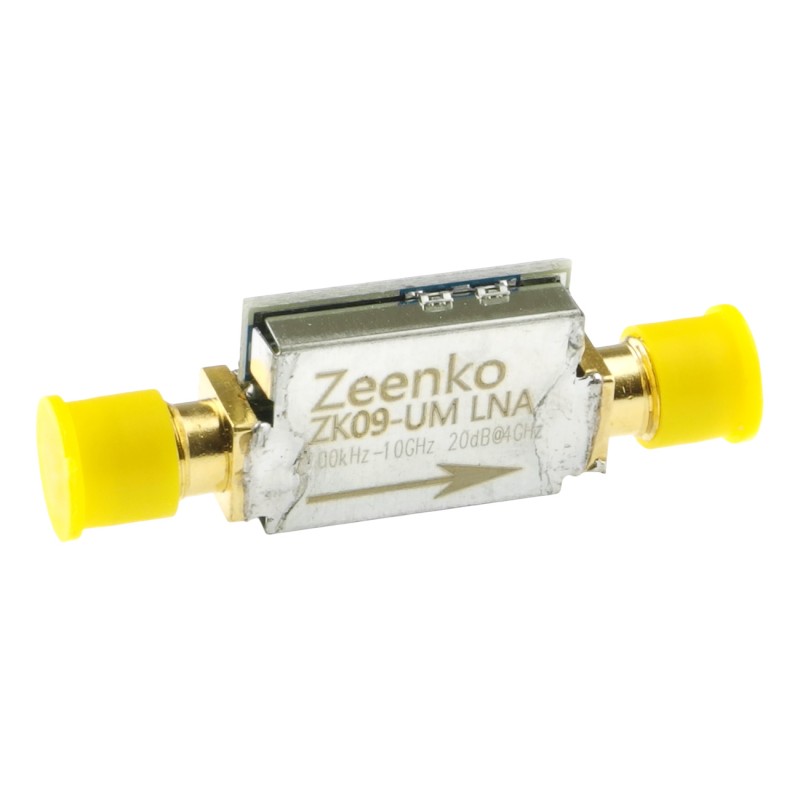
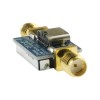
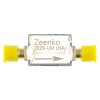
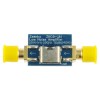
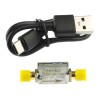
Zeenko ZK09-UM is a compact low-noise RF amplifier operating in the 100 kHz to 10 GHz band, powered via USB-C and equipped with on-chip bias technology. It provides high linearity, stable gain, and a wide operating bandwidth, serving as an alternative to popular microwave amplifiers in laboratory and measurement applications.
The ZK09-UM is an ultra-wideband low-noise amplifier (LNA) from Zeenko, designed to operate in the 100 kHz to 10 GHz range. The module uses on-chip bias technology, eliminating the need for external bias adjustment, and draws 52 mA of supply current. It offers good gain flatness and stable operation across the wide band, making it suitable for measurement applications, receiver front-ends, and antenna systems.
The ZK09-UM can be used as a replacement for amplifiers such as the ADM-8095, ADM-8625, and HMC8413, providing high linearity and a low noise figure in applications requiring a broad frequency range.
Manufacturer BTC Korporacja sp. z o. o. Lwowska 5 05-120 Legionowo Poland sprzedaz@kamami.pl 22 767 36 20
Responsible person BTC Korporacja sp. z o. o. Lwowska 5 05-120 Legionowo Poland sprzedaz@kamami.pl 22 767 36 20
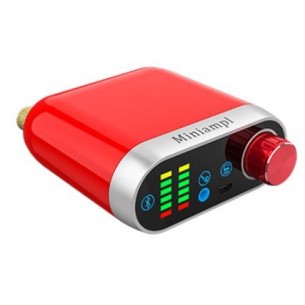
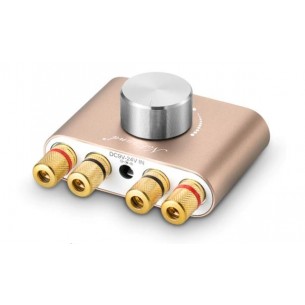
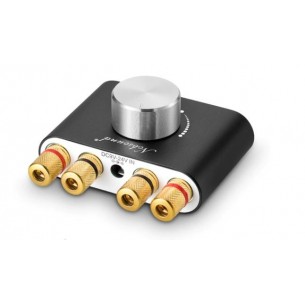
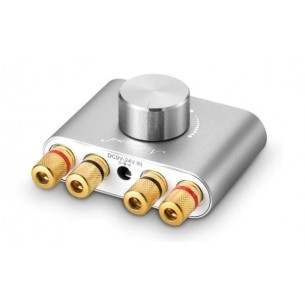
Class D digital audio amplifier with Bluetooth 5.0 module. It has two channels with a power of 50 W and can work with speakers from 4 to 8 Ω. It is powered with the voltage ranging from 9 to 24 V
No product available!
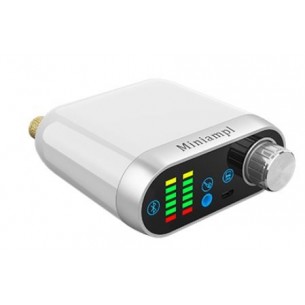
Class D digital audio amplifier with Bluetooth 5.0 module. It has two channels with a power of 50 W and can work with speakers from 4 to 8 Ω. It is powered with the voltage ranging from 9 to 24 V
No product available!
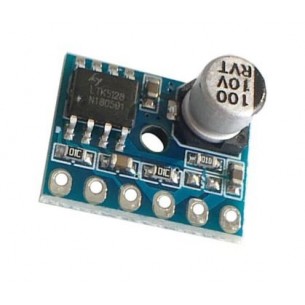
Class D LTK5128 mono digital audio amplifier module. The system allows you to connect one loudspeaker with an impedance from 4 to 8 Ω and a power of 5 W
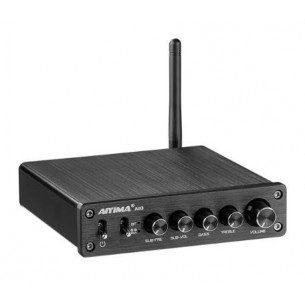
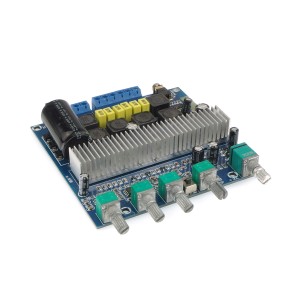
Audio amplifier with three output channels. It can be powered with the voltage from 12 to 24 V and has two outputs with a power of 50 W (left and right) and one with a power of 100 W (bass). Equipped with Bluetooth 5.0 communication
No product available!
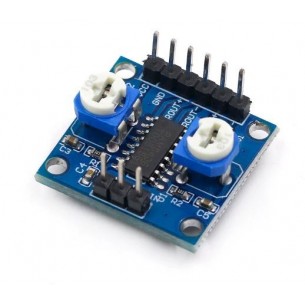
Class D PAM8406 stereo digital audio amplifier module. The system allows you to connect two speakers with an impedance of 4 to 8 Ω and a power of 5 W per channel
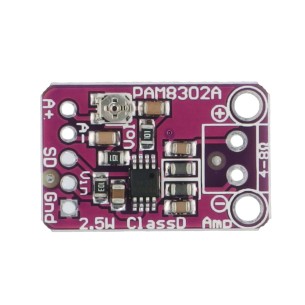
Class D mono digital audio amplifier module PAM8302. The system allows you to connect one loudspeaker with an impedance from 4 to 8 Ω and a power of 2.5 W
No product available!
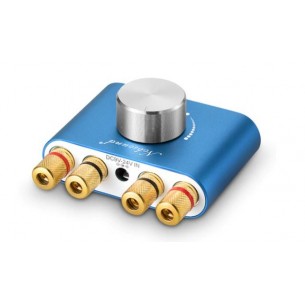
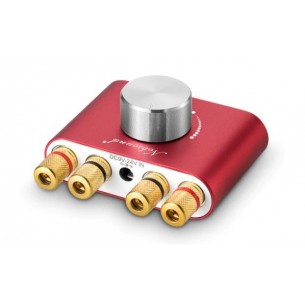
Class D digital audio amplifier with Bluetooth module. It has two channels with a power of 50 W and can work with speakers from 4 to 8 Ω. It is powered with the voltage in the range from 9 to 24 V. NS-01G
No product available!
Class D digital audio amplifier with Bluetooth module. It has two channels with a power of 50 W and can work with speakers from 4 to 8 Ω. It is powered with the voltage in the range from 9 to 24 V. NS-01G
No product available!
Class D digital audio amplifier with Bluetooth module. It has two channels with a power of 50 W and can work with speakers from 4 to 8 Ω. It is powered with the voltage in the range from 9 to 24 V. NS-01G
No product available!
Class D digital audio amplifier with Bluetooth module. It has two channels with a power of 50 W and can work with speakers from 4 to 8 Ω. It is powered with the voltage in the range from 9 to 24 V. NS-01G
No product available!
Class D digital audio amplifier with Bluetooth module. It has two channels with a power of 50 W and can work with speakers from 4 to 8 Ω. It is powered with the voltage in the range from 9 to 24 V. NS-01G
No product available!
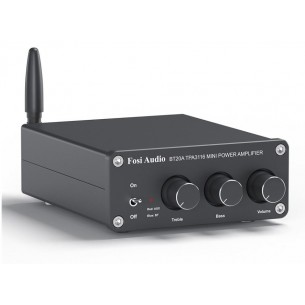
Class D digital audio amplifier with Bluetooth 5.0 module. It has two channels with a power of 50 W and can work with speakers from 2 to 8 Ω. Powered with DC voltage from 12 to 24 V. Fosi Audio BT20A
No product available!
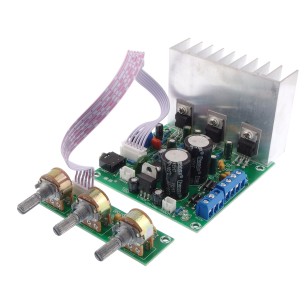
Class AB audio amplifier with three output channels. It can be powered with AC voltage from 8 to 18 V and has two outputs with a power of 18 W (left and right) and one with a power of 20 W (bass)
No product available!
Audio amplifier with three output channels. It can be powered with the voltage from 12 to 24 V and has two outputs with a power of 50 W (left and right) and one with a power of 100 W (bass). Equipped with Bluetooth 5.0 communication
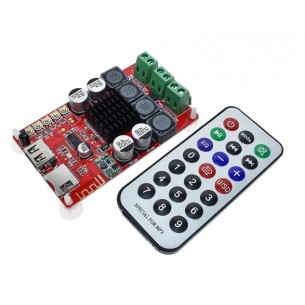
Stereo audio amplifier with Bluetooth communication. It can be powered with the voltage from 8 to 26 V and has two outputs with a power of 50 W. The set includes a remote control
No product available!
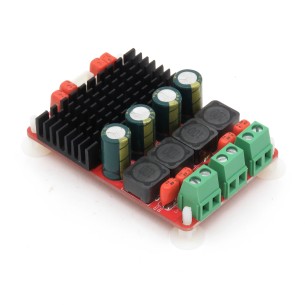
Class D digital audio amplifier. It has two channels with a power of 50 W and can work with speakers from 4 to 8 Ω. It is powered with the voltage from 11 to 26 V
No product available!
Zeenko ZK09-UM is a compact low-noise RF amplifier operating in the 100 kHz to 10 GHz band, powered via USB-C and equipped with on-chip bias technology. It provides high linearity, stable gain, and a wide operating bandwidth, serving as an alternative to popular microwave amplifiers in laboratory and measurement applications.