.png)



zł3.50 tax excl.
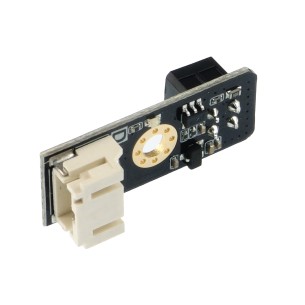
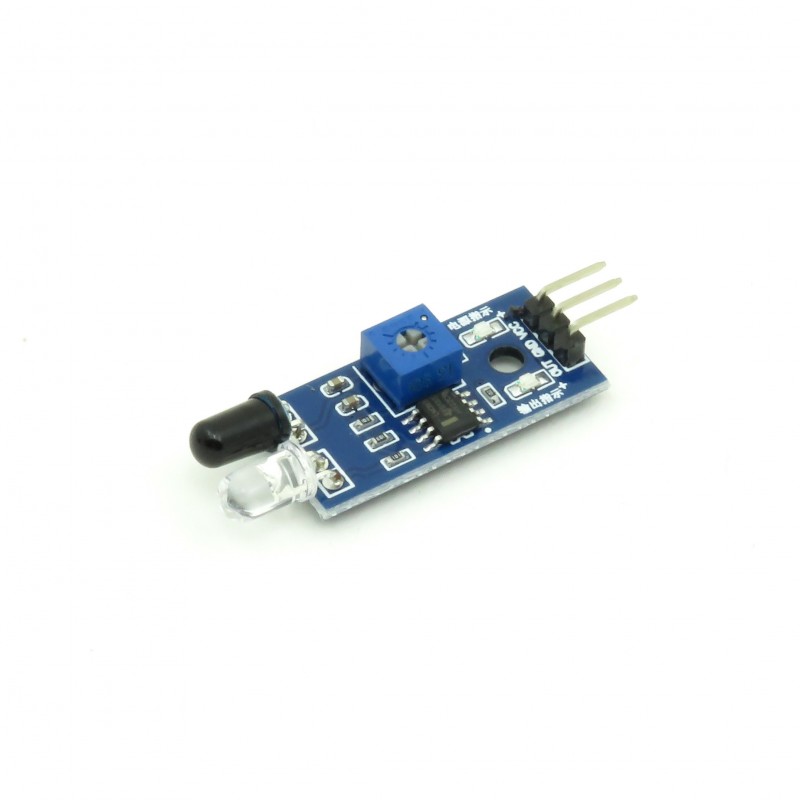
Reflective sensor with digital output, enabling obstacle detection, with adjustable trigger threshold using a built-in potentiometer. The module can be connected directly to a microcontroller and development kits such as Arduino, Raspberry Pi, STM32 or ESP32
The LM393 IR Reflective Sensor with Comparator is a module used to detect obstacles using infrared. It uses the reflection of the IR beam to precisely respond to the presence of objects in range. When an obstacle is detected, a low state is generated at the output. The module is equipped with an LM393 comparator, which ensures stable operation even in interference conditions. The built-in potentiometer allows you to adjust the trigger threshold, which allows you to adapt the sensor to the ambient lighting. The mounting hole in the central part of the board makes it easy to install the device. The sensor is ideal for applications related to robotics and obstacle detection systems. Thanks to the digital output, it can be easily integrated with all development kits available on the market such as Arduino, Raspberry Pi, STM32, ESP32 and many others.
Data sheet
Manufacturer
Responsible person
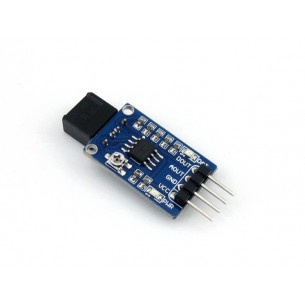
This module can be applied to intellectual robot, obstacle avoidance car, counter device in the pipeline, black and white lines tracking device. This infrared sensor contains two parts: an infrared transmitter and an infrared receiver.
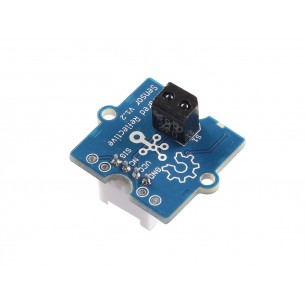
Module with a reflection sensor operating in the infrared band. The board is equipped with a Grove connector and communicates via a digital interface. Seeed Studio 101020174
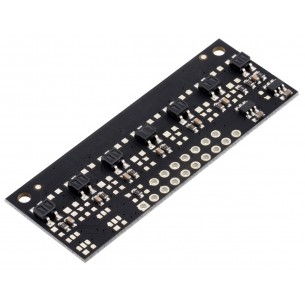
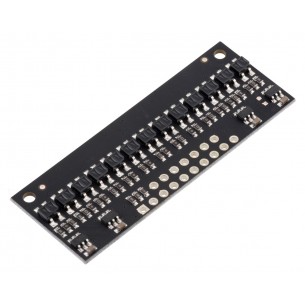
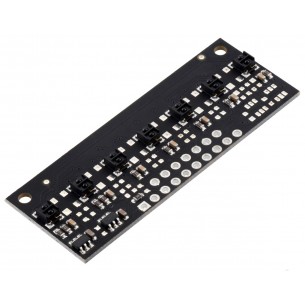
Module with 7 QTR type optocoupler with RC (digital) output. The module operates from 2.9 V to 5.5 V, detects objects at a distance of up to 40 mm. The sensor will be used in projects that require detection of changes in the ground, e.g. in linefollower robots. Pololu 4147
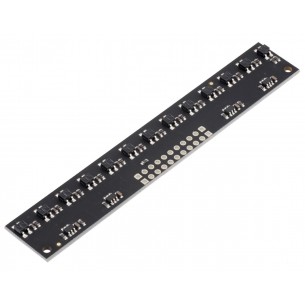
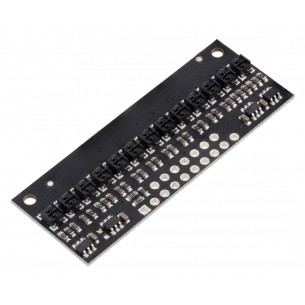
Module with 13 QTR type optocoupler with analog output. The module operates from 2.9 V to 5.5 V, detects objects at a distance of up to 40 mm. The sensor will be used in projects that require detection of changes in the ground, e.g. in linefollower robots. Pololu 4213
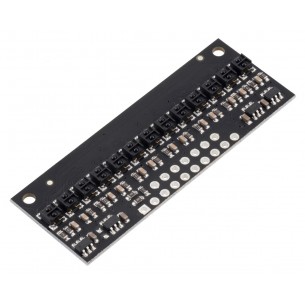
Module with 13 QTR type optocoupler with analog output. The module operates from 2.9 V to 5.5 V, detects objects at a distance of up to 40 mm. The sensor will be used in projects that require detection of changes in the ground, e.g. in linefollower robots. Pololu 4253
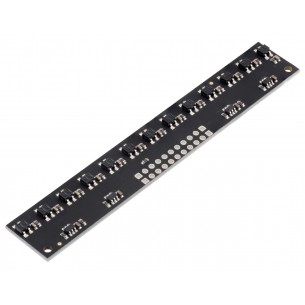
Module with 13 QTR type optocoupler with RC (digital) output. The module operates from 2.9 V to 5.5 V, detects objects at a distance of up to 40 mm. The sensor will be used in projects that require detection of changes in the ground, e.g. in linefollower robots. Pololu 4153
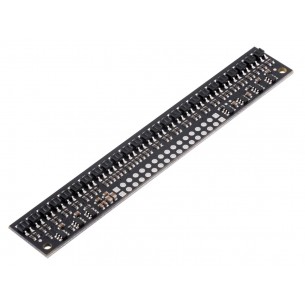
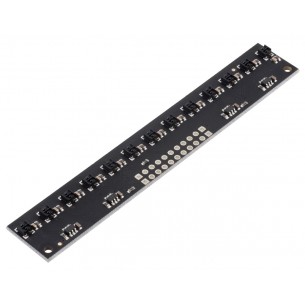
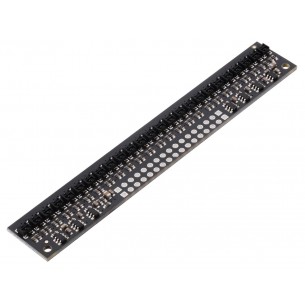
Module with 25 QTR type optocoupler with analog output. The module operates from 2.9 V to 5.5 V, detects objects at a distance of up to 50 mm. The sensor will be used in projects that require detection of changes in the ground, e.g. in linefollower robots. Pololu 4225
Module with 25 QTR type optocoupler with RC (digital) output. The module operates from 2.9 V to 5.5 V, detects objects at a distance of up to 50 mm. The sensor will be used in projects that require detection of changes in the ground, e.g. in linefollower robots. Pololu 4125
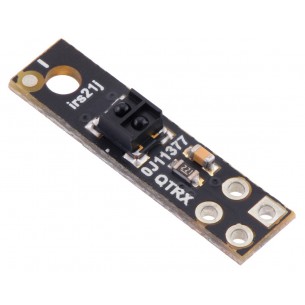
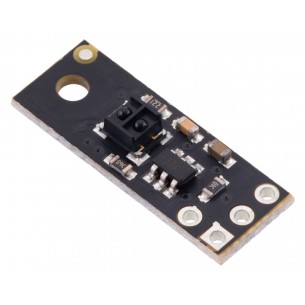
Module with 1 QTRX type optocoupler with RC (digital) output. The module operates from 2.9 V to 5.5 V, detects objects at a distance of up to 30 mm. The sensor will be used in projects that require detection of changes in the ground, e.g. in linefollower robots. Pololu 4301
Module with 1 QTRX type optocoupler with RC (digital) output. The module operates from 2.9 V to 5.5 V, detects objects at a distance of up to 30 mm. The sensor will be used in projects that require detection of changes in the ground, e.g. in linefollower robots. Pololu 4341
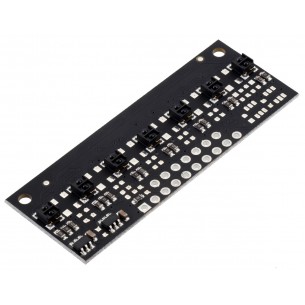
Module with 7 QTRX type optocoupler with analog output. The module operates from 2.9 V to 5.5 V, detects objects at a distance of up to 40 mm. The sensor will be used in projects that require detection of changes in the ground, e.g. in linefollower robots. Pololu 4447
Module with 7 QTRX type optocoupler with RC (digital) output. The module operates from 2.9 V to 5.5 V, detects objects at a distance of up to 40 mm. The sensor will be used in projects that require detection of changes in the ground, e.g. in linefollower robots. Pololu 4347
Module with 13 QTRX type optocoupler with analog output. The module operates from 2.9 V to 5.5 V, detects objects at a distance of up to 40 mm. The sensor will be used in projects that require detection of changes in the ground, e.g. in linefollower robots. Pololu 4413
Module with 13 QTRX type optocoupler with RC (digital) output. The module operates from 2.9 V to 5.5 V, detects objects at a distance of up to 40 mm. The sensor will be used in projects that require detection of changes in the ground, e.g. in linefollower robots. Pololu 4313
Module with 13 QTRX type optocoupler with RC (digital) output. The module operates from 2.9 V to 5.5 V, detects objects at a distance of up to 40 mm. The sensor will be used in projects that require detection of changes in the ground, e.g. in linefollower robots. Pololu 4353
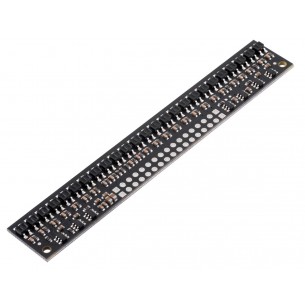
Module with 25 QTRX type optocoupler with analog output. The module operates from 2.9 V to 5.5 V, detects objects at a distance of up to 50 mm. The sensor will be used in projects that require detection of changes in the ground, e.g. in linefollower robots. Pololu 4425
No product available!
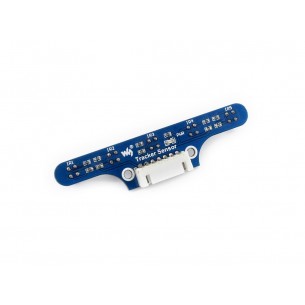
Module with five ITR20001/T reflective sensors. Powered with the voltage from 3.3 V to 5 V, it has analog outputs. It can detect objects at a distance of up to 5 mm. Waveshare Tracker Sensor
Reflective sensor with digital output, enabling obstacle detection, with adjustable trigger threshold using a built-in potentiometer. The module can be connected directly to a microcontroller and development kits such as Arduino, Raspberry Pi, STM32 or ESP32