


zł24.18 tax excl.
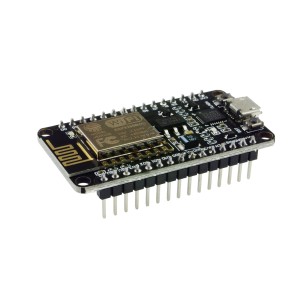
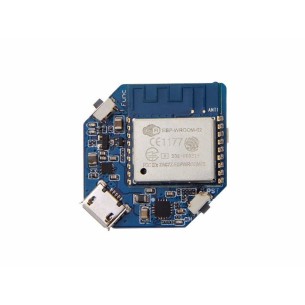
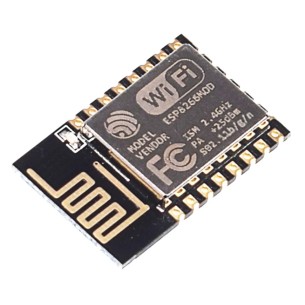
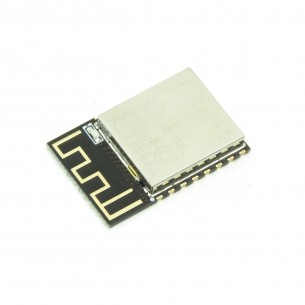
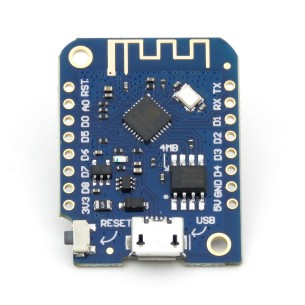
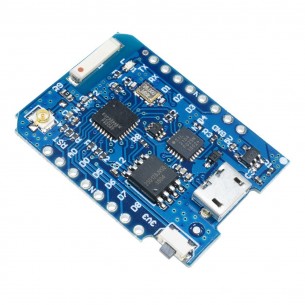
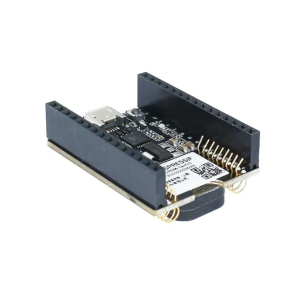
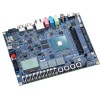
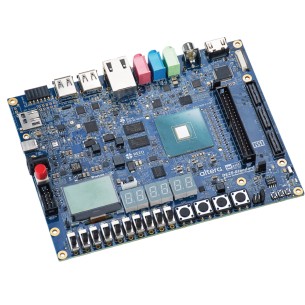
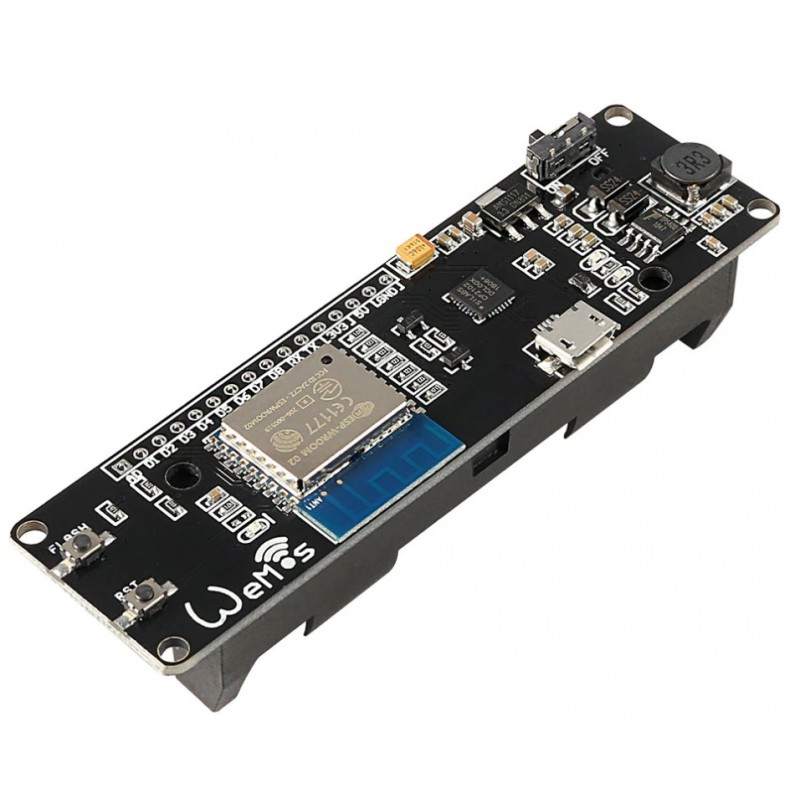
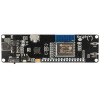
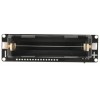
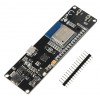
Development board with the ESP-WROOM-02 WiFi module. The board has a USB-UART converter, a basket for a Li-Ion 18650 battery and a charging circuit
Development board with WiFi ESP-WROOM-02 module. The board has a USB-UART converter with the CP2102 system and a microUSB connector for communication with the ESP module. A Li-Ion battery placed on the bottom of the PCB was used for power supply. The battery is charged via a microUSB connector, and the charging process is controlled by a built-in circuit. On the edge of the board, the ESP module pins are also led out, which allows you to connect additional sensors. Thanks to its small dimensions, the set is perfect for applications in the field of IoT and mobile devices.
Manufacturer BTC Korporacja sp. z o. o. Lwowska 5 05-120 Legionowo Poland sprzedaz@kamami.pl 22 767 36 20
Responsible person BTC Korporacja sp. z o. o. Lwowska 5 05-120 Legionowo Poland sprzedaz@kamami.pl 22 767 36 20
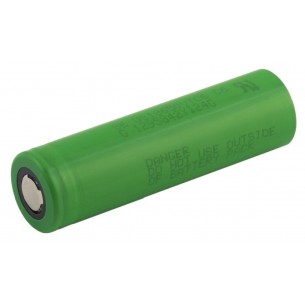
18650 Li-Ion battery with a nominal voltage of 3.7V and a capacity of 3000mAh. Sony US18650VTC6
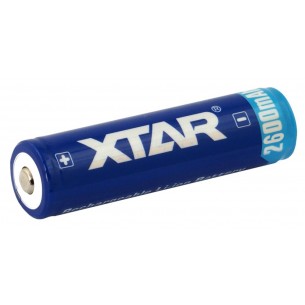
Li-Ion 18650 battery with a nominal voltage of 3.7V and a capacity of 2600mAh. It has protection against overcharging, excessive discharge, overload and short circuit.
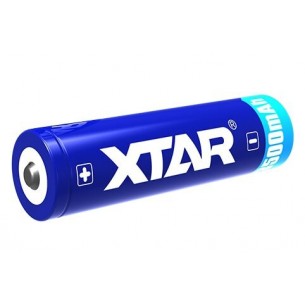
Li-Ion 18650 battery with a nominal voltage of 3.6V and a capacity of 3500mAh. It has protection against overcharging, excessive discharge, overload and short circuit.
WiFi module based on ESP8266. The module has a built-in antenna and USB-UART converter. The module can be programmed in Lua (under the control of the NodeMCU firmware) or in the Arduino environment. 10 GPIO lines are available which each can be configured to work as PWM, I2C.
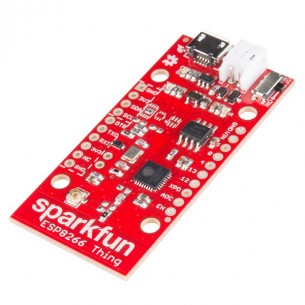
Development board ESP8266 with WiFi module; WRL-13231
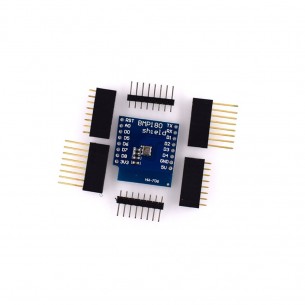
BMP180 temperature / pressure sensor module compatible with WeMos D1 mini board.
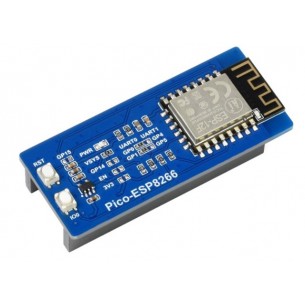
WiFi module with ESP8266 designed to work with the Raspberry Pi Pico. It communicates via the UART interface using AT commands. Waveshare Pico-ESP8266
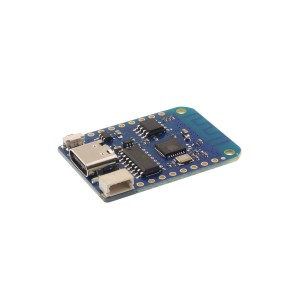
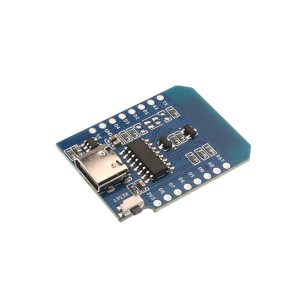
The module is based on the ESP8266EX chip. Thanks to the support of the 802.11 b/g/n standard, it enables wireless communication with WiFi networks, which allows for Internet access and data exchange. It is programmed via the USB Type-C connector using Arduino, MicroPython or NodeMCU. WeMos D1 Mini Type-C
This ESP8266-based development board is designed for rapid IoT application development. It features support for two Grove Plug-n-Play connectors, digital and analog I/O, and UART and I2C interfaces for connecting multiple sensors and modules. The device supports OTA firmware updates, a RESTful API, and integration with mobile apps and IFTTT, allowing for easy remote control and monitoring. Seeed Studio 102110057
ESP8684-DEVKITC-02C-N4 is a development board with the ESP8684 module, 4 MB Flash, Wi-Fi, and Bluetooth LE support, perfect for IoT and automation projects. Espressif ESP8684-DEVKITC-02C-N4
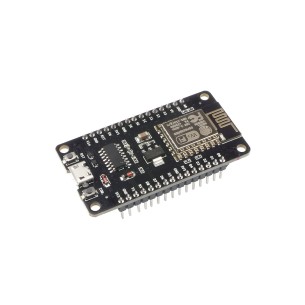
LoLin NodeMCU V3 is a board with ESP8266 (ESP12E). The ESP8266 system provides WiFi connectivity (802.11 b / g / n). The USB-UART converter (CH340G chip) is located on the board. The module can be programmed in Lua (under the control of the NodeMCU firmware) or in the Arduino environment. There are 10 GPIO lines available.
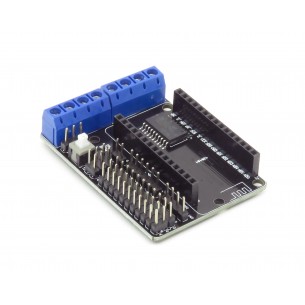
The base board for the Wi-Fi NodeMCU module (ESP-12E), thanks to the built-in L293DD system, allows for attaching e.g. motors, electromagnets or other executive devices. The I/O lines of the NodeMCU module were derived to the pin connectors, and the power supply can be connected with the use of screw connectors. ESP12E Motor Shield
The module is based on the ESP8266MOD chip. Thanks to the support of the 802.11 b/g/n standard, it enables wireless communication with WiFi networks, which allows for Internet access and data exchange. WeMos D1 Mini Type-C
WiFi 802.11 b/g/n module with ESP8266 system, they have 22 edge terminals with 2 mm raster with the possibility of soldered gold connectors, 9 GPIO lines and 1 ADC line on the connector. Built-in PCB antenna. ESP-12E
WiFi module developed by AI-Thinker Co., Ltd with ESP8266 processor. Integrates a 32-bit MCU microcontroller with 80 MHz clock, RTOS support, Wi-Fi and antenna. The module supports the IEEE802.11 b / g / ni standard and has a complete TCP / IP protocol stack. AI-Thinker ESP-12S
Plate for applications in the area of Internet of Things (IoT). The module was based on the ESP8266 system, which integrates WiFi, TCP / IP communication, 32-bit MCU, 10-bit ADC and many interfaces such as HSPI, UART, PWM, I2C and I2S. DFrobot DFR0489
Development board D1 Mini V3 with WiFi module ESP-8266 and 4 MB Flash memory. The module can be programmed from the Arduino IDE level. WeMos D1 Mini V3.x
Development board D1 Mini Pro with WiFi ESP8266 module and 16 MB Flash memory, equipped with ceramic antenna and external antenna connector. The module can be programmed from the Arduino IDE level. WeMos D1 Mini Pro
ESP8266-DevKitS – a board for quick programming and launching of ESP8266 modules without soldering. Ideal for IoT prototyping. Espressif ESP8266-DevKitS
Development board with the ESP-WROOM-02 WiFi module. The board has a USB-UART converter, a basket for a Li-Ion 18650 battery and a charging circuit