.png)







zł17.14 tax excl.
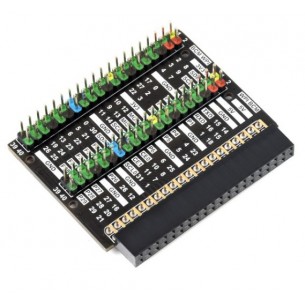
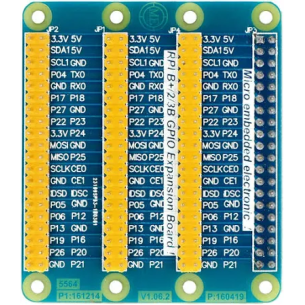
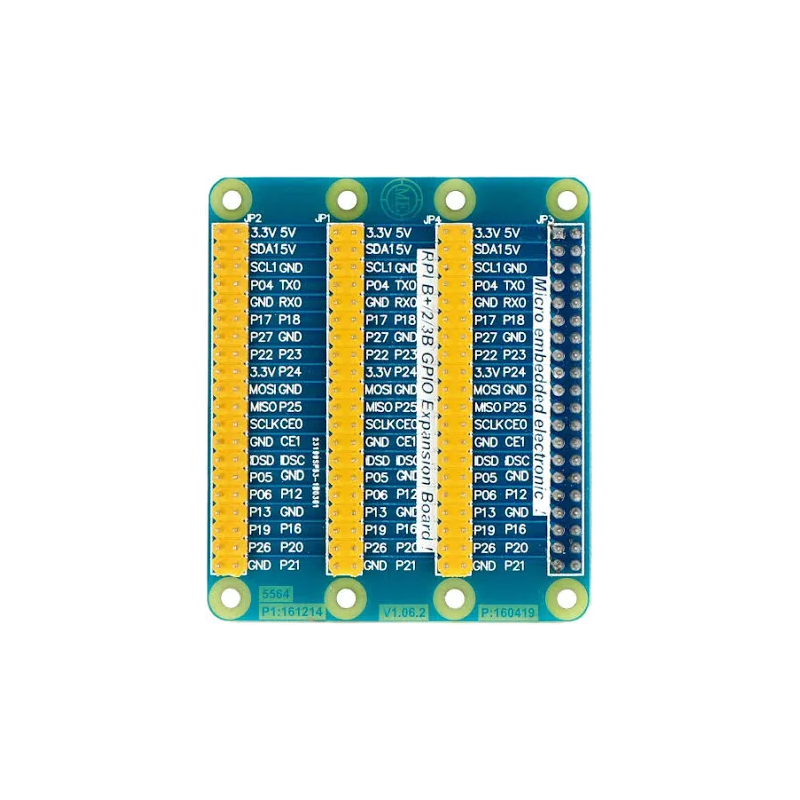
The GPIO Expander HAT for Raspberry Pi is a versatile solution that allows multiple modules to be connected simultaneously to the same GPIO lines. With clear labeling and compatibility with popular Raspberry Pi models, the HAT is suitable for educational projects, electronic circuit prototyping, and complex system integration. It is ideal wherever there is a need to duplicate pinouts without limiting access to the Raspberry Pi’s ports.
The GPIO expansion HAT is designed for Raspberry Pi models B+, 2, 3, and 4. It enables the parallel connection of three independent modules to each GPIO pin. The board features three rows of goldpin headers (a total of 120 pins) with a standard 2.54 mm pitch. Each row contains 40 pins corresponding to the Raspberry Pi GPIO layout, allowing convenient signal branching without the need for additional splitters.
The connector layout is designed to ensure unobstructed access to the USB ports and other Raspberry Pi interfaces. Pin labels printed on the board surface allow for quick identification of individual lines, significantly simplifying work during prototyping or the integration of external components.
Manufacturer
Responsible person
The expansion module is designed to work with a portable computer built into the Raspberry Pi 400 keyboard. The board has two 40-pin connector in a vertical position. Waveshare PI400-GPIO-ADAPTER-B
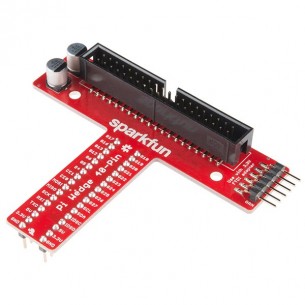
Adapter for connecting the GPIO line of the Raspberry Pi to the breadboard (2.54 mm). The set includes a connection tape. SparkFun BOB-13717
No product available!
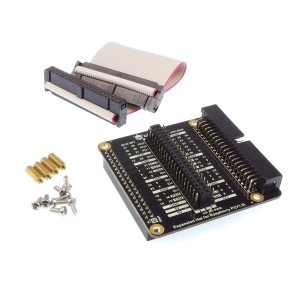
The IO pin expansion module is designed for minicomputers Raspberry Pi 3, Raspberry Pi 4 and Raspberry Pi 400. It contains markings of all inputs and outputs of the minicomputer. DFRobot DFR0828
No product available!
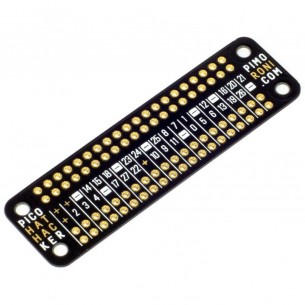
Mini pin expander designed for Raspberry Pi boards. It is equipped with a standard 40-pin connector for connecting a minicomputer and a set of 2x20-pin outputs for connecting expansion modules. Pimoroni PIM300
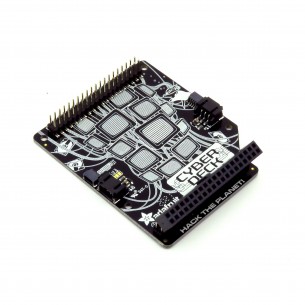
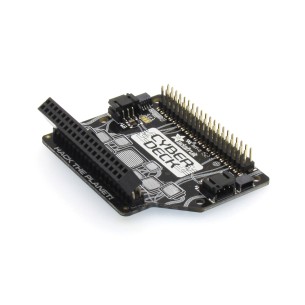
The expansion module is designed to work with the Raspberry Pi 400. The board has a 40-pin connector placed in a vertical position and a connector for RPI 400 at an angle of 45°. Adafruit 4863
The expansion module is designed to work with the Raspberry Pi 400. The board has a 40-pin connector placed in a vertical position and a connector for RPI 400 at an angle of 45°. Adafruit 4862
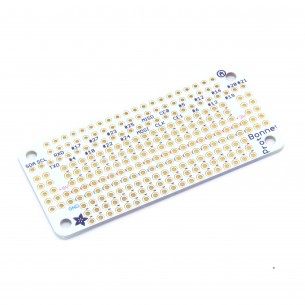
Universal prototyping board for Raspberry Pi minicomputers. Comes with a 40-pin connector. Adafruit 3203
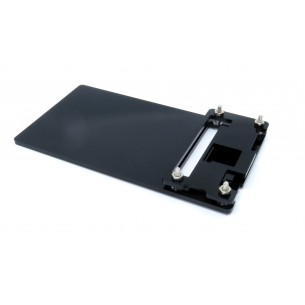
Acrylic case with a place for the breadboard, designed for Raspberry Pi Zero W minicomputers. The user has free access to all minicomputer ports, including GPIO connectors
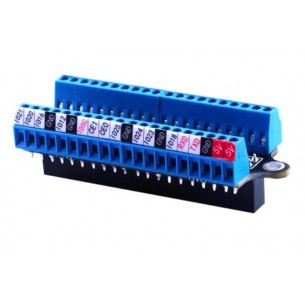
Universal expansion board with screw connectors dedicated to the Raspberry Pi. Facilitates prototyping
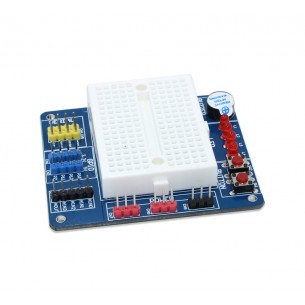
Prototyping kit dedicated to Raspberry Pi. It offers GPIO pin leads, a breadboard, buttons, LEDs and a buzzer. SB Components 11605
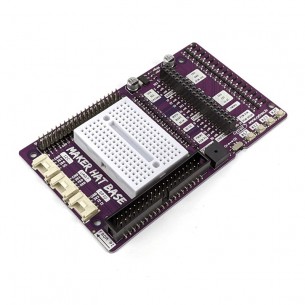
The IO pin expansion module is designed for Raspberry Pi 3, 4 and Raspberry Pi 400 minicomputers. It offers GPIO pins, breadboard, 4 buttons and a buzzer. Cytron MAKER-HAT-BASE
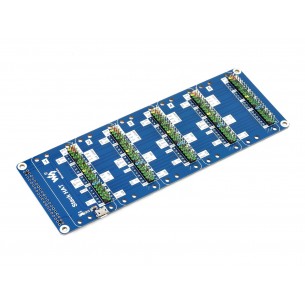
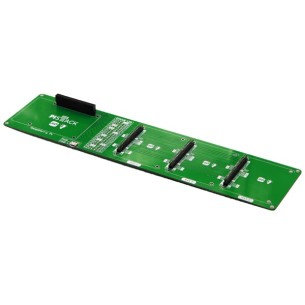
A pin expander designed for Raspberry Pi boards. It is equipped with a standard 40-pin connector for connecting a minicomputer and five sets of 2x20-pin outputs for connecting expansion modules. Waveshare Stack HAT
No product available!
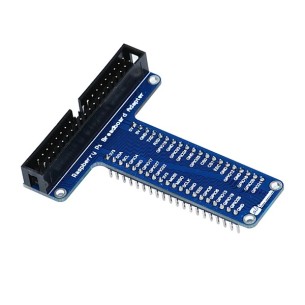
Adapter designed for Raspberry Pi minicomputers. It facilitates access to all pins, which are led out on the connector with a raster of 2.54 mm, which allows the use of a breadboard. SB Components 14576
Pin expander for Raspberry Pi boards. It is equipped with a standard 40-pin connector for connecting a minicomputer and three sets of 2x20-pin outputs for connecting extension modules. SB Components 14095
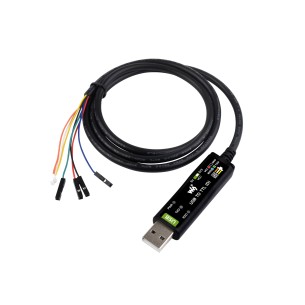
Industrial USB TO TTL (D) Serial Cable, Original FT232RNL Chip, Multi Protection Circuits, Multi Systems Support, With Separated 4pin Header + SH1.0 3PIN Connector, Suitable For Raspberry Pi 5 Serial Port Debugging. USB TO TTL (D)
The GPIO Expander HAT for Raspberry Pi is a versatile solution that allows multiple modules to be connected simultaneously to the same GPIO lines. With clear labeling and compatibility with popular Raspberry Pi models, the HAT is suitable for educational projects, electronic circuit prototyping, and complex system integration. It is ideal wherever there is a need to duplicate pinouts without limiting access to the Raspberry Pi’s ports.
The GPIO Expander HAT for Raspberry Pi is a versatile solution that allows multiple modules to be connected simultaneously to the same GPIO lines. With clear labeling and compatibility with popular Raspberry Pi models, the HAT is suitable for educational projects, electronic circuit prototyping, and complex system integration. It is ideal wherever there is a need to duplicate pinouts without limiting access to the Raspberry Pi’s ports.