.png)







zł8.05 tax excl.
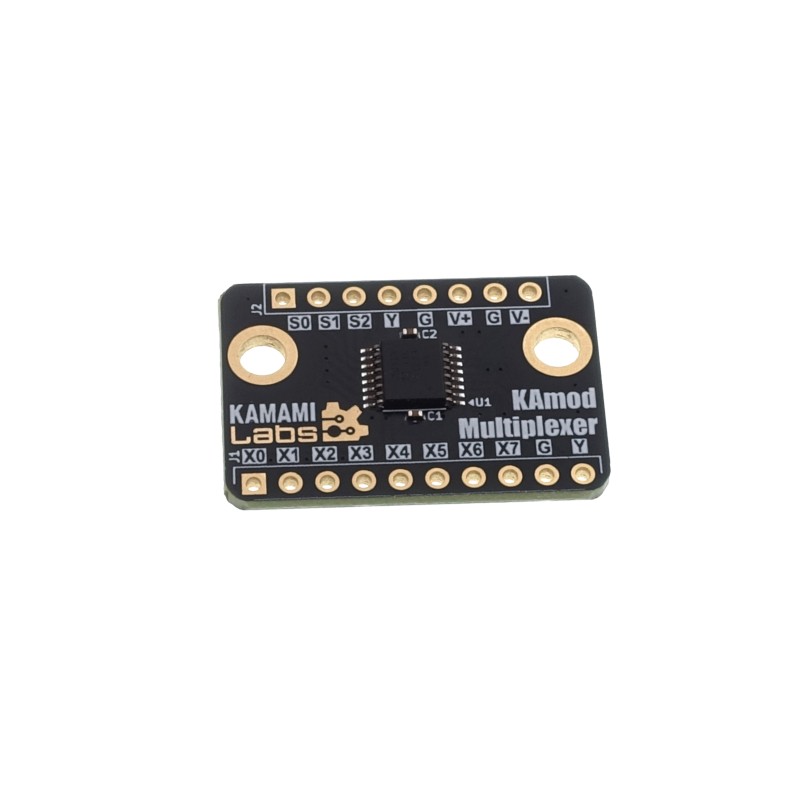
KAmod Multiplexer features the CD4051 chip, which is an analog 8-channel multiplexer/demultiplexer. The chip can handle analog signals with an amplitude of up to 20 VPP and provides low on-state resistance. The active channel is selected through a sequence of states on three digital inputs
KAmod Multiplexer is a module based on the CD4051 system, which acts as an 8-channel analog multiplexer/demultiplexer. It allows switching analog signals with an amplitude of up to 20 VPP, providing low resistance in the on state. The active channel is selected by providing appropriate logical states on three digital inputs. The module can be powered by a single or symmetrical voltage in the range of 3...20 V, which allows for its wide application in control systems, signal processing and measurement systems.
Manufacturer
Responsible person
16-channel I/O port expander module controlled by the I2C interface. The module is based on the MCP23017-E/SS system.
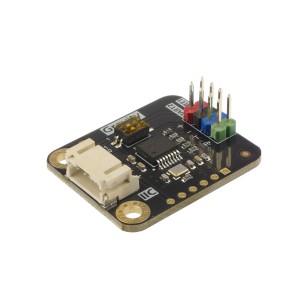
I2C-UART converter module with two UART output interfaces. Configuration of I2C addresses allows you to connect up to 4 such modules to one controller, which means extending the board\'s capabilities by 8 UART interfaces. DFRobot DFR0627
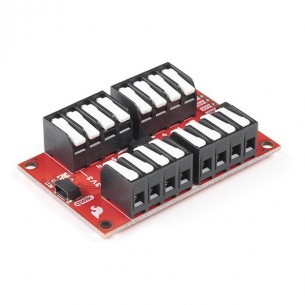
Module with an IO pin expander based on the TCA9534 system. It allows you to add 8 GPIO pins to an I2C-controlled project. SparkFun DEV-17047
No product available!
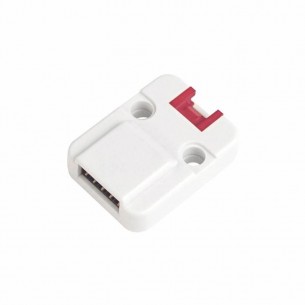
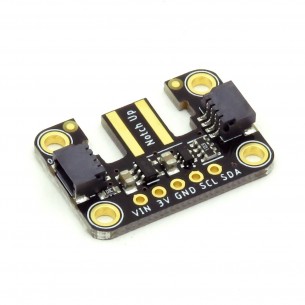
IO port expander for M5Stack kits. Equipped with 8 IO pins and power pins, it communicates via the I2C interface. M5Stack U011-B
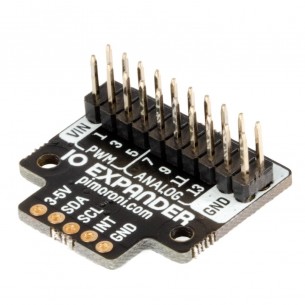
Module with IO expander equipped with 14 inputs/outputs, including 8 connected to the ADC converter and 6 to PWM outputs. It communicates via the I2C interface and is compatible with the Raspberry Pi. Pimoroni PIM517
The KAmodPCAL6408 is an 8-bit I/O expander with the PCAL6408A chip by NXP, controlled by the I2C interface.
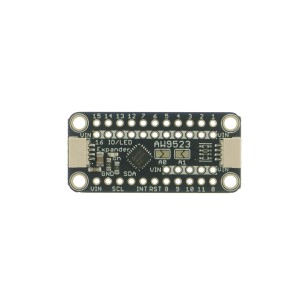
Module with a 16-channel GPIO expander with the ability to control LEDs. Equipped with a STEMMA QT connector, it communicates via the I2C interface. Adafruit 4886
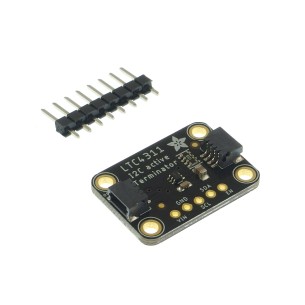
I2C bus amplifier module based on the LTC4311 system. It enables communication via a popular interface over much longer distances while maintaining high transmission speeds. Adafruit 4756
Adapter dedicated to the Nintendo Wii Nunchuck. It allows you to connect the controller to the development board via the I2C interface. Adafruit 4836
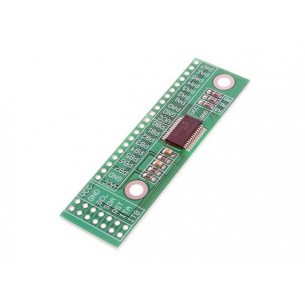
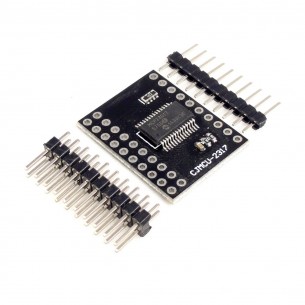
Module with 16-channel I/O ports expander controlled by the I2C interface. It was based on the MCP23017 chip
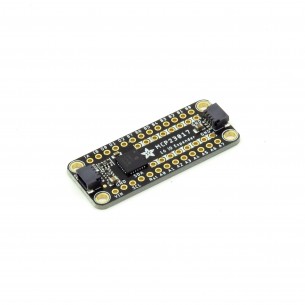
Module with 16-channel IO expander MCP23017 controlled by the I2C interface. Equipped with a STEMMA QT connector. Adafruit 5346
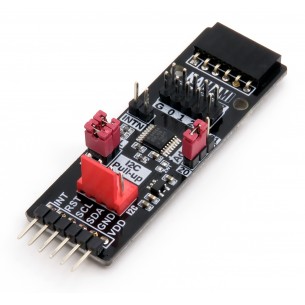
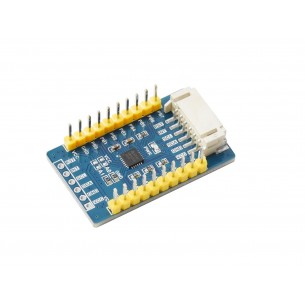
Module with a 16-channel GPIO expander with the ability to control LEDs. It communicates via the I2C interface. Waveshare AW9523B IO Expansion Board
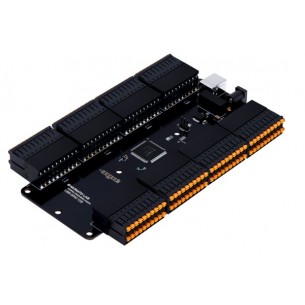
128-channel IO expander with 32 analog inputs. It communicates via the USB interface. Numato Lab GP1280001
No product available!
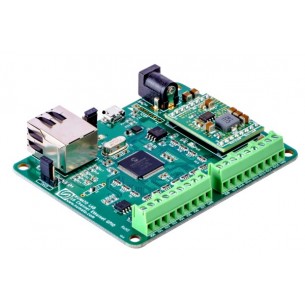
16-channel IO expander with 10 analog inputs. The board communicates via the Ethernet interface. Numato Lab GPETH160001
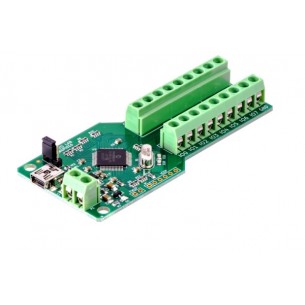
16-channel IO expander with 7 analog inputs. It communicates via the USB interface. Numato Lab GP160001
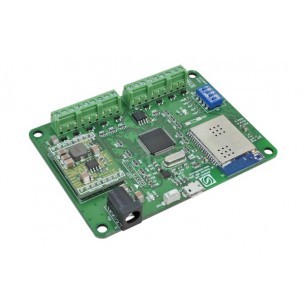
16-channel IO expander with 14 analog inputs. Communicates via the WiFi wireless interface. Numato Lab GPWIFI160001
No product available!
KAmod Multiplexer features the CD4051 chip, which is an analog 8-channel multiplexer/demultiplexer. The chip can handle analog signals with an amplitude of up to 20 VPP and provides low on-state resistance. The active channel is selected through a sequence of states on three digital inputs