


zł11.56 tax excl.
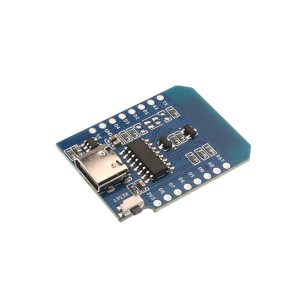
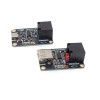
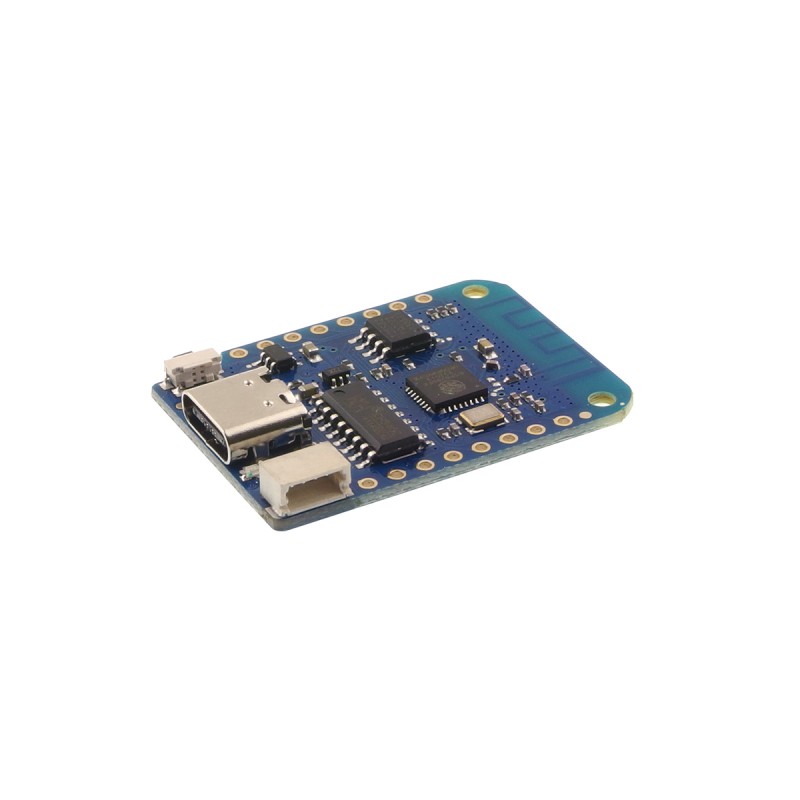
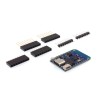
The module is based on the ESP8266EX chip. Thanks to the support of the 802.11 b/g/n standard, it enables wireless communication with WiFi networks, which allows for Internet access and data exchange. It is programmed via the USB Type-C connector using Arduino, MicroPython or NodeMCU. WeMos D1 Mini Type-C
Wemos D1 Mini is a module based on the ESP8266EX chip. Thanks to the support of the 802.11 b/g/n standard, it enables wireless communication with WiFi networks, which allows for Internet access and data exchange. In addition, support for Wi-Fi Direct (P2P) and Soft AP enables direct communication between devices and the creation of an access point. The ESP8266EX is equipped with a low-power 32-bit processor that can be used as an application processor. It also has 4 MB Flash memory.
The interface includes 11 digital I/O pins and an analog input to connect various sensors, I/O devices, and other components. The module uses the CH340G USB-UART converter, which allows easy connection to a computer via a USB cable. Wemos D1 Mini is compatible with development platforms such as Arduino, MicroPython and NodeMCU. It can be powered via the USB type C connector. It offers a wide range of possibilities, and thanks to its functions and compatibility with popular development platforms, it is an ideal tool for creating projects related to IoT and wireless communication.
Manufacturer BTC Korporacja sp. z o. o. Lwowska 5 05-120 Legionowo Poland sprzedaz@kamami.pl 22 767 36 20
Responsible person BTC Korporacja sp. z o. o. Lwowska 5 05-120 Legionowo Poland sprzedaz@kamami.pl 22 767 36 20
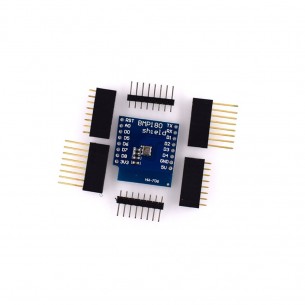
BMP180 temperature / pressure sensor module compatible with WeMos D1 mini board.
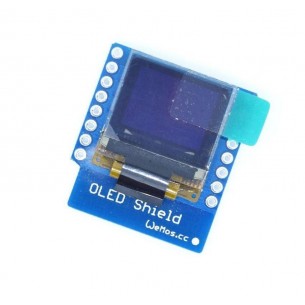
Module with 0.66 "OLED display with 64x48 resolution for D1 Mini PCB with I2C interface. WeMos OLED Shield
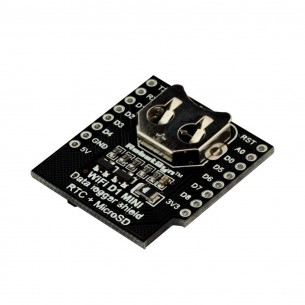
RTC DS1307 real-time clock module and MicroSD card slot for the WeMos D1 Mini.
No product available!
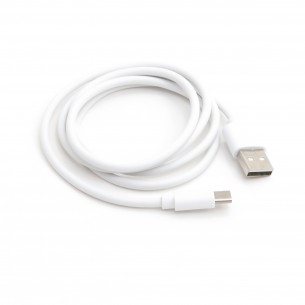
Cable with USB type A and USB type C plugs, length 1m, white
No product available!
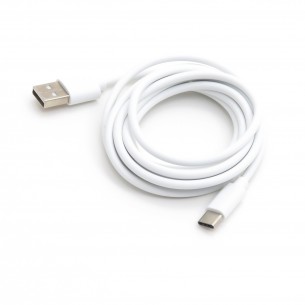
Cable with USB type A and USB type C plugs, length 2m, white
No product available!
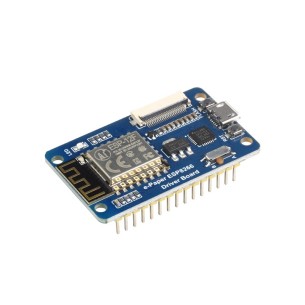
E-Paper ESP8266 Driver Board is a universal driver board for e-Paper displays. The board is based on the WiFi ESP8266 module. e-Paper ESP8266 Driver Board
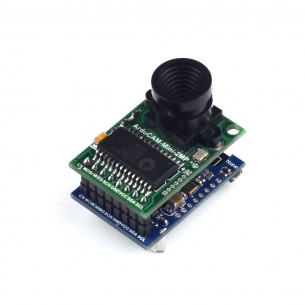
Evaluation set designed for the use of Internet of Things based on ArduCAM-Mini-2MP and ArduCAM-ESP8266-Nano-V2 modules. ArduCAM-Mini-2MP is a module with a 2 megapixel camera with an OV2640 transducer and an ESP8266 chip. Mounting the M12 lens. ArduCAM B0085
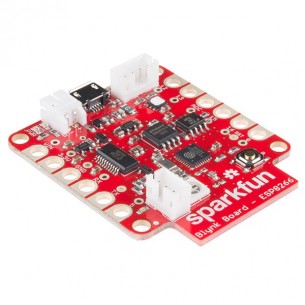
Easy to use app builder that allows users to add a variety of buttons, sliders, graphical displays and even RGB controllers to their phone. The SparkFun Blynk Board is specially designed to work with the ‘widgets’ within the Blynk mobile app to create your next IoT project. WRL-13794
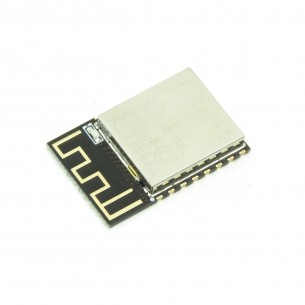
WiFi module developed by AI-Thinker Co., Ltd with ESP8266 processor. Integrates a 32-bit MCU microcontroller with 80 MHz clock, RTOS support, Wi-Fi and antenna. The module supports the IEEE802.11 b / g / ni standard and has a complete TCP / IP protocol stack. AI-Thinker ESP-12S
BMP180 temperature / pressure sensor module compatible with WeMos D1 mini board.
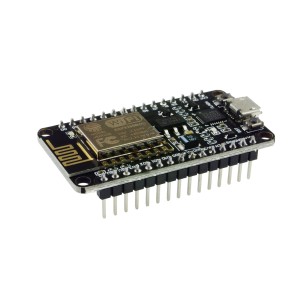
WiFi module based on ESP8266. The module has a built-in antenna and USB-UART converter. The module can be programmed in Lua (under the control of the NodeMCU firmware) or in the Arduino environment. 10 GPIO lines are available which each can be configured to work as PWM, I2C.
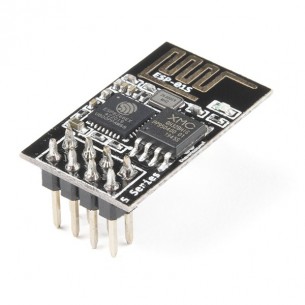
WiFi 802.11 b/g/n module with ESP8266 chip, there are 8 pins with UART and GPIO interface. Built-in PCB antenna. SparkFun WRL-17146
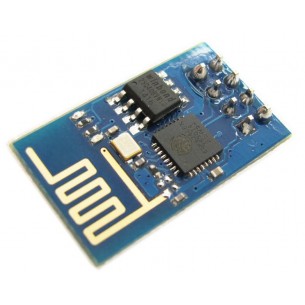
WiFI 802.11 b/g/n module. Equipment includes, among others: LED diode, antenna, 8 pins with 2.54mm pitch (including 3 GPIO lines). Power supply: 3.3V.
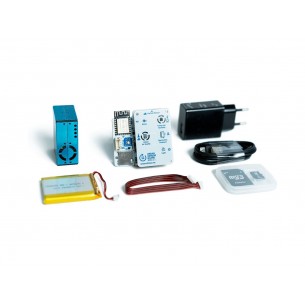
A set with environmental sensors that allows you to measure air pollution and noise and visualize data on a dedicated platform. Seeed Studio 102110258
No product available!
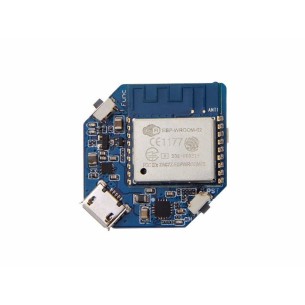
This ESP8266-based development board is designed for rapid IoT application development. It features support for two Grove Plug-n-Play connectors, digital and analog I/O, and UART and I2C interfaces for connecting multiple sensors and modules. The device supports OTA firmware updates, a RESTful API, and integration with mobile apps and IFTTT, allowing for easy remote control and monitoring. Seeed Studio 102110057
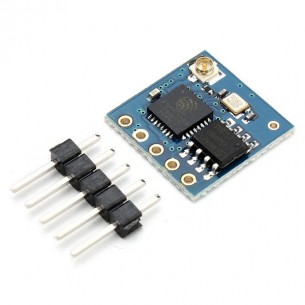
Wi-Fi module based on the ESP8266 system - simplicity of use (communication through UART, supports AT commands), 3.3V power supply, support for WPA / WPA2 encryption - these features make the EPS8266 module applicable anywhere, where reliable and effective data transmission. The module is not equipped with an antenna, it should be attached using the U.FL connector. ESP-05
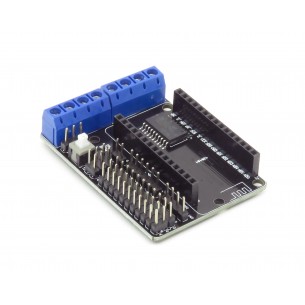
The base board for the Wi-Fi NodeMCU module (ESP-12E), thanks to the built-in L293DD system, allows for attaching e.g. motors, electromagnets or other executive devices. The I/O lines of the NodeMCU module were derived to the pin connectors, and the power supply can be connected with the use of screw connectors. ESP12E Motor Shield
ESP8684-DEVKITC-02C-N4 is a development board with the ESP8684 module, 4 MB Flash, Wi-Fi, and Bluetooth LE support, perfect for IoT and automation projects. Espressif ESP8684-DEVKITC-02C-N4
The module is based on the ESP8266MOD chip. Thanks to the support of the 802.11 b/g/n standard, it enables wireless communication with WiFi networks, which allows for Internet access and data exchange. WeMos D1 Mini Type-C
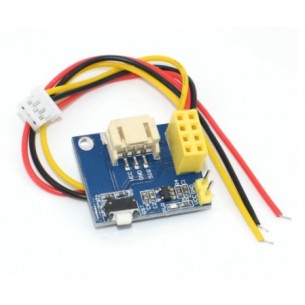
Adapter for ESP8266 modules dedicated to control addressable RGB LEDs from the WS2812 series
No product available!
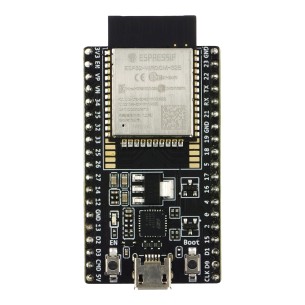
ESP32-DevKitC-32E is a development kit based on the ESP32 module, supporting WiFi 802.11 b/g/n and Bluetooth, ideal for IoT and home automation projects. The integrated dual-core Tensilica LX6 microcontroller offers high computing power and support for many interfaces, and thanks to compatibility with the Espressif SDK and the Arduino and MicroPython platforms, programming is quick and easy.
The module is based on the ESP8266EX chip. Thanks to the support of the 802.11 b/g/n standard, it enables wireless communication with WiFi networks, which allows for Internet access and data exchange. It is programmed via the USB Type-C connector using Arduino, MicroPython or NodeMCU. WeMos D1 Mini Type-C