.png)



zł53.83 tax excl.
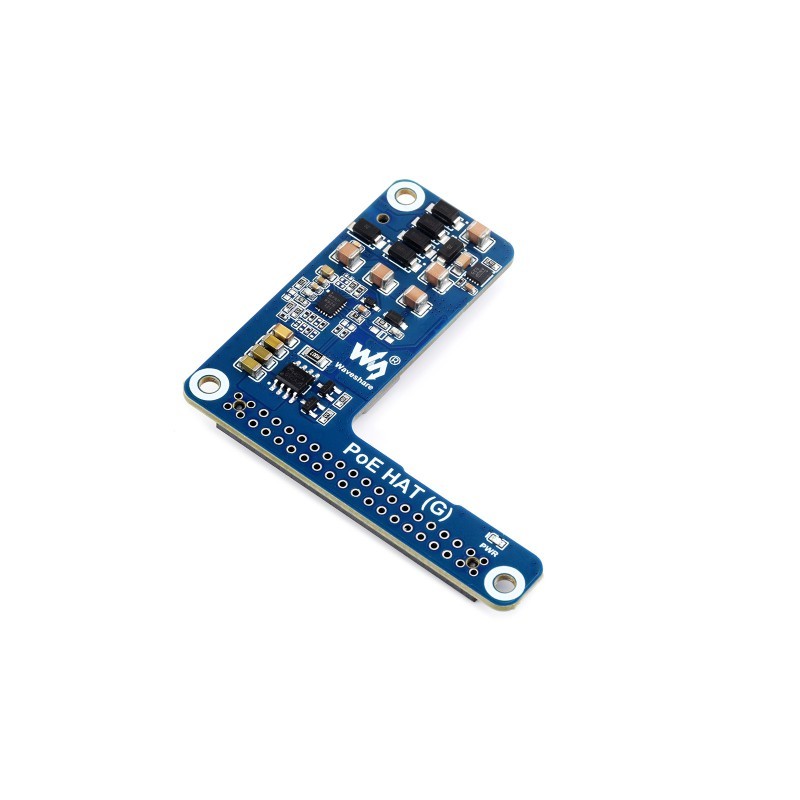
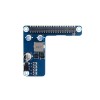
PoE HAT (G) allows Raspberry Pi 5 to be powered without the need for an additional power cable, using only an Ethernet cable compatible with Power over Ethernet technology. With high output power and a compact design, the HAT is ideal for projects requiring stability, space efficiency, and clean integration—especially when used with the official Raspberry Pi 5 case.
PoE HAT (G) is a compact add-on board that enables both power supply to the Raspberry Pi 5 and data transmission over a single Ethernet cable. Compliant with the IEEE 802.3af/at networking standard, the module accepts an input voltage of 38–57 V DC and provides stable 5 V / 5 A output directly via the GPIO header. Featuring an original controller and a non-isolated switching regulator (SMPS), the HAT offers high efficiency and reliable performance. Its design is tailored for compatibility with the official Raspberry Pi 5 case, allowing for easy installation and integration with active cooling.
Data sheet
Manufacturer
Responsible person
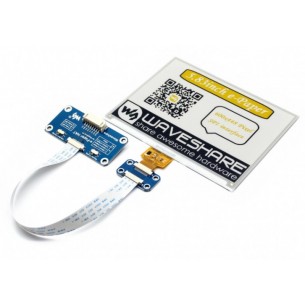
Module with e-Paper display, 5.83" diagonal and 600x448 px resolution. Communication via SPI interface. Waveshare 5.83inch e-Paper HAT (C)
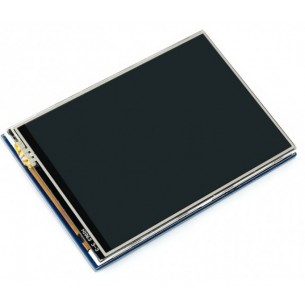
3.5" LCD IPS display with touch screen. The display is equipped with an SPI interface for image display and touch screen operation. Resolution 480x320 pixels. Waveshare 3.5inch RPi LCD (B)
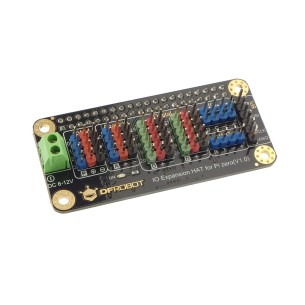
The DFRobot IO Expansion HAT module provides additional digital, analog, I2C, PWM, UART and SPI outputs. Thanks to its small size, it fits perfectly with Raspberry Pi Zero and Zero W. DFRobot DFR0604
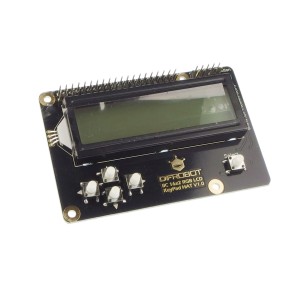
16x2 LCD display module with RGB backlight and control keyboard. Communicates via the I2C interface. It has a connector compatible with Raspberry Pi 4 model B and Raspberry Pi 3 model B+. DFRobot DFR0514
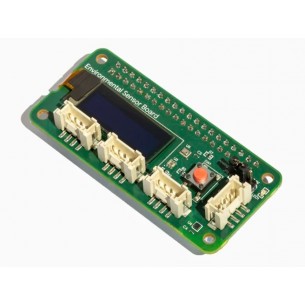
Add-on board (also known as a pHAT or bonnet) that adds sensing capabilities to your Coral Dev Board or Raspberry Pi projects. The board provides atmospheric data such as light level, barometric pressure, temperature, and humidity. Coral Environmental Sensor Board
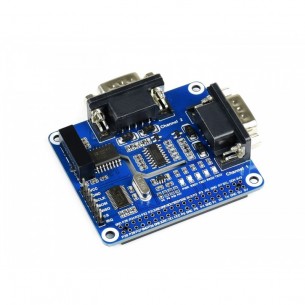
HAT designed for Raspberry Pi minicomputers with a two-channel RS232 converter. Communication is realized via the SPI interface. The overlay uses a standard 40-pin Raspberry Pi connector. Waveshare 2-CH RS232 HAT
No product available!
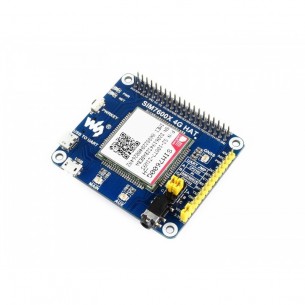
4G/3G/2G communication module and GNSS positioning. It allows making phone calls, SMS, MMS, mail, TCP, UDP, DTMF, HTTP, FTP support and GPS, BeiDou, Glonass, LBS support. Waveshare SIM7600G-H 4G HAT
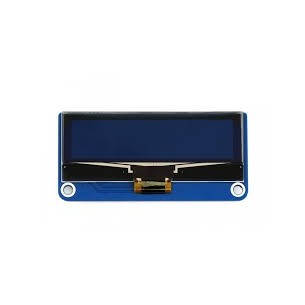
2.23" OLED display overlay designed for Raspberry Pi minicomputers. Module based on SSD1305 driver, communicates via SPI or I2C interface. Waveshare 2.23inch OLED HAT
HAT designed for Raspberry Pi minicomputers with a two-channel RS485 converter. Communication is realized via the SPI interface. The overlay uses a standard 40-pin Raspberry Pi connector. Waveshare 2-CH RS485 HAT
HAT with 2-channel CAN converter designed for Raspberry Pi minicomputers. The communication was based on the CAN controller MCP2518FD as well as the MCP2562FD transceiver and SPI interface. Waveshare 2-CH CAN FD HAT
No product available!
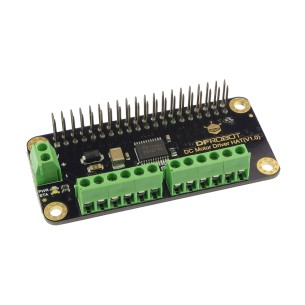
DFRobot 0592 is a Raspberry Pi DC motor driver board with built-in encoder interface that can drive a 2-way DC motor and a DC motor with encoder
Expansion HAT from Waveshare is equipped with an I2C interface, 2-channel UART and 8 GPIO, which increase the functionality and capabilities of Raspberry Pi projects
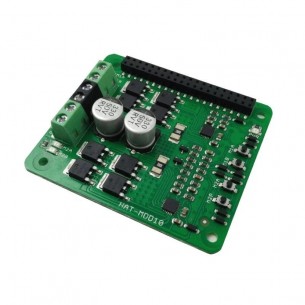
HAT with two-channel DC motor driver for Raspberry Pi. It has an operating voltage from 6 to 24 V and a continuous current of up to 10 A. It can be controlled by a PWM signal or by means of built-in buttons. Cytron HAT-MDD10
No product available!
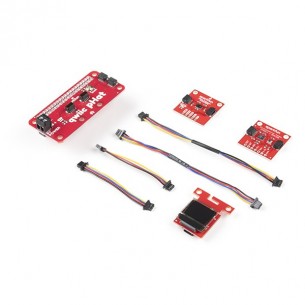
Starter kit with Qwiic modules designed to work with the Raspberry Pi. The set consists of an overlay for Raspberry Pi with a standard 40-pin connector and four Qwiic connectors, OLED display, VCNL4040 distance sensor and environmental sensors. SparkFun KIT-16841
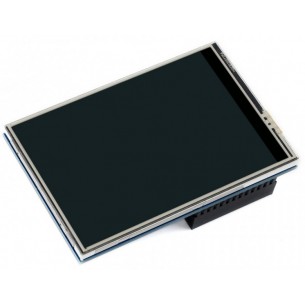
3.5" LCD TFT display with touch screen. The display is equipped with an SPI interface for image display and touch screen operation. Resolution 480x320 pixels. Waveshare 3.5inch RPi LCD (C)
No product available!
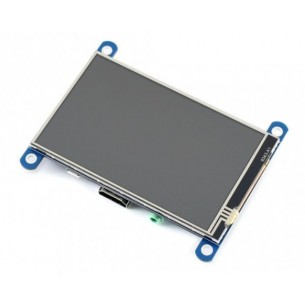
4" LCD IPS display with touch screen. The display is equipped with HDMI interface for image display and SPI for touch screen. Resolution 800x480 pixels. Waveshare 4inch HDMI LCD (H)
PoE HAT (G) allows Raspberry Pi 5 to be powered without the need for an additional power cable, using only an Ethernet cable compatible with Power over Ethernet technology. With high output power and a compact design, the HAT is ideal for projects requiring stability, space efficiency, and clean integration—especially when used with the official Raspberry Pi 5 case.