.png)




zł27.88 tax excl.
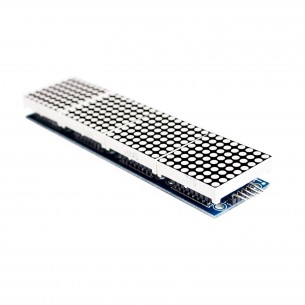
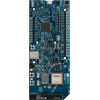
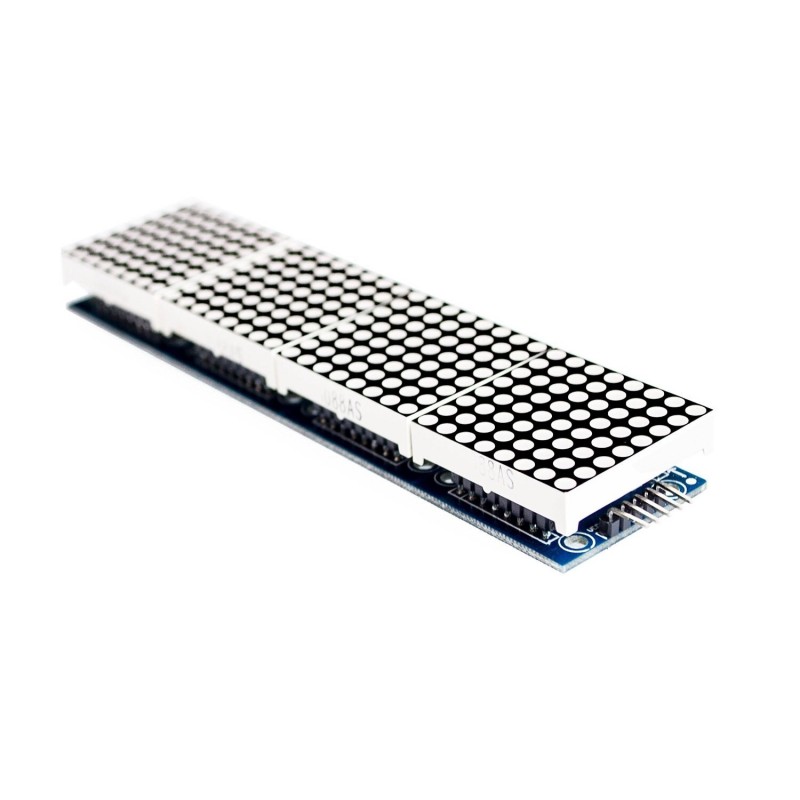
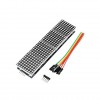
Module of four integrated 8x8 LED (color red) matrixes based on the MAX7219 controller. Module controlled by the SPI interface.
Module of four integrated 8x8 LED (color red) matrixes based on the MAX7219 controller. Module controlled by the SPI interface. Diodes in modules connected by a common cathode. Module compatible with Arduino boards .
Description of exits:
Data sheet
Manufacturer
Responsible person
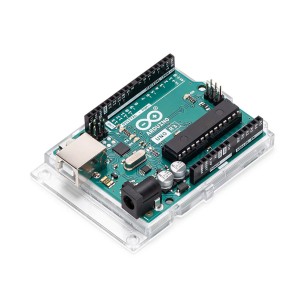
Arduino Uno Rev3 is a popular board with Atmel ATmega328 microcontroller from the AVR family, there are 14 I / O lines, 6 PWM channels and 6 analog inputs. The additional ATmega16U4 microcontroller realizes communication via the USB interface. Arduino A000066
No product available!
Adafruit 1487
No product available!
No product available!
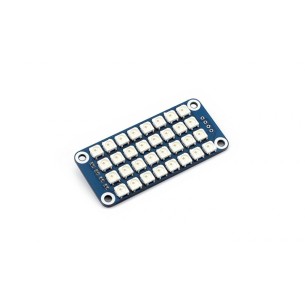
RGB LED WS2812B 8 x 4 matrix module for Raspberry Pi, one signal pin, additional power connector, direct RPI computer overlay. Waveshare RGB LED HAT
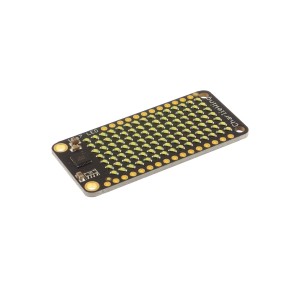
IS31FL3731 LED Matrix Opto Feather Platform Evaluation Expansion Board. COOL WHITE matrix. Adafruit 3138
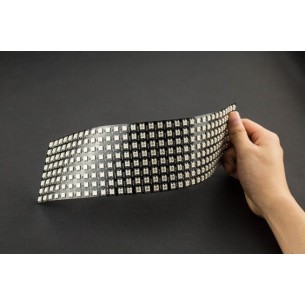
Flexible 8x32 RGB LED matrix module. The set uses addressable SK6812/WS2812B diodes. DFRobot DFR0462
No product available!
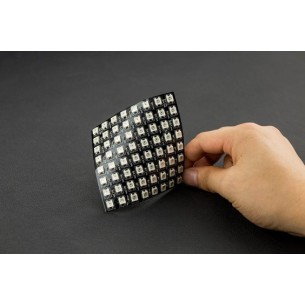
Flexible 8x8 RGB LED matrix module. The set uses addressable SK6812/WS2812B diodes. DFRobot DFR0461
No product available!
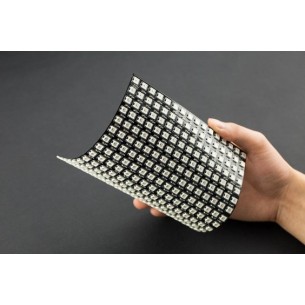
Flexible 16x16 RGB LED matrix module. The set uses addressable SK6812/WS2812B diodes. DFRobot DFR0463
No product available!
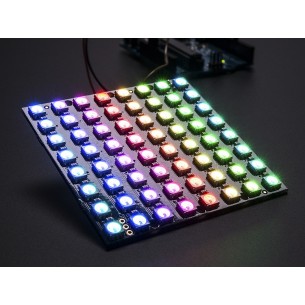
This is the tiniest little LED grid, with 64 full RGB color pixels in a square. For use with Arduino and Raspberry Pi. Adafruit 3444
No product available!
RGB LED matrix display with a resolution of 32 x 16 (512 LED). DFRobot DFR0471
Beam is a beginner-friendly PCB with 120 LEDs arranged in a 5x24 grid, a great size to display text or animations in your project. Plug in one to four to create a long blinky display that can be controlled by any 3-5V microcontroller or microcomputer (e.g. Arduino, Raspberry Pi, Particle, and more). Adafruit 3668
RGB LED WS2812B 8 x 4 matrix module for Raspberry Pi, one signal pin, additional power connector, direct RPI computer overlay. Waveshare RGB LED HAT
32 x 64 RGB LED display module (2048 LEDs). Refresh rate 1:16. It has two IDC connectors, which allows you to connect multiple displays in series. SparkFun COM-14718
Module of four integrated 8x8 LED (color red) matrixes based on the MAX7219 controller. Module controlled by the SPI interface.
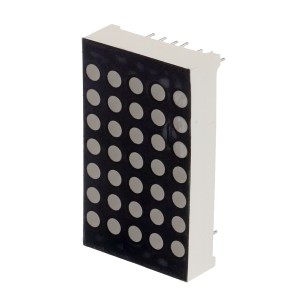
3 mm LED matrix. The matrix contains 35 LEDs (5x7 system) in red. Connection diodes are a common anode.
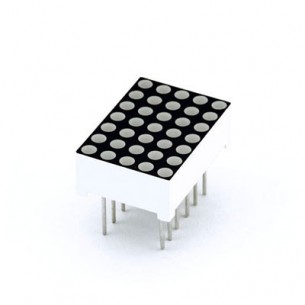
3 mm LED matrix. The matrix contains 35 LEDs (5x7 system) in red. The diodes are connected by a common cathode.
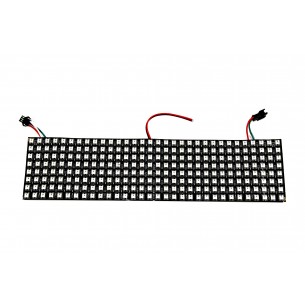
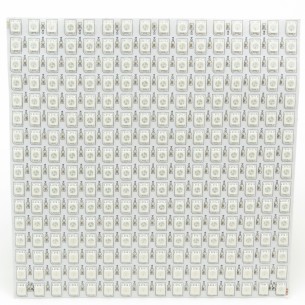
The Led 16x16 WS2812 matrix is made of flexible material on which RGB LEDs are arranged in the form of 16 rows and 16 columns, one microcontroller pin is enough to operate them. Each pixel can emit color from a 24-bit palette.
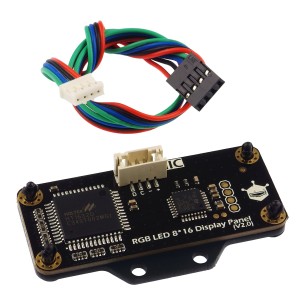
8x16 LED matrix equipped with colored LEDs and a driver. It is powered by 5 V and communicates via the I2C interface (Gravity connector). DFRobot DFR0522
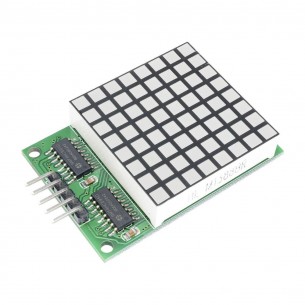
8x8 pixel LED matrix display with red LEDs. The module is equipped with the 74HC595 controller and communicates via the I2C interface
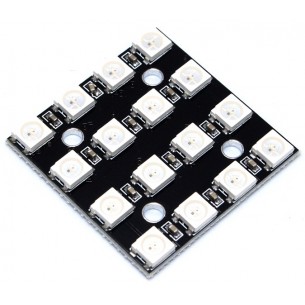
Matrix with 16 WS2812B RGB diodes controlled by a serial signal. The module can be powered with 5V, only one signal line is required for control
Module of four integrated 8x8 LED (color red) matrixes based on the MAX7219 controller. Module controlled by the SPI interface.