.png)



zł48.05 tax excl.
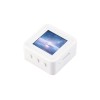
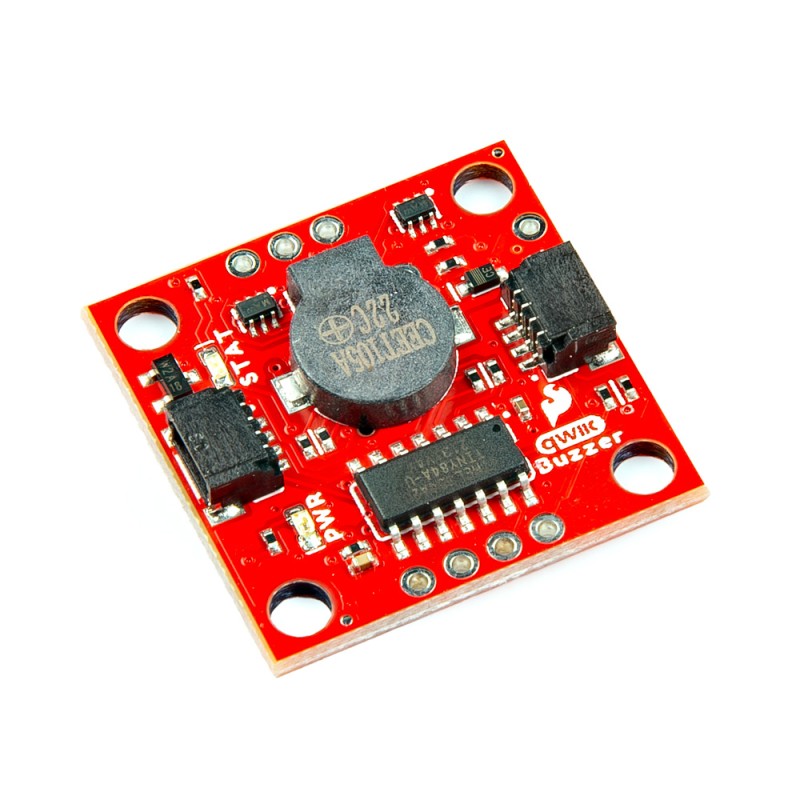
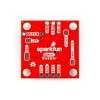
Sound module supported by I2C interface, which allows to generate sound signals in simple projects thanks to Qwiic system and ATtiny84 microcontroller. With support of Arduino libraries, users can control volume, frequency and duration of sound, which makes it ideal for applications such as alarms or signals in robots. SparkFun BOB-24474
The SparkFun Qwiic Buzzer is a module designed to easily add simple sound signals to projects using an I2C interface. Just connect a Qwiic cable and load your code onto an Arduino to generate sound signals. The module features an ATtiny84 microcontroller to control the buzzer, and the Qwiic system, which eliminates the need for soldering. Transistors control the volume, and at full power, the buzzer draws up to 95 mA of current. The Arduino library allows control of volume, frequency, sound duration, and even I2C address. The module is easily integrated into projects using Arduino or Python, and can also be triggered by grounding a pin. It's an excellent solution for alarms, sound signals in robots, and other projects.
Manufacturer
Responsible person
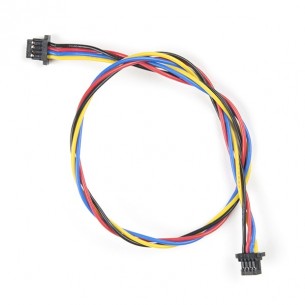
Flexible 4-core cable, 200 mm long, terminated on both sides with a Qwiic plug. Sparkfun PRT-17258
No product available!
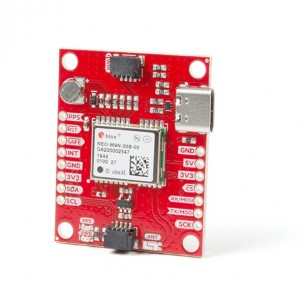
GPS module with NEO-M9N 92-channel GNSS receiver. The system can receive data from all major positioning systems: GPS, GLONASS, Galileo and BeiDou. It has UART, I2C and SPI interfaces. SparkFun GPS-15733
No product available!
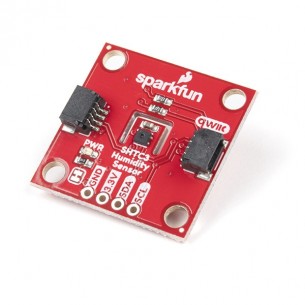
Module with a digital temperature and humidity sensor based on the SHTC3 system. Communication takes place via the I2C interface. SparkFun SEN-16467
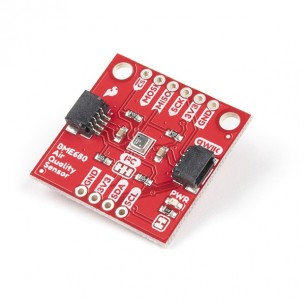
Module with BME680 sensor for measuring environmental conditions such as concentration of volatile organic compounds (VOC), atmospheric pressure, temperature and humidity. I2C or SPI communication. SparkFun SEN-16466
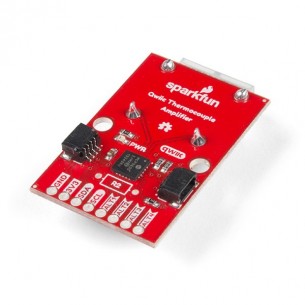
Module with the MCP9600 amplifier designed to work with a K-type thermocouple. The module has a PCC connector for connecting this type of thermocouple. I2C communication. SparkFun SEN-16294
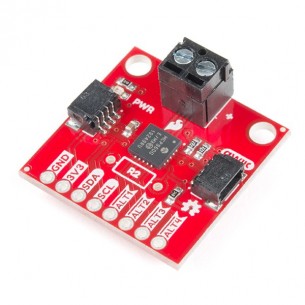
Module with the MCP9600 amplifier designed to work with a K-type thermocouple. The module has a screw connector for connecting this type of thermocouple. I2C communication. SparkFun SEN-16295
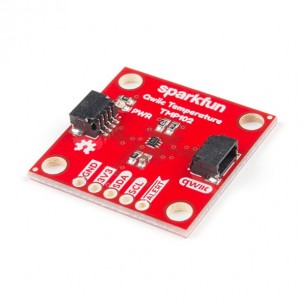
Module with digital temperature sensor TMP102. It enables temperature measurement in the range from –40°C to 125°C with an accuracy of 0.5°C. The system communicates via the I2C interface. SparkFun SEN-16304
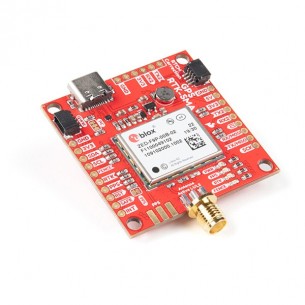
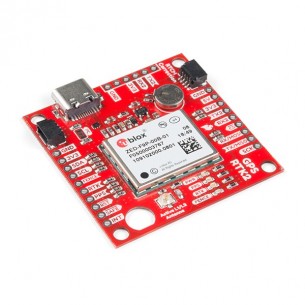
GPS module with GNSS receiver ZED-F9P. It can receive data from GPS, GLONASS, Galileo and BeiDou systems. It has USB, UART, I2C and SPI interfaces. RTK and high accuracy up to 10 mm. SparkFun GPS-16481
No product available!
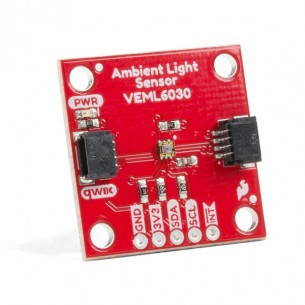
Module with an ambient light sensor VEML6030 with a measuring range up to 120,000 lx. It enables light measurement with 16-bit resolution. I2C communication. SparkFun SEN-15436
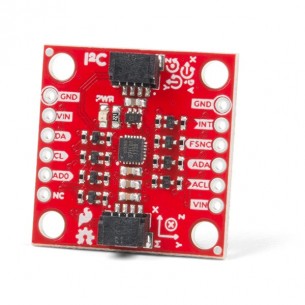
Module with 9-axis IMU ICM-20948 sensor. The chip is an integrated 3-axis accelerometer, gyroscope and magnetometer and a digital motion processor DMP (Digital Motion Processor). Communication via I2C or SPI. SparkFun SEN-15335
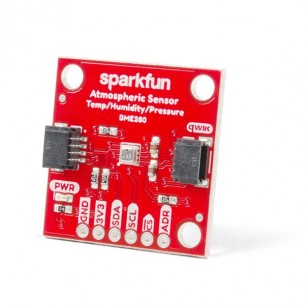
Module with BME280 environmental sensor. It allows you to measure temperature, humidity and pressure. The sensor is equipped with two communication interfaces: SPI and I2C (Qwiic). SparkFun SEN-15440
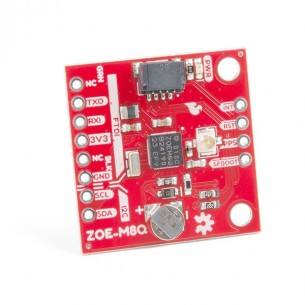
GPS module with 72-channel GNSS ZOE-M8Q receiver. The system can receive data from all major positioning systems: GPS, GLONASS, Galileo and BeiDou. It has UART and I2C interfaces. SparkFun GPS-15193
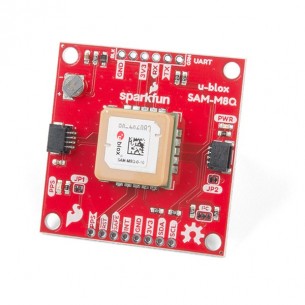
GPS module with 72-channel GNSS SAM-M8Q receiver. The system can receive data from all major positioning systems: GPS, GLONASS, Galileo and BeiDou. It has UART and I2C interfaces. SparkFun GPS-15210
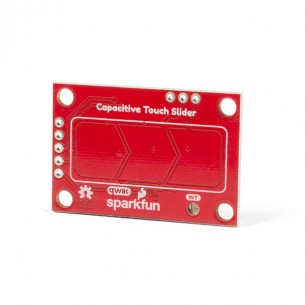
Module with a capacitive touch sensor based on the CAP1203 chip. There are three touch panels on the board that can be used as separate sensors (pins CS1, CS2, CS3) or as a touch slider. I2C communication. SparkFun SEN-15344
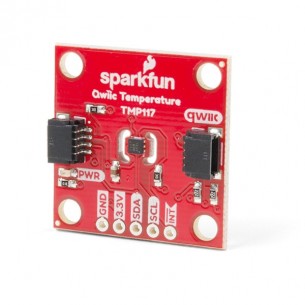
Module with digital temperature sensor TMP117. It enables temperature measurement in the range from –55°C to 150°C with very high accuracy up to ± 0.1°C. The system communicates via the I2C interface. SparkFun SEN-15805
GPS module with GNSS receiver ZED-F9P. It can receive data from GPS, GLONASS, Galileo and BeiDou systems. It has USB, UART, I2C and SPI interfaces. RTK and high accuracy up to 10 mm. SparkFun GPS-15136
No product available!
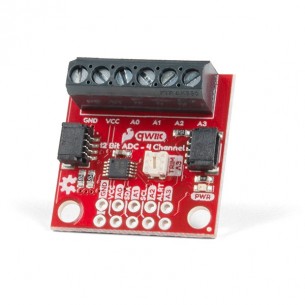
Module with 4-channel ADC ADS1015 converter. The system enables analog voltage conversion for both single signals (11-bit resolution) and differential signals (12-bit resolution). I2C communication. SparkFun DEV-15334
Sound module supported by I2C interface, which allows to generate sound signals in simple projects thanks to Qwiic system and ATtiny84 microcontroller. With support of Arduino libraries, users can control volume, frequency and duration of sound, which makes it ideal for applications such as alarms or signals in robots. SparkFun BOB-24474