


zł55.82 tax excl.
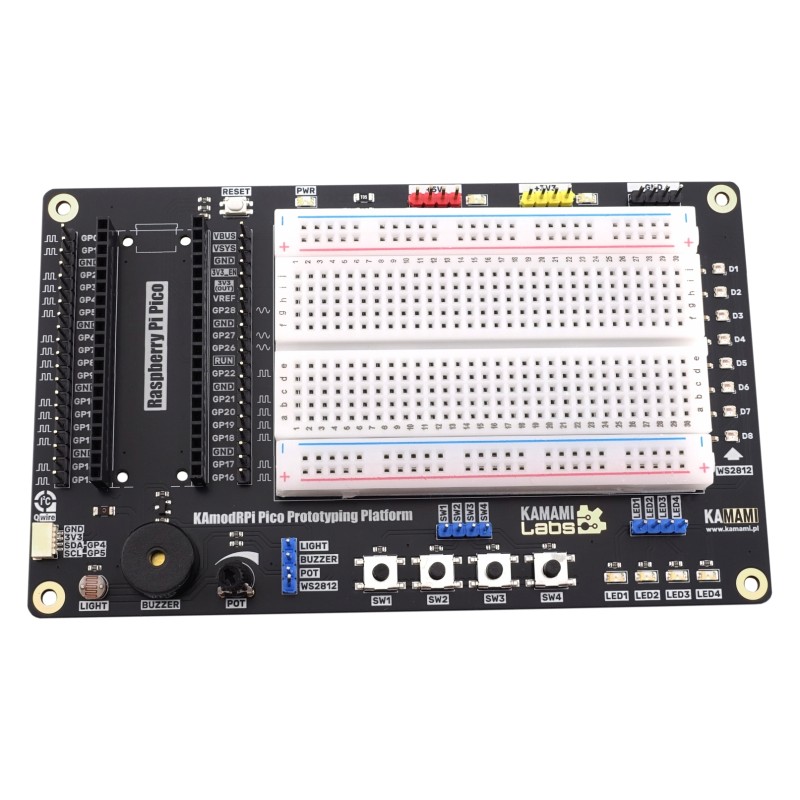
Prototyping platform for Raspberry Pi Pico, Pico W and Pico 2 with a 400-point breadboard, 4 LEDs, 8 addressable WS2812 LEDs, 4 push buttons, buzzer, potentiometer 0 - 3.3 V and photoresistor, featuring GPIO breakout on 2 x 20 pin headers and I2C Qwiic/STEMMA QT interface, dimensions 85 x 140 mm, designed for rapid prototyping and testing of electronic circuits, product page includes example test program for LED control with source code for Arduino IDE and MicroPython. KamamiLabs KAmodRPi Pico Prototyping Platform
Prototyping platform designed for use with Raspberry Pi Pico, Pico W and Pico 2 modules, integrating a breadboard and a set of basic input and output components. The layout supports fast development and testing of circuits without repeated manual wiring of fundamental elements, while all GPIO signals are routed to clearly labeled connectors. Built-in peripherals can be disconnected, allowing full reuse of microcontroller pins in custom applications.
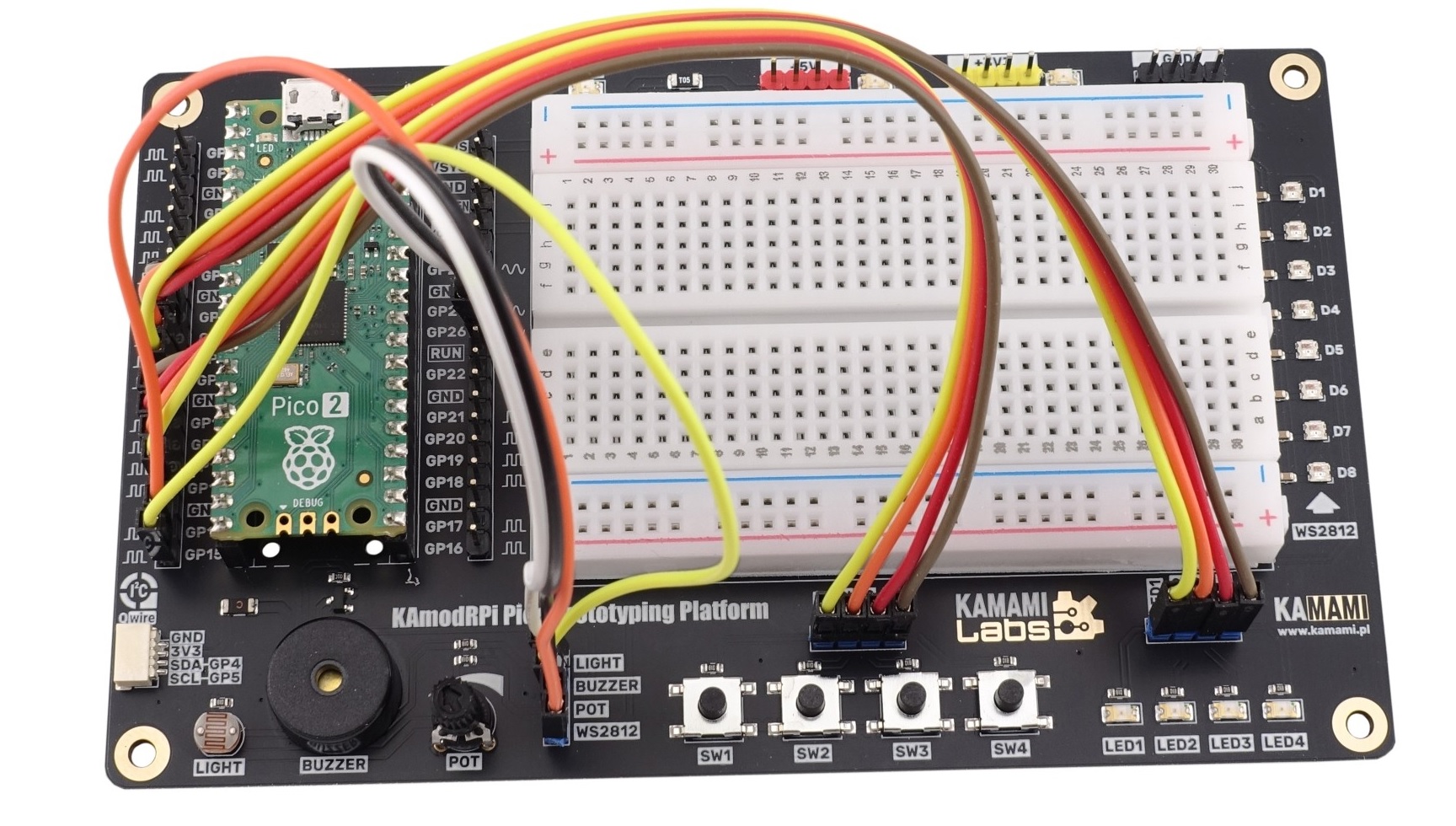
The board includes components required for typical embedded system tasks, such as push buttons, LEDs, addressable WS2812 RGB LEDs and a piezoelectric buzzer for sound generation. The analog section consists of a potentiometer with a range of 0 - 3.3 V and a photoresistor, enabling ADC testing and simulation of sensor signals. The I2C interface is available on a Qwire connector, enabling fast connection of external modules compatible with Qwiic and STEMMA QT standards.
Power is supplied from 5 V via the Raspberry Pi Pico USB port. The board includes status LEDs for power rails and polymer fuses protecting supply lines against overload and short circuit. A dedicated RESET button connected to the RUN pin enables quick restart of the program without disconnecting power, and the datasheet includes an example test program with source code for LED control.
Manufacturer BTC Korporacja sp. z o. o. Lwowska 5 05-120 Legionowo Poland sprzedaz@kamami.pl 22 767 36 20
Responsible person BTC Korporacja sp. z o. o. Lwowska 5 05-120 Legionowo Poland sprzedaz@kamami.pl 22 767 36 20
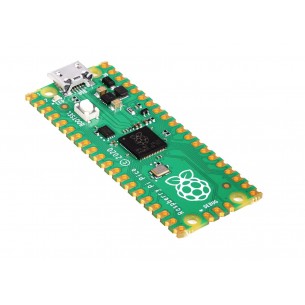
Module with the RP2040 microcontroller with two ARM Cortex-M0 + cores operating at 133 MHz, 256 kB RAM and 30 GPIO. The board also has 2 MB of external QSPI flash memory. Module can be programmed in C/C++ or microPython. Raspberry Pi Pico
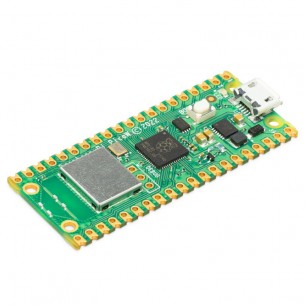
The board with the RP2040 microcontroller equipped with two ARM Cortex-M0 + cores operating at a frequency of 133 MHz, 264 kB RAM. The board also has 2 MB of QSPI flash memory. In addition, the board is equipped with the Infineon CYW43439 system, extending the board with wireless connectivity. Raspberry Pi SC0918
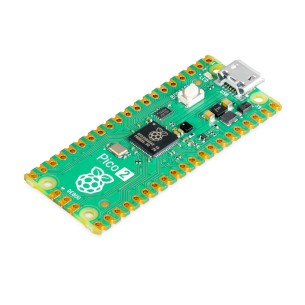
Raspberry Pi Pico 2, based on the RP2350 microcontroller, using the application and functional applications of the Cortex M33 and RISC-V cores, doubled SRAM memory and advanced security function, including Arm TrustZone. It is hardware and software with a connected model, which provides an attractive operation for enthusiasts and specialists in systems used
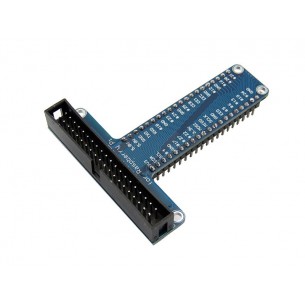
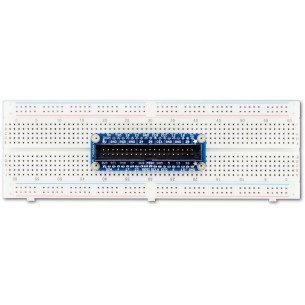
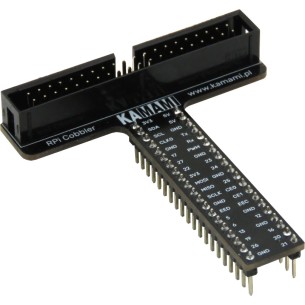
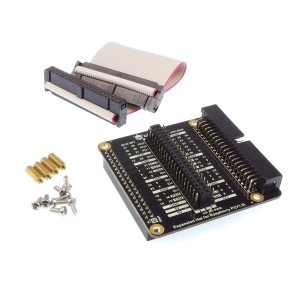
T-Cobbler adapter enabling connection of GPIO Raspberry Pi A +, B +, Pi 2 and Pi 3 lines to the contact plate (2.54 mm). Adapter assembled, including connecting tape
No product available!
The adapter allows for prototyping using the GPIO connectors of Raspberry computers, and thanks to the IDC 40-pin tape it is possible to securely and securely connect the adapter with the RPI output
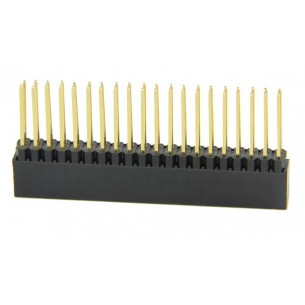
Pin strip straight in black, double-row, female with 2x20 layout, 2.54mm pitch and elongated legs (12mm). Thru-hole assembly (THT), often used to build GPIO modules for single board computers. PBD40S L
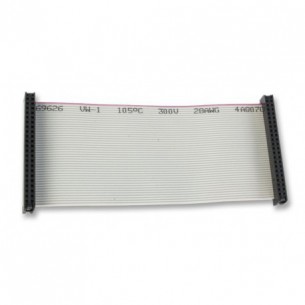
Connecting ribbon with a length of 15 cm (40 wires), terminated on both sides with 2x20 pin female connectors. The cable can be used to connect Raspberry Pi with prototyping accessories (eg T-Cobbler Plus)
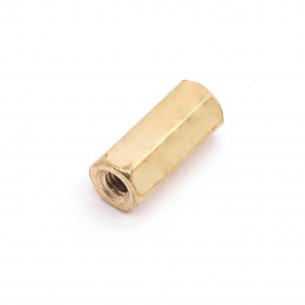
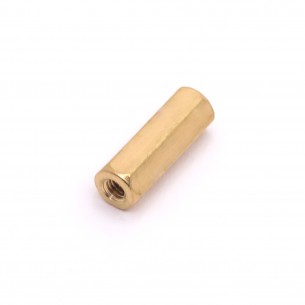
Threaded hexagon spacer M2,5, sleeve length 11mm, female-female. The sleeve is made of brass
No product available!
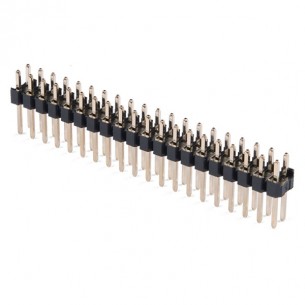
Pin header goldpin black 2x40 pins. Straight connector for through-hole assembly. 2.54mm pitch
No product available!
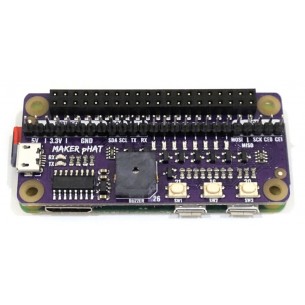
Overlay compatible with Raspberry Pi Zero, Zero W, Zero WH, 1A+, 3A+, 3B, 3B+, 4B. Includes LEDs, buttons, USB-UART converter (USB connector) and buzzer. Cytron Maker pHAT
Threaded hexagon spacer M2,5, sleeve length 14mm, female-female. The sleeve is made of brass
T-Cobbler adapter enabling connection of GPIO Raspberry Pi A +, B +, Pi 2, Pi 3, Pi 4 and Pi 5 lines to the breadboard (2.54 mm). Adapter assembled, included connecting tape
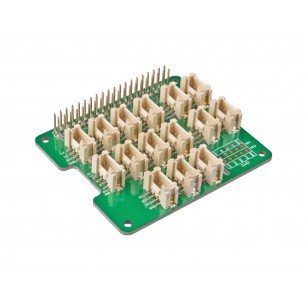
The expansion module is designed for Raspberry Pi minicomputers. It is equipped with connectors to which you can attach modules compatible with the Grove standard. Seeed Studio 103030275
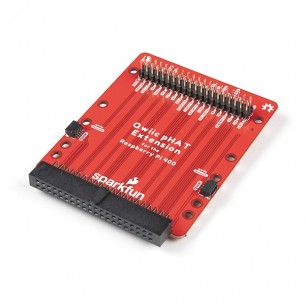
The expansion module is designed to work with Raspberry Pi 400 - a portable computer built into the keyboard. The board has a 40-pin connector in the pin position and two Qwiic connectors. SparkFun DEV-17512
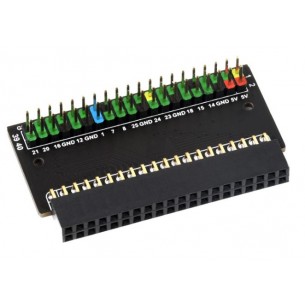
The expansion module is designed to work with a portable computer built into the Raspberry Pi 400 keyboard. The board has a 40-pin connector in a vertical position. Waveshare PI400-GPIO-ADAPTER-A
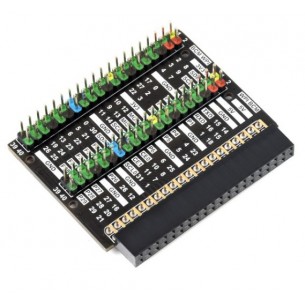
The expansion module is designed to work with a portable computer built into the Raspberry Pi 400 keyboard. The board has two 40-pin connector in a vertical position. Waveshare PI400-GPIO-ADAPTER-B
No product available!
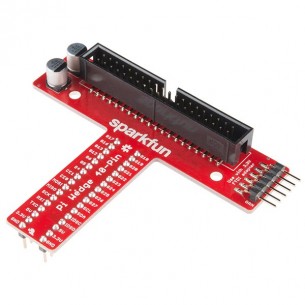
Adapter for connecting the GPIO line of the Raspberry Pi to the breadboard (2.54 mm). The set includes a connection tape. SparkFun BOB-13717
No product available!
The IO pin expansion module is designed for minicomputers Raspberry Pi 3, Raspberry Pi 4 and Raspberry Pi 400. It contains markings of all inputs and outputs of the minicomputer. DFRobot DFR0828
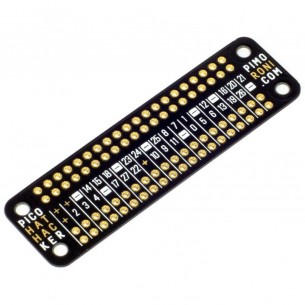
Mini pin expander designed for Raspberry Pi boards. It is equipped with a standard 40-pin connector for connecting a minicomputer and a set of 2x20-pin outputs for connecting expansion modules. Pimoroni PIM300
Prototyping platform for Raspberry Pi Pico, Pico W and Pico 2 with a 400-point breadboard, 4 LEDs, 8 addressable WS2812 LEDs, 4 push buttons, buzzer, potentiometer 0 - 3.3 V and photoresistor, featuring GPIO breakout on 2 x 20 pin headers and I2C Qwiic/STEMMA QT interface, dimensions 85 x 140 mm, designed for rapid prototyping and testing of electronic circuits, product page includes example test program for LED control with source code for Arduino IDE and MicroPython. KamamiLabs KAmodRPi Pico Prototyping Platform