.png)


- Out-of-Stock

Adam Bajera, Ryszard Kisiel
About the book
The script acquaints the reader with the principles of the organization of the manufacturing process, with the subject of design and construction of electronic devices and the construction of selected electronic components. Various techniques of assembly of modern electronic devices and systems as well as issues related to heat exchange in devices have been discussed.
Table of Contents
Preface
Admission
1. PROBLEMS OF CONSTRUCTION OF ELECTRONIC DEVICES
1.1. Industrial implementation process
1.2. Constructional characteristics of electronic devices
1.3. Functional and operational features of the EU
1.4. Main environmental exposures and their impact on devices, components and electronic components
1.5. Environmental research, climate category
1.6. Environmental exposure teams
2. RELIABILITY OF ELECTRONIC DEVICES
2.1. Definition and measures of reliability
2.2. Reliability of basic structures
2.3. Actual reliability characteristics
3. MODULAR APPLIANCES. CONCEPT OF MODULAR DIVISION AND LEVELS OF INSTALLATION
3.1. microcircuits
3.2. Basic modules
3.3. Block
3.4. Block team. Stands and wardrobes. System
3.5. Unification and normalization of structures
4. ELECTRICAL CONNECTIONS IN ELECTRONIC APPLIANCES
4.1. Cables, properties and basic types
4.2. Wiring and its structural solution
4.3. Connection of electronic components
5. BASIC MODULES
5.1. Features of modules
5.2. Factors determining the dimensions of the module
5.3. Assembly of electronic and electromechanical components
5.4. Module constructions
6. PRINTED CIRCUITS
6.1. Types of printed circuits
6.2. Ways of mounting printed circuits
6.3. Principles of designing printed circuits
7. COOLING OF ELECTRONIC DEVICES
7.1. Heat transfer in electronic devices
7.2. Methods for increasing the heat exchange intensity
8. BASIC TECHNICAL PARAMETERS OF SELECTED ELECTRONIC ELEMENTS
8.1. A normalized series of nominal values
8.2. Resistors
8.3. capacitors
8.4. Basic induction components
8.5. Semiconductor devices
9. EXAMPLE PROBLEMS FOR SOLUTION
Literature
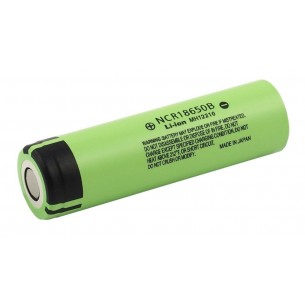
Li-Ion battery type 18650 with a nominal voltage of 3.7 V and a capacity of 3400 mAh. Panasonic NCR-18650B
No product available!
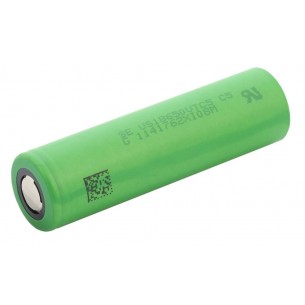
Li-Ion battery type 18650 with a nominal voltage of 3.6 V and a capacity of 2600 mAh. Sony/Murata US18650VTC5
No product available!
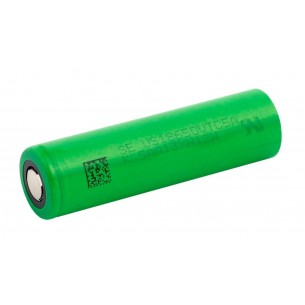
Li-Ion battery type 18650 with a nominal voltage of 3.6 V and a capacity of 2600 mAh. Sony/Murata US18650VTC5A
No product available!
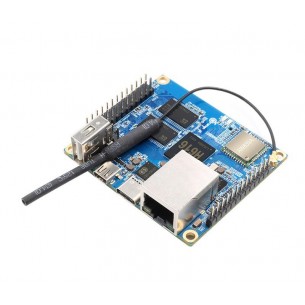
Minicomputer with Allwinner H616 Cortex-A53 quad-core processor. It is equipped with a Mali G31 MP2 GPU and 1 GB of RAM. The set provides WiFi communication and Bluetooth 5.0. Orange Pi Zero2
No product available!
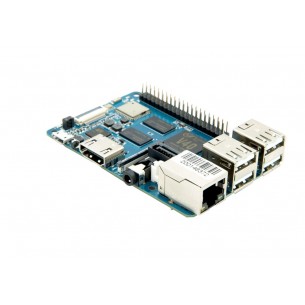
Minicomputer with 4-core Allwinner V40 ARM Cortex-A7 processor, Mali 400 MP2 GPU graphics card, 1 GB RAM, WiFi, BT 4.0 and numerous connectors. Banana Pi BPI-M2 Berry
No product available!
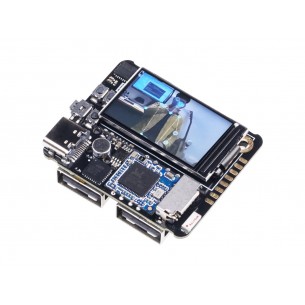
The kit is designed to work with Linux. It consists of the SoM (System on Module) Quark-N and the Atom-N expansion board. Seeed Studio 114992462
No product available!
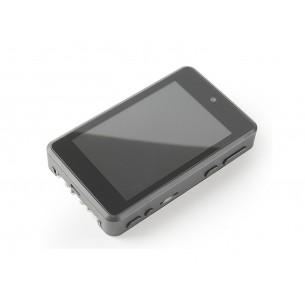
Development board equipped with an ESP32 module and a 3.5-inch color touch screen. Seeed Studio 102991454
No product available!
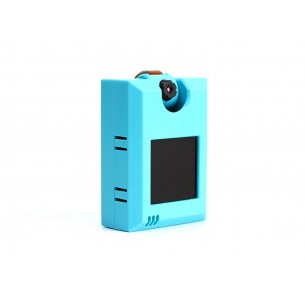
Evaluation kit with RISC-V Dual Core 64bit clocked at 400 MHz. Equipped with a camera, microphones, LCD display and microSD card slot. Everything is closed in a housing. Seeed Studio 102110425
No product available!
Evaluation kit with RISC-V Dual Core 64bit clocked at 400 MHz. Equipped with 2 cameras, microphone, LCD display and microSD card slot. Everything is closed in a housing. Seeed Studio 102110463
No product available!
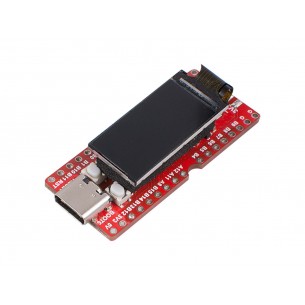
Development board based on GD32VF103CBT6 MCU with 32-bit RISC-V core. It is equipped with an IPS RGB LCD display with a diagonal of 0.96 inch 160x80 and a housing. Seeed Studio 102991302
No product available!
AI module with RISC-V Kendryte K210 chip, which can work with micro: bit, Arduino and Raspberry Pi. Equipped with a camera, microphone, speaker, IPS screen and Wi-Fi communication. Seeed Studio 101990646
No product available!
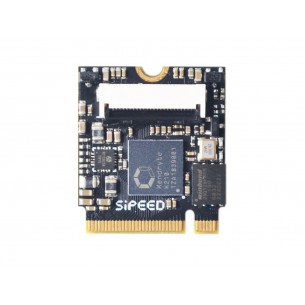
Evaluation kit with RISC-V Dual Core 64bit clocked at 400 MHz. Equipped with a camera and USB Type-C to M.2 adapter. Seeed Studio 102991335
No product available!
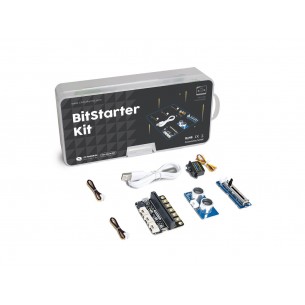
Starter kit for the micro:bit educational module. The kit includes an expansion module with Grove connectors, Grove modules and the necessary accessories. Seeed Studio 114991972
No product available!
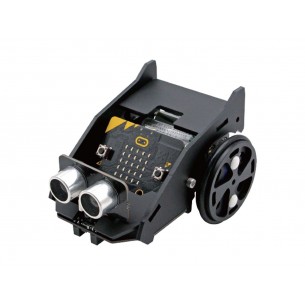
A set for building a remotely controlled vehicle based on the micro:bit educational module. Seeed Studio 114991884
No product available!
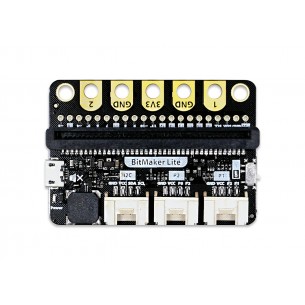
The expansion module with 3 Grove connectors for the micro:bit educational module. Seeed Studio 114991850
No product available!
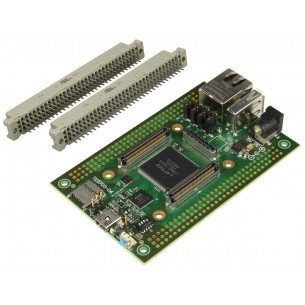
Base plate for Trenz Electronics modules 4 x 5 cm, eg for TE0741. The board allows connecting to the module interfaces: USB, Ethernet, JTAG, UART. TE0703-06
No product available!
Adam Bajera, Ryszard Kisiel