






- Out-of-Stock

.png)











Barry Wilkinson
| Author: Barry Wilkinson ISBN: 83-206-1327-2 Format: B5, 220 pages Publisher: WKiŁ |
| About the book (only in Polish) |
| The book is a concise, practical introduction to the design of digital logic circuits. It can be used by students of all specialties (not only electronics and computer science), students of electronic schools, as well as readers of secondary and higher education interested in the construction and operation of digital circuits. The book describes: basic logic gates, Boolean algebra, design of combinational circuits, flip-flops and counters, design of sequential circuits, programmable logic circuits, testing of logic circuits. Table of Contents: Preface Digital systems and information storage 1.1 Area of applications of digital systems 1.2. Representation of numbers in a digital system 1.2.1 Binary numbers 1.2.2 Number conversion 1.2.3 Hexadecimal and octal numbers 1.3 Basic arithmetic operations on binary numbers 1.3.1 Addition 1.3.2 Negative numbers and subtraction 1.3.3 Decimal numbers coded in binary 1.4. Representation of alphanumeric symbols 1.5 Example of a digital circuit 1.6 Summary 1.7 Tasks 1.8. Supplementary literature Logic gates 2.1 Logic signals 2.2 Basic logic functions 2.2.1. NOT gate 2.2.2 AND gate 2.2.3 OR gate 2.3 Boolean expressions 2.3.1 Identities and their use 2.3.2. Basic laws of algebra 2.3.3 Dualism 2.3.4 DeMorgan's law 2.4 Universal gates 2.4.1. NAND Gateway 2.4.2. NOR gate 2.5 Other types of goals 2.5.1. Exclusive gate-OR 2.5.2. Exclusive gate-NOR 2.5.3 Alternating functions 2.6 Construction of gates 2.6.1. Combination TTL logic circuits 2.6.2 MOS gateways 2.7 Summary 2.8 Tasks 2.9. Additional literature Designing combinational circuits 3.1 Combination systems 3.2. Implementation of Boolean expressions 3.2.1. Summation expressions 3.2.2. Product expressions 3.3 Alternative implementations 3.4 Simplifying logic circuits 3.4.1 Algebraic simplification of logical expressions 3.4.2 Karnaugh minimization method 3.5 Combined MSI logic circuits 3.5.1 Decoders and demultiplexers 3.5.2 Multiplexers 3.5.3 Arithmetic systems 3.6 Summary 3.7 Tasks 3.8. Additional literature Flip-flops and counters 4.1. Sequential systems 4.2 Memory systems built from gates 4.3 Flip-flops 4.3.1 SR selector 4.3.2 Type D latch 4.3.3 JK trigger 4.4 Registers 4.4.1 Shift registers 4.4.2. Applications of registers 4.5 Counters 4.5.1 Counters with JK triggers 4.5.2 Counters with D type latches 4.5.3. Conditions for the initialisation of digital systems 4.5.4 Binary counter back 4.5.5 Serial binary counters 4.6 Summary 4.7 Tasks 4.8. Additional literature Designing sequential circuits 5.1. Model of a synchronous sequential circuit 5.2. Designing synchronous sequential circuits 5.2.1 Design example 1-numerator with any code and two state sequences 5.2.2 Design example 2 - the sequence detector 5.2.3. Use of JK trigger devices 5.2.4. Arrangements according to the Mealy model 5.2.5 Minimizing states 5.2.6 Graphs of transitions with Boolean expressions describing the terms of the acquisition 5.2.7. Systems not fully defined 5.2.8. Code coding "lzn" 5.3 Summary 5.4 Tasks 5.5. Additional literature Designing using programmable systems 6.1 Programmable logic circuits (PLD) 6.2 Combination PLD systems 6.2.1 Programmable logic matrices (PLA) 6.2.2 Programmable matrix logic circuits (PAL) 6.3. Sequential PLD systems 6.3.1 PLD register systems 6.3.2 Macrocells 6.4 Software tools for system synthesis in PLD structures 6.4.1 Structure of the source description in the ABEL language 6.4.2 Combination functions 6.4.3 Sequential functions 6.5. Use of read-only memory (ROM) 6.6 Summary 6.7 Tasks 6.8. Supplementary literature Testing logic circuits 7.1 Need for testing 7.2 Damage and error models 7.3. Generation of test vectors for combinational circuits 7.3.1. Array and algebraic methods 7.3.2 Method of stimulating the path 7.4 Testing sequential circuits and complex systems 7.4.1 Test path method 7.4.2 Built-in self-testing 7.4.3 Edge testing 7.5 Summary 7.6 Tasks 7.7. Supplementary literature Answers to exercises Index of things |
Module with GP2Y0D805Z0F proximity sensor, which can detect the presence of objects in the range from 0.5 to 5 cm. The board is equipped with a Grove connector and communicates via a digital interface. Seeed Studio 101020533
No product available!
Module with FM receiver RDA5807M. The board is equipped with a Grove connector and communicates via the I2C interface. Seeed Studio 107020049
No product available!
A module with a microphone for recognizing voice commands. The board is equipped with a Grove connector and communicates via the UART interface. Seeed Studio 101020312
No product available!
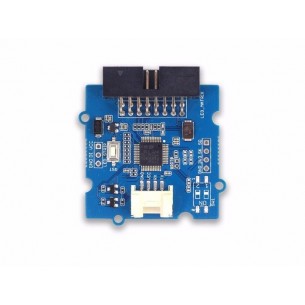
Module with driver for 64x32 or 32x16 LED matrix displays. The board is equipped with a Grove connector and communicates via the UART interface. Seeed Studio 105020013
No product available!
The module with an incremental encoder with channels A and B. The board is equipped with a Grove connector and communicates via a digital interface. Seeed Studio 103020030
No product available!
Module with a track ball that allows you to track the movement in 5 axes in the range of 360 °. The board is equipped with a Grove connector and communicates via the I2C interface. Seeed Studio 101020091
No product available!
Module with a vibration motor and the ability to generate 123 different vibration modes. The board is equipped with a Grove connector and communicates via the I2C interface. Seeed Studio 105020011
No product available!
Module with a dynamic NFC M24LR64E-R tag and an external antenna. The board is equipped with a Grove connector and communicates via the I2C interface. Seeed Studio 101020070
No product available!
Li-Ion battery type 18650 with a nominal voltage of 3.7 V and a capacity of 3450 mAh. Sanyo NCR18650GA
No product available!
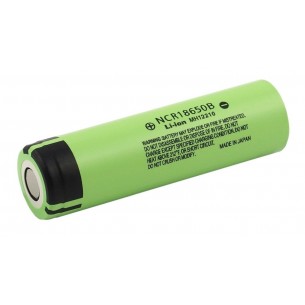
Li-Ion battery type 18650 with a nominal voltage of 3.7 V and a capacity of 3400 mAh. Panasonic NCR-18650B
No product available!
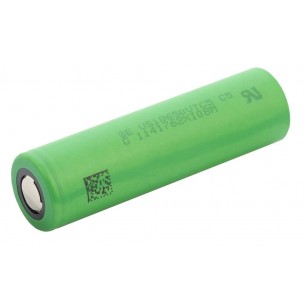
Li-Ion battery type 18650 with a nominal voltage of 3.6 V and a capacity of 2600 mAh. Sony/Murata US18650VTC5
No product available!
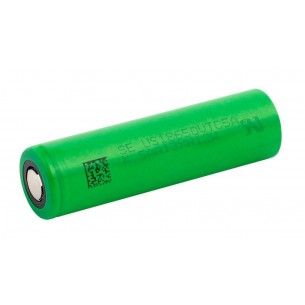
Li-Ion battery type 18650 with a nominal voltage of 3.6 V and a capacity of 2600 mAh. Sony/Murata US18650VTC5A
No product available!
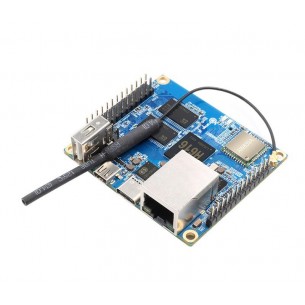
Minicomputer with Allwinner H616 Cortex-A53 quad-core processor. It is equipped with a Mali G31 MP2 GPU and 1 GB of RAM. The set provides WiFi communication and Bluetooth 5.0. Orange Pi Zero2
No product available!
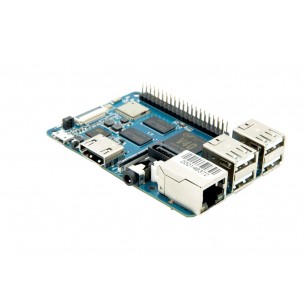
Minicomputer with 4-core Allwinner V40 ARM Cortex-A7 processor, Mali 400 MP2 GPU graphics card, 1 GB RAM, WiFi, BT 4.0 and numerous connectors. Banana Pi BPI-M2 Berry
No product available!
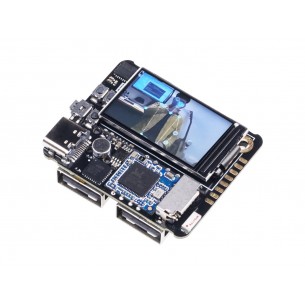
The kit is designed to work with Linux. It consists of the SoM (System on Module) Quark-N and the Atom-N expansion board. Seeed Studio 114992462
No product available!
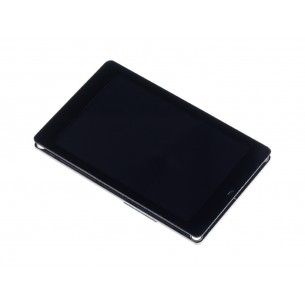
Development board equipped with an ESP32 module and a 3.5-inch color touch screen. Seeed Studio 102991454
No product available!
Barry Wilkinson