.png)




zł133.73 tax excl.
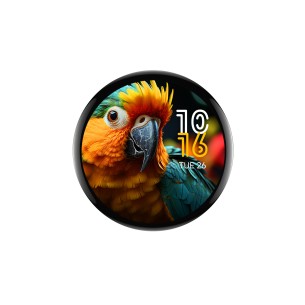
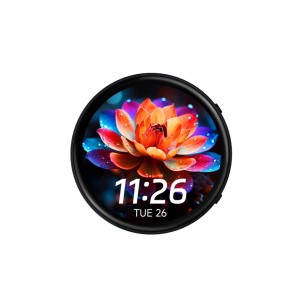
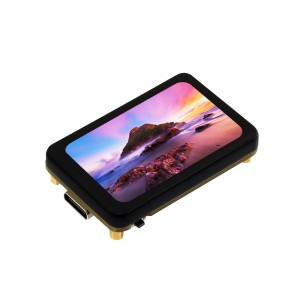
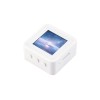
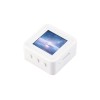
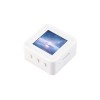
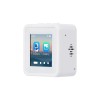
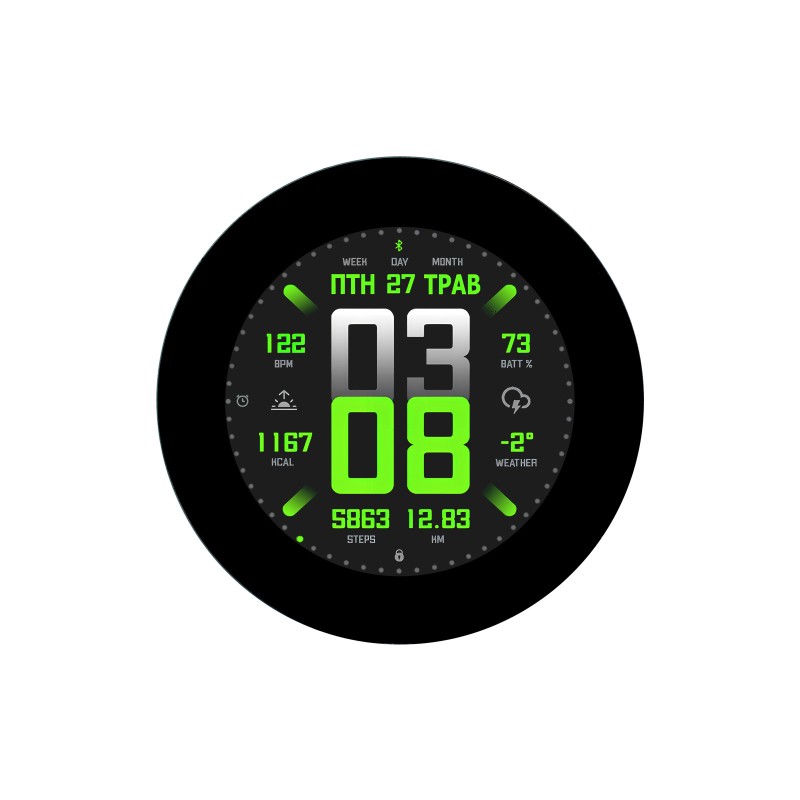
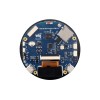
ESP32-S3-Touch-LCD-2.1 in the flat panel version is an advanced platform for developing interactive applications with a touch graphic interface. Thanks to its extensive feature set, including wireless connectivity, PSRAM memory, sensors, and battery power support, it is suitable for mobile devices, HMI interfaces, monitoring systems, and IoT projects.
The ESP32-S3-Touch-LCD-2.1 is a compact development board featuring a dual-core ESP32-S3R8 microcontroller and an integrated 2.1-inch LCD touch display with a resolution of 480×480 px. It supports 2.4 GHz Wi-Fi and Bluetooth 5 LE, and is equipped with sensors, peripheral interfaces, TF card support, and battery power management. The flat capacitive touch panel enables intuitive interaction with a GUI based on LVGL. The board is designed for rapid prototyping of HMI applications, AIoT devices, and mobile projects.
Manufacturer
Responsible person
ESP32-S3-Touch-AMOLED-1.75-G is a development board with a round AMOLED display and built-in GPS, designed for mobile applications, IoT, and user interfaces. Thanks to the ESP32-S3 with Wi-Fi, Bluetooth, and rich peripherals, the board enables the development of projects combining visualization, touch control, GNSS positioning, and voice interaction.
No product available!
ESP32-S3-Touch-AMOLED-1.75-B is a development board based on the ESP32-S3 with a round AMOLED display and built-in protective enclosure, designed for projects requiring durability and compact integration. With Wi-Fi, Bluetooth, audio, sensors, and touch support, it is suitable for creating modern IoT and HMI devices.
No product available!
ESP32-S3-Touch-AMOLED-1.75 is a standard ESP32-S3 development board with an AMOLED display, touch, microphones, sensors, and Wi-Fi/Bluetooth support. It is suitable for building compact IoT and HMI devices where touch interaction, wireless communication, and audio support are essential.
No product available!
ESP32-S3 1.64” AMOLED Touch Display Development Board is a robust development platform for IoT, HMI, and smart device projects. Equipped with a high-contrast AMOLED display with a wide viewing angle, a rich set of peripherals, an accelerometer and gyroscope, as well as Wi-Fi and Bluetooth, it enables rapid development of modern interactive applications and portable devices.
ESP32-P4-WIFI6-Touch-LCD-4C board with a 4″ round AMOLED display, 10-point touch support, Wi-Fi 6, Bluetooth 5, and hardware security features, designed for advanced embedded applications, HMI systems, voice-enabled devices, and smart interfaces.
No product available!
ESP32-P4-WIFI6-Touch-LCD-3.4C development board with a 3.4-inch AMOLED display, Wi-Fi 6 and Bluetooth 5 (LE) support, two microphones with echo cancellation, and hardware security features. A solution for AI, HMI, and IoT projects requiring high performance and precise touch interaction.
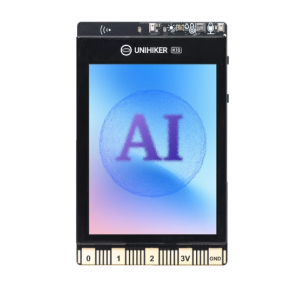
UNIHIKER K10 is a comprehensive AI educational board featuring an ESP32-S3, wireless connectivity, and a set of built-in sensors, designed for learning visual programming and exploring AI. It enables rapid development of projects involving computer vision, voice control, and IoT communication – ideal for educational use and prototyping.
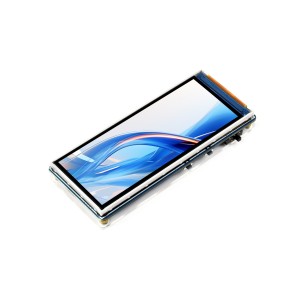
ESP32-S3R8 microcontroller development board featuring a 3.16-inch 320x820 color LCD display with an ST7701 controller. It offers 2.4GHz Wi-Fi and Bluetooth 5 connectivity, 16MB of Flash, and 8MB of PSRAM for high performance and support for rich graphics interfaces (LVGL). Onboard features include a QMI8658 motion sensor (6-axis IMU), a PCF85063 RTC, a microSD slot, UART/I2C/USB connectors, a 3.7V battery connector with charging, and a USB Type-C port. Waveshare ESP32-S3-LCD-3.16
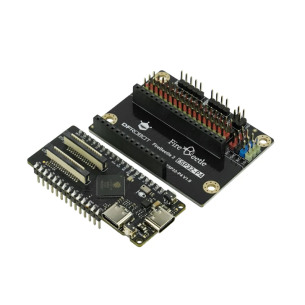
FireBeetle 2 ESP32-P4 kit with IO board is a powerful platform for developing AI devices and vision systems, integrating video encoding, touch, Wi-Fi 6, and Bluetooth 5. It is ideal for building intelligent HMI panels, face recognition cameras, and computer vision-based solutions.
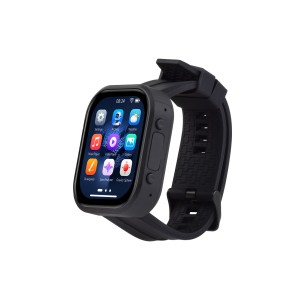
Smartwatch-type development board based on the ESP32-S3 microcontroller, equipped with a 2.06 inch AMOLED touchscreen display with 410 x 502 resolution, a 32-bit dual-core LX7 processor, QSPI interface and an onboard dual digital microphone. Display version without MX1.25 lithium battery. Waveshare ESP32-S3-Touch-AMOLED-2.06-EN
No product available!
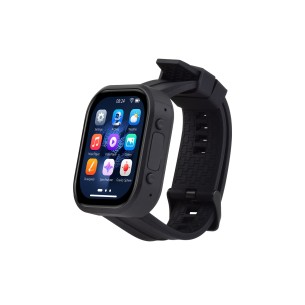
ESP32-S3-Touch-AMOLED-2.06 is a complete development platform for designing wearable devices with an AMOLED display, touch control, audio, wireless connectivity, and AI features. Thanks to its compact design and built-in battery, it is suitable as a foundation for smartwatches, data loggers, and IoT devices.
No product available!
Development board based on the ESP32-C6 microcontroller with a round 1.43 inch capacitive AMOLED display with 466 x 466 resolution, a 160 MHz RISC-V processor, QSPI interface and an onboard dual microphone. Version with a protective case. Waveshare ESP32-C6-Touch-AMOLED-1.43-B
No product available!
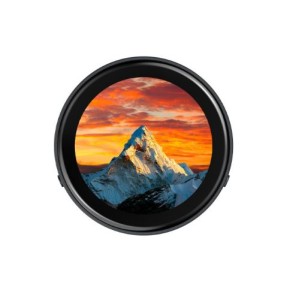
This 32-bit RISC-V development board, running at up to 160 MHz, is designed for AIoT and human-computer interface applications. Featuring a 1.43-inch, 466x466-pixel AMOLED display and an FT6146 touch controller, it delivers detailed graphics and interactive experiences. The board features Wi-Fi 6, Bluetooth 5, and Zigbee/Thread connectivity, dual digital microphones, audio playback and recording, and the ability to connect a lithium battery or power via USB-C. ESP32-C6-Touch-AMOLED-1.43
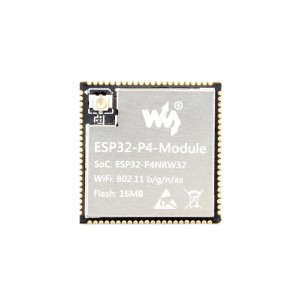
ESP32-P4-Module is a module featuring two chips: ESP32-P4 and ESP32-C6, offering support for 2.4 GHz Wi-Fi in the 802.11 b/g/n/ax standard and Bluetooth 5.3. With large memory, image and voice processing capabilities, and built-in security features, it is suitable for IoT applications, HMI, image and voice recognition systems, and smart industry.
No product available!
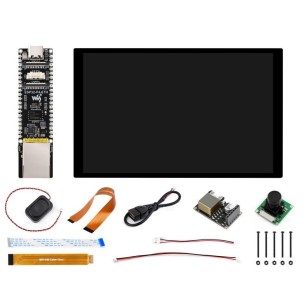
A development kit based on the ESP32-P4 microcontroller, featuring a 10.1-inch DSI capacitive touch display, 100 Mbps Ethernet with PoE support, camera module, and AI speech capabilities. Designed for advanced HMI, multimedia, and edge computing projects, it offers rich interfaces, high performance, and suitability for IoT and industrial applications. Waveshare ESP32-P4-POE-ETH-KIT-B
No product available!
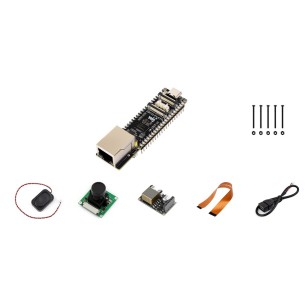
Development kit based on the high-performance ESP32-P4 microcontroller with a 100 Mbps Ethernet port, PoE support, and AI voice interaction. The KIT-A version includes the development board, PoE module, camera, and audio accessories, designed for HMI, edge computing, and IoT applications. Waveshare ESP32-P4-POE-ETH-KIT-A
No product available!
ESP32-S3-Touch-LCD-2.1 in the flat panel version is an advanced platform for developing interactive applications with a touch graphic interface. Thanks to its extensive feature set, including wireless connectivity, PSRAM memory, sensors, and battery power support, it is suitable for mobile devices, HMI interfaces, monitoring systems, and IoT projects.