.png)




- Out-of-Stock

Wiesław Rychlicki
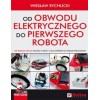
Have you ever wondered how a flashlight, toaster and battery car work? If every electronic toy that you had at your fingertips, you undressed parts, and your dream was your own robot, get to work and, together with merry Lutek, enter the extraordinary world of electrotechnics!
Have fun learning! Follow the instructions in this book, and you'll be able to build constructions at different levels: from a simple electrical circuit with a battery and a light bulb, through all possible pesticides, plugs and switches, to a simple robot from a brush or tricycle.
Young Reader! You can study this book yourself. Do not limit yourself to reading - experiment and build models. You will not do everything right away. Collect necessary materials, complete tools and learn how to use them safely. Understand the properties of materials and technologies for their processing. If necessary, use the help of experienced DIY enthusiasts. Get interested in your work, colleagues, parents and teachers at school. The exchange of experiences and a bit of competition will have a positive impact on the results of your work.
Parent, Grandpa, Teacher! You can use this book to organize interesting activities for your pupils. This is an interesting proposition for weekend fun with your children, grandchildren or students in the school's studio. Such classes give great satisfaction to the teacher and the participants are happy.
Table of Contents
From the author (5) Chapter 1. What is electricity? (9) Chapter 2. The first electrical circuit (11)
Chapter 3. Turning the current on and off (23)
Chapter 4. Measurements of electrical quantities (41)
Chapter 5. Measurements and calculations in electrical circuits (63)
Chapter 6. Electric current and magnetic field (83)
Chapter 7. My first robot (99)
Chapter 8. Considerations on mechanical elements (113)
Chapter 9. We build a mobile robot (131)
Appendix A. How I built electric blocks (151) Appendix B. List of used electrotechnical symbols (157) Appendix C. Answers to problems in Chapter 5. (159) Index (165)
No product available!
No product available!
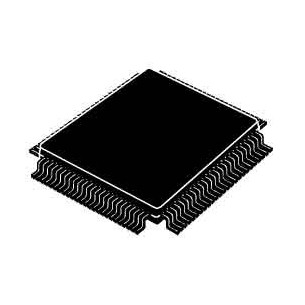
ARM7TDMI, 512kB Flash (ISP), 64kB RAM, 2xCAN, Ethernet 10/100, USB, DMA, I2S, 3xI2C, SPI/SSP, 4xUART, ADC, DAC, LQFP100, RoHS
No product available!
No product available!
No product available!
No product available!
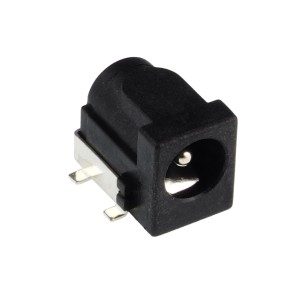
The DC2025SMD male right angle socket is a 2.0 mm diameter SMT component, ideal for power systems and cooperation with appropriate plugs. Its angled design facilitates mounting on PCBs, optimizing space, and durable materials ensure a reliable connection and long service life.
No product available!
No product available!
No product available!
No product available!
No product available!
No product available!
No product available!
No product available!
No product available!
No product available!
Wiesław Rychlicki