.png)



zł50.33 tax excl.
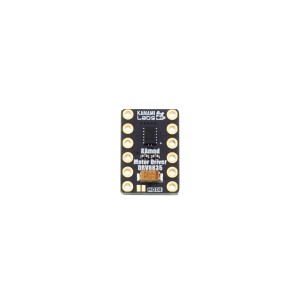
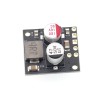
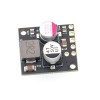
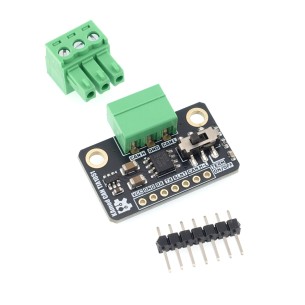
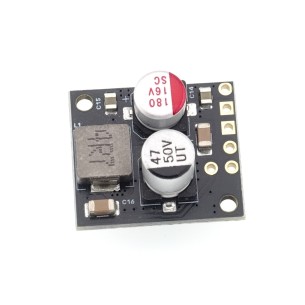
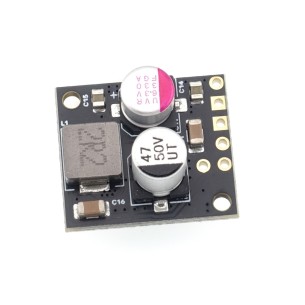
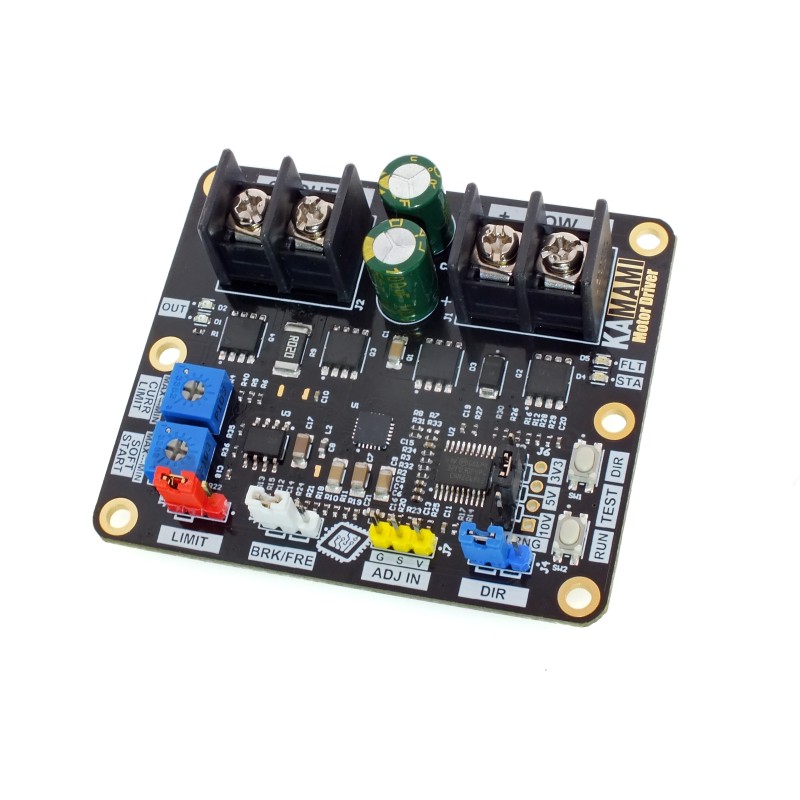
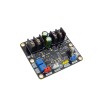
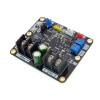
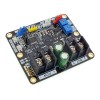
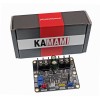
KAmod Motor Driver is an advanced DC motor controller powered by 6-30 V, enabling power regulation using the PWM method and control of the direction of rotation, compatible with analog and PWM signals from various sources, equipped with overload and thermal protections and soft start and stop functions
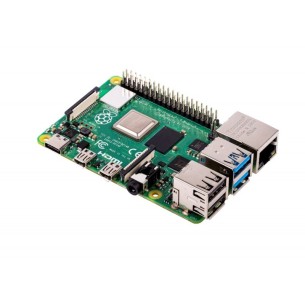
KAmod Motor Driver is a controller for an electric motor with a constant voltage of up to 30 V. It allows you to select the direction of motor rotation and adjust its power in the range of 0...100%, which in practice is used to regulate the rotational speed. The control signal can be a voltage signal in one of three ranges: 0...3.3 V, 0...5 V or 0...10 V, or a PWM signal with an amplitude of 3.3 V, 5 V or 10 V. Such signals can be easily obtained from Raspberry, Arduino, Nucleo boards or from a regular potentiometer. The power stage is composed of MOSFET transistors connected in an H-bridge arrangement, which ensures high output power and high driver efficiency.
Manufacturer
Responsible person
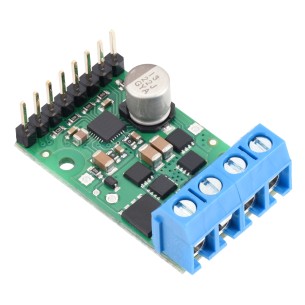
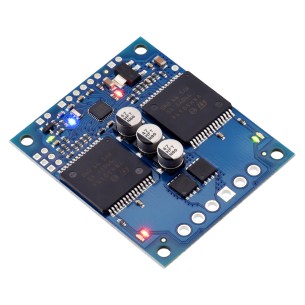
An H-bridge driver that provides bidirectional control of a high-power DC motor with a voltage range of 5-60 V and a continuous current of up to 11 A. The module supports PWM signals up to 100 kHz, features a current measurement (CS) output based on the ACS711 sensor, and features reverse polarity and short-circuit protection. It is compatible with both 3.3 V and 5 V logic, enabling easy integration with popular microcontroller platforms. Ideal for robotics, automation, and DIY projects requiring high performance and reliability. Pololu 2993
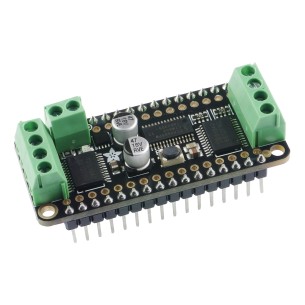
FeatherWing expansion board for controlling DC motors, stepper motors, and servo motors, based on the PCA9685 PWM controller and TB6612FNG H-bridge drivers. Adafruit 3243
A compact motor controller designed for the Pimoroni Yukon platform, capable of driving two DC motors or one bipolar stepper motor. The DRV8424P chip provides stable control with a supply voltage of 5 to 17 V and a current of up to 1.6 A continuous per channel. The module offers adjustable current limiting, thermal protection, and error detection. Pimoroni PIM693
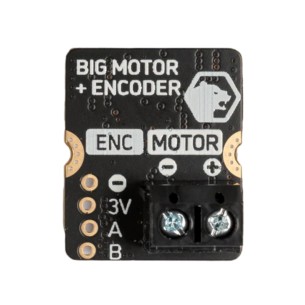
A powerful controller designed to drive a single brushed DC motor with an encoder in the Pimoroni Yukon system. It offers up to 8 A continuous and 12 A peak current at a supply voltage of 5 to 17 V, making it suitable for demanding robotic projects. The module provides precise control thanks to encoder support and built-in current, temperature, and error sensors. Pimoroni PIM691
Compact module for driving two DC motors, 6.5–37 V, continuous current 12 A per channel, peak 70 A, with protections and status indicators. DFRobot DFR0601
No product available!
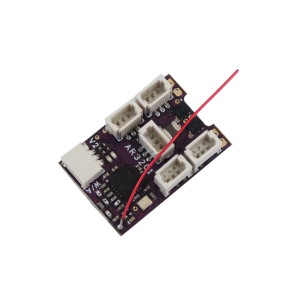
Brushed DC motor ESC with integrated FlySky receiver, designed for remote control of DC motors in RC models and mobile projects, supporting speed and direction control. modAR3201-F2
Dual-channel motor driver module designed for controlling two DC motors or one bipolar stepper motor. The circuit supports motor voltages up to 11 V, works with 3.3 V and 5 V logic systems, and provides output current up to 1.2 A per channel. The design includes dual H-bridges, PWM support, IN / IN and PHASE / ENABLE operating modes, as well as overcurrent and thermal protection. Kamod Motor Driver DRV8835
DC motor driver based on the Texas Instruments DRV8263H-Q1. It can control one DC motor in two directions or two motors in one direction from a supply voltage of 4.5-65V and a continuous current of up to 3.5A (limited to 10A). The module offers three control modes: Phase/Enable (PH/EN), PWM (IN/IN), and independent half-bridges. Built-in current sensors and protection features protect against overload, overheating, and reverse power connection. The 3-5V logic control is decoupled from the motor supply, increasing safety and integration flexibility. Pololu 5238
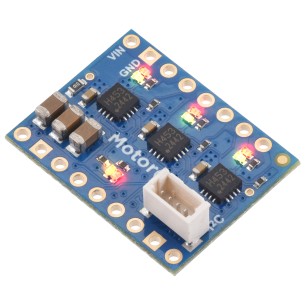
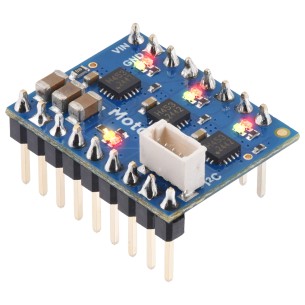
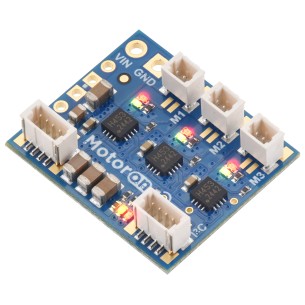
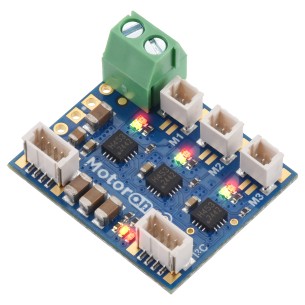
This controller allows independent control of three DC motors using a single I²C bus. It supports motor supply voltages ranging from 4.5 to 44 V and currents up to 0.8 A continuous per channel, making it suitable for a wide range of robotic and mobile applications. I²C communication eliminates the need to generate PWM signals and significantly saves microcontroller pins. The ability to connect multiple controllers on a single bus allows for easy scaling of the system to larger motor counts. Pololu 5085
This controller allows independent control of three DC motors using a single I²C bus. It supports motor supply voltages ranging from 4.5 to 44 V and currents up to 0.8 A continuous per channel, making it suitable for a wide range of robotic and mobile applications. I²C communication eliminates the need to generate PWM signals and significantly saves microcontroller pins. The ability to connect multiple controllers on a single bus allows for easy scaling of the system to larger motor counts. Pololu 5084
This controller allows independent control of three DC motors using a single I²C bus. It supports motor supply voltages ranging from 4.5 to 44 V and currents up to 0.8 A continuous per channel, making it suitable for a wide range of robotic and mobile applications. I²C communication eliminates the need to generate PWM signals and significantly saves microcontroller pins. The ability to connect multiple controllers on a single bus allows for easy scaling of the system to larger motor counts. Pololu 5083
This controller allows independent control of three DC motors using a single I²C bus. It supports motor supply voltages ranging from 4.5 to 44 V and currents up to 0.8 A continuous per channel, making it suitable for a wide range of robotic and mobile applications. I²C communication eliminates the need to generate PWM signals and significantly saves microcontroller pins. The ability to connect multiple controllers on a single bus allows for easy scaling of the system to larger motor counts. Pololu 5082
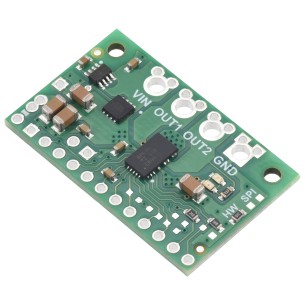
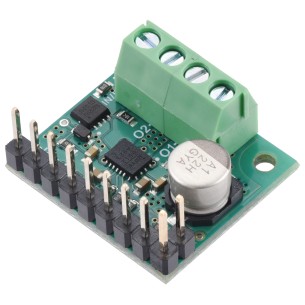
Single-channel brushed DC motor driver based on the MPQ6612A chip, enabling bidirectional motor control with a supply voltage of 4-40 V and up to 4 A continuous current. The module offers motor current sensing, active current limiting, overcurrent and thermal protection, and supports PWM control up to 200 kHz. The carrier board includes factory-soldered connectors, allowing the module to be used without additional soldering. Pololu 5286
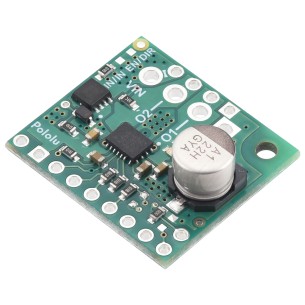
Single-channel brushed DC motor driver based on the MPQ6612A chip, enabling bidirectional motor control with a supply voltage of 4-40 V and up to 4 A continuous current. The module provides motor current sensing, active current limiting, overcurrent and thermal protection, and supports PWM control up to 200 kHz. The carrier board does not include soldered connectors, allowing direct soldering of wires or custom connectors. Pololu 5285
Dual-channel brushed DC motor controller with TTL and RS-232 serial interface enabling speed and direction control of two motors at 6–24 V supply voltage with up to 12 A continuous current per channel (30 A peak), designed for robotics, automation, and microcontroller-based projects. Pololu 2078
No product available!
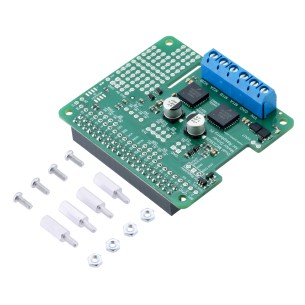
Expansion module for Raspberry Pi enabling control of two brushed DC motors using two MC33926 H-bridges. The driver operates in a voltage range of 5 - 28 V and supports continuous current up to 3 A per channel (up to 5 A peak), offering PWM control, reverse polarity protection, and GPIO access for advanced applications. Pololu 2756
No product available!
KAmod Motor Driver is an advanced DC motor controller powered by 6-30 V, enabling power regulation using the PWM method and control of the direction of rotation, compatible with analog and PWM signals from various sources, equipped with overload and thermal protections and soft start and stop functions