.png)




zł16.67 tax excl.
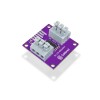
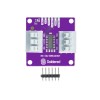
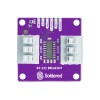
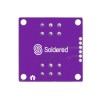
RS-232 transceiver module based on the MAX232E, designed for bidirectional conversion between TTL/CMOS logic levels and RS-232 signals. It provides two transmit and two receive channels, allowing simultaneous data transmission and reception. The supply voltage range specified in the documentation is 4.5–5.5V. Soldered 333067
The device RS-232 Transceiver breakout by Soldered uses the MAX232E IC for bidirectional conversion between TTL/CMOS logic levels and RS-232 voltage levels. It allows a microcontroller to communicate with devices using RS-232, including industrial equipment, modems, barcode scanners, and legacy communication devices.
The MAX232E provides two transmit channels and two receive channels, allowing simultaneous data transmission and reception in full-duplex mode. The DIN1 and DIN2 lines accept logic-level signals for transmission, while DOUT1 and DOUT2 provide the corresponding RS-232 signals. In the receive direction, RIN1 and RIN2 accept RS-232 signals, while ROUT1 and ROUT2 provide the converted logic-level signals.
RS-232 uses bipolar voltage levels, with the manufacturer documentation specifying a range of ±3V to ±15V for the RS-232 side. The charge pump integrated into the MAX232E generates the voltages required for RS-232 communication from a single supply. The IC also incorporates ESD protection to increase resistance to electrostatic discharge.
The manufacturer documentation specifies a board supply voltage range of 3,3–5.5V, with a nominal supply of 5V. A basic microcontroller connection can use one channel, with TX connected to DIN1 and RX connected to ROUT1. The second channel provides an additional independent communication path.
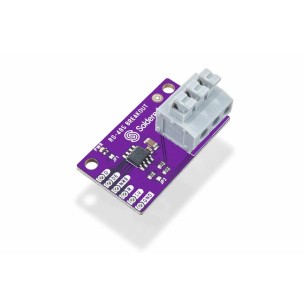
RS-485 transceiver module based on the SN65176BDR, designed for bidirectional data transmission between a microcontroller and an RS-485 bus. It supports data rates up to 20Mbps and communication distances up to 1200m, while the onboard 120Ω termination resistor can be enabled using the JP2 jumper. Supply voltage is 5V. Soldered 333068
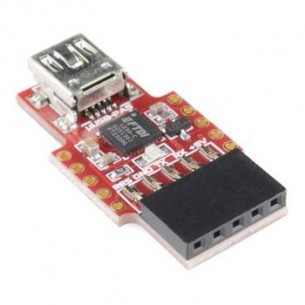
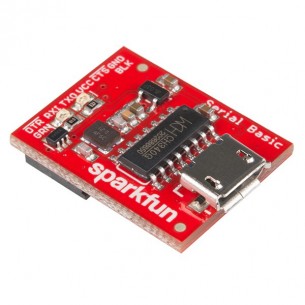
DEV-11814 - USB-to-Serial Bridge - µUSB-PA5, RoHS
No product available!
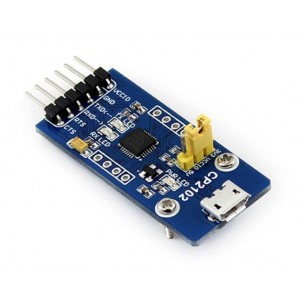
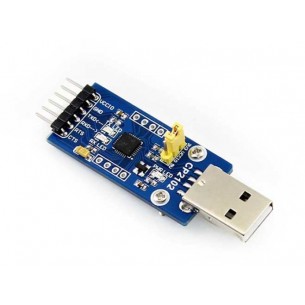
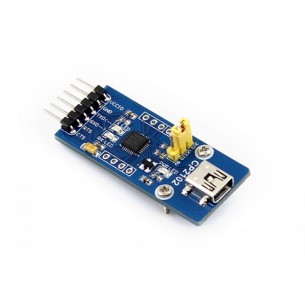
CP2102 USB to UART Module, USB micro connector
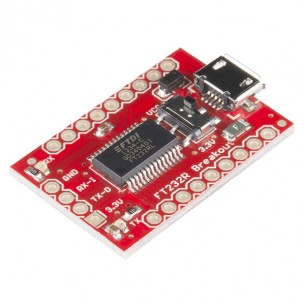
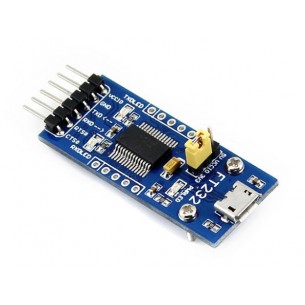
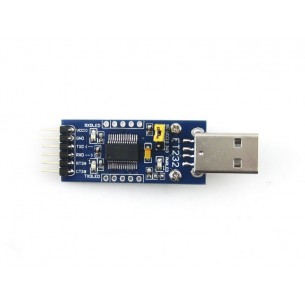
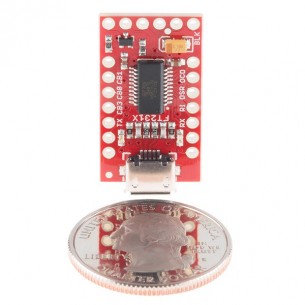
UART - USB converter based on the FT232RL chip with TX, RX, RTS and CTS lines led out to the pin connector, the remaining lines available on solder fields for pin connectors. Micro-USB socket. Voltage supply from 3.3 to 5 V. FT232 USB UART Board (micro)
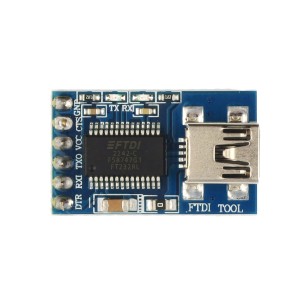
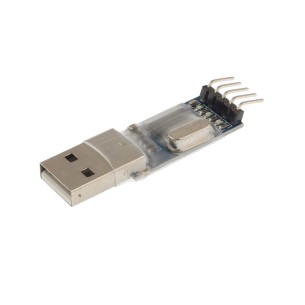
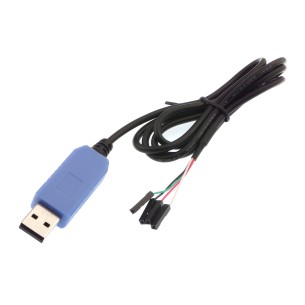
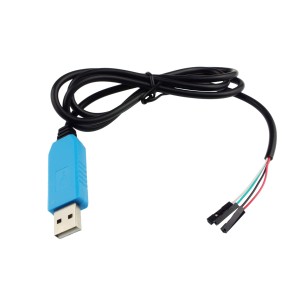
The module allows you to send UART (TTL) bus signals to a computer via a USB port. The adapter operates based on the PL2303HX chip and is recognized in the computer as a virtual serial port
USB TO UART solution with USB Type A connector
ZL5USB is a USB-UART converter module based on Silabs CP2102. The module has small sizes, microUSB connector and it can works with the 2.5...5.5V signals.
The cable is easiest way ever to connect to your microcontroller/Raspberry Pi/WiFi router serial console port. The power pin provides the 5V @ 500mA direct from the USB port and the RX/TX pins are 3.3V level for interfacing with the most common 3.3V logic level chipsets. Adafruit 954
Easy-to-use USB-to-Serial adapter based on the CH340G IC from WCH; works with 5V and 3.3V systems and should auto install on most operating systems without the need for additional drivers; uses the CH340G IC to quickly and easily convert serial signals to USB. DEV-14050
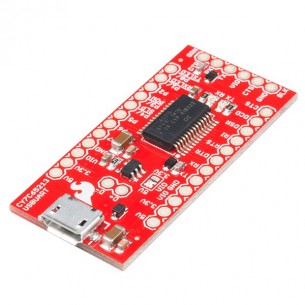
The CY7C65213 USB to UART serial breakout is designed to provide users with a means to access all available I/O pins on the IC, and to provide a 6-pin UART header that is compatible with other SparkFun breakout boards. This breakout has a microUSB connector and other support circuitry to get the IC quickly up and running. BOB-13830
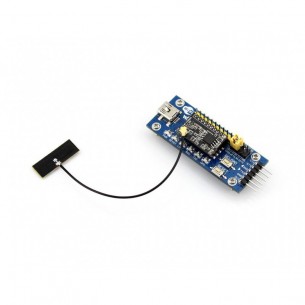
WIFI-LPT100 Eval Kit module enables UART data transmission via WiFi, ultra low power consumption, encrypted communication
No product available!
USB - UART converter based on the PL2303 chip
RS-232 transceiver module based on the MAX232E, designed for bidirectional conversion between TTL/CMOS logic levels and RS-232 signals. It provides two transmit and two receive channels, allowing simultaneous data transmission and reception. The supply voltage range specified in the documentation is 4.5–5.5V. Soldered 333067