.png)



zł74.69 tax excl.
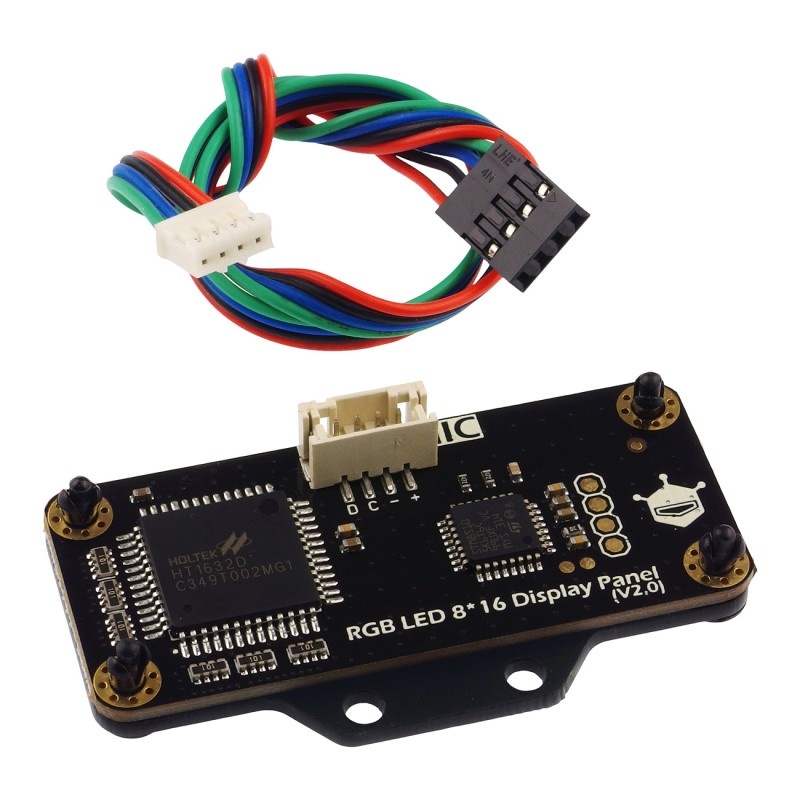
8x16 LED matrix equipped with colored LEDs and a driver. It is powered by 5 V and communicates via the I2C interface (Gravity connector). DFRobot DFR0522
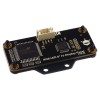
8x16 LED matrix equipped with colored LEDs and a driver. It is powered by 5 V and communicates via the I2C interface (Gravity connector). The matrix has 7 defined display colors and several dozen built-in graphics, which makes it much easier to start working with the module. It can also display numbers, letters, and symbols, and has built-in support for scrolling images. On the Wiki page there is a user manual and sample programs based on a dedicated library.
Manufacturer
Responsible person
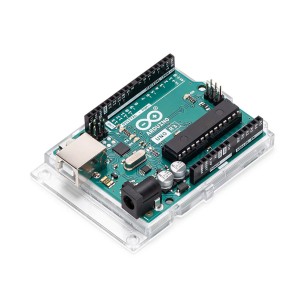
Arduino Uno Rev3 is a popular board with Atmel ATmega328 microcontroller from the AVR family, there are 14 I / O lines, 6 PWM channels and 6 analog inputs. The additional ATmega16U4 microcontroller realizes communication via the USB interface. Arduino A000066
No product available!
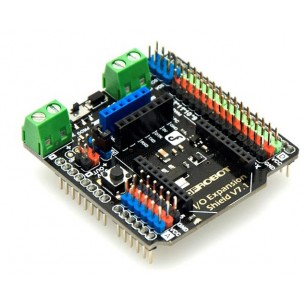
Expansion board for Arduino, allows easy connection of XBee modules, has separate outputs for I2C, SPI and UART buses. The built-in 3.3V voltage stabilizer and operating mode switch make it easier to program the Arduino when the XBee module is connected to the sockets. DFRobot DFR0265
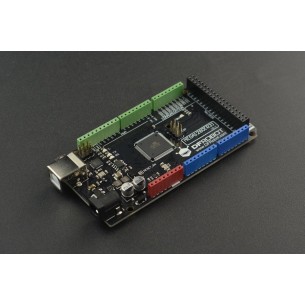
Board with ATmega1280 microcontroller from the AVR family, the user has 54 I/O lines, 14 PWM channels, 16 analog inputs. DFRobot DFR0003
No product available!
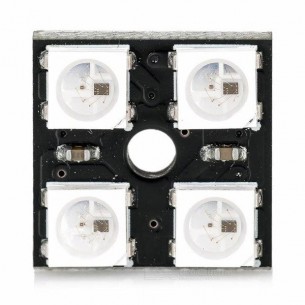
Matrix with 4 WS2812B RGB diodes controlled by a serial signal. The module can be powered with 5V, only one signal line is required for control
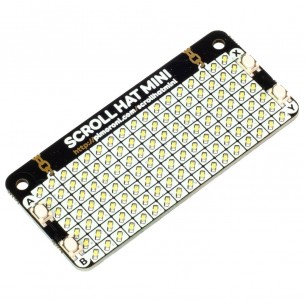
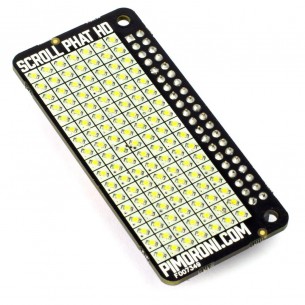
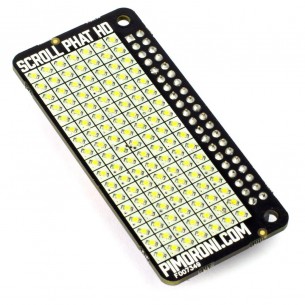
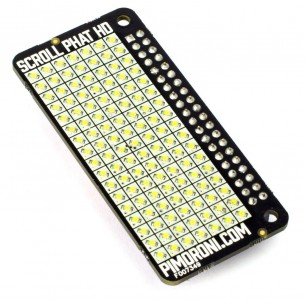
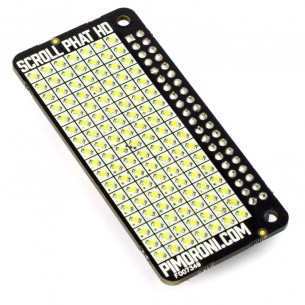
Module with 17x7 LED matrix display (119 LEDs) designed to work with the Raspberry Pi. It uses the IS31FL3731 driver and communicates via the I2C interface. Pimoroni PIM491
Module with 17x7 LED matrix display (119 LEDs) designed to work with the Raspberry Pi. It uses the IS31FL3731 driver and communicates via the I2C interface. Pimoroni PIM335
Module with 17x7 LED matrix display (119 LEDs) designed to work with the Raspberry Pi. It uses the IS31FL3731 driver and communicates via the I2C interface. Pimoroni PIM336
Module with 17x7 LED matrix display (119 LEDs) designed to work with the Raspberry Pi. It uses the IS31FL3731 driver and communicates via the I2C interface. Pimoroni PIM334
Module with 17x7 LED matrix display (119 LEDs) designed to work with the Raspberry Pi. It uses the IS31FL3731 driver and communicates via the I2C interface. Pimoroni PIM333
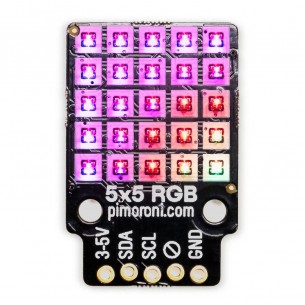
Module with 5x5 RGB LED matrix display (25 LEDs). It uses the IS31FL3731 driver and communicates via the I2C interface. Pimoroni PIM435
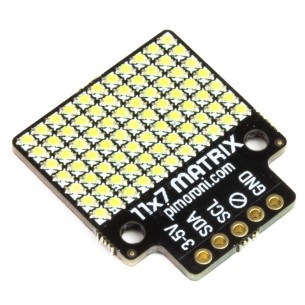
Module with 117x7 LED matrix display (77 LEDs). It uses the IS31FL3731 driver and communicates via the I2C interface. Pimoroni PIM442
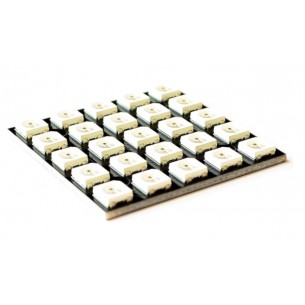
Matrix with 25 WS2812B RGB diodes controlled by a serial signal. The module can be powered by 5V, only one signal line is required for control
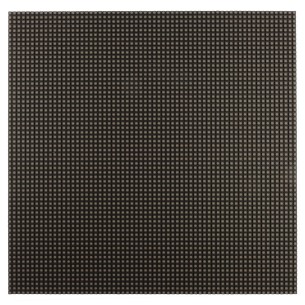
RGB LED matrix display with a resolution of 64x64 (4096 LED). It has cutouts at an angle of 45° to build an LED cube. Adafruit 5407
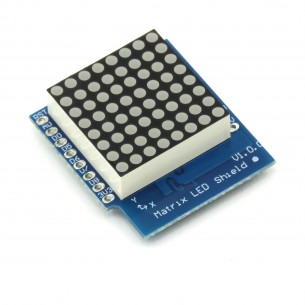
The module with an 8x8 LED matrix designed for Wemos D1 Mini
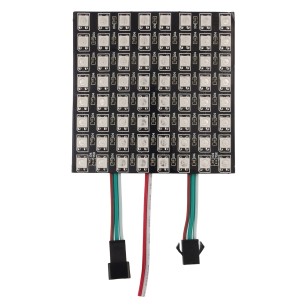
Flexible RGB 8x8 LED Matrix Module with Addressable WS2812B LEDs. modFlexMatrix8x8
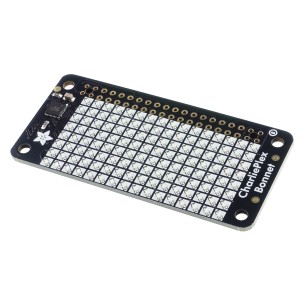
This 40-pin GPIO module for the Raspberry Pi features 128 red LEDs arranged in a 16x8 grid. Using the IS31FL3731 driver communicating over the I2C bus, each LED can be independently controlled with 8-bit brightness control, enabling smooth animations and lighting effects. The module stores up to eight frames of animation in RAM and utilizes Charlieplexing technology, offering efficient control with a minimal number of pins. Adafruit 6115
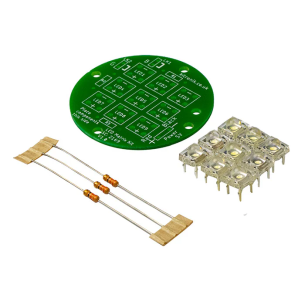
This DIY kit allows you to create a compact and bright LED lamp using 9 diodes with a total intensity of approximately 16,000 mCd. Built-in resistors allow the system to be powered directly from a 5V power supply or from three AA batteries, ensuring flexibility and ease of use. Its simple design makes it ideal for soldering practice. Kitronik 2169
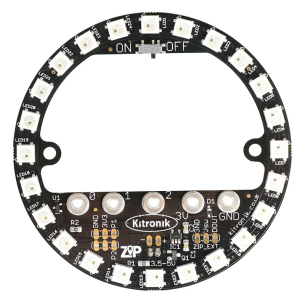
A circular board for the BBC micro:bit with 24 addressable ZIP LEDs, offering a full color spectrum and allowing for the creation of eye-catching lighting animations. Mounts directly to the micro:bit using screws, and additional pins allow for the connection of sensors or additional LEDs. Power is supplied via a JST socket or solder pads, and the built-in regulator also powers the micro:bit. The ZIP Halo is fully compatible with NeoPixel libraries and can be programmed in MakeCode or MicroPython. Kitronik 5625
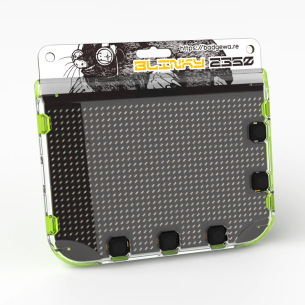
An interactive educational kit with a 39 x 26 LED matrix (872 diodes) capable of displaying animations, text, and pixel graphics. At the heart of the device is a dual-core RP2350A microcontroller (2 x Arm Cortex-M33 250 MHz) with 520 KB SRAM, 16 MB QSPI Flash, and 8 MB PSRAM. Connectivity is provided by a Wi-Fi and Bluetooth module (CYW43439). A built-in 1000 mAh LiPo battery charged via USB-C allows for mobile operation, while additional buttons and a RTC (Real Time Clock) enhance the device\'s functionality. Pimoroni WARE003
No product available!
8x16 LED matrix equipped with colored LEDs and a driver. It is powered by 5 V and communicates via the I2C interface (Gravity connector). DFRobot DFR0522