.png)


zł172.82 tax excl.
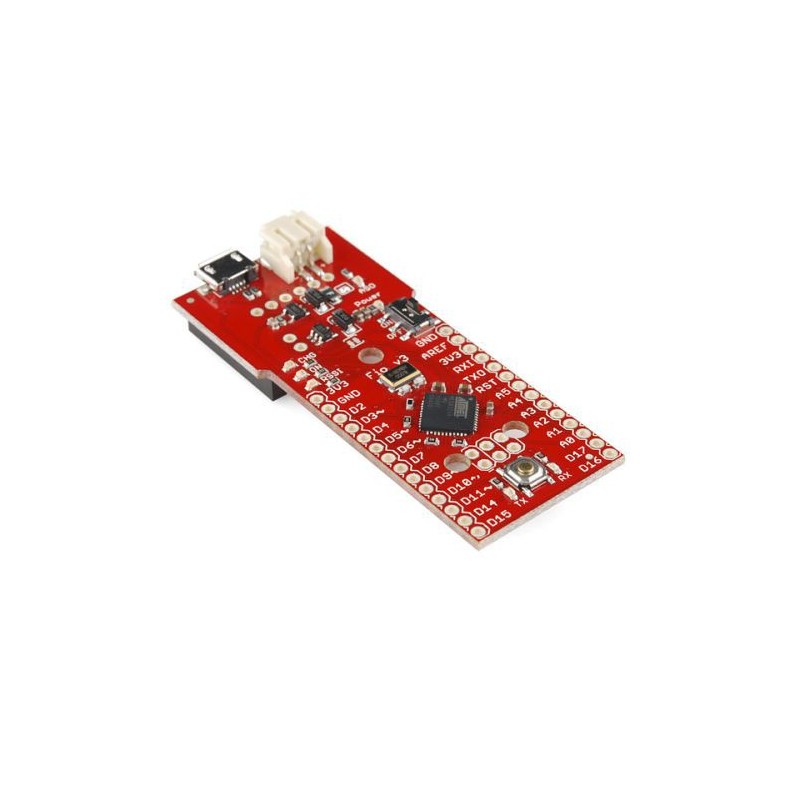
The Fio v3 is a new spin on the Arduino Fio hardware powered by the ATmega32U4. Not only is it small and LiPo-ready, it’s a very capable XBee-ready development board. DEV-11520
The Fio v3 is a new spin on the Arduino Fio hardware powered by the ATmega32U4.Not only is it small and LiPo-ready, it’s a very capable XBee-ready development board.
The JST-connector and 3.3v system voltage make this a great development tool for portable devices, simply plug in a Li-Poly battery and you’re ready to go. Wireless sensor networks and communication are made easy by the on-board XBee socket.
The ATmega32U4, running at 8MHz, makes it possible for you to use the on-board USB jack not only to charge a connected Li-Poly battery but to actually program the device! Because this board uses a similar bootloader to the one on the Pro Micro, you will need to download and install the special software driver below. There’s also a board definition add-on for the Arduino IDE which will add support for this board.
Data sheet
Manufacturer
Responsible person
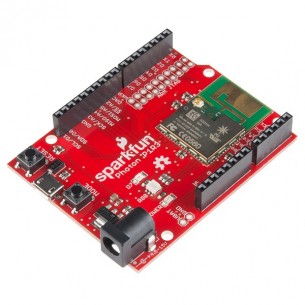
IoT development board the size of Arduino, equipped with an ARM Cortex-M3 processor (STM32F205) and a Wi-Fi communication module (with an integrated antenna and uFL connector). SparkFun DEV-13321
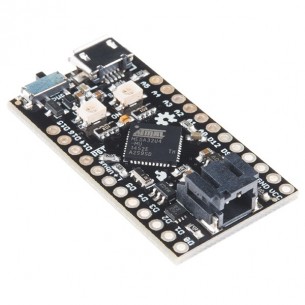
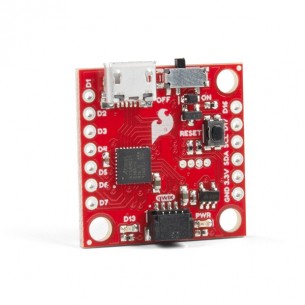
Qduino Mini is a tiny, Arduino-compatible board with ATmega32u4 (8MHz, 32kB Flash, 2kB RAM), a LiPol battery connector and charger built-in. SparkFun DEV-13614
No product available!
This board combines the simplicity of the UNO’s Optiboot bootloader (which is used in the Pro series), the stability of the FTDI (which we all missed after the Duemilanove was discontinued) and the R3 shield compatibility of the latest Arduino UNO R3. SparkFun DEV-13975
No product available!
Qduino Mini is a tiny, Arduino-compatible board with ATmega32u4 (8MHz, 32kB Flash, 2kB RAM), a LiPol battery connector and charger built-in. SparkFun DEV-13614
The SparkFun AST-CAN485 board is a miniature Arduino in a compact Pro Mini housing with a built-in CAN (Control Area Network) and RS485 ports. Sparkfun DEV-14483
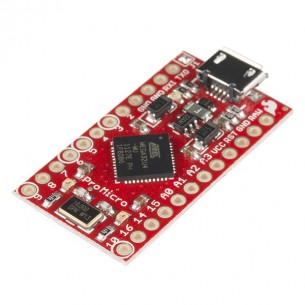
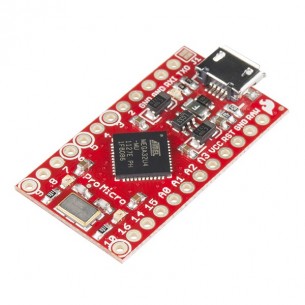
Pro Micro is similar to Pro Mini Arduino compatible board, main difference is that Pro Micro uses ATmega32u4 with builtin USB connectivity. Sparkfun DEV-12640
No product available!
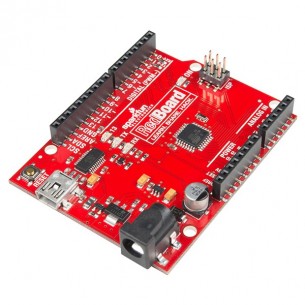
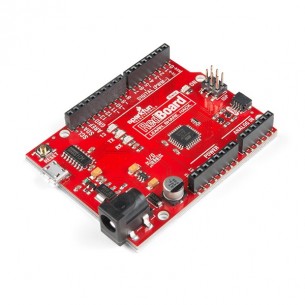
Base board compatible with Arduino. It was equipped with an Atmega 328P microcontroller. It has 14 I/O lines (including 6 PWM channels) and 6 analog inputs. SparkFun DEV-14525
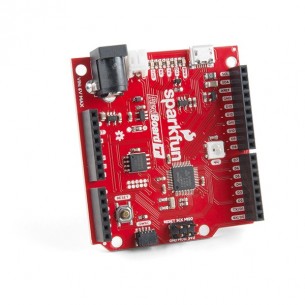
Base board compatible with Arduino. It was equipped with the ATSAMD21G18 microcontroller. It has 26 I/O lines and 14 analog inputs. SparkFun DEV-14812
No product available!
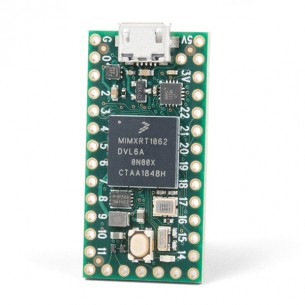
A small module, matching the breadboard, containing a 32-bit microcontroller with ARM Cortex M7 core. PJRC TEENSY40
No product available!
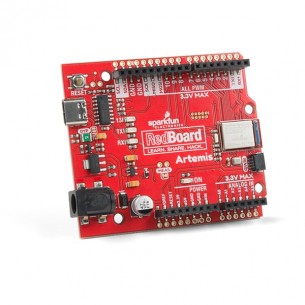
Evaluation kit with Sparkfun Artemis Bluetooth 5.0 module designed on the basis of the Arduino UNO kit. It has a USB C. The board also has a USB-UART converter, a microphone and a JTAG debugging connector. Artemis has support in the Arduino IDE. SparkFun DEV-15444
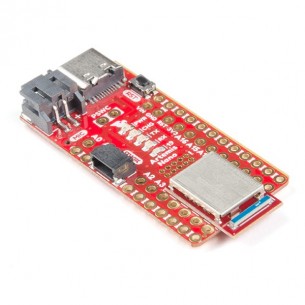
Evaluation kit with Sparkfun Artemis Bluetooth 5.0 module designed on the basis of the Arduino Nano kit. It has a USB C. The board also has a USB-UART converter, a microphone, Lipo battery charging and a JTAG debugging connector. Artemis has support in the Arduino IDE. SparkFun DEV-15443
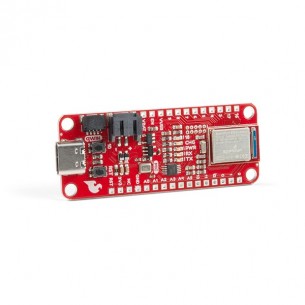
Evaluation kit with Sparkfun Artemis Bluetooth 5.0 module designed on the basis of the Feather kit. It has a USB C. The board also has a USB-UART converter, a microphone and a JTAG debugging connector. Artemis has support in the Arduino IDE. SparkFun WRL-15574
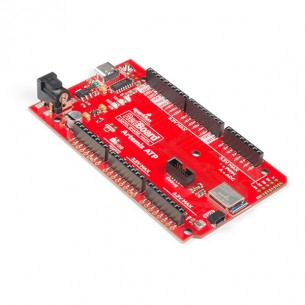
Evaluation kit with Sparkfun Artemis Bluetooth 5.0 module designed on the basis of the Arduino Mega kit. It has a USB C. The board also has a USB-UART converter, a microphone and a JTAG debugging connector. Artemis has support in the Arduino IDE. SparkFun DEV-15442
Pro Micro is similar to Pro Mini Arduino compatible board, main difference is that Pro Micro uses ATmega32u4 with builtin USB connectivity. Sparkfun DEV – 12587
No product available!
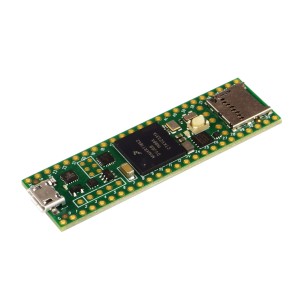
A small module matching the contact plate based on a 32-bit microcontroller with ARM Cortex M7 core. Has a microSD slot. PJRC TEENSY41
Board with the ATmega328 microcontroller from the AVR family, there are 20 I/O lines, 6 PWM channels, 6 analog inputs at the user\'s disposal. SparkFun DEV-15123
Development kit with ATSAMD21E microcontroller with ARM Cortex M0+ core. The chip can be clocked at 48 MHz, has a built-in 256 KB of Flash memory and 32 KB of SRAM. The module has a Qwiic connector. SparkFun DEV-15423
The Fio v3 is a new spin on the Arduino Fio hardware powered by the ATmega32U4. Not only is it small and LiPo-ready, it’s a very capable XBee-ready development board. DEV-11520