.png)



zł11.71 tax excl.
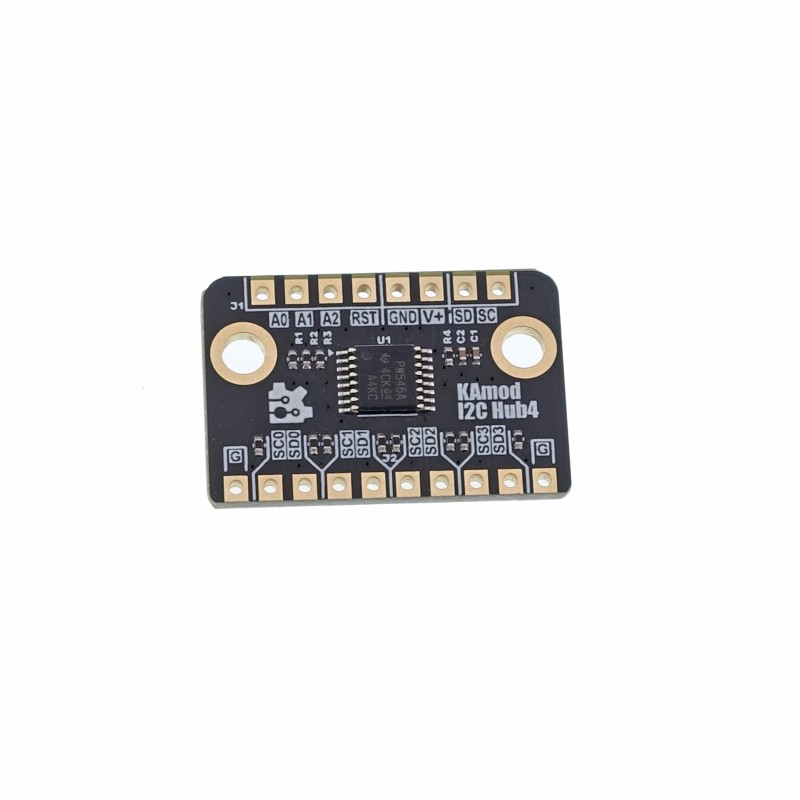
KAmod I2C Hub4 enables splitting the I2C bus into four independent outputs with a voltage level translation function, eliminating address conflicts and increasing connection flexibility. The module is intended for projects with multiple I2C devices requiring separation or diverse supply voltages.
The KAmod I2C Hub4 module enables independent redirection of I2C bus signals (SCL and SDA) from one input to four independent outputs, which allows eliminating I2C device address conflicts in systems with multiple circuits of the same addressing. Thanks to the TCA9546A chip used, each pair of I2C lines can operate with a different voltage level, which enables voltage translation between devices powered with voltages in the range of 1.8–5.5 V. The module supports clocking up to 400 kHz and allows the configuration of up to eight independent modules on one I2C bus via three address inputs. Integrated pull-up resistors on the output lines can be supplemented with external resistors, depending on the project requirements. The module is intended for applications in microprocessor systems where it is necessary to split or convert I2C interface voltage levels.
Manufacturer
Responsible person
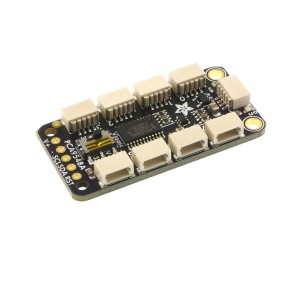
8-channel I2C expander module based on the PCA9548 chip. Allows communication with multiple I2C devices that have the same address. Equipped with STEMMA QT connectors. Adafruit 5626
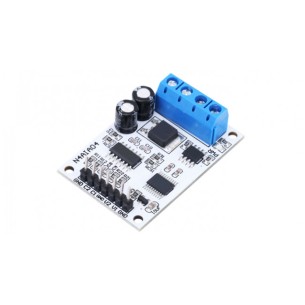
Measurement module with RS485 interface. It has two voltage measurement inputs in the range of 0 to 5 V and 0 to 10 V and two current measurement inputs in the range of 0 to 20 mA. Supports the Modbus RTU protocol
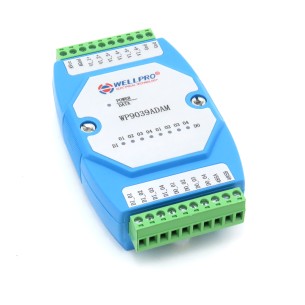
Module with 4 digital inputs, 4 outputs and 6 analog inputs. It communicates via the RS485 interface and supports the Modbus RTU protocol. The board is enclosed in an industrial housing. Wellpro WP9039ADAM
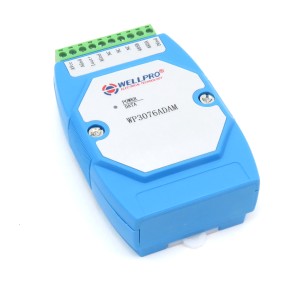
Module with analog output 0-20 mA or 4-20 mA. It communicates via the RS485 interface and supports the Modbus RTU protocol. The board is enclosed in an industrial housing. Wellpro WP3076ADAM
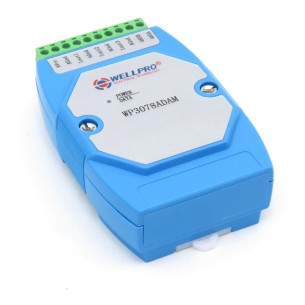
Module with three 4-20 mA analog outputs. It communicates via the RS485 interface and supports the Modbus RTU protocol. The board is enclosed in an industrial housing. Wellpro WP3078ADAM
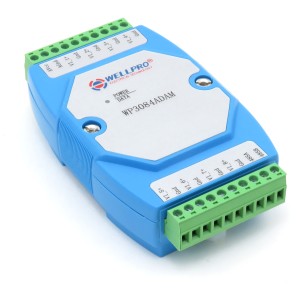
Module with 8 analog inputs for voltage measurement in the range from 0 to 10 V. It communicates via the RS485 interface and supports the Modbus RTU protocol. The board is enclosed in an industrial housing. Wellpro WP3084ADAM
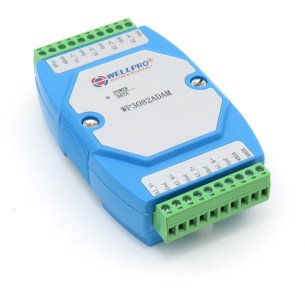
Module with 8 analog inputs for current measurement in the range of 0 to 20 mA or 4 to 20 mA. It communicates via the RS485 interface and supports the Modbus RTU protocol. The board is enclosed in an industrial housing. Wellpro WP3082ADAM
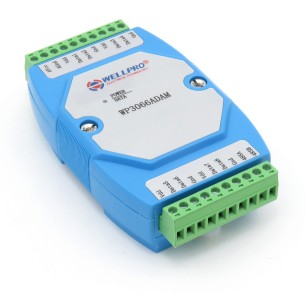
Module with 8 inputs for data acquisition from DS18B20 temperature sensors. It communicates via the RS485 interface and supports the Modbus RTU protocol. The board is enclosed in an industrial housing. Wellpro WP3066ADAM
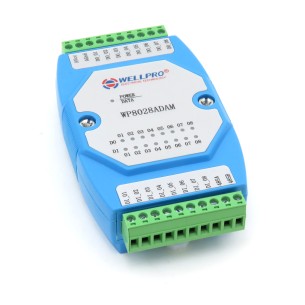
Module with 8 digital inputs and 8 digital outputs. It communicates via the RS485 interface and supports the Modbus RTU protocol. The board is enclosed in an industrial housing. Wellpro WP8028ADAM
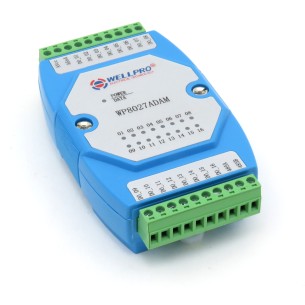
Module with 16 digital outputs. It communicates via the RS485 interface and supports the Modbus RTU protocol. The board is enclosed in an industrial housing. Wellpro WP8027ADAM
No product available!
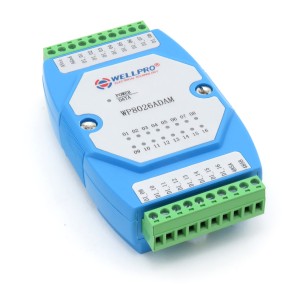
Module with 16 digital inputs. It communicates via the RS485 interface and supports the Modbus RTU protocol. The board is enclosed in an industrial housing. Wellpro WP8026ADAM
No product available!
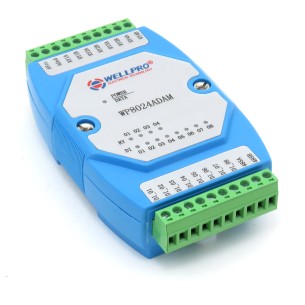
Module with 8 digital inputs and 4 relays with a maximum switching current of 2 A. It communicates via the RS485 interface and supports the Modbus RTU protocol. The board is enclosed in an industrial housing. Wellpro WP8024ADAM
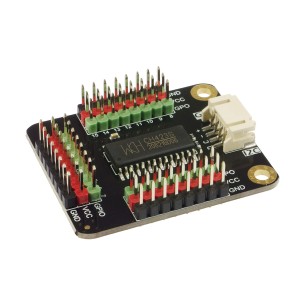
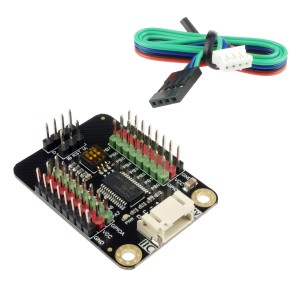
A 24-channel input/output port expander module controlled by an I2C interface. It was based on the CH423 chip and equipped with a Gravity connector. DFRobot DFR0979
A module with a 16-channel input/output port expander controlled by an I2C interface. It was based on the MCP23017 chip and equipped with a Gravity connector. DFRobot DFR0626
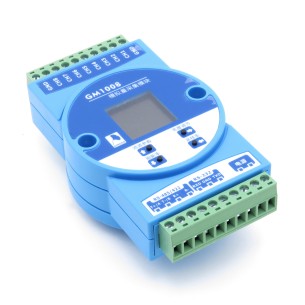
Module with 8 inputs for data acquisition from 0-24 mA analog current inputs. It communicates via RS485 interface and supports Modbus RTU protocol. The board is enclosed in an industrial enclosure. GM1008
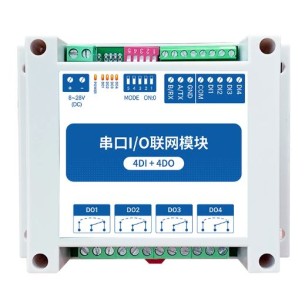
Module with 4 digital inputs and 4 digital outputs. It communicates via RS485 interface and supports Modbus RTU protocol. The board is enclosed in an industrial enclosure. MA01-AXCX4040
KAmod I2C Hub4 enables splitting the I2C bus into four independent outputs with a voltage level translation function, eliminating address conflicts and increasing connection flexibility. The module is intended for projects with multiple I2C devices requiring separation or diverse supply voltages.