.png)



zł25.12 tax excl.
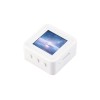
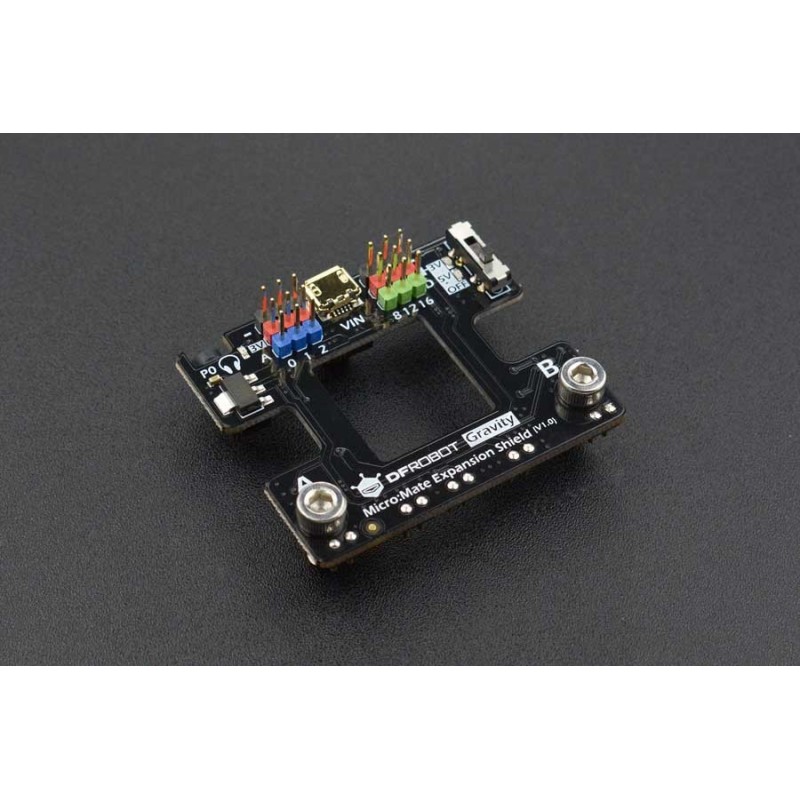
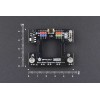
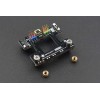
Micro:Mate is an expansion board for the micro: bit development module. It provides six 3-pin connectors with I/O outputs, a 3.5mm audio jack connector and is powered from a 5V microUSB connector. DFRobot DFR0518
Micro:Mate is a small size expansion board for the micro:bit development module. Provides six 3-pin connectors with I / O outputs that allow you to connect Gravity modules, sensors or servos. A 3.5mm audio jack is also available on the board. The set of extensions includes a 3 V / 5 V voltage switch for pins 8, 12 and 16. These pins give the possibility of connecting modules with a higher power consumption (up to 2 A). The modules are powered via a microUSB connector.
Attention!
Analog inputs on pins 0, 1 and 2 support 3.3V signals. Applying a higher voltage to pins may cause damage to the set
Manufacturer
Responsible person
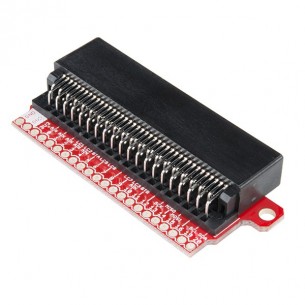
The SparkFun micro:bit Breakout is a board that connects to the BBC micro:bit and expands the capabilities of the development platform by providing access to more pins and allowing for connections to the I2C and SPI buses. This breakout board for the micro:bit’s edge connector allows to connect the micro:bit to breadboards and other sensors, motors, LEDs and more! BOB-13988
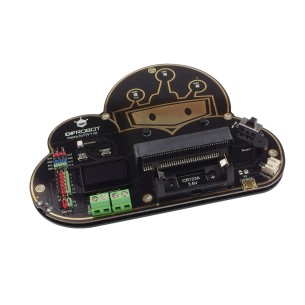
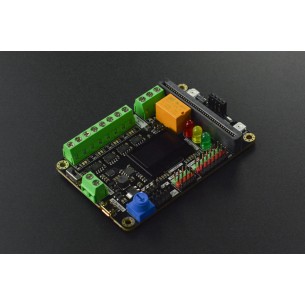
Micro:bit expansion module designed for IoT. The board is equipped with WiFi, a two-channel output for DC motors, 6 IO pins, an I2C, UART interface, a buzzer, RGB diodes and a charging circuit. DFRobot MBT0012
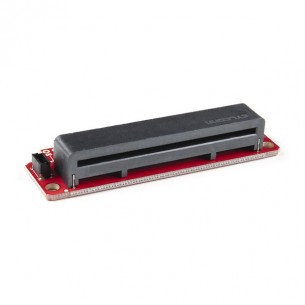
Qwiic adapter designed for micro:bit educational modules. Facilitates access to all pins that are led out on the connector with a pitch of 2.54 mm and the Qwiic connector. SparkFun BOB-16446
Qwiic adapter designed for micro:bit educational modules. Facilitates access to all pins that are led out on the connector with a pitch of 2.54 mm and the Qwiic connector. SparkFun BOB-16445
No product available!
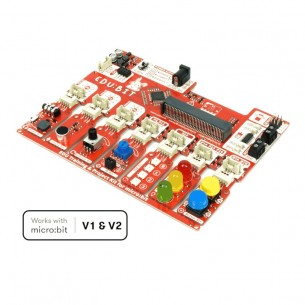
Starter kit for the micro:bit educational module. It includes an expansion module, sensors, motor, servo and the necessary accessories. Cytron EDUBIT-NB
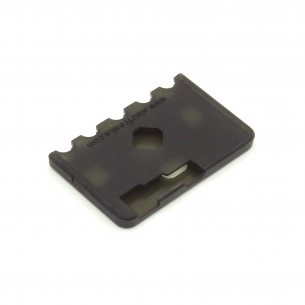
Transparent case made of tinted plastic, designed for micro:bit educational modules. Adafruit 4852
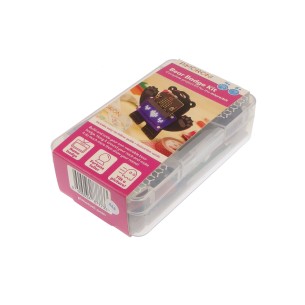
A set for building an interactive teddy bear-shaped pendant based on a micro:bit. It consists of a micro:bit v2 educational module, a scroll:bit module with a matrix display, a lanyard and a battery. Pimoroni PIM362
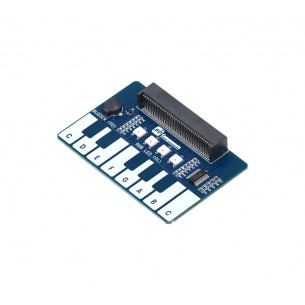
The expansion module is designed to work with the micro:bit educational board. It allows you to build an electronic piano. SB Components 21482
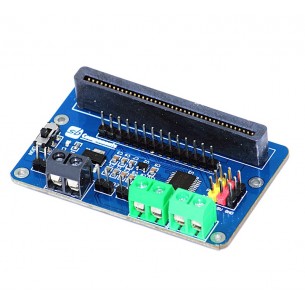
Module with a 2-channel DC motor driver TB6612FNG designed to work with micro: bit. It can also control 3 servos. SB Components 14897
Multifunctional expansion module dedicated to micro: bit V2. DFRobot MBT0042
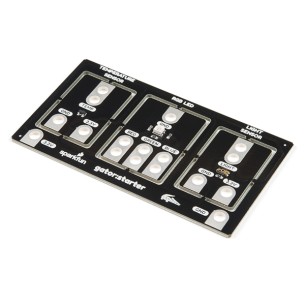
An accessory from the gator:boards series. The board has large pads dedicated for crocodile-type wires for easy connection to the micro:bit. It includes a temperature sensor module (MCP9700), a light sensor (TEMT6000) and an RGB LED board. SparkFun SEN-14891
No product available!
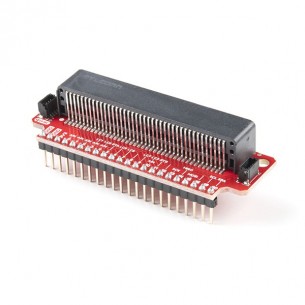
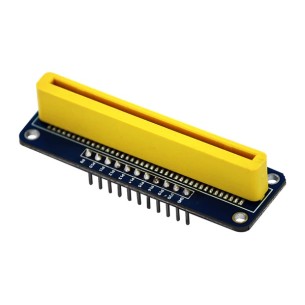
Adapter designed for micro:bit educational modules. It facilitates access to all pins, which are led out on the connector with a raster of 2.54 mm, which allows the use of a breadboard. SB Components 14880
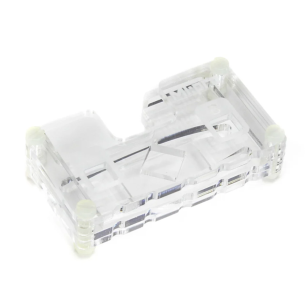
Protective case for micro:bit modules designed with protection in mind. It is transparent, has large and legible labels for buttons A and B, and full access to the bottom pins of the micro:bit. Kitronik 56102
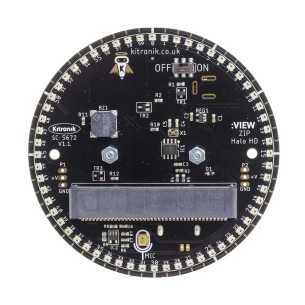
An advanced LED module for the BBC micro:bit, featuring 60 individually addressable ZIP LEDs, plus a MEMS microphone and piezo speaker to create light and sound effects. The module also has an I2C-controlled real-time clock, and its integrated edge connector and AA battery holder means it\'s ready to go as soon as you plug in your micro:bit. Kitronik 5672
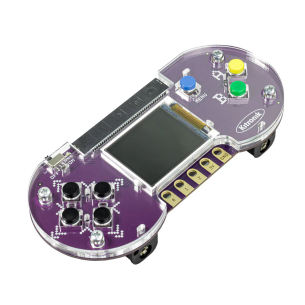
A retro gaming platform that lets users use the BBC micro:bit and the MakeCode Arcade editor to create and run their own games. The console features 4 directional D-pads, 2 interactive action buttons, a 1.77-inch full color screen, and ports for connecting additional devices, making it incredibly functional and convenient to use. Due to the educational nature of MakeCode Arcade, there are numerous resources and guides available to help both beginners and advanced users learn how to program games. Kitronik 56116
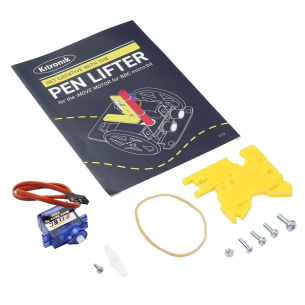
The Pen Lifter pen holder is a set dedicated to the :MOVE Motor for BBC micro:bit. Thanks to the mounted servo, the holder allows you to raise and lower the pen, which can be controlled using a code. Kitronik 56118
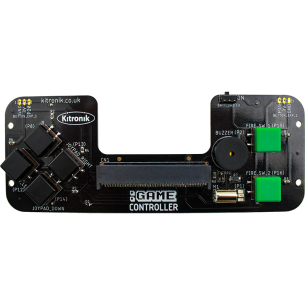
Kitronik 5644 is a programmable gamepad-style controller designed for the micro:bit, enabling enhanced gaming experiences and remote control of other devices via the micro:bit’s radio communication. It features six buttons, a built-in buzzer for sound signals, and a vibration motor for haptic feedback.
Micro:Mate is an expansion board for the micro: bit development module. It provides six 3-pin connectors with I/O outputs, a 3.5mm audio jack connector and is powered from a 5V microUSB connector. DFRobot DFR0518