.png)



zł105.94 tax excl.
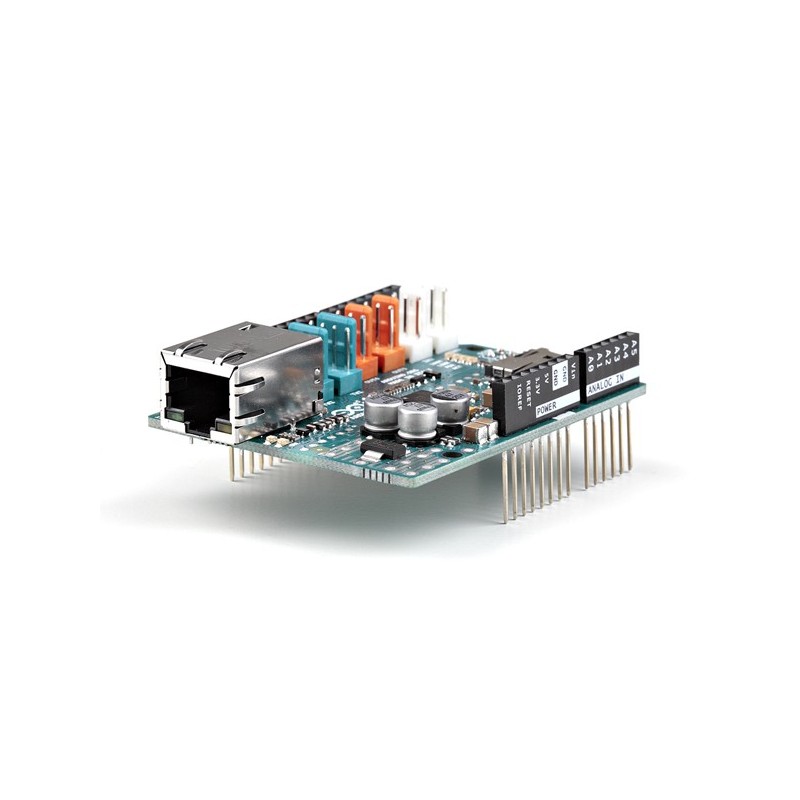
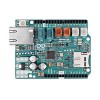
The Arduino Ethernet Shield 2 allows an Arduino Board to connect to the internet. It is based on the Wiznet W5500 Ethernet chip. The Wiznet W5500 provides a network (IP) stack capable of both TCP and UDP. There is an onboard micro-SD card slot, which can be used to store files for serving over the network. It is compatible with the Arduino Uno and Mega
The Arduino Ethernet Shield 2 connects your Arduino to the internet in mere minutes. Just plug this module onto your Arduino Board, connect it to your network with an RJ45 cable (not included) and follow a few simple steps to start controlling your world through the internet. As always with Arduino, every element of the platform – hardware, software and documentation – is freely available and open-source. This means you can learn exactly how it's made and use its design as the starting point for your own circuits. Hundreds of thousands of Arduino Boards are already fueling people’s creativity all over the world, everyday. Join us now, Arduino is you!
The Arduino Ethernet Shield 2 allows an Arduino Board to connect to the internet. It is based on the Wiznet W5500 Ethernet chip (datasheet). The Wiznet W5500 provides a network (IP) stack capable of both TCP and UDP. It supports up to eight simultaneous socket connections. Use the Ethernet library to write sketches that connect to the Internet using the Shield. The Ethernet Shield 2 connects to an Arduino Board using long wire-wrap headers extending through the Shield. This keeps the pin layout intact and allows another Shield to be stacked on top of it.
The most recent revision of the board exposes the 1.0 pinout on rev 3 of the Arduino UNO Board.
The Ethernet Shield 2 has a standard RJ-45 connection, with an integrated line transformer and Power over Ethernet enabled.
There is an onboard micro-SD card slot, which can be used to store files for serving over the network. It is compatible with the Arduino Uno and Mega (using the Ethernet library). The onboard micro-SD card reader is accessible through the SD Library. When working with this library, SS is on Pin 4. The original revision of the Shield contained a full-size SD card slot; this is not supported.
The Shield also includes a reset controller, to ensure that the W5500 Ethernet module is properly reset on power-up. Previous revisions of the Shield were not compatible with the Mega and needed to be manually reset after power-up.
The current Shield has a Power over Ethernet (PoE) module designed to extract power from a conventional twisted pair Category 5 Ethernet cable.
PoE module features as follows:
The Shield does not come with a built in PoE module, it is a separate component that must be added on.
Arduino communicates with both the W5500 and SD card using the SPI bus (through the ICSP header). This is on digital pins 10, 11, 12, and 13 on the Uno and pins 50, 51, and 52 on the Mega. On both boards, pin 10 is used to select the W5500 and pin 4 for the SD card. These pins cannot be used for general I/O. On the Mega, the hardware SS pin, 53, is not used to select either the W5500 or the SD card, but it must be kept as an output or the SPI interface won't work.
Note that because the W5500 and SD card share the SPI bus, only one at a time can be active. If you are using both peripherals in your program, this should be taken care of by the corresponding libraries. If you're not using one of the peripherals in your program, however, you'll need to explicitly deselect it. To do this with the SD card, set pin 4 as an output and write a high to it. For the W5500, set digital pin 10 as a high output.
The Shield provides a standard RJ45 Ethernet jack.
The reset button on the Shield resets both the W5500 and the Arduino Board.
The Shield contains a number of information LEDs:
Important Note
The Ethernet Shield 2 is, at present time, not compatible with the Arduino Zero Pro Board.
The maximum length and width of the Uno PCB are 2.7 and 2.1 inches respectively, with the USB connector and power jack extending beyond the former dimension. Four screw holes allow the board to be attached to a surface or case. Note that the distance between digital pins 7 and 8 is 160 mil (0.16"), not an even multiple of the 100 mil spacing of the other pins.
Data sheet
Manufacturer
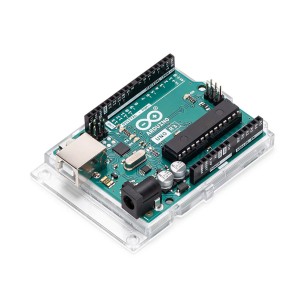
Arduino Uno Rev3 is a popular board with Atmel ATmega328 microcontroller from the AVR family, there are 14 I / O lines, 6 PWM channels and 6 analog inputs. The additional ATmega16U4 microcontroller realizes communication via the USB interface. Arduino A000066
No product available!
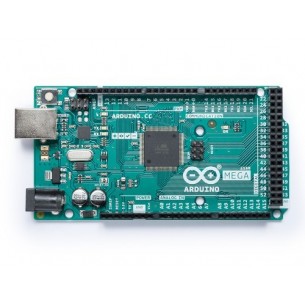
A set with ATmega2560 microcontroller (256 kB Flash, 8 kB RAM, 4 kB EEPROM) clocked at 16 MHz. The user has, among others: 54 I / O lines, 14 PWM channels, 16 analog inputs. Arduino A000067
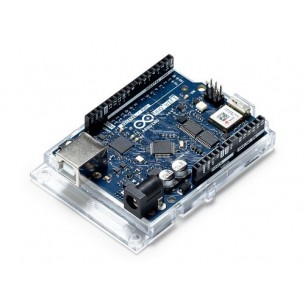
Board with the ATmega4809 microcontroller from the AVR family and the u-blox W102 WiFi module. There are 14 I/O lines, 5 PWM channels, 6 analog inputs and the IMU LSM6DS3TR system at your disposal. Arduino ABX00021
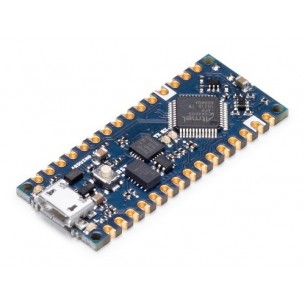
Module with the ATMega4809 microcontroller from the AVR family (48 KB Flash, 6 KB SRAM, 256 B EEPROM). The module has two 15-pin connectors equipped with GPIO, SPI, I2C, PWM, USART, DAC and ADC. Arduino ABX00028
No product available!
Module with the ATMega4809 microcontroller from the AVR family (48 KB Flash, 6 KB SRAM, 256 B EEPROM). The module has two 15-pin connectors equipped with GPIO, SPI, I2C, PWM, USART, DAC and ADC. Module with headers. Arduino ABX00033
No product available!
Board with nRF52840 microcontroller with Cortex M4F core (64 MHz, 1 MB Flash, 256 kB RAM). Equipped with BT 5.0 and IMU LSM9DS1 module. Module with headers. Arduino ABX00034
Board with SAMD21 microcontroller with CortexM0 + core (48 MHz, 256 KB Flash, 32 KB RAM). Equipped with WiFi and BT module (based on ESP32) and IMU LSM6DS3 unit. Ideal for applications in the IoT area. Module with headers. Arduino ABX00032
No product available!
Board with SAMD21 microcontroller with Cortex M0+ core (48 MHz, 256 KB Flash, 32 KB RAM). Equipped with WiFi and BT module (based on ESP32) and IMU LSM6DS3 unit. Ideal for applications in the IoT area. Arduino ABX00027
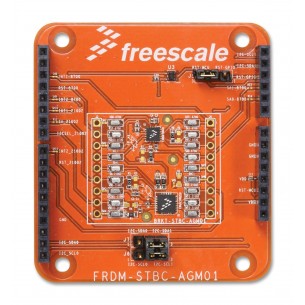
9-axis expansion module with motion sensors. The module combines two integrated circuits: FXAS21002C 3-axis gyroscope and FXOS8700CQ 6-axis accelerometer/magnetometer. The board is equipped with connectors compatible with Arduino R3. NXP FRDM-STBC-AGM01
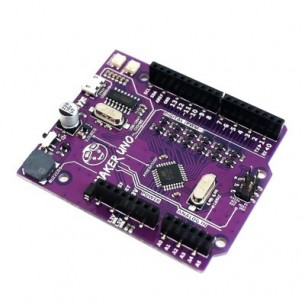
The board is compatible with Arduino, based on the ATmega328P microcontroller from the AVR family, 14 I/O lines, 6 PWM channels, 6 analog inputs are available to the user. The CH340G chip communicates via a USB interface. In addition, it has 12 LEDs, a programmable button and a embedded buzzer. Cytron Uno Maker
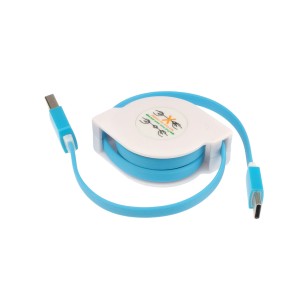
Convenient to use retractable USB cable with a USB A and USB Type C plug with a length of 1m. CKX2484
No product available!
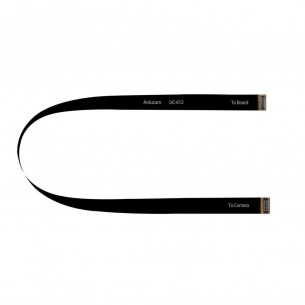
300mm ArduCam extension cable. Compatible e.g. with IMX219 image sensor. ArduCam B0186
No product available!
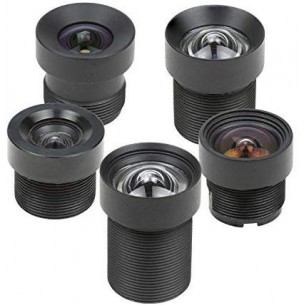
A set of lenses for Arducam cameras. Includes 5 lenses with different viewing angles, two lens holders and a set of screws. Lenses compatible and tested with image sensors such as OV2640 and OV5647. Arducam LK002
No product available!
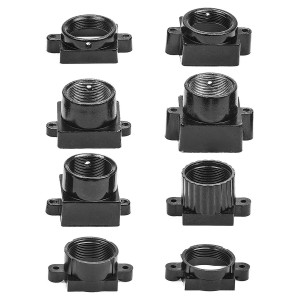
A set of 9 mounts for Arducam camera lenses. Includes 5 metal and 4 plastic handles. Arducam LHK01
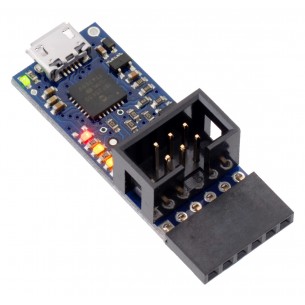
Compact ISP programmer for AVR microcontrollers. Works with Atmel Studio, AVRDUDE and Arduino IDE environments, using the STK500 protocol. Has a USB-TTL adapter function. Pololu 3172
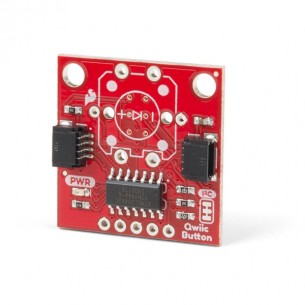
SparkFun Qwiic Button Breakout is a configurable button module for projects using the Qwiic environment. Has a built-in LED. It allows soldering the 12 mm button with the lighting color chosen by the designer. SparkFun BOB-15931
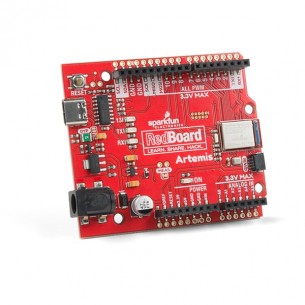
Evaluation kit with Sparkfun Artemis Bluetooth 5.0 module designed on the basis of the Arduino UNO kit. It has a USB C. The board also has a USB-UART converter, a microphone and a JTAG debugging connector. Artemis has support in the Arduino IDE. SparkFun DEV-15444
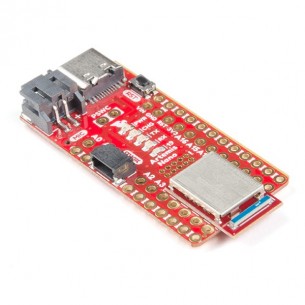
Evaluation kit with Sparkfun Artemis Bluetooth 5.0 module designed on the basis of the Arduino Nano kit. It has a USB C. The board also has a USB-UART converter, a microphone, Lipo battery charging and a JTAG debugging connector. Artemis has support in the Arduino IDE. SparkFun DEV-15443
The Arduino Ethernet Shield 2 allows an Arduino Board to connect to the internet. It is based on the Wiznet W5500 Ethernet chip. The Wiznet W5500 provides a network (IP) stack capable of both TCP and UDP. There is an onboard micro-SD card slot, which can be used to store files for serving over the network. It is compatible with the Arduino Uno and Mega