.png)



zł43.82 tax excl.
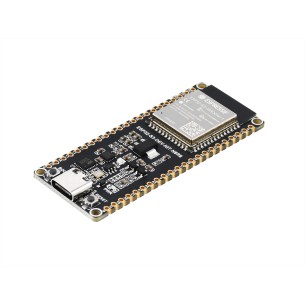
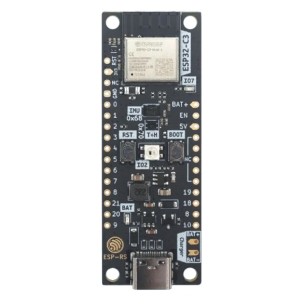
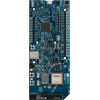
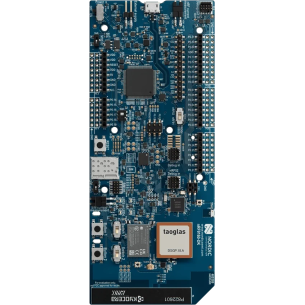
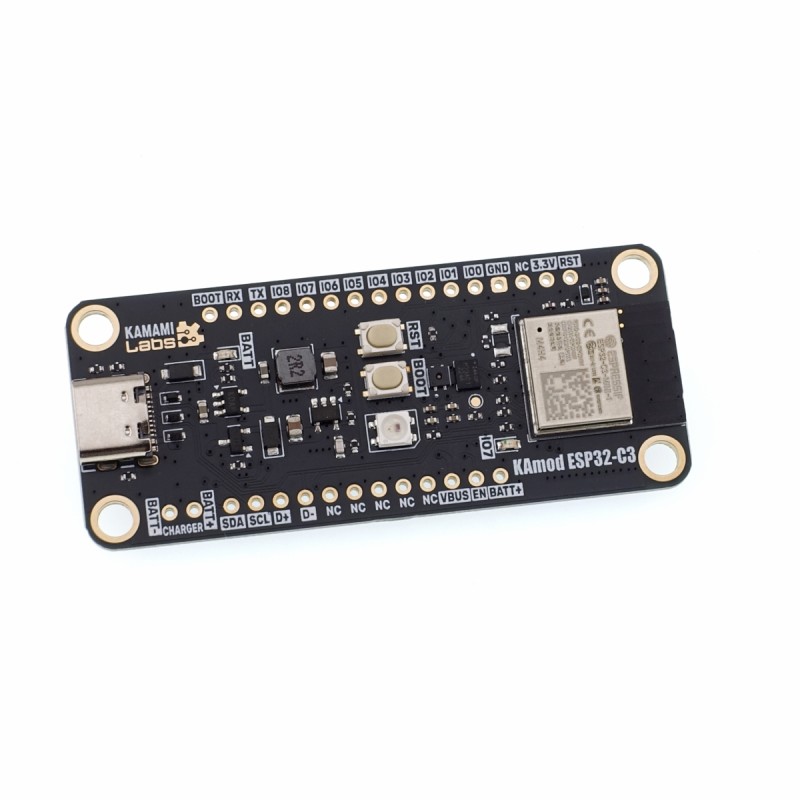
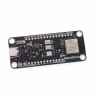
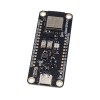
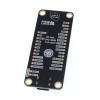
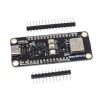
The KAmod ESP32-C3 board, equipped with a RISC-V microcontroller and a set of MEMS and SHTC3 sensors, enables the creation of IoT, measurement, and control applications. Thanks to power from USB-C or a battery and support for Arduino and Rust, it works perfectly in mobile projects and embedded systems.
The KAmod ESP32-C3 development board based on the ESP32-C3 Mini-1 module from Espressif contains a 32-bit SoC microcontroller with RISC-V architecture, clocked up to 160 MHz. The chip has 400 kB of SRAM memory and 4 MB of Flash memory. Built-in wireless communication interfaces Wi-Fi (802.11 b/g/n) and Bluetooth 5 LE with support for long-range mode (LR) enable the implementation of advanced IoT projects. The chip supports Flash memory encryption functions (AES-128/256-XTS) and secure boot. The board includes a set of integrated sensors: a digital thermometer and hygrometer SHTC3 (I2C) and a 6-axis MEMS sensor ICM42670 (gyroscope and accelerometer, I2C). Additionally, a programmable RGB diode WS2812 and an LED connected to GPIO are built in.
The module is powered by 5 V via a USB-C connector or from a Li-Ion battery. The integrated SY8088 buck converter (2.5…5 V) generates 3.3 V to power the microcontroller and sensors. The built-in MCP73831 system enables battery charging. The board also has Reset and Boot buttons and a USB-C connector serving as a power supply, programming, and JTAG interface. The module works with the Arduino (C/C++) and Rust environment, which allows fast prototyping of applications in the field of automation, telemetry, and embedded systems.
Manufacturer
Responsible person
The Espressif ESP32-S3-WROOM-1 WiFi and Bluetooth LE module board offers 8 MB Flash memory and 8 MB PSRAM. The pinouts are compatible with the ESP32-S3-DevKitC-1 modules.Waveshare ESP32-S3-DEV-KIT-N8R8
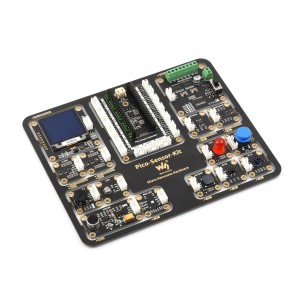
Starter kit with 15 modules useful for learning (button, LED, display, sensors, etc.) and ESP32-S3-Pico-M board. Ideal for starting your electronics and programming adventure. Waveshare ESP32-S3-Pico-Sensor-Kit-B
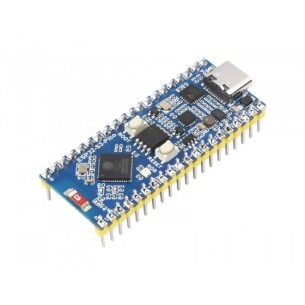
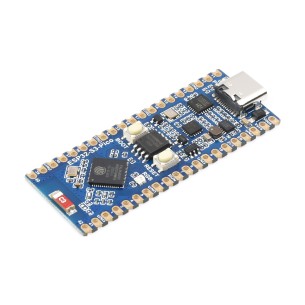
Espressif ESP32-S3 WiFi and Bluetooth LE module board. It offers 16 MB of flash memory and 2 MB of SRAM. The pinouts are compatible with the HAT modules for the Raspberry Pi Pico. Waveshare ESP32-S3-Pico-M
Espressif ESP32-S3 WiFi and Bluetooth LE module board. It offers 16 MB of flash memory and 2 MB of SRAM. The pinouts are compatible with the HAT modules for the Raspberry Pi Pico. Waveshare ESP32-S3-Pico
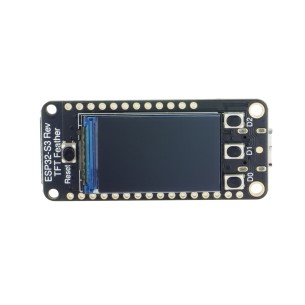
Espressif ESP32-S3 WiFi and BLE chip module with 1.14" TFT LCD display. It integrates a LiPo charging circuit and an RGB diode. It is equipped with a STEMMA QT connector. Adafruit 5691
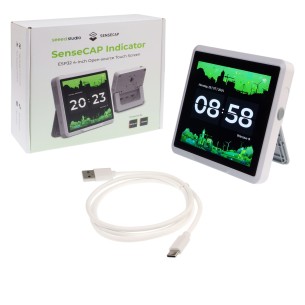
Module with a 4-inch touch display that uses two MCU systems (ESP32-S3 and RP2040) and supports Wi-Fi and BLE communication. The board is equipped with USB Type C, I2C (Grove) and analog inputs interfaces and can easily connect to other peripheral devices. Seeed Studio 114993068
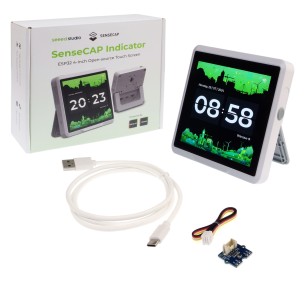
Module with a 4-inch touch display that uses two MCU systems (ESP32-S3 and RP2040) and supports Wi-Fi and BLE communication. The board is equipped with USB Type C, I2C (Grove) and analog inputs interfaces and can easily connect to other peripheral devices. Seeed Studio 114993069
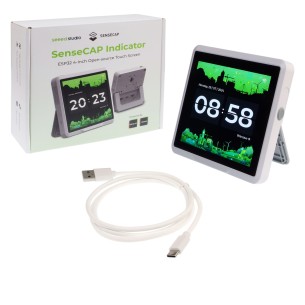
Module with a 4-inch touch display that uses two MCU systems (ESP32-S3 and RP2040) and supports Wi-Fi, BLE and LoRa communication. The board is equipped with USB Type C, I2C (Grove) and analog inputs interfaces and can easily connect to other peripheral devices. Seeed Studio 114993070
No product available!
Module with a 4-inch touch display that uses two MCU systems (ESP32-S3 and RP2040) and supports Wi-Fi, BLE and LoRa communication. The board is equipped with USB Type C, I2C (Grove) and analog inputs interfaces and can easily connect to other peripheral devices using a rich set of GPIOs. Seeed Studio 114993071
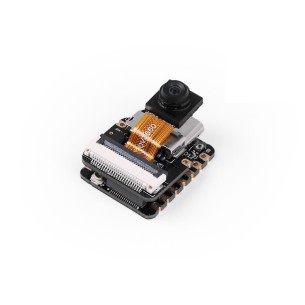
Board with WiFi and BLE Espressif ESP32-S3 module and OV3660 camera and digital microphone. It offers 8 MB Flash memory and 8 MB PSRAM. It is equipped with a USB type C connector and a WiFi/BT antenna. Seeed Studio 113991115
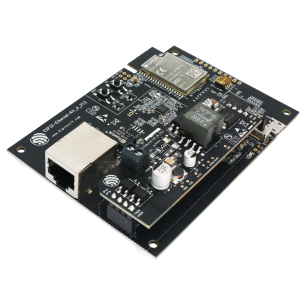
An Ethernet-Wi-Fi development board that allows you to connect Ethernet devices via Wi-Fi. It consists of two development boards: Ethernet (A) and PoE (B). The Ethernet (A) includes the ESP32-WROVER-E Bluetooth/Wi-Fi module and IP101GRI, and the PoE module (B) provides the power over Ethernet function.
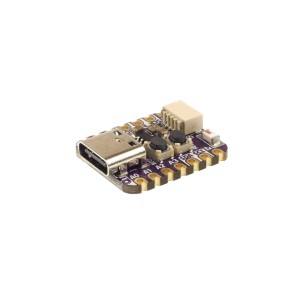
Espressif ESP32-C3 WiFi module board. It offers 4 MB of Flash memory and 400 kB of SRAM, as well as an RGB diode. It is equipped with a STEMMA QT connector. Adafruit 5700
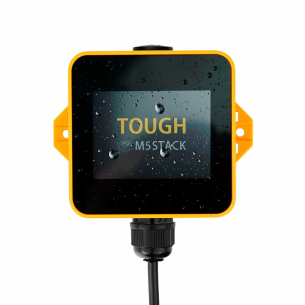
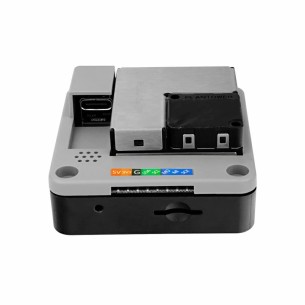
Waterproof controller with ESP32 module in an industrial-grade housing designed for demanding applications. It uses the Espressif ESP32 chip with the Xtensa® 32-bit LX6 core and a built-in Wi-Fi module. It is equipped with a 2-inch IPS display with a touch panel. M5stack K034
A set for testing ambient temperature and humidity as well as air quality. It is a combination of the M5Stack Basic host module, the SHT30 temperature and humidity sensor and the PMSA003 digital universal particle concentration sensor. M5Stack K023-b
Development kit from the M5Stack series equipped with the ESP32-S3 module. It will work well in projects related to IoT or in "wearable" devices. M5 Stack C124
No product available!
Development board based on the ESP32-C3-MINI-1 module. It offers the ability to connect via WiFi, Bluetooth version 5 and Bluetooth Mesh. It is equipped with sensors, such as the SHTC3 temperature and humidity sensor or the IMU 6 DoF ICM-42670-P sensor. Espressif Systems ESP32-C3-DevKit-RUST-1
The KAmod ESP32-C3 board, equipped with a RISC-V microcontroller and a set of MEMS and SHTC3 sensors, enables the creation of IoT, measurement, and control applications. Thanks to power from USB-C or a battery and support for Arduino and Rust, it works perfectly in mobile projects and embedded systems.