.png)




zł1,630.73 tax excl.
A powerful single-board computer featuring a quad-core Cortex-A76 processor, a quad-core Cortex-A55 processor, and a Mali-G610 GPU. The setup includes 16GB of LPDDR5 RAM, 64GB eMMC storage, an NVMe SSD slot, and a variety of connectivity options, including Ethernet, HDMI, and USB-C 3.0. Hardkernel Odroid-M2
The Odroid M2 is a powerful single-board computer designed for high-performance embedded systems. It features an octa-core Rockchip RK3588S2 chip, comprising four Cortex-A76 cores, four Cortex-A55 cores, a next-generation Mali-G610 GPU, and an RKNN NPU AI accelerator. The board comes equipped with 16GB of fast LPDDR5 RAM and a 64GB eMMC storage module.
This compact computer is an upgraded successor to the Odroid M1, aimed at industrial applications demanding exceptional performance. The Odroid M2 boasts three times the computing power, double the memory bandwidth, and five times the graphics performance of its predecessor. Additionally, the Rockchip RK3588S2 SoC is manufactured using an 8nm process, ensuring lower power consumption.

The device includes a variety of interfaces for connecting external peripherals, such as Ethernet, an NVMe SSD slot, HDMI, USB-C 3.0, USB 2.0, MIPI CSI, and GPIO headers. It supports both Ubuntu 20.04 and Android 13 operating systems, and a range of accessories and extensive documentation are available via the manufacturer's Wiki page.
Manufacturer
Responsible person
50cm 4-wire Qwiic cable terminated with 4-pin JST-SH 1.00mm connectors on both ends. Designed to carry power and I2C signals between compatible Qwiic, easyC and STEMMA QT boards and modules. Soldered 333313
4-wire cable that breaks out a Qwiic connector to individual female header terminals. Provides GND, VCC, SDA and SCL lines for connecting Qwiic modules to boards without a dedicated Qwiic connector. Soldered 333314
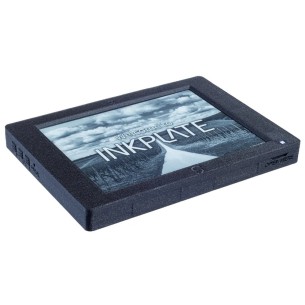
Programmable 6" 1024 × 758px touchscreen e-paper module based on ESP32 with WiFi and Bluetooth. Features two-point capacitive touch, 64-step frontlight control, microSD, RTC, Qwiic/easyC and support for Arduino, MicroPython and ESP-IDF. Version with enclosure and Li-Ion battery. Soldered 333320
Programmable module with a 6-inch 1024 × 758px e-paper display supporting 16 grayscale levels and partial refresh in approximately 91ms. Powered by an STM32H743ZIT6 with an ESP32-C3 co-processor for WiFi and Bluetooth, and equipped with microSD, RTC, Qwiic and multiple onboard sensors. Version with enclosure and 1200mAh Li-Ion battery. Soldered 333324
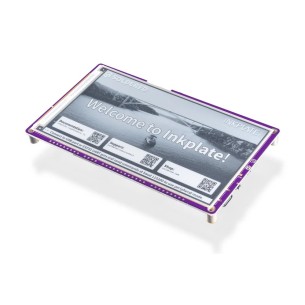
Programmable 5.2" e-paper display board with 1280 × 720px landscape resolution, based on ESP32 with WiFi and Bluetooth 4.0 LE. Features approximately 0.22s partial refresh, microSD, RTC, Qwiic and support for Arduino, MicroPython and ESP-IDF. Version with e-paper display, without enclosure or battery. Soldered 333333
No product available!
Programmable 5.2" e-paper module with 1280 × 720px resolution, ESP32, WiFi and Bluetooth LE. Features partial refresh, microSD, RTC, Qwiic/easyC, USB-C and a 1200mAh Li-Ion battery. Version with enclosure. Soldered 333336
DIY soldering kit for building a compact programmable macro keyboard based on the RP2040 microcontroller. Features 5 MX switches, a programmable rotary encoder, USB-C and QMK firmware support. Compatible with Windows, macOS and Linux. Soldered 333347
DIY soldering kit for building a programmable Pomodoro timer based on the RP2040 microcontroller. Features a 4-digit 7-segment display, WS2812B RGB LED, piezo buzzer, four control buttons and USB-C. Programmable in MicroPython. Soldered 333348
DIY soldering kit for building an analogue Lo-Fi sound generator based on the NE556N timer. Features pitch and pulse-width adjustment, a buzzer, 8Ω speaker, 3.5mm audio output and USB-C power. Soldered 333349
No product available!
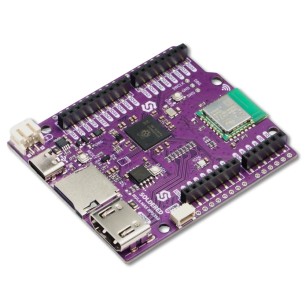
Advanced development board based on the RP2350B with 520KB SRAM and 16MB Flash. Features WiFi and Bluetooth connectivity, DVI output, microSD slot, Qwiic/easyC, USB-C and onboard charging for a 3.7V Li-Ion/Li-Poly battery. No-header version. Soldered 333351
Low-power development board based on the ESP32-S3-WROOM-1-N8R8 with WiFi, Bluetooth LE, 8MB Flash, 8MB PSRAM, PCF85063A RTC and onboard Li-Ion/Li-Poly battery charging. Deep-sleep current can be approximately 7µA. No-header version. Soldered 333352
Wireless breakout based on the ST67W611M1A6B, providing 2.4GHz WiFi 6 and Bluetooth LE 5.4 connectivity for STM32 microcontrollers. Supports SPI and UART host interfaces, 3.3V supply and a built-in PCB antenna. Soldered 333353
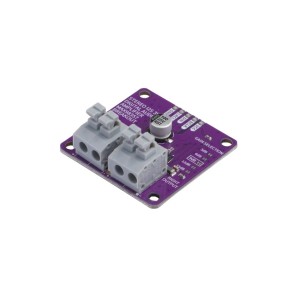
Stereo Class D audio amplifier based on two MAX98357A ICs with a digital I2S input. Delivers up to 3.2W per channel into 4Ω at 5V, supports 8–96kHz sample rates and selectable 6, 9, 12 or 15dB gain. Soldered 333355
Compact ESP32-C6-MINI-1-N4 development board with WiFi 6, Bluetooth 5.3 LE, Zigbee and Thread connectivity. Features 512KB SRAM, 4MB Flash, USB-C, Qwiic/STEMMA QT and onboard charging for a 3.7V Li-Ion/Li-Poly battery. No-header version. Soldered 333356
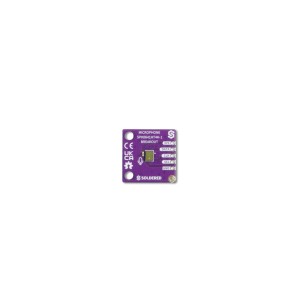
Digital MEMS microphone breakout based on the SPK0641HT4H with PDM output, 20Hz–20kHz frequency response and 64.5dB SNR. Features L/R channel selection, 3.3V supply and a compact 22 × 22mm board. Soldered 333357
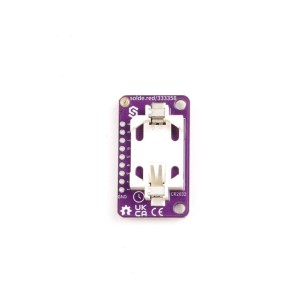
High-precision RTC breakout based on the DS3234 with an integrated temperature-compensated TCXO. Features SPI communication, accuracy up to ±2ppm, CR2032 battery backup and 256B of battery-backed SRAM. Soldered 333358
A powerful single-board computer featuring a quad-core Cortex-A76 processor, a quad-core Cortex-A55 processor, and a Mali-G610 GPU. The setup includes 16GB of LPDDR5 RAM, 64GB eMMC storage, an NVMe SSD slot, and a variety of connectivity options, including Ethernet, HDMI, and USB-C 3.0. Hardkernel Odroid-M2