.png)




zł87.80 tax excl.
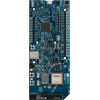
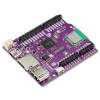
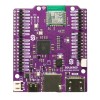
Advanced development board based on the RP2350B with 520KB SRAM and 16MB Flash. Features WiFi and Bluetooth connectivity, DVI output, microSD slot, Qwiic/easyC, USB-C and onboard charging for a 3.7V Li-Ion/Li-Poly battery. No-header version. Soldered 333351
The device NULA Max RP2350 by Soldered is based on the RP2350B microcontroller in its 80-pin package. The device features two Arm Cortex-M33 cores running at up to 150MHz and provides 520KB of SRAM together with 8KB of OTP memory. The board also includes 16MB of external Flash memory. Up to 48 GPIO lines are available depending on the configuration, making the board suitable for more complex projects requiring a large number of interfaces and peripherals. Product variant 333351 is supplied without pin headers.
The board features a Raspberry Pi Radio Module 2 providing WiFi and Bluetooth connectivity, as well as a DVI output using PicoDVI for directly driving compatible displays. A microSD card slot allows data and media storage, while the Qwiic/easyC connector enables convenient connection of I2C peripherals. Standard UART, SPI and I2C interfaces are also available, together with PWM and programmable PIO blocks.
The USB-C connector is used for programming, serial communication and powering the board. NULA Max also features a JST connector for a 3.7V Li-Ion/Li-Poly battery together with an onboard charging circuit. GPIO logic operates at 3.3V and the pins are not 5V tolerant. The board also includes a WS2812 RGB LED and RESET, BOOTSEL and USER buttons. NULA Max RP2350 supports Arduino IDE, MicroPython, C++ and Rust and measures 69 × 58.5mm.
Data sheet
The board with the RP2040 microcontroller equipped with two ARM Cortex-M0+ cores, which work at a frequency of 133 MHz, 264 kB RAM. The board also has 8 MB of QSPI flash memory. The circuit can be programmed in C/C++, CircuitPython or MicroPython. Adafruit 4900
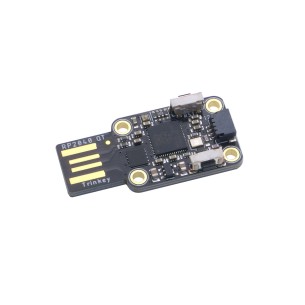
The board with the RP2040 microcontroller in the form of a USB dongle. Equipped with Stemma QT connector, RGB NeoPixel diode, boot and reset button. Adafruit 5056
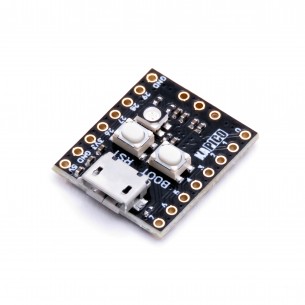
The board with the RP2040 microcontroller equipped with two ARM Cortex-M0 + cores operating at a frequency of 133 MHz, 264 kB RAM. There is as much as 16 MB of QSPI flash memory on the board. The system can be programmed in C / C ++ or microPython. KApico RP2040
No product available!
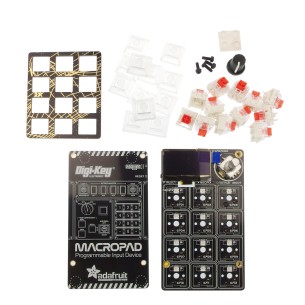
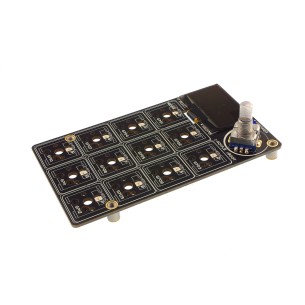
Mechanical keyboard module with LED backlight, encoder and display. Based on the RP2040 microcontroller. Adafruit 5128
No product available!
Mechanical keyboard module with LED backlight, encoder and display. Based on the RP2040 microcontroller. Adafruit 5100
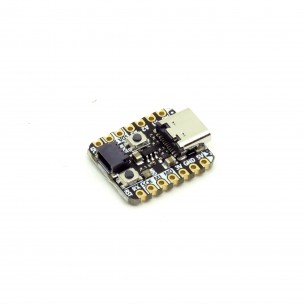
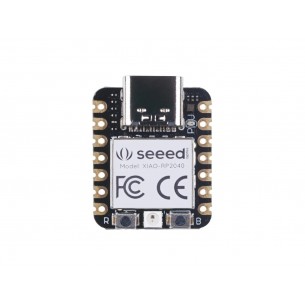
The board with the RP2040 microcontroller equipped with two ARM Cortex-M0 + cores, which work at a frequency of 133 MHz, 264 kB RAM. The board also has 2 MB of QSPI flash memory. The system can be programmed in C/C++ or MicroPython. Seeed Studio 102010428
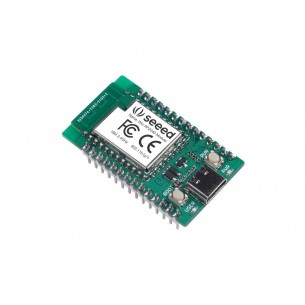
The board with the RP2040 microcontroller equipped with two ARM Cortex-M0 + cores, which operate at a frequency of 133 MHz and 264 kB RAM. The additional ESP8285 system allows communication in the WiFi network. Seeed Studio 102991555
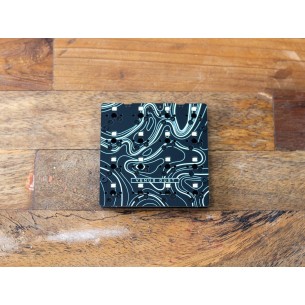
A module for building a mechanical keyboard with 16 buttons and backlight. Based on the RP2040 chip, it has sockets compatible with Cherry-MX switches. Pimoroni PIM567
No product available!
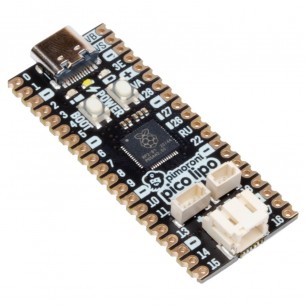
The board with the RP2040 microcontroller equipped with two ARM Cortex-M0+ cores, which work at a frequency of 133 MHz, 264 kB RAM. The board also has 4 MB of QSPI flash memory. The system can be programmed in C/C++ or MicroPython. Pimoroni PIM578
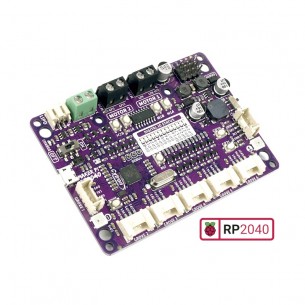
Development board with RP2040 microcontroller. Equipped with a driver for DC motors, servos and Grove connectors. Dedicated to the construction of robots. Cytron MAKER-PI-RP2040
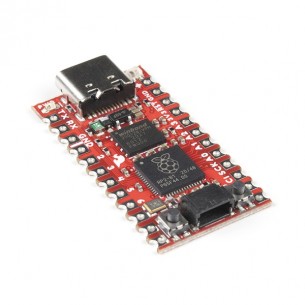
The board with the RP2040 microcontroller equipped with two ARM Cortex-M0 + cores operating at 133 MHz, 256 kB RAM. The board also has 16 MB of QSPI flash memory. The system can be programmed in C/C++ or microPython. SparkFun DEV-18288
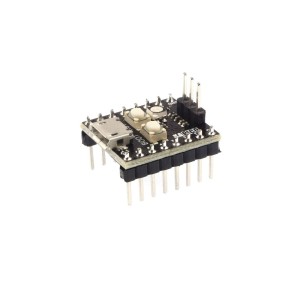
The board with the RP2040 microcontroller equipped with two ARM Cortex-M0 + cores operating at a frequency of 133 MHz, 264 kB RAM. There is as much as 16 MB of QSPI flash memory on the board. The system can be programmed in C / C ++ or microPython. Soldered connectors. KApico RP2040
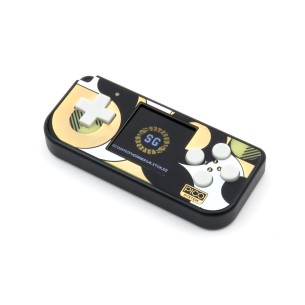
Game console based on the RP2040 microcontroller from Raspberry Pi. Equipped with a 1.54" LCD display, LiPo battery and aluminum housing. It has API support that allows you to create your own games in C++ and MicroPython. Pimoroni PIM559
No product available!
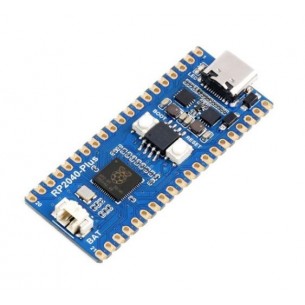
The board with the RP2040 microcontroller equipped with two ARM Cortex-M0+ cores, which work at a frequency of 133 MHz, 264 kB RAM. The board also has 4 MB of QSPI flash memory. The system can be programmed in C/C++ or MicroPython. Waveshare RP2040-Plus
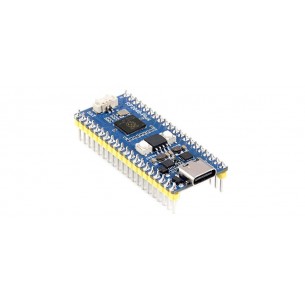
The board with the RP2040 microcontroller equipped with two ARM Cortex-M0+ cores, which work at a frequency of 133 MHz, 264 kB RAM. The board also has 4 MB of QSPI flash memory. The system can be programmed in C/C++ or MicroPython. Waveshare RP2040-Plus-M
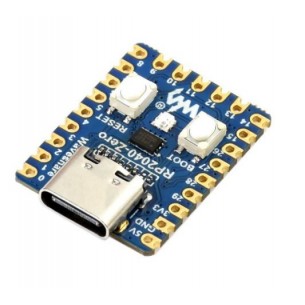
The board with the RP2040 microcontroller equipped with two ARM Cortex-M0+ cores, which work at a frequency of 133 MHz, 264 kB RAM. The board also has 2 MB of QSPI flash memory. The system can be programmed in C/C++ or MicroPython. Waveshare RP2040-Zero
Advanced development board based on the RP2350B with 520KB SRAM and 16MB Flash. Features WiFi and Bluetooth connectivity, DVI output, microSD slot, Qwiic/easyC, USB-C and onboard charging for a 3.7V Li-Ion/Li-Poly battery. No-header version. Soldered 333351