
.png)












zł198.74 tax excl.
Versatile digital video module. It uses two RP2040 chips (one in the form of a Raspberry Pi Pico W board and the other as a separate RP2040 microcontroller) and is equipped with an HDMI output connector. Pimoroni PIM674
PicoVision is a versatile digital video module. It uses two RP2040 chips (one in the form of a Raspberry Pi Pico W board and the other as a separate RP2040 microcontroller) and is equipped with an HDMI output connector, which opens up a world of audio-visual projects.
The RP2040 microcontroller works as a graphics processor and takes care of the process of rendering smooth, high-resolution animations on a TV or monitor via HDMI output. The central unit (CPU), which serves as the Raspberry Pi Pico W board, executes code and establishes connections with other devices via USB, Wi-Fi and Bluetooth. Two PSRAM memories act as image buffers. The CPU writes to one while the GPU reads from the other, ensuring constant image refreshment.
Thanks to the HDMI output, you can use various types of screens, from TVs and monitors to powerful projectors or even small screens to create unique projects. PicoVision also has an audio interface that allows you to generate high-quality sounds and sound effects. It uses a MicroSD card to store image and audio data, providing enough space. In addition, the board has a Qwiic/Stemma QT connector, useful for connecting additional sensors via the I2C interface. Creating a user interface is made easier by a set of buttons.
PicoVision can be programmed in both C++ and MicroPython. Whatever your programming preferences, you have access to PicoVision's graphics libraries that let you manipulate shapes, text, and images. Discover exciting new vector graphics and font possibilities with PicoVector and give your creativity free rein with PicoSynth, producing stunning sounds and melodies. Whether you're a seasoned creator or a novice enthusiast, this digital video module opens the door to a limitless world of audio-visual innovation.
Data sheet
Manufacturer
Responsible person
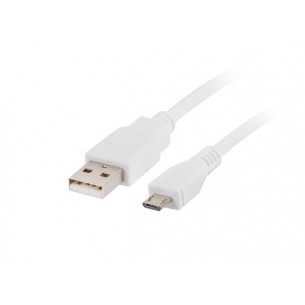
Cable with USB typ A and microUSB typ B connectors, cable length 1 m. LANBERG CCP-MUSB2-AMBM-W-1M
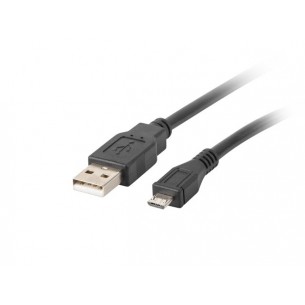
Cable with USB typ A and microUSB typ B connectors, cable length 1 m. LANBERG CA-USBM-10CC-0010-BK
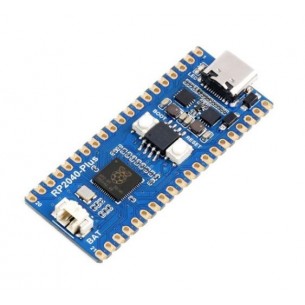
The board with the RP2040 microcontroller equipped with two ARM Cortex-M0+ cores, which work at a frequency of 133 MHz, 264 kB RAM. The board also has 4 MB of QSPI flash memory. The system can be programmed in C/C++ or MicroPython. Waveshare RP2040-Plus
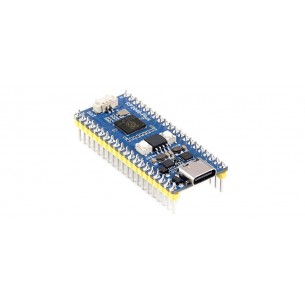
The board with the RP2040 microcontroller equipped with two ARM Cortex-M0+ cores, which work at a frequency of 133 MHz, 264 kB RAM. The board also has 4 MB of QSPI flash memory. The system can be programmed in C/C++ or MicroPython. Waveshare RP2040-Plus-M
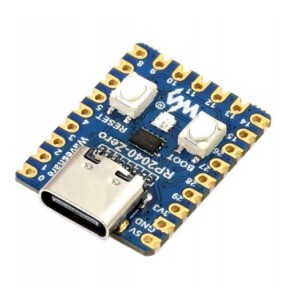
The board with the RP2040 microcontroller equipped with two ARM Cortex-M0+ cores, which work at a frequency of 133 MHz, 264 kB RAM. The board also has 2 MB of QSPI flash memory. The system can be programmed in C/C++ or MicroPython. Waveshare RP2040-Zero
No product available!
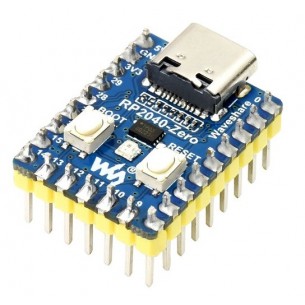
The board with the RP2040 microcontroller equipped with two ARM Cortex-M0+ cores, which work at a frequency of 133 MHz, 264 kB RAM. The board also has 2 MB of QSPI flash memory. The system can be programmed in C/C++ or MicroPython. Waveshare RP2040-Zero-M
The board with the RP2040 microcontroller equipped with two ARM Cortex-M0+ cores, which work at a frequency of 133 MHz, 264 kB RAM. The board also has 2 MB of QSPI flash memory. The system can be programmed in C/C++ or MicroPython. Waveshare RP2040-LCD-0.96
The board with the RP2040 microcontroller equipped with two ARM Cortex-M0+ cores, which work at a frequency of 133 MHz, 264 kB RAM. The board also has 2 MB of QSPI flash memory. The system can be programmed in C/C++ or MicroPython. Waveshare RP2040-LCD-0.96-M
The board with the RP2040 microcontroller equipped with two ARM Cortex-M0 + 133 MHz cores, 264 kB RAM. The board also has 8 MB of QSPI flash memory. The circuit can be programmed in C/C++, CircuitPython or MicroPython. Adafruit 5302
Mini board with RP2040 microcontroller equipped with two ARM Cortex-M0 + 133 MHz cores, 264 kB RAM. The board also has 8 MB of QSPI flash memory. The circuit can be programmed in C/C++, CircuitPython or MicroPython. Pimoroni SP011
No product available!
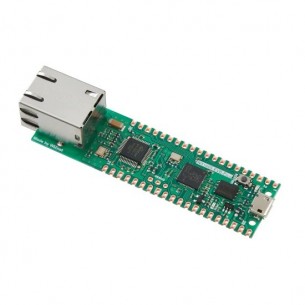
Board with RP2040 microcontroller and W5100S network chip. The module is equipped with an Ethernet connector. WIZnet W5100S-EVB-Pico
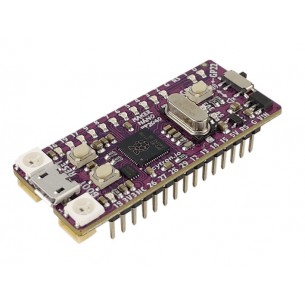
Development board equipped with RP2040 microcontroller, RGB LED diodes, buzzer and Qwiic/STEMMA QT connectors. Pin spacing compatible with Arduino Nano. Cytron MAKER-NANO-RP2040
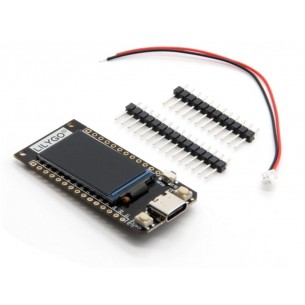
The board with the RP2040 microcontroller equipped with two ARM Cortex-M0+ cores. The board also has 4 MB of QSPI flash memory. 1.14" LCD module. TTGO T-Display RP2040
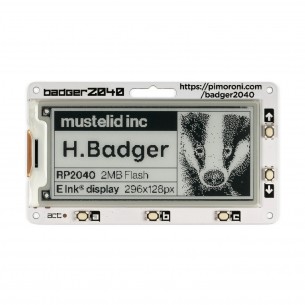
Module with ePaper 2.9" display and RP2040 microcontroller. Equipped with QW/ST connector. Pimoroni PIM607
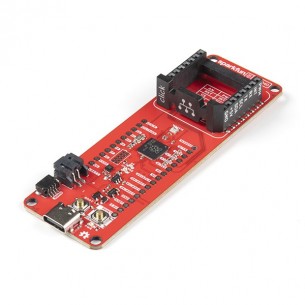
Development board with RP2040 microcontroller. Equipped with a microBUS connector, it can work with Qwiic expansion boards. SprakFun DEV-18721
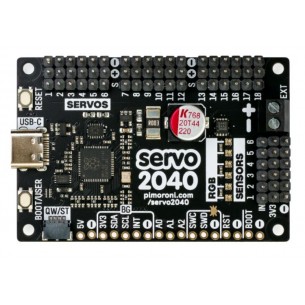
Servo driver based on the Raspberry Pi RP2040 microcontroller. It allows you to control up to 18 servos, has 6 analog inputs and a QW/ST connector for connecting additional sensors. Pimoroni PIM613
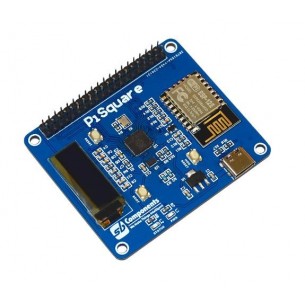
Development board with RP2040 and ESP-12E microcontroller. Equipped with 0.91" OLED display. SB Components 24186
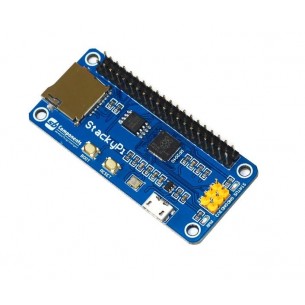
The board with the RP2040 microcontroller, which provides a set of 2x20-pin connectors to which you can connect the HATs of the Raspberry Pi. SB Components 24032
Versatile digital video module. It uses two RP2040 chips (one in the form of a Raspberry Pi Pico W board and the other as a separate RP2040 microcontroller) and is equipped with an HDMI output connector. Pimoroni PIM674