.png)



zł48.85 tax excl.
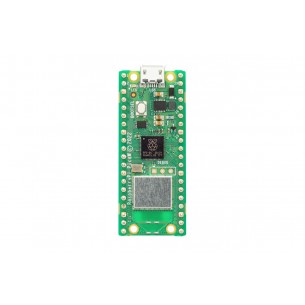
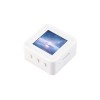
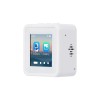
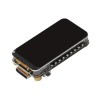
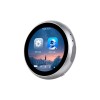
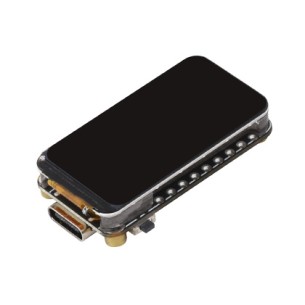
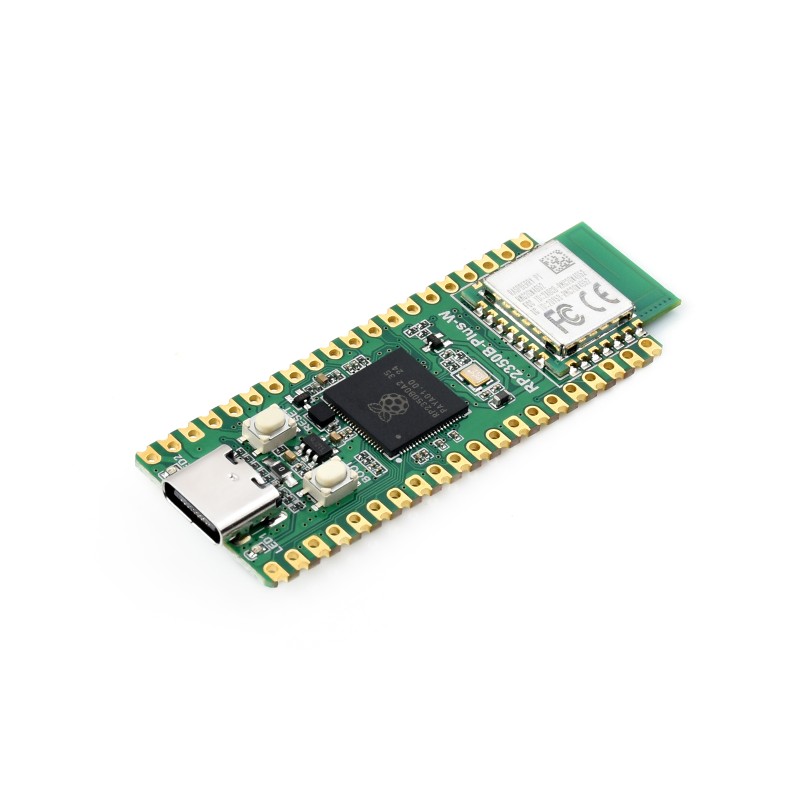
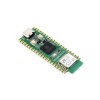
RP2350B-Plus-W is an advanced development board with an RP2350B microcontroller and wireless Wi-Fi/Bluetooth communication, enabling selection between ARM and RISC-V architectures. Intended for educational applications, IoT device prototyping, and projects requiring versatile communication and processing capabilities.
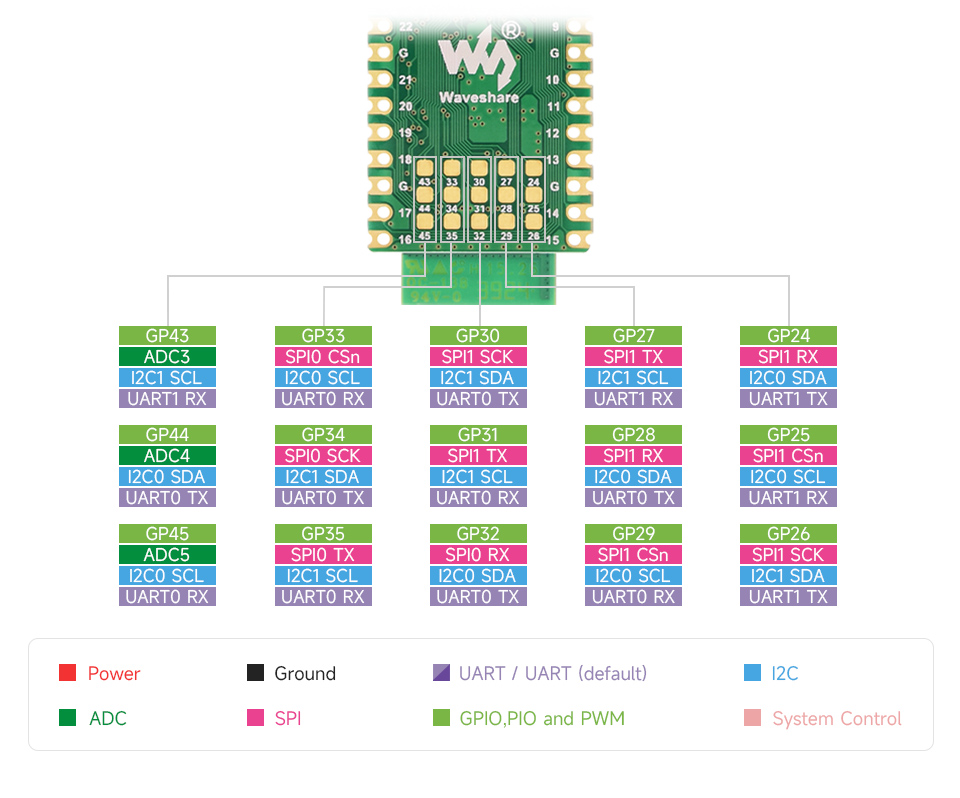
The RP2350B-Plus-W development board by Waveshare based on the Raspberry Pi RP2350B microcontroller enables operation in ARM Cortex-M33 or RISC-V Hazard3 dual-core architecture, with a maximum frequency of 150 MHz. The integrated Raspberry Pi Radio Module 2 communication module based on the Infineon CYW43439 chip provides wireless connectivity in Wi-Fi 4 and Bluetooth 5.2 standards. The device is equipped with 520 kB of SRAM and 16 MB of Flash memory and allows further expansion thanks to pads for mounting a PSRAM chip.
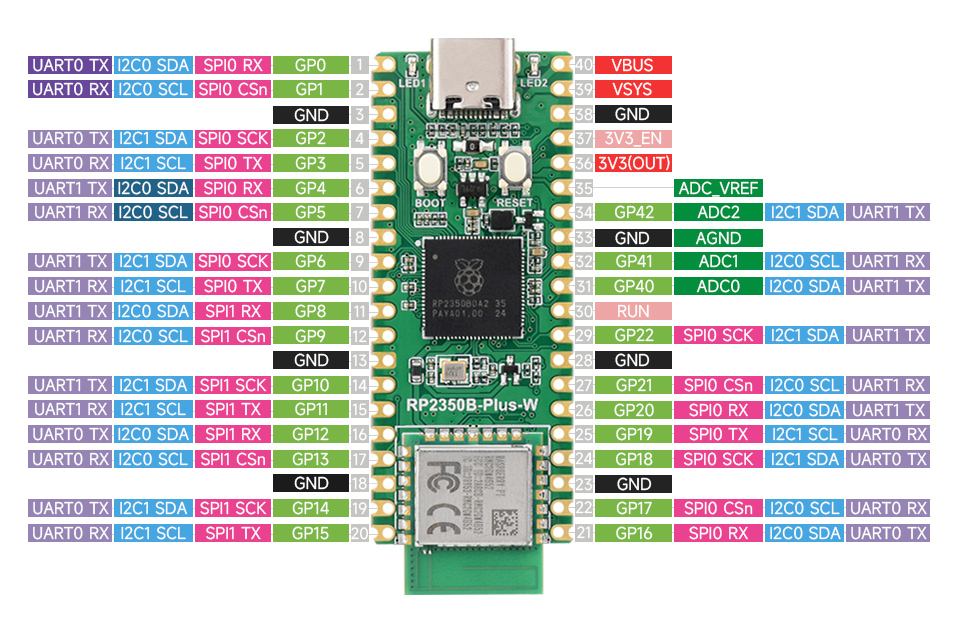
The board features a USB Type-C connector supporting device and host modes (USB 1.1), 41 multifunctional GPIO pins including SPI, I2C, UART interfaces, 6 12-bit ADC channels, 22 PWM channels and 12 PIO programmable state machines. It supports drag-and-drop programming via USB mass storage, as well as C/C++, MicroPython and Arduino IDE environments. Also included are BOOT and RESET buttons and two LED indicators.
The RP2350B-Plus-W is used in projects requiring flexibility of CPU architecture, wireless communication and low power consumption, as well as an experimental platform for learning microcontroller programming in RISC-V and ARM architecture.
Data sheet
Manufacturer
Responsible person
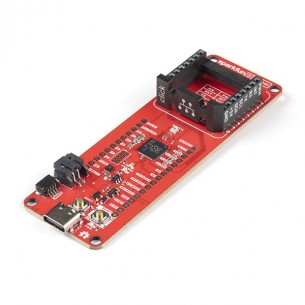
Development board with RP2040 microcontroller. Equipped with a microBUS connector, it can work with Qwiic expansion boards. SprakFun DEV-18721
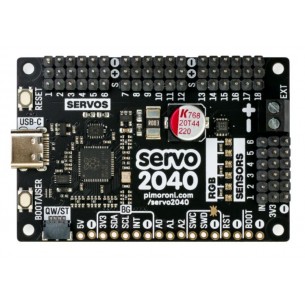
Servo driver based on the Raspberry Pi RP2040 microcontroller. It allows you to control up to 18 servos, has 6 analog inputs and a QW/ST connector for connecting additional sensors. Pimoroni PIM613
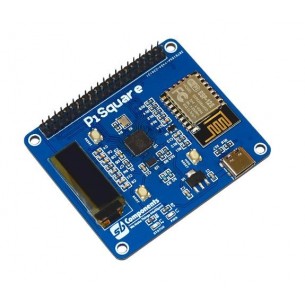
Development board with RP2040 and ESP-12E microcontroller. Equipped with 0.91" OLED display. SB Components 24186
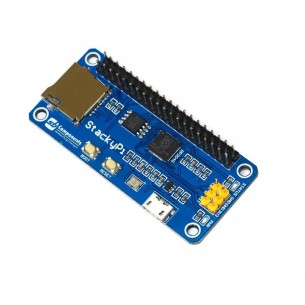
The board with the RP2040 microcontroller, which provides a set of 2x20-pin connectors to which you can connect the HATs of the Raspberry Pi. SB Components 24032
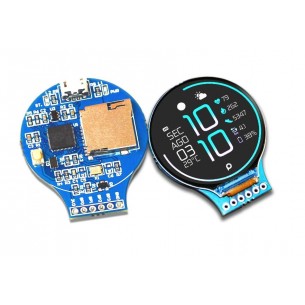
Module with round 1.28" IPS LCD display and 240x240 px resolution and RP2040 chip. SB Components 24018
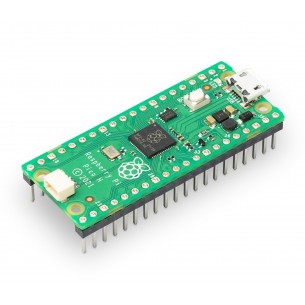
Module with the RP2040 microcontroller with two ARM Cortex-M0 + cores operating at 133 MHz, 256 kB RAM and 30 GPIO. The board also has 2 MB of external QSPI flash memory. Module can be programmed in C/C++ or microPython. Version with soldered connectors. Raspberry Pi SC0917
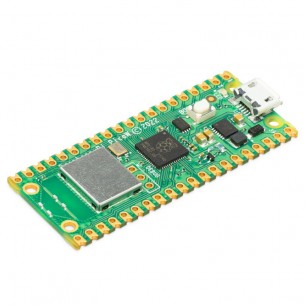
The board with the RP2040 microcontroller equipped with two ARM Cortex-M0 + cores operating at a frequency of 133 MHz, 264 kB RAM. The board also has 2 MB of QSPI flash memory. In addition, the board is equipped with the Infineon CYW43439 system, extending the board with wireless connectivity. Raspberry Pi SC0918
The board with the RP2040 microcontroller equipped with two ARM Cortex-M0 + cores operating at a frequency of 133 MHz, 264 kB RAM. The board also has 2 MB of QSPI flash memory. In addition, the board is equipped with the Infineon CYW43439 system, extending the board with wireless connectivity. Version with soldered connectors. Raspberry Pi SC0919
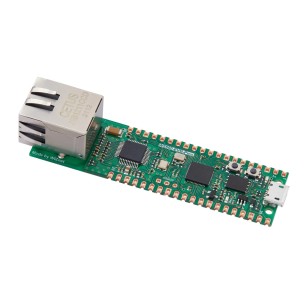
Evaluation board with a Raspberry Pi RP2040 microcontroller and a TCP/IP W5500 controller. WIZnet W5500-EVB-PICO
No product available!
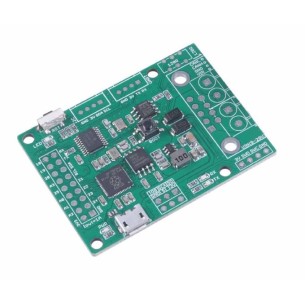
CAN 2.0 module based on the MCP2551 and MCP2515 systems, equipped with the RP2040 microcontroller. Seeed Studio 102991596
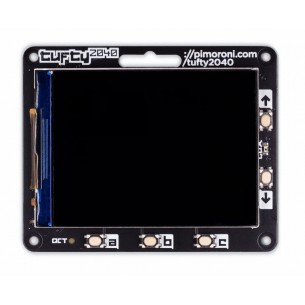
Module with LCD 2.4" display with a resolution of 320x240 px and RP2040 microcontroller. Equipped with QW/ST connector. Pimoroni PIM624
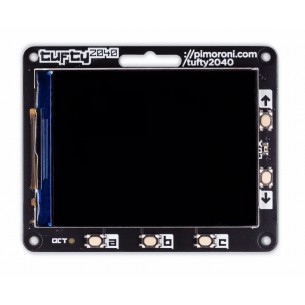
Module with LCD 2.4" display with a resolution of 320x240 px and RP2040 microcontroller. Equipped with QW/ST connector. Accessories included. Pimoroni PIM636
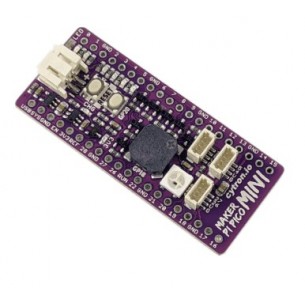
Base board with soldered Raspberry Pi Pico W module. Equipped with numerous connectors, buzzer, buttons and LEDs. Cytron MAKER-PI-PICO-MINI-W
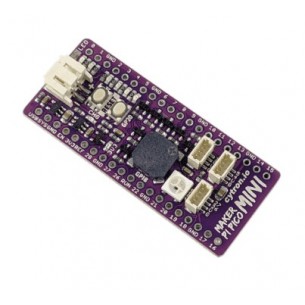
Base board with soldered Raspberry Pi Pico module. Equipped with numerous connectors, buzzer, buttons and LEDs. Cytron MAKER-PI-PICO-MINI
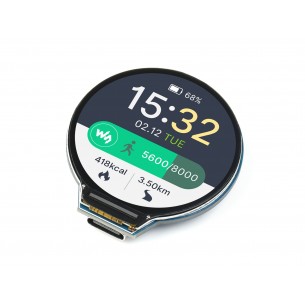
Module with a round 1.28" IPS LCD display with a resolution of 240x240 px and RP2040 microcontroller. Equipped with an accelerometer and a gyroscope. Waveshare RP2040-LCD-1.28
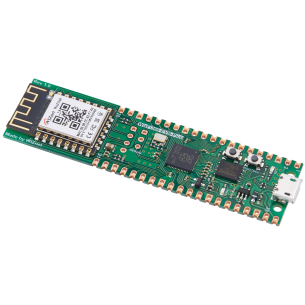
The board features the Raspberry Pi Foundation\'s RP2040 microcontroller and the WizFi360 module, which provides 2.4GHz WiFi communication over 802.11 b/g/n. WIZnet WizFi360-EVB-Pico
RP2350B-Plus-W is an advanced development board with an RP2350B microcontroller and wireless Wi-Fi/Bluetooth communication, enabling selection between ARM and RISC-V architectures. Intended for educational applications, IoT device prototyping, and projects requiring versatile communication and processing capabilities.