.png)



zł13.74 tax excl.
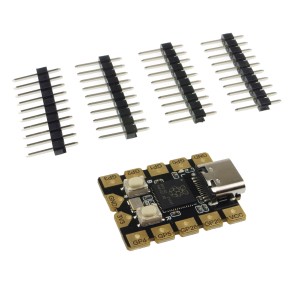
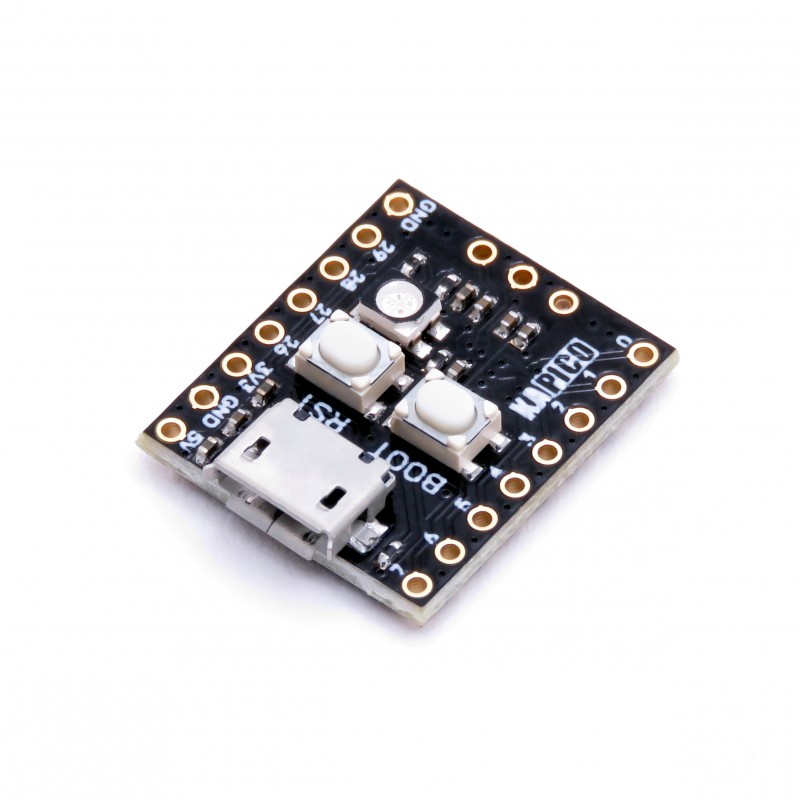
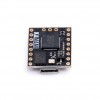
The board with the RP2040 microcontroller equipped with two ARM Cortex-M0 + cores operating at a frequency of 133 MHz, 264 kB RAM. There is as much as 16 MB of QSPI flash memory on the board. The system can be programmed in C / C ++ or microPython. KApico RP2040
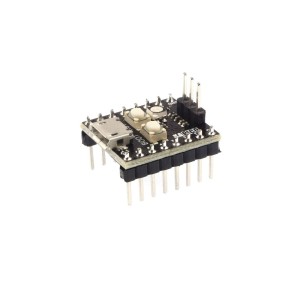
A miniature board with an RP2040 microcontroller equipped with two ARM Cortex-M0 + cores operating at 133 MHz, 264 kB RAM. The board has as much as 16 MB of QSPI flash memory - compared to the 2 MB in which the standard Pico is equipped, as well as 4 ADC inputs instead of 3.
Data sheet
Manufacturer
Responsible person
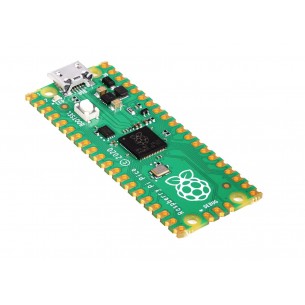
Module with the RP2040 microcontroller with two ARM Cortex-M0 + cores operating at 133 MHz, 256 kB RAM and 30 GPIO. The board also has 2 MB of external QSPI flash memory. Module can be programmed in C/C++ or microPython. Raspberry Pi Pico
The board with the RP2040 microcontroller equipped with two ARM Cortex-M0 + cores operating at a frequency of 133 MHz, 264 kB RAM. There is as much as 16 MB of QSPI flash memory on the board. The system can be programmed in C / C ++ or microPython. Soldered connectors. KApico RP2040
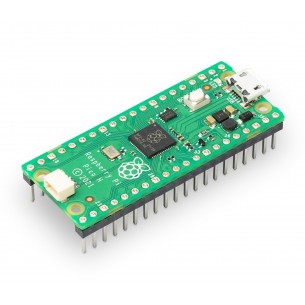
Module with the RP2040 microcontroller with two ARM Cortex-M0 + cores operating at 133 MHz, 256 kB RAM and 30 GPIO. The board also has 2 MB of external QSPI flash memory. Module can be programmed in C/C++ or microPython. Version with soldered connectors. Raspberry Pi SC0917
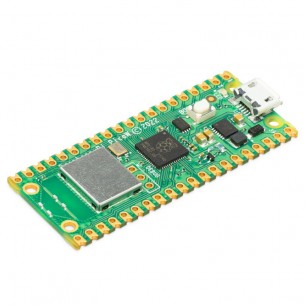
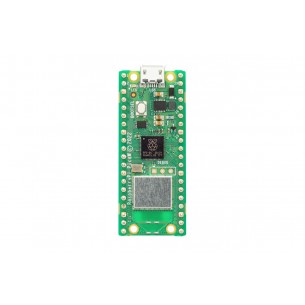
The board with the RP2040 microcontroller equipped with two ARM Cortex-M0 + cores operating at a frequency of 133 MHz, 264 kB RAM. The board also has 2 MB of QSPI flash memory. In addition, the board is equipped with the Infineon CYW43439 system, extending the board with wireless connectivity. Raspberry Pi SC0918
The board with the RP2040 microcontroller equipped with two ARM Cortex-M0 + cores operating at a frequency of 133 MHz, 264 kB RAM. The board also has 2 MB of QSPI flash memory. In addition, the board is equipped with the Infineon CYW43439 system, extending the board with wireless connectivity. Version with soldered connectors. Raspberry Pi SC0919
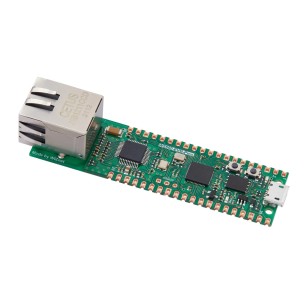
Evaluation board with a Raspberry Pi RP2040 microcontroller and a TCP/IP W5500 controller. WIZnet W5500-EVB-PICO
No product available!
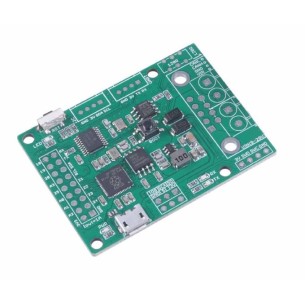
CAN 2.0 module based on the MCP2551 and MCP2515 systems, equipped with the RP2040 microcontroller. Seeed Studio 102991596
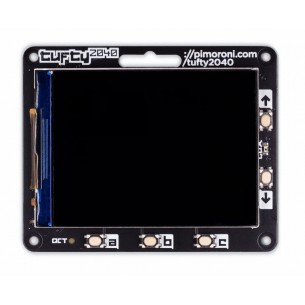
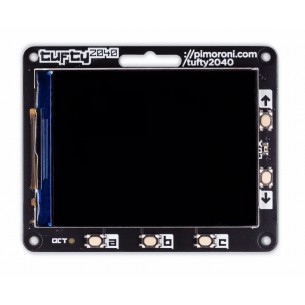
Module with LCD 2.4" display with a resolution of 320x240 px and RP2040 microcontroller. Equipped with QW/ST connector. Pimoroni PIM624
Module with LCD 2.4" display with a resolution of 320x240 px and RP2040 microcontroller. Equipped with QW/ST connector. Accessories included. Pimoroni PIM636
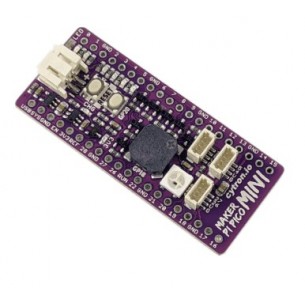
Base board with soldered Raspberry Pi Pico W module. Equipped with numerous connectors, buzzer, buttons and LEDs. Cytron MAKER-PI-PICO-MINI-W
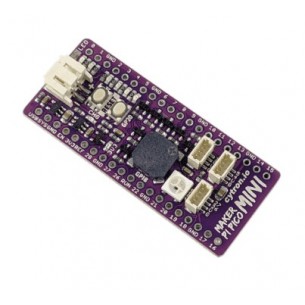
Base board with soldered Raspberry Pi Pico module. Equipped with numerous connectors, buzzer, buttons and LEDs. Cytron MAKER-PI-PICO-MINI
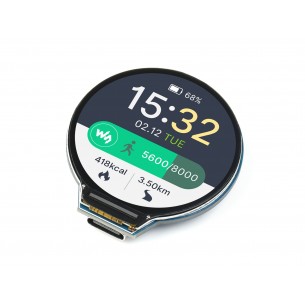
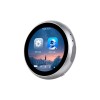
Module with a round 1.28" IPS LCD display with a resolution of 240x240 px and RP2040 microcontroller. Equipped with an accelerometer and a gyroscope. Waveshare RP2040-LCD-1.28
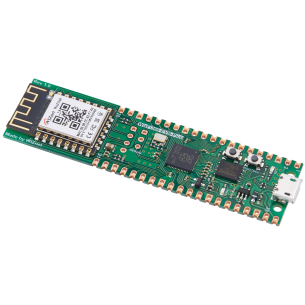
The board features the Raspberry Pi Foundation\'s RP2040 microcontroller and the WizFi360 module, which provides 2.4GHz WiFi communication over 802.11 b/g/n. WIZnet WizFi360-EVB-Pico
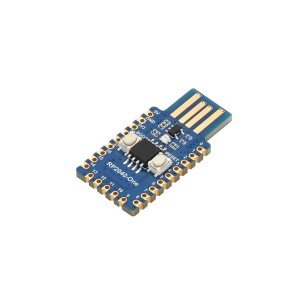
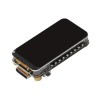
Board with the RP2040 microcontroller in the form of a USB dongle. Equipped with edge connectors, RGB LED, boot and reset button. Waveshare RP2040-One
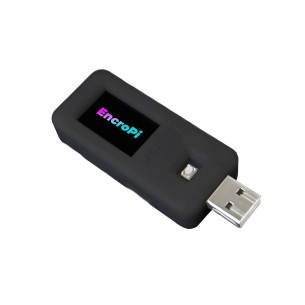
USB RTC module based on Raspberry Pi RP2040 microcontroller. It combines MicroSD card slot, LCD display and CR1220 battery holder. SB Components SKU25138
The RP2040 microcontroller board features two 133 MHz ARM Cortex-M0+ cores and 264 kB of RAM. The board also includes 2 MB of QSPI Flash memory. The chip can be programmed in C/C++, CircuitPython or MicroPython. DFRobot DFR0959
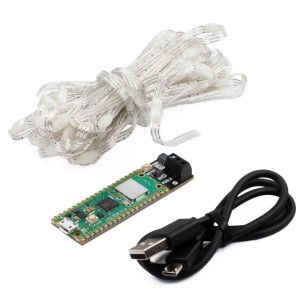
A kit containing an LED strip driver module and WS2812/Neopixel tape. Designed to easily and quickly create animations using popular RGB LED strips. Pimoroni PIM657
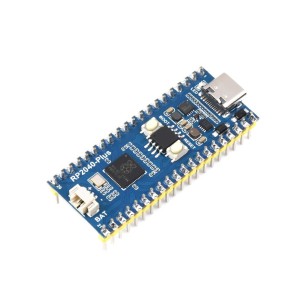
The RP2040 microcontroller board features two ARM Cortex-M0+ cores that operate at 133 MHz. It has 264 kB of RAM, and the board also includes 16 MB of QSPI Flash memory. The chip can be programmed in C/C++ or MicroPython. Board with connectors. Waveshare RP2040-Plus-16MB-M
The board with the RP2040 microcontroller equipped with two ARM Cortex-M0 + cores operating at a frequency of 133 MHz, 264 kB RAM. There is as much as 16 MB of QSPI flash memory on the board. The system can be programmed in C / C ++ or microPython. KApico RP2040