.png)



zł29.99 tax excl.
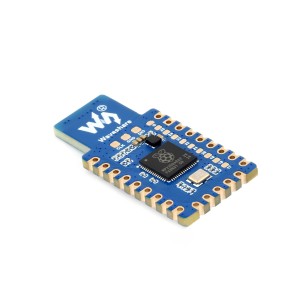
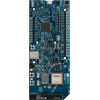
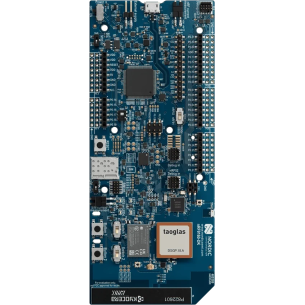
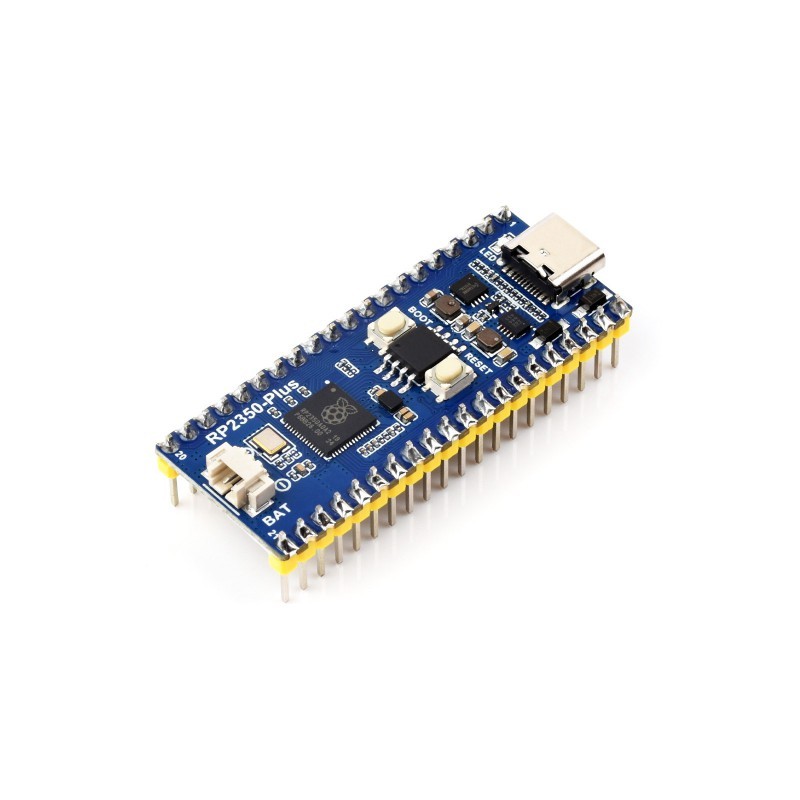
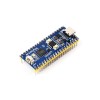
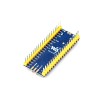
The RP2350-Plus-M offers the flexibility and performance required in modern embedded projects while maintaining full compatibility with Raspberry Pi Pico and its extensions. Factory-soldered headers and built-in Flash memory make the module suitable for rapid prototyping as well as educational and commercial applications.
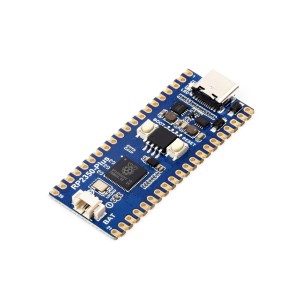
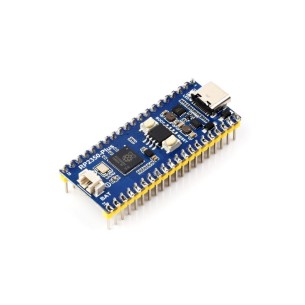
The RP2350-Plus-M is a high-performance, cost-effective development board based on Raspberry Pi’s RP2350A microcontroller. This version comes with pre-soldered headers and 4 MB of onboard Flash memory. It maintains full dimensional compatibility with Raspberry Pi Pico, allowing seamless integration with most Pico extension boards. With a dual-core architecture (ARM Cortex-M33 and RISC-V Hazard 3) and USB Type-C power supply, the board is ideal for educational, embedded, and prototyping applications.
Data sheet
Manufacturer
Responsible person
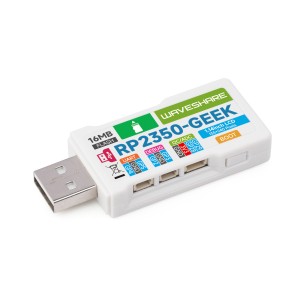
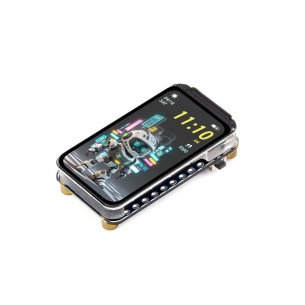
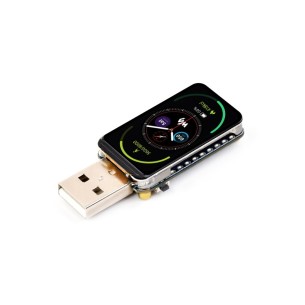
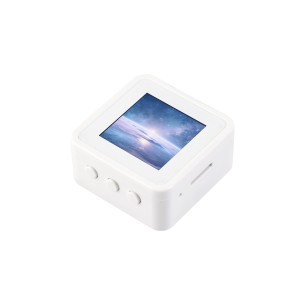
RP2350-GEEK is an advanced diagnostic and development platform for electronics designers. It enables convenient debugging of ARM microcontrollers, testing of I2C and UART peripherals, and data visualization on a color display. Thanks to its compact enclosure and set of interfaces, it is an excellent tool for learning, prototyping, and embedded project development.
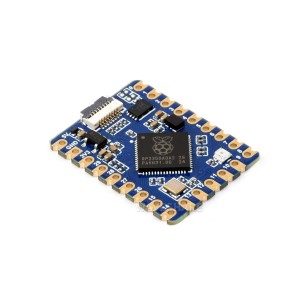
RP2350-Zero-M combines compact dimensions with high performance and a rich set of peripherals. With pre-soldered headers and compatibility with popular development environments such as C/C++ and MicroPython, it is an ideal choice for creators of educational projects, embedded system prototypes, and IoT solutions.
RP2350-Plus without headers is a universal development board designed for developers who prefer surface-mount soldering or custom connector configurations. Thanks to a large number of peripherals, a powerful chip, and full compatibility with the Raspberry Pi Pico, it provides a solid foundation for developing consumer, educational, and professional electronics projects.
The RP2350-Plus-M offers the flexibility and performance required in modern embedded projects while maintaining full compatibility with Raspberry Pi Pico and its extensions. Factory-soldered headers and built-in Flash memory make the module suitable for rapid prototyping as well as educational and commercial applications.
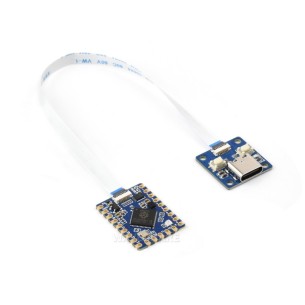
RP2350-Tiny is a minimalist development board based on the RP2350A microcontroller with dual Cortex-M33 and RISC-V architecture, without an integrated USB port. Instead, it features an FPC connector for attaching an external USB-C adapter (not included). The module offers extensive GPIO and peripheral functionality, drag-and-drop programming, support for C/C++ and MicroPython, and SMT mounting capability. It is ideal for embedded projects where minimal space and flexible connectivity are essential.
RP2350-Tiny-Kit is a versatile development kit for embedded and educational projects. With a flexible interface, rich set of peripherals, and support for popular development environments, it enables rapid prototyping and easy integration into larger systems. The version with a USB Type-C adapter provides convenient access for programming and powering the module.
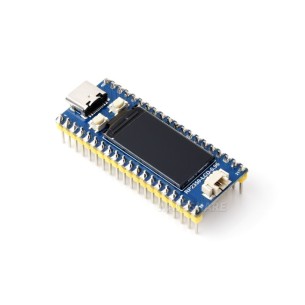
RP2350-LCD-0.96-M is a versatile development board with a display, designed for projects based on RP2350A microcontrollers. It supports multiple interfaces and programming languages, features pre-soldered headers, and is compatible with Pico HAT modules, making it ideal for prototyping embedded systems, portable devices, and educational projects.
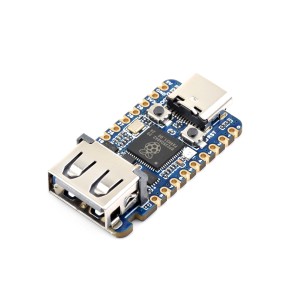
Waveshare RP2350-One is a compact development board featuring the RP2350A microcontroller with dual-core architecture: Arm Cortex-M33 and RISC-V. It offers a rich set of peripherals and 4 MB of Flash memory. With a direct USB Type-A connector, support for C/C++ and MicroPython, and SMT mounting capability, it is ideal for modern embedded applications, automation, and technical education.
RP2350-Touch-LCD-1.69 is a compact and versatile development board offering advanced processing capabilities thanks to its dual-core CPU architecture and large Flash memory. The integrated touchscreen, sensors, and battery power support make it an ideal choice for HMI projects, wearable electronics, measurement systems, and educational solutions based on the RP2350.
RP2350-USB-A is a versatile development board based on the modern RP2350A microcontroller with a unique dual-core architecture: Arm Cortex-M33 + RISC-V. Thanks to the USB Type-A port supported via PIO, a wide range of interfaces, and a compact form factor, the board is ideal for prototyping peripheral devices, learning programming, and integrating into custom projects as an SMD module.
RP2350-LCD-1.47-A is a compact development board featuring the RP2350A microcontroller and a color LCD screen, offering high computing performance and low power consumption. With support for dual CPU architectures and USB programming, it is ideally suited for educational projects, graphical demonstrators, and integration with consumer and portable devices. The version with a USB Type-C port and without pre-soldered headers provides greater flexibility for mounting and adaptation.
RP2350-LCD-1.47-B is a compact development board with the RP2350A microcontroller and a 1.47" color LCD, designed for rapid prototyping of embedded projects. With support for dual CPU architectures, 16 MB of Flash memory, and a variety of interfaces (USB, TF, RGB LED), it is suitable for educational purposes, demo projects, wearables, and interactive systems. Support for popular development environments and expandability via goldpin headers further enhance its versatility.
RP2350-Touch-LCD-2.8 is a versatile development platform with a touchscreen and audio functions, designed for projects involving user interfaces, audio playback, motion tracking, and remote communication. It combines the processing power of the RP2350 with a rich set of peripherals and low power consumption, making it ideal for portable, educational, and HMI applications.
RP2350-Touch-LCD-2 is a compact and cost-effective development board featuring an IPS touchscreen display, motion sensor, and camera interface. Designed for developing interactive, educational, and portable applications, it is based on the RP2350 microcontroller with a unique ARM + RISC-V architecture.
RP2350-Touch-AMOLED-1.43 is a high-performance platform for building modern user interfaces in mobile, wearable, and control system projects. The high-contrast AMOLED display and capacitive touch, combined with an IMU sensor and RTC, provide a comprehensive development environment for applications requiring advanced interaction and mobility.
RP2350-Touch-AMOLED-1.43-B is a compact development board with an AMOLED display and capacitive touch, enclosed in a robust CNC-machined case. Integrated sensors and interfaces offer extensive expansion and application possibilities in HMI projects, wearable electronics, and smart control systems. Support for C/C++, MicroPython, and Arduino IDE, along with rich SDK resources, facilitates rapid project deployment.
The RP2350-Plus-M offers the flexibility and performance required in modern embedded projects while maintaining full compatibility with Raspberry Pi Pico and its extensions. Factory-soldered headers and built-in Flash memory make the module suitable for rapid prototyping as well as educational and commercial applications.