.png)



zł22.06 tax excl.
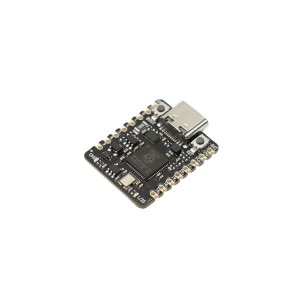
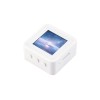
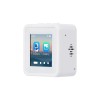
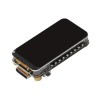
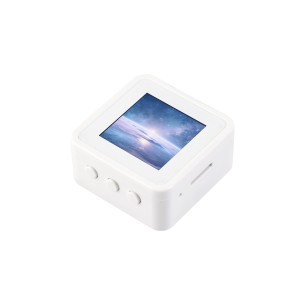
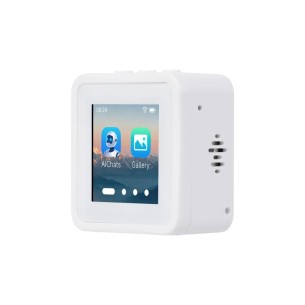
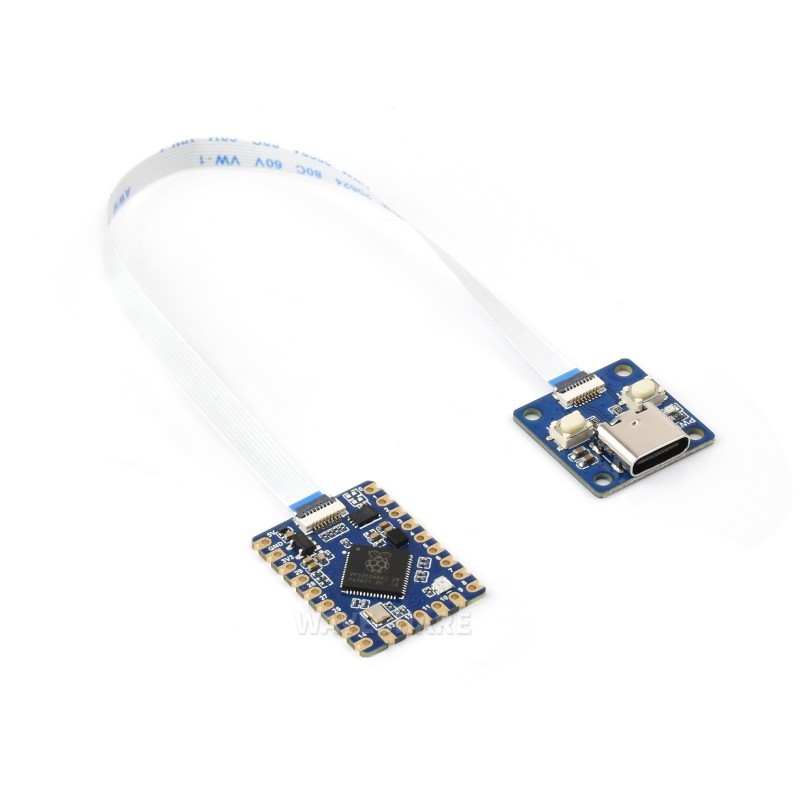
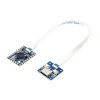
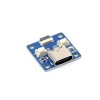
RP2350-Tiny-Kit is a versatile development kit for embedded and educational projects. With a flexible interface, rich set of peripherals, and support for popular development environments, it enables rapid prototyping and easy integration into larger systems. The version with a USB Type-C adapter provides convenient access for programming and powering the module.
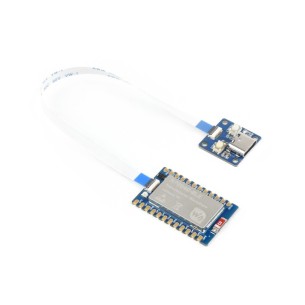
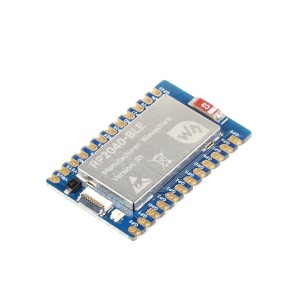
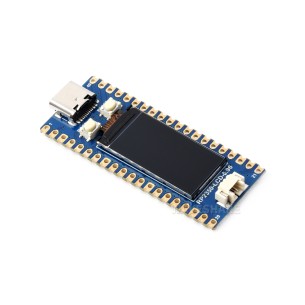
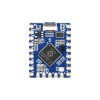
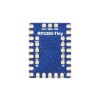
The RP2350-Tiny-Kit is a compact development kit based on the RP2350A microcontroller designed by Raspberry Pi. The version with USB adapter and FPC cable enables convenient power supply and programming via USB Type-C port. The module features castellated edges, making it suitable for use as a standalone board or as a solderable component on a base board. With support for C/C++ and MicroPython, the kit is ideal for a wide range of embedded and educational projects.
Data sheet
Manufacturer
Responsible person
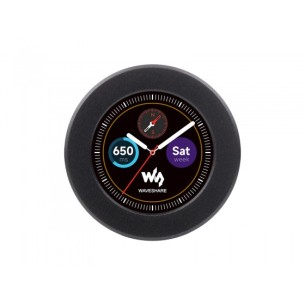
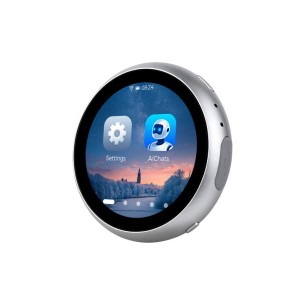
Module with a round 1.28" IPS LCD display with a resolution of 240x240 px and an RP2040 microcontroller. Equipped with an accelerometer and gyroscope. Enclosed in a nice metal housing. Waveshare RP2040-LCD-1.28-B
The RP2040 MCU board combines the high performance of two ARM Cortex M0+ cores clocked at up to 133 MHz, with 264 KB of SRAM, 2 MB of Flash, and integrated Bluetooth 5.1 for easy wireless communication. With simple programming, multiple GPIO interfaces, and support for C/C++, MicroPython, and Arduino, the board is ideal for IoT projects and other advanced applications. It comes with a USB Type-C adapter. Waveshare RP2040-BLE-Kit
No product available!
The RP2040 MCU board combines the high performance of two ARM Cortex M0+ cores clocked at up to 133 MHz, with 264 KB of SRAM, 2 MB of Flash, and integrated Bluetooth 5.1 for easy wireless communication. With simple programming, multiple GPIO interfaces, and support for C/C++, MicroPython, and Arduino, the board is ideal for IoT projects and other advanced applications. Waveshare RP2040-BLE
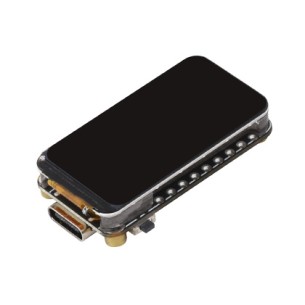
Module with a round 0.99" IPS LCD display with a resolution of 128x115 px and an RP2040 microcontroller. Equipped with an accelerometer and gyroscope. Enclosed in a nice metal housing. Waveshare RP2040-LCD-0.99-B
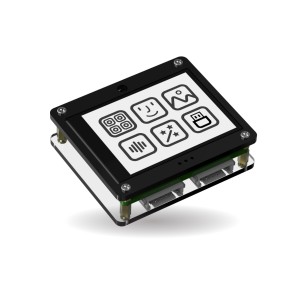
Camera adapter based on Raspberry RP2040, dedicated to TinyML development. is equipped with a 2.4-inch LCD screen, microphone, camera connectors and an IMU module. It allows you to take photos, use WiFi, SD card and USB mass storage. ArduCam B0432
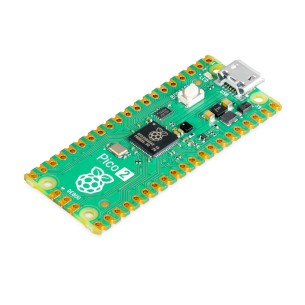
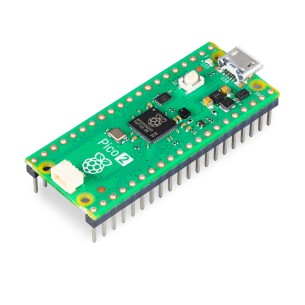
Raspberry Pi Pico 2, based on the RP2350 microcontroller, using the application and functional applications of the Cortex M33 and RISC-V cores, doubled SRAM memory and advanced security function, including Arm TrustZone. It is hardware and software with a connected model, which provides an attractive operation for enthusiasts and specialists in systems used
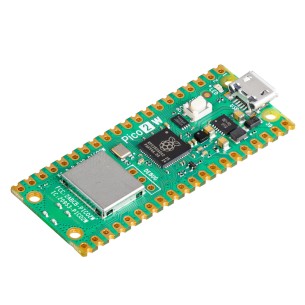
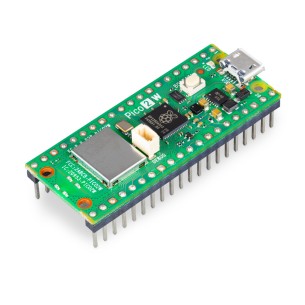
Raspberry Pi Pico 2W, based on the RP2350 microcontroller and has a built-in WiFi and Bluetooth communication module. Pi Pico 2W offers significantly increased performance and functionality thanks to the use of Cortex M33 and RISC-V cores, doubled SRAM memory and advanced security features, including Arm TrustZone. It is hardware and software compatible with previous models, making it an attractive choice for enthusiasts and professionals in the field of embedded systems
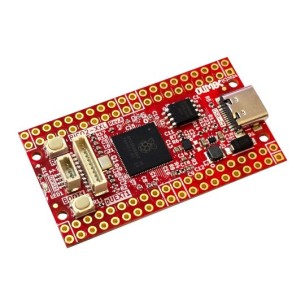
An enhanced version of the Raspberry Pi Pico 2 with access to all 48 GPIO pins and an RP2350B microcontroller (Cortex-M33 or RISC-V) clocked at up to 150 MHz. It offers 16 MB of Flash, 8 MB of RAM, and a microSD card reader, making it ideal for complex embedded and IoT projects. With USB-C, Qwiic/Stemma Qt, UEXT connectors, and BOOT/RESET buttons, it offers high flexibility and easy integration with peripherals. Olimex RP2350-PICO2-XXL
Raspberry Pi Pico 2 H, based on the RP2350 microcontroller, using the application and functional applications of the Cortex M33 and RISC-V cores, doubled SRAM memory and advanced security function, including Arm TrustZone. It is hardware and software with a connected model, which provides an attractive operation for enthusiasts and specialists in systems used. Version with joints.
Raspberry Pi Pico 2WH, based on the RP2350 microcontroller and has a built-in WiFi and Bluetooth communication module. Pi Pico 2WH offers significantly increased performance and functionality thanks to the use of Cortex M33 and RISC-V cores, doubled SRAM memory and advanced security features, including Arm TrustZone. It is hardware and software compatible with previous models, making it an attractive choice for enthusiasts and professionals in the field of embedded systems. Version with soldered joints.
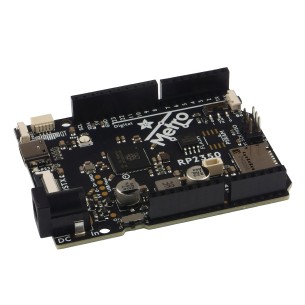
A powerful development board based on the Raspberry Pi RP2350 chip with a dual-core Cortex M33 150 MHz processor and 528 KB RAM, offering 37 GPIO pins and 16 MB of QSPI Flash memory. It supports power supply via USB-C or DC, has a DVI connector, microSD slot, Pico Probe debug port and programmable UF2 bootloader. Thanks to the wide support of programming languages (C/C++, MicroPython, CircuitPython, Arduino), it will be suitable for both educational projects and advanced embedded solutions. Adafruit 6003
Compact development board based on the Raspberry Pi RP2350 microcontroller, equipped with two cores (ARM Cortex-M33 and Hazard3 RISC-V), 520KB RAM and 2MB Flash, ideal for IoT, smart home and wearable projects. With 11 IO pins, battery charging support, C/C++/MicroPython/Arduino programming and SMT support, it is perfect for rapid prototyping and mass production. DFRobot DFR1188
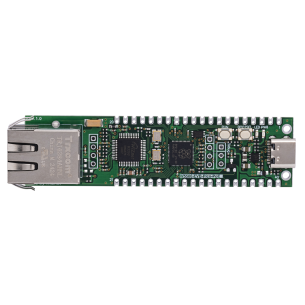
This RP2040-based evaluation board features an embedded W5500 Ethernet controller, providing hardware-based TCP/IP support without burdening the microcontroller. Its compact design, PoE support, and Raspberry Pi Pico-compatible interfaces make it ideal for IoT, automation, and networking projects. WIZnet W5500-EVB-Pico-POE
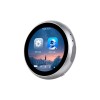
RP2040-Touch-LCD-1.69 is a high-performance, integrated MCU board designed for interactive device developers. With a touch display, 6-axis sensor, RTC, and power management, it is suitable for HMI systems, mobile devices, data loggers, and IoT solutions. Support for MicroPython and Arduino facilitates rapid prototyping and deployment.
RP2350-Zero enables rapid development of embedded applications while maintaining minimal mounting requirements and excellent flexibility in baseboard design. Particularly recommended for portable devices, educational use, and as a control module in larger systems.
RP2350-LCD-0.96 offers a low-cost and flexible solution for creating projects involving information display, battery-powered operation, and full GPIO control. Ideal for portable devices, user interfaces, and educational applications.
RP2350-Tiny-Kit is a versatile development kit for embedded and educational projects. With a flexible interface, rich set of peripherals, and support for popular development environments, it enables rapid prototyping and easy integration into larger systems. The version with a USB Type-C adapter provides convenient access for programming and powering the module.