


zł18.01 tax excl.
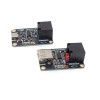
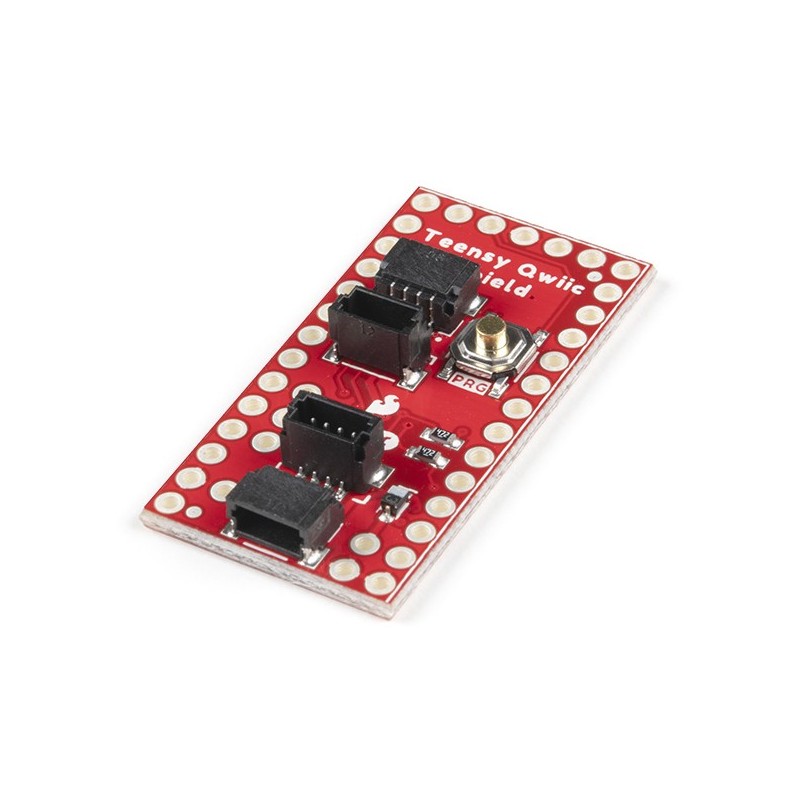
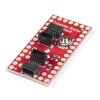
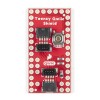
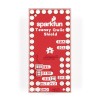
Module with 4 Qwiic connectors for Teensy boards. Communication via the I2C interface. SparkFun DEV-17119
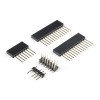
Qwiic Shield provides an easy-to-install way to add Qwiic connectors to Teensy boards. Communication takes place via the I2C interface. The module is compatible with Teensy 4.0, Teensy 3.2, and Teensy LC. It connects the I2C bus (GND, 3.3V, SDA and SCL) in Teensy to four SparkFun Qwiic connectors (two mounted horizontally and two vertically). The Qwiic ecosystem allows easy daisy-chaining, so if the devices are at different addresses, any number of Qwiic devices can be connected. There is a user guide on the product page.
Manufacturer BTC Korporacja sp. z o. o. Lwowska 5 05-120 Legionowo Poland sprzedaz@kamami.pl 22 767 36 20
Responsible person BTC Korporacja sp. z o. o. Lwowska 5 05-120 Legionowo Poland sprzedaz@kamami.pl 22 767 36 20
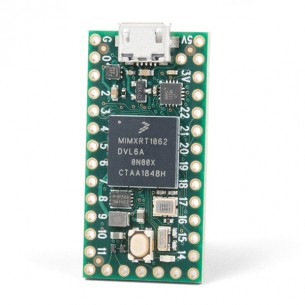
A small module, matching the breadboard, containing a 32-bit microcontroller with ARM Cortex M7 core. PJRC TEENSY40
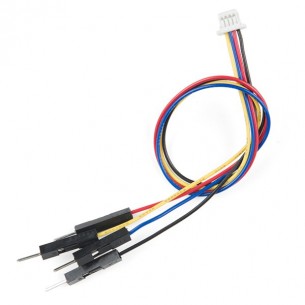
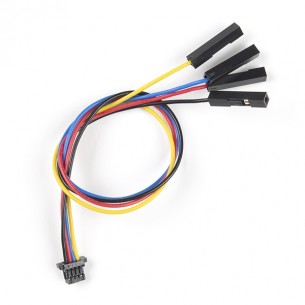
Flexible Qwiic cable, 150 mm long. On one side it is terminated with a female Qwiic connector, and on the other side with single female goldpin connectors. SparkFun PRT-17261
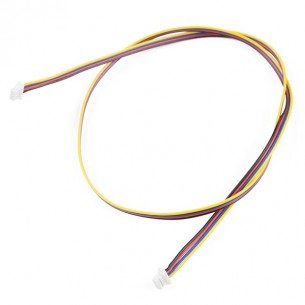
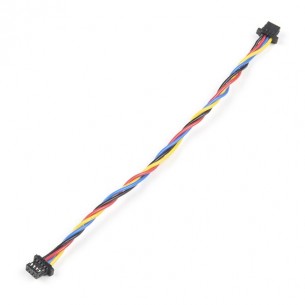
Flexible 4-core cable, 100 mm long, terminated on both sides with a Qwiic plug. Sparkfun PRT-17259
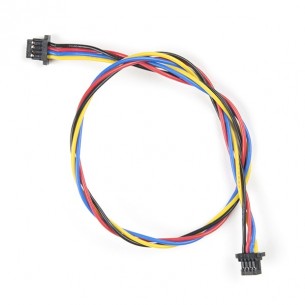
Flexible 4-core cable, 200 mm long, terminated on both sides with a Qwiic plug. Sparkfun PRT-17258
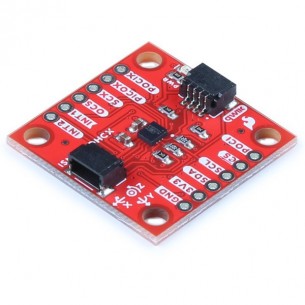
Module with 3-axis accelerometer and ISM330DHCX gyroscope. Equipped with a Qwiic connector, it communicates via the I2C or SPI interface. SparkFun SEN-19764
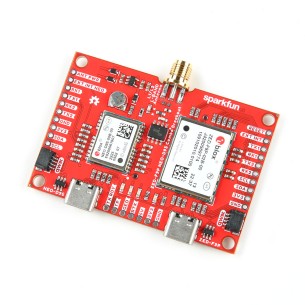
A GNSS module that combines the precise u-blox ZED-F9P receiver with the NEO-D9S L-band GNSS correction data receiver. Provides high-accuracy positioning without the need for separate RTK or NTRIP corrections. SparkFun GPS-22560
No product available!
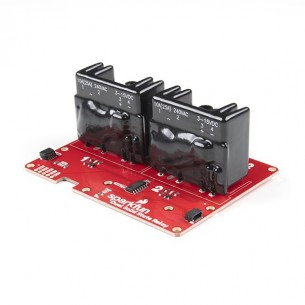
Module with 2 relays controlled by the I2C interface. Each relay can switch currents up to 25 A at 12 to 280 V AC. SparkFun COM-16810
No product available!
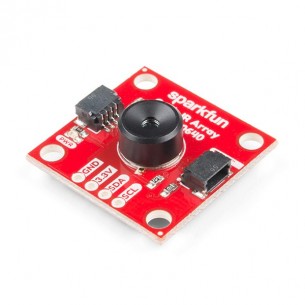
Module with an infrared sensor MLX90640 - a measuring matrix with a resolution of 32x24 pixels. It offers an accuracy of 1.5°C and a viewing angle of 110x75°. Communication with the sensor takes place via the I2C interface. SparkFun SEN-14843
No product available!
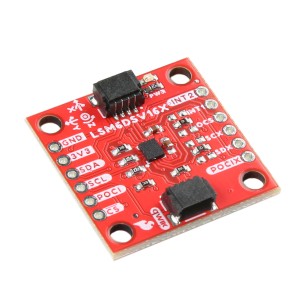
Module with 3-axis accelerometer and gyroscope LSM6DSV16X. The chip is a low-power IMU optimized for IoT devices with data processing capabilities using machine learning. Equipped with a Qwiic connector, it communicates via the I2C interface. SparkFun SEN-21325
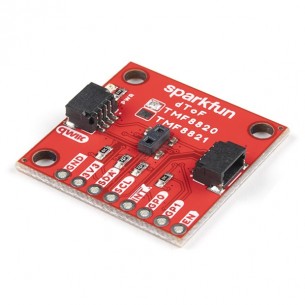
ToF distance sensor (Time of flight) with a range of up to 5 m. The module is supplied with the voltage of 3.3 V and communicates via the I2C interface. SparkFun SEN-19036
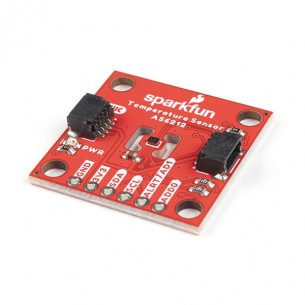
Module with digital temperature sensor AS6212. It enables measurement in the range from –40°C to 125°C with an accuracy of 0.2°C. SparkFun SEN-18521
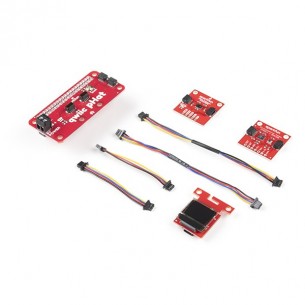
Starter kit with Qwiic modules designed to work with the Raspberry Pi. The set consists of an overlay for Raspberry Pi with a standard 40-pin connector and four Qwiic connectors, OLED display, VCNL4040 distance sensor and environmental sensors. SparkFun KIT-16841
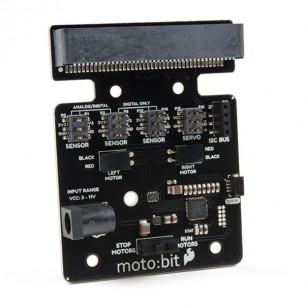
The expansion module is designed for micro:bit sets. Offers a simple, beginner-friendly robotics controller. SparkFun DEV-15713
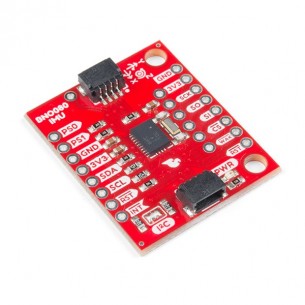
Sensor module for use in the area of virtual reality (VR). It was based on the BNO080 chip, which integrates the accelerometer, gyroscope and magnetometer with the ARM Cortex M0+ microcontroller. SparkFun SEN-14686
No product available!
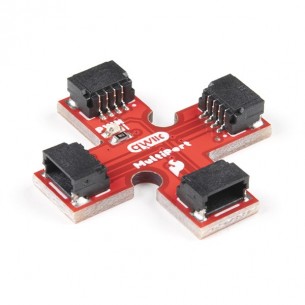
Hub with Qwiic connectors that allows you to connect several boards to the evaluation kit. There is no built-in control system, but only splits one connector into 3 more. SparkFun BOB-18012
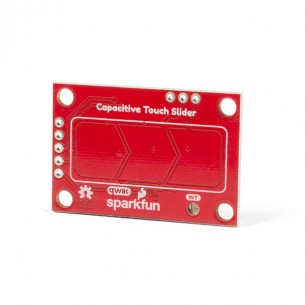
Module with a capacitive touch sensor based on the CAP1203 chip. There are three touch panels on the board that can be used as separate sensors (pins CS1, CS2, CS3) or as a touch slider. I2C communication. SparkFun SEN-15344
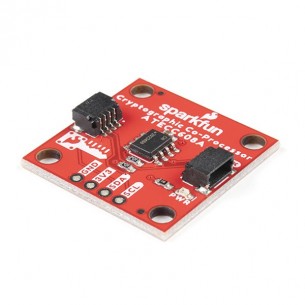
Module with the ATECC608A cryptographic chip. It allows you to add strong security to an IoT node, edge device, or embedded system. SparkFun DEV-18077
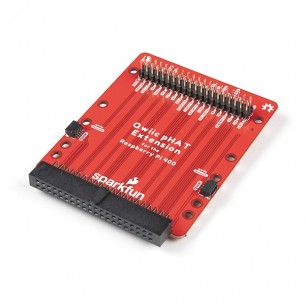
The expansion module is designed to work with Raspberry Pi 400 - a portable computer built into the keyboard. The board has a 40-pin connector in the pin position and two Qwiic connectors. SparkFun DEV-17512
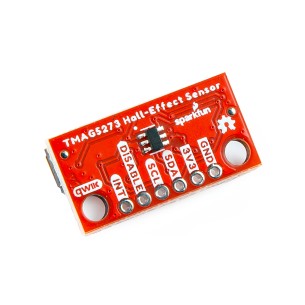
TMAG5273 Hall sensor module dedicated to detecting the presence, strength and direction of a magnetic field in three dimensions. It uses communication via the I2C interface and Qwiic connectors. SparkFun SEN-23881
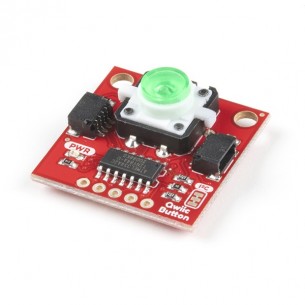
Module with a button and green LED backlight. Controlled by the I2C interface, it has a built-in debouncing mechanism, pull-up resistors as well as interrupts and a FIFO queue. SparkFun BOB-16842
Module with 4 Qwiic connectors for Teensy boards. Communication via the I2C interface. SparkFun DEV-17119