.png)






zł6.57 tax excl.
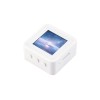
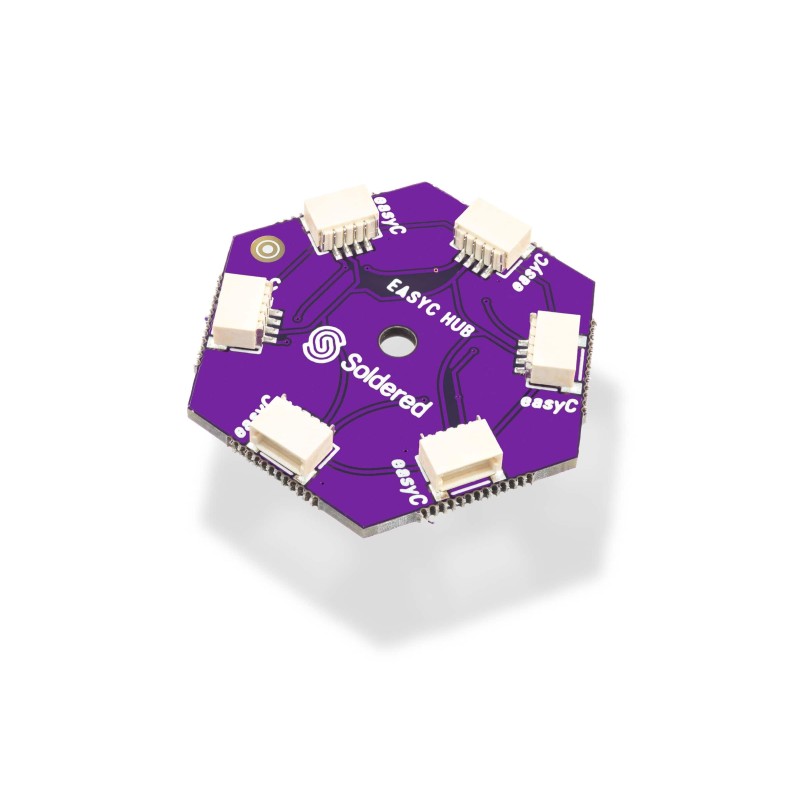
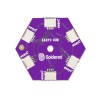
Compact hub designed to expand a Qwiic/I2C bus with additional connection points. It provides six Qwiic connectors, operates at 3.3 V, and helps organize connections between sensors and modules using the Qwiic ecosystem. Soldered 333018
Six Qwiic connectors allow multiple compatible modules to be connected to a common I2C bus without soldering. The hub does not perform signal conversion or active switching, but distributes the communication and power lines across additional ports. It can be used in projects where the number of Qwiic connectors available on the main board is insufficient or where more organized cable routing is required.
The operating voltage is 3.3 V, so devices connected through the hub should use the appropriate supply voltage. A mounting hole located in the center of the board allows it to be secured to a surface. The module measures 39 x 34 mm.
I2C multiplexer module with TCA9548A system. Allows you to connect up to 8 devices. The system works like a gateway - it transmits I2C interface data to one of the 8 main busses. This allows you to connect up to 8 devices with the same address. Adafruit 2717
16-channel GPIO expander with an I2C interface microcontroller can interface with 16 fully configurable digital input/output pins. It can produce PWM signals, so you can dim LEDs. It can be set to blink or even breathe pins at varying rates. With a built-in keypad engine, it can interface with up to 64 buttons set up in an 8x8 matrix. BOB-13601
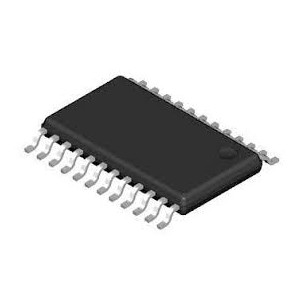
PCA9555APW,118 is a versatile 16-bit I/O expander with I2C interface and interrupt capability, ideal for applications requiring efficient GPIO extension
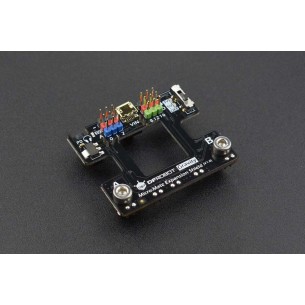
Micro:Mate is an expansion board for the micro: bit development module. It provides six 3-pin connectors with I/O outputs, a 3.5mm audio jack connector and is powered from a 5V microUSB connector. DFRobot DFR0518
No product available!
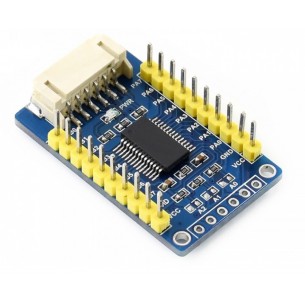
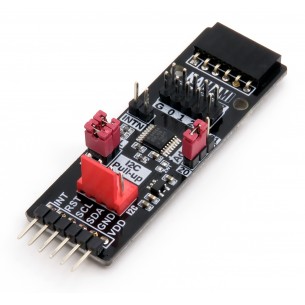
Module with 16-channel I/O ports expander controlled by the I2C interface. It was based on the MCP23017 chip. Waveshare MCP23017 IO Expansion Board
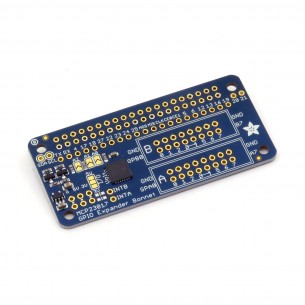
Module with 16-channel IO expander MCP23017 controlled by the I2C interface. Designed for minicomputers Raspberry Pi. Adafruit 4132
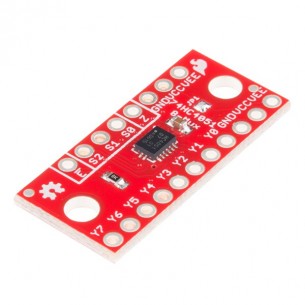
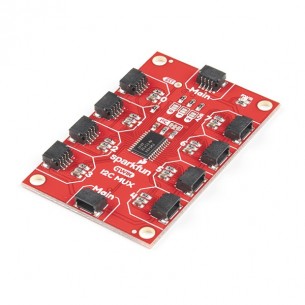
8-channel I2C expander module based on the TCA9548A system. The module has Qwiic connectors and allows communication with many I2C devices that have the same address. Sparkfun BOB-16784
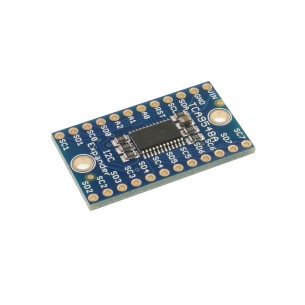
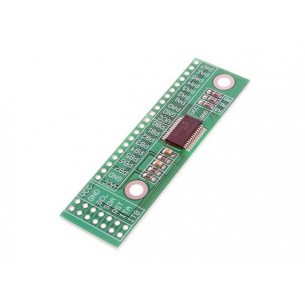
16-channel I/O port expander module controlled by the I2C interface. The module is based on the MCP23017-E/SS system.
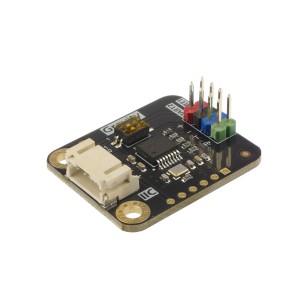
I2C-UART converter module with two UART output interfaces. Configuration of I2C addresses allows you to connect up to 4 such modules to one controller, which means extending the board\'s capabilities by 8 UART interfaces. DFRobot DFR0627
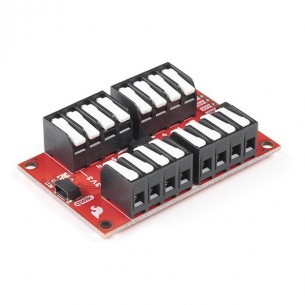
Module with an IO pin expander based on the TCA9534 system. It allows you to add 8 GPIO pins to an I2C-controlled project. SparkFun DEV-17047
No product available!
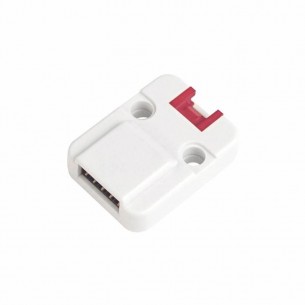
IO port expander for M5Stack kits. Equipped with 8 IO pins and power pins, it communicates via the I2C interface. M5Stack U011-B
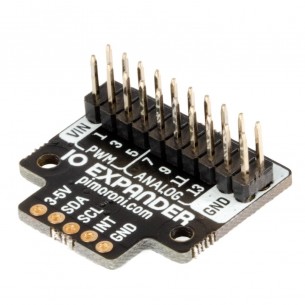
Module with IO expander equipped with 14 inputs/outputs, including 8 connected to the ADC converter and 6 to PWM outputs. It communicates via the I2C interface and is compatible with the Raspberry Pi. Pimoroni PIM517
The KAmodPCAL6408 is an 8-bit I/O expander with the PCAL6408A chip by NXP, controlled by the I2C interface.
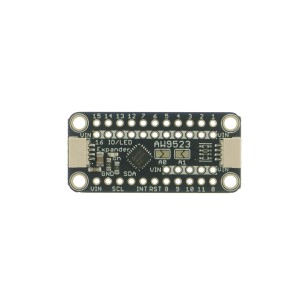
Module with a 16-channel GPIO expander with the ability to control LEDs. Equipped with a STEMMA QT connector, it communicates via the I2C interface. Adafruit 4886
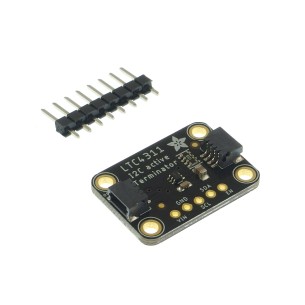
I2C bus amplifier module based on the LTC4311 system. It enables communication via a popular interface over much longer distances while maintaining high transmission speeds. Adafruit 4756
Compact hub designed to expand a Qwiic/I2C bus with additional connection points. It provides six Qwiic connectors, operates at 3.3 V, and helps organize connections between sensors and modules using the Qwiic ecosystem. Soldered 333018