




zł86.89 tax excl.
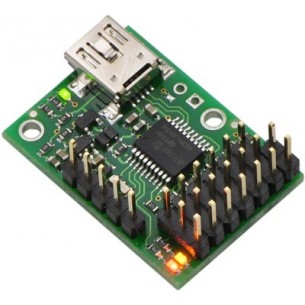
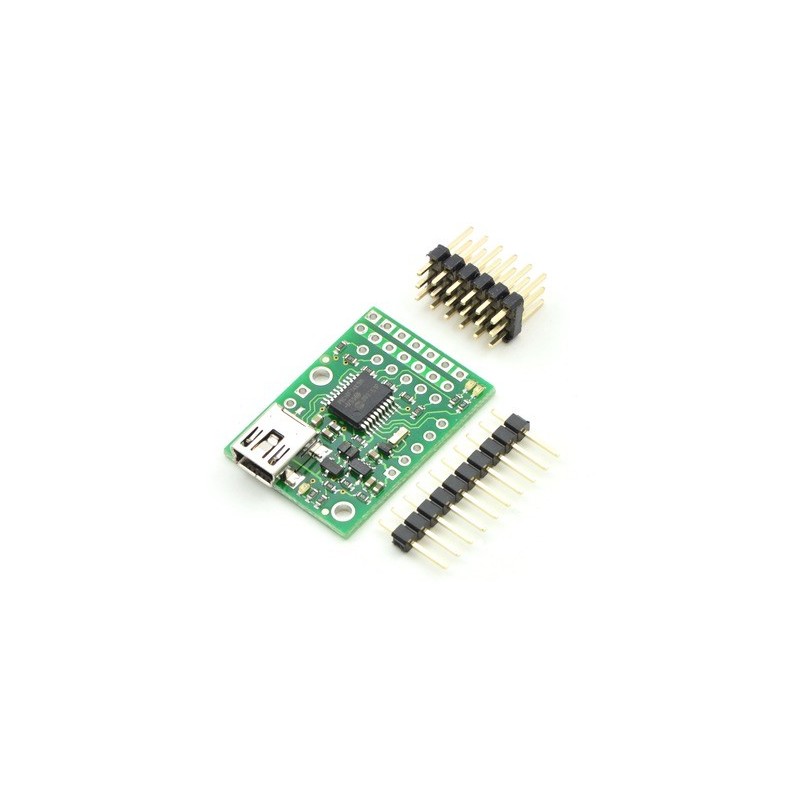
Pololu Micro Maestro 1351 in kit version enables precise and flexible control of servos and sensors from a PC or microcontroller. Thanks to its ability to operate autonomously and function as a USB–TTL interface, it is used in motion control systems, animatronic projects, and interactive systems responding to external stimuli.
The Micro Maestro 1351 is a 6-channel servo controller in a partially assembled version – all SMD components are soldered, and the included goldpin connectors require manual assembly. It enables high-precision servo control (0.25 µs resolution) and independent speed and acceleration adjustment for each channel. It supports three control modes: USB, UART TTL, and internal script. Channels can function as PWM outputs, analog inputs, or digital outputs. The controller allows autonomous operation thanks to the built-in script interpreter and 1 KB of memory. It is used in robotics, animatronics, and interactive systems.
Manufacturer BTC Korporacja sp. z o. o. Lwowska 5 05-120 Legionowo Poland sprzedaz@kamami.pl 22 767 36 20
Responsible person BTC Korporacja sp. z o. o. Lwowska 5 05-120 Legionowo Poland sprzedaz@kamami.pl 22 767 36 20
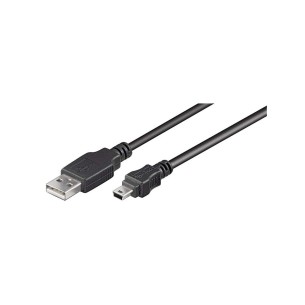
Cable with USB plugs type A and mini-USB type B, cable with a length of 1.8 m
No product available!
Pololu Micro Maestro 1350 is a compact, versatile servo controller with a USB interface and autonomous operation capability, designed for use in robotics, animatronics, and control systems based on PCs or microcontrollers. Thanks to its flexible channel configuration, it can also be used as a sensor interface and I/O expander.
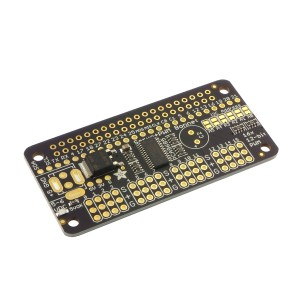
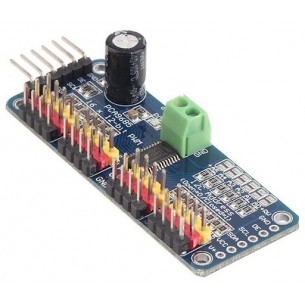
HAT module with the PCA9685 server driver designed for Raspberry Pi minicomputers. The board is equipped with a 40-pin connector. Adafruit 3416
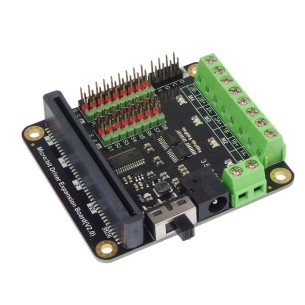
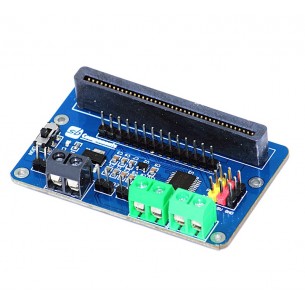
The expansion module is designed to work with micro:bit. It allows you to control 4 DC motors or two stepper motors and 8 servos. It communicates via the I2C interface. DFRobot DFR0548
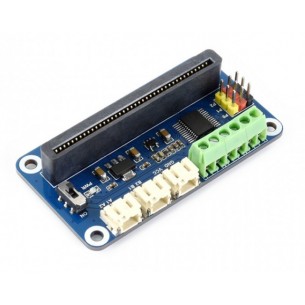
The expansion module is designed to work with the micro:bit educational board. It can control 3 servos and 2 DC motors. Waveshare Motor Driver for micro:bit
No product available!
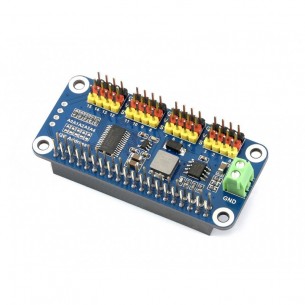
The servo driver module is an extension intended for minicomputers Raspberry Pi Zero / Zero W / Zero WH / 2B / 3B / 3B +. Allows you to control 16 PWM channels. Waveshare 15275
No product available!
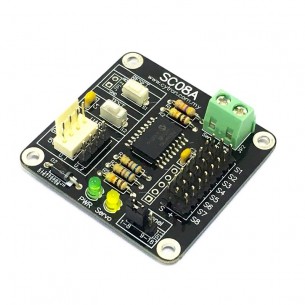
Module with 8-channel servo driver. It allows you to control the speed of movement and the initial position of the servo. Cytron SC08A
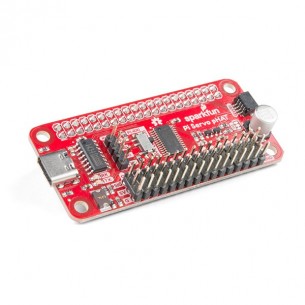
Module with 16-channel PCA9685 servo driver designed for Raspberry Pi minicomputers. The board is equipped with a USB Type C power connector. SparkFun DEV-15316
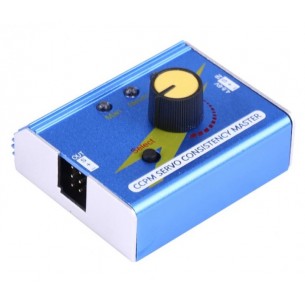
Universal tester of servos and ESC regulators. It allows you to check the operation of the servo without the need for a transmitter and receiver
No product available!
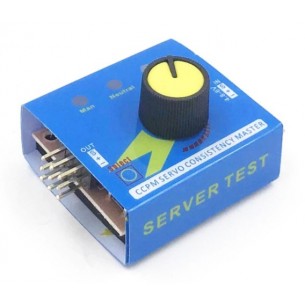
Universal tester of servos and ESC regulators. It allows you to check the operation of the servo without the need for a transmitter and receiver
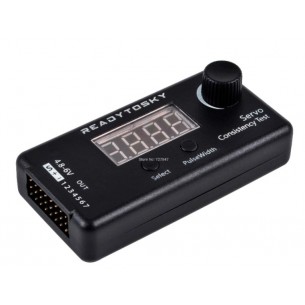
Universal tester of servos and ESC regulators. It allows you to check the operation of the servo without the need for a transmitter and receiver
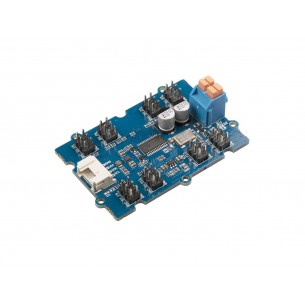
Module with a 16-channel PWM PCA9685 driver. The board is equipped with a Grove connector and communicates via the I2C interface. Seeed Studio 108020102
16-channel servo driver module with I2C interface based on the PCA9685 system. modPCA9685
No product available!
Module with a 2-channel DC motor driver TB6612FNG designed to work with micro: bit. It can also control 3 servos. SB Components 14897
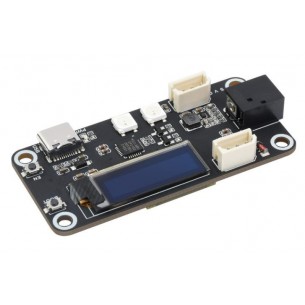
Servo driver with UART serial interface. Equipped with an ESP32 module with WiFi and Bluetooth wireless communication. Waveshare Servo Driver with ESP32
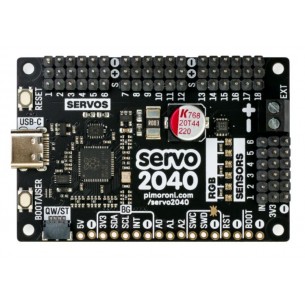
Servo driver based on the Raspberry Pi RP2040 microcontroller. It allows you to control up to 18 servos, has 6 analog inputs and a QW/ST connector for connecting additional sensors. Pimoroni PIM613
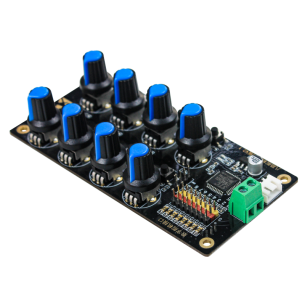
The 8-channel servomechanism controller with potentiometers is a versatile device that allows you to control many servomechanisms at the same time. With a wide voltage range and resistance to extreme temperatures, it is an ideal solution for robotics projects and remote-controlled applications.
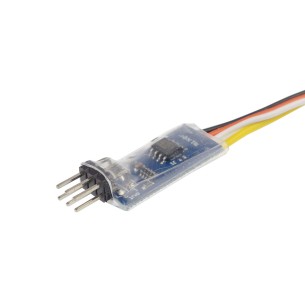
The Modeling PWM Signal Mixer Module is a compact device that allows mixing of PWM signals in modeling, allowing for a variety of control of components such as guns, plates and motors. It can be precisely tailored to the user\'s needs and also offers flexibility in control priority settings.
Pololu Micro Maestro 1351 in kit version enables precise and flexible control of servos and sensors from a PC or microcontroller. Thanks to its ability to operate autonomously and function as a USB–TTL interface, it is used in motion control systems, animatronic projects, and interactive systems responding to external stimuli.