.png)



zł61.74 tax excl.
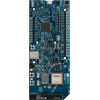
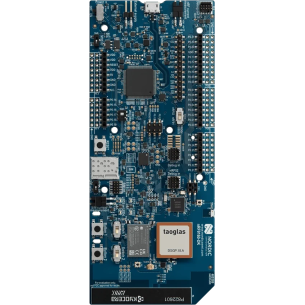
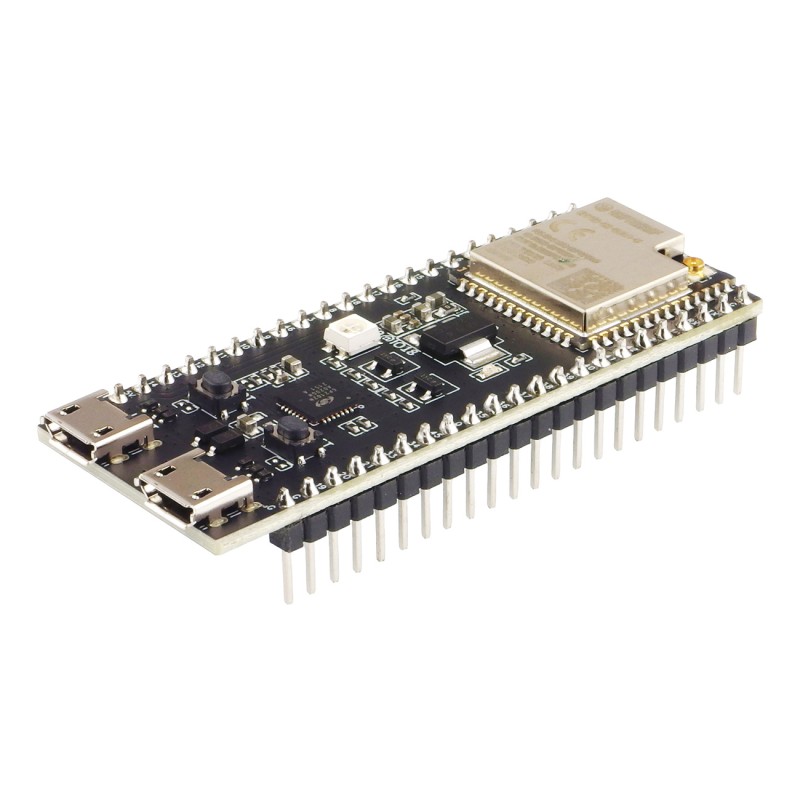
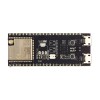
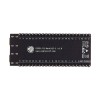
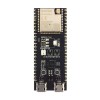
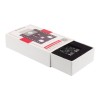
Evaluation board with the ESP32-S2-SOLO-U-N4R2 module enables the development of 2.4 GHz wireless Wi-Fi applications, offering integrated Flash and PSRAM memory as well as the option to use an external antenna. Thanks to a wide range of interfaces and a high number of available GPIOs, it is suitable for IoT projects, building automation, remote control systems, as well as wearable devices and distributed measurement systems.
Evaluation board with the ESP32-S2-SOLO-U-N4R2 module featuring a Xtensa® 32-bit LX7 microcontroller clocked up to 240 MHz. The module includes 4 MB SPI Flash and 2 MB PSRAM integrated in the package. The “U” variant allows for connection of an external antenna via a U.FL connector. The system offers full support for communication interfaces such as SPI, UART, I2C, I2S, USB OTG, as well as ADC and DAC converters, touch sensors, and a temperature sensor. Powered with 3.0 to 3.6 V DC. The module supports up to 36 GPIOs, enabling easy integration with sensors and actuators.
Manufacturer
Responsible person
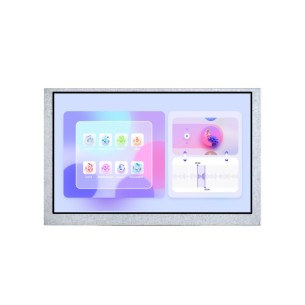
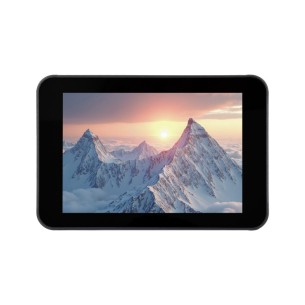
The ESP32-S3-LCD-5 board with a 5-inch 800×480 screen offers a wide range of features for creating user interfaces and communication applications using the ESP32-S3. With support for 2.4 GHz Wi-Fi and Bluetooth 5 LE, optically isolated digital I/O, and flexible power options, the module is suitable for HMI systems, industrial automation, and IoT projects requiring high-performance graphics without the need for touch functionality.
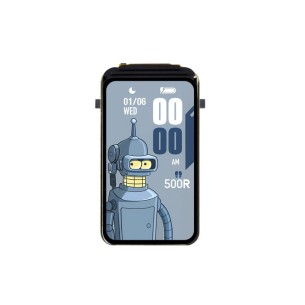
The ESP32-C6-LCD-1.47 development board with a 1.47" display is a high-performance solution for projects based on the ESP32-C6, offering support for Wi-Fi 6 and Bluetooth 5 LE. With its compact design, GPIO expansion, TF card slot, and visually appealing enclosure with an RGB LED, the module is suitable for AIoT projects, user interfaces, and systems requiring low power consumption and wireless communication.
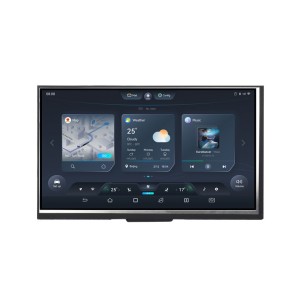
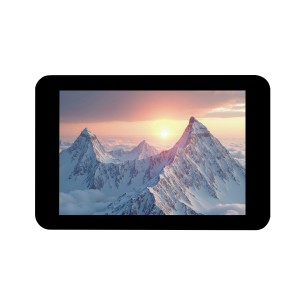
The ESP32-S3-LCD-7 development board from Waveshare, equipped with a 7" screen with a resolution of 800×480, is designed for creating graphical user interfaces in applications based on the ESP32-S3 microcontroller. Thanks to the presence of PSRAM, large Flash memory, support for popular communication interfaces, and battery power supply, the board is suitable for HMI projects, information terminals, device controllers, and IoT systems requiring graphics support without touch functionality.
No product available!
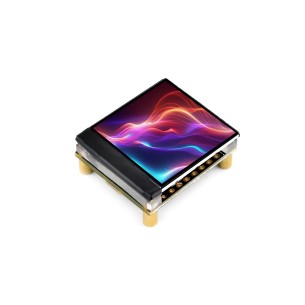
ESP32-S3-LCD-4.3 is an advanced evaluation board for graphical and IoT applications, offering a high level of integration with an IPS display, wireless connectivity, and a rich set of interfaces. The non-touch version allows focus on implementing visual interfaces in control systems, data visualization, and consumer devices, while ensuring flexibility and ease of integration.
No product available!
ESP32-C6-DEV-KIT-N16-M is an evaluation board for projects requiring modern wireless connectivity and high performance with low power consumption. Support for Wi-Fi 6, Bluetooth 5, and Zigbee/Thread makes it an ideal choice for smart home applications, industrial automation, and consumer electronics. Integrated connectors and USB/UART interfaces facilitate rapid development and prototyping.
No product available!
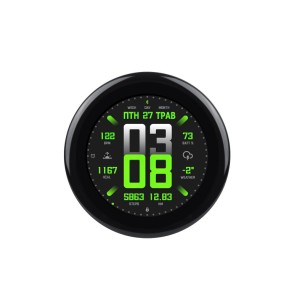
ESP32-S3-LCD-1.3 is a compact and efficient development board designed for IoT applications, user interfaces, and wearable systems. The integrated color IPS display, 6-axis motion sensor, wireless communication, and extensive power options make it ideal for creating interactive educational projects, demonstrators, and prototypes of mobile control and measurement devices. The standard version is intended for self-expansion or integration.
No product available!
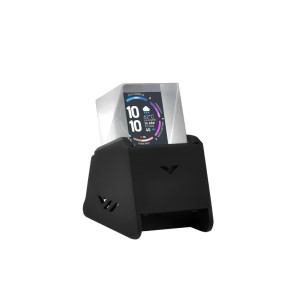
ESP32-S3-LCD-1.3-C is an advanced evaluation board featuring a 1.3-inch LCD screen, integrated IMU, and Wi-Fi and Bluetooth connectivity, designed for use in interactive systems and IoT devices. Thanks to its enclosure and prismatic cube, it offers an impressive graphical display. High performance, a rich set of peripherals, and compact size make the board ideal for prototyping user interfaces, wearable devices, electronic toys, and control systems.
No product available!
ESP32-S3-Touch-AMOLED-2.41 is an advanced evaluation board with a 2.41" AMOLED touch screen and an ESP32-S3 microcontroller, designed for developing modern HMI interfaces and IoT applications. High resolution and color reproduction, gesture support, motion sensors, and full support for Wi-Fi and BLE make it ideal for interactive projects, mobile control systems, and graphical demonstrators. The standard version without an enclosure allows flexible adaptation to custom solutions.
No product available!
ESP32-S3-Touch-AMOLED-2.41-B is a high-performance module with an AMOLED display and touch panel, enclosed in a protective housing. Thanks to its rich peripheral resources and wireless connectivity, it is well suited for HMI projects, interactive devices, and IoT systems that require high-quality display and responsive touch control.
ESP32-S3-Touch-LCD-1.85C is a complete solution for implementing projects with a graphical user interface, touch control, and audio processing. Thanks to its compact design and support for AI functions, the device is suitable for smart control terminals, portable HMI systems, and speech recognition applications.
No product available!
ESP32-S3-Touch-LCD-1.85C-BOX offers full functionality for building mobile and smart devices with touch and audio support. The built-in battery, compact speaker enclosure, and advanced capabilities of the ESP32-S3 microcontroller make it an ideal solution for IoT, HMI, and voice interaction projects.
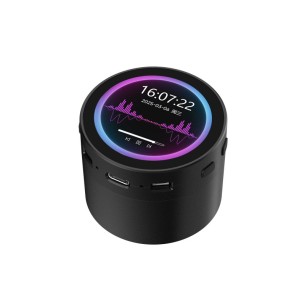
ESP32-S3-Touch-LCD-1.85C-BOX-EN is a complete development platform with a touchscreen display and built-in speaker, ideal for creating audiovisual applications with Wi-Fi, Bluetooth, and voice control support. With large memory capacity, AI model support, and a wide range of peripheral interfaces, the module provides a solid foundation for building smart devices and user interfaces.
No product available!
ESP32-S3-Touch-LCD-2.1B is a versatile development board featuring an IPS RGB touchscreen display with a circular touch panel, dedicated to HMI interfaces, IoT systems, control panels, and smart devices. It combines the performance of a dual-core processor with advanced communication capabilities and a wide range of peripheral interfaces, enabling rapid prototyping of modern visual and interactive applications.
ESP32-S3-Touch-LCD-3.5 is a modern development platform integrating multimedia, communication, and sensor functions. With a touch display, audio, IMU, and MIPI camera support, it enables the creation of advanced user interfaces and interactive applications with Wi-Fi and Bluetooth connectivity. Ideal for control systems, portable devices, and interactive HMI panels.
No product available!
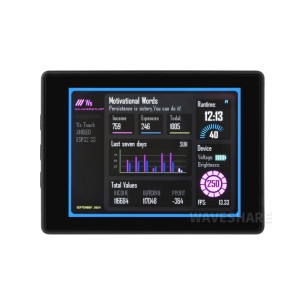
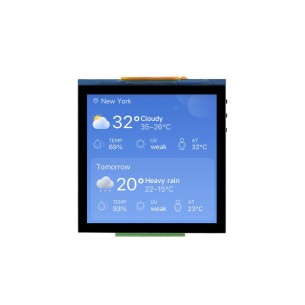
ESP32-S3-LCD-4 is an advanced development board with a 4" display, intended for high-level HMI, automation, and interactive system applications. The non-touch version offers a full set of industrial interfaces (RS485, CAN, I2C), integrated power management, and flexible mounting options. With high computational performance, ample memory resources, and support for ESP-IDF and Arduino IDE environments, it serves as a solid platform for implementing control and communication systems in end devices.
No product available!
ESP32-S3-Touch-LCD-3.5-C is a versatile development board with a touch display, enclosed in a compact case and equipped with an OV5640 camera. Integrated communication, audio, and sensor systems enable the development of advanced applications in image recognition, voice interaction, and automation. An excellent platform for rapid prototyping of HMI devices, smart terminals, and user interface-equipped devices.
No product available!
Evaluation board with the ESP32-S2-SOLO-U-N4R2 module enables the development of 2.4 GHz wireless Wi-Fi applications, offering integrated Flash and PSRAM memory as well as the option to use an external antenna. Thanks to a wide range of interfaces and a high number of available GPIOs, it is suitable for IoT projects, building automation, remote control systems, as well as wearable devices and distributed measurement systems.