.png)





zł10.55 tax excl.
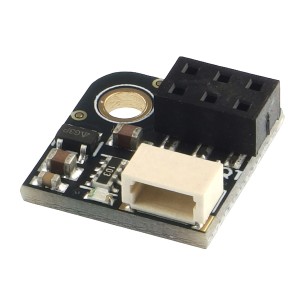
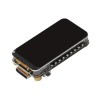
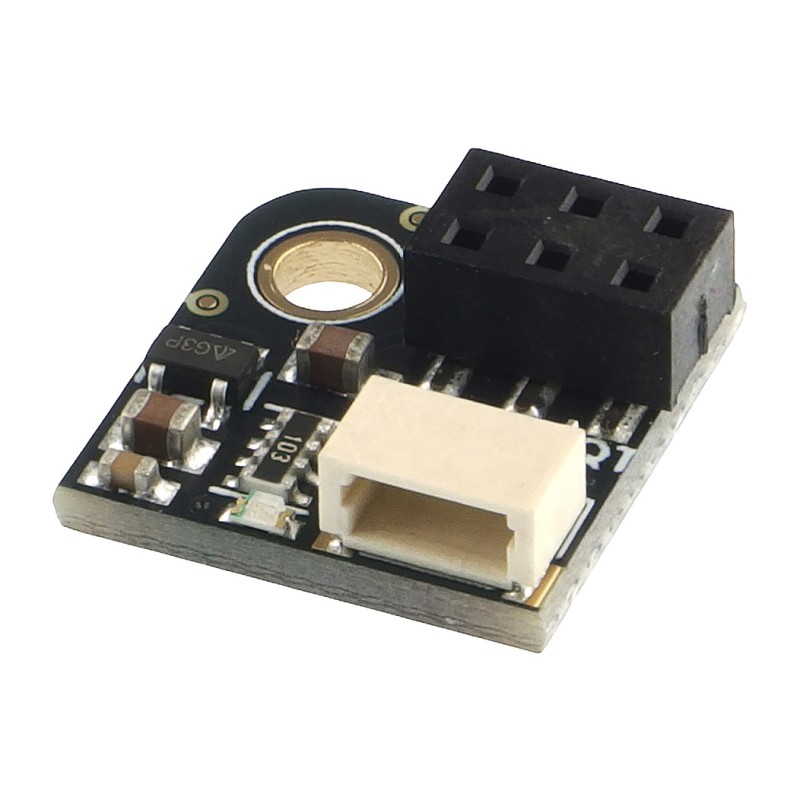
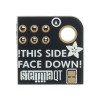
This compact expansion module easily adds a 4-pin JST SH (Stemma QT/Qwiic) connector to your Raspberry Pi or other single-board computer. It allows for quick, solderless connection of I2C sensors and devices, while providing stable power thanks to the built-in 3.3V regulator. The module includes a built-in power LED and 10kΩ pull-up resistors for the I2C lines. Adafruit 6365
STEMMA QT Breakout is a small, practical module that allows you to easily add a 4-pin JST SH connector (Stemma QT or Qwiic) to any single-board computer with a Raspberry Pi–compatible pin layout. This solution enables quick connection of sensors and devices communicating via the I2C bus. It’s an ideal accessory for users who want to easily expand their Raspberry Pi’s capabilities with additional components.
The module features a 2x3 socket that allows for a stable connection to power and I2C lines without the need for soldering. Simply align the connector with the edge of the 2x20-pin header on the Raspberry Pi board. An additional JST SH connector allows convenient connection of devices using SDA, SCL, 3V, and GND signals. Thanks to the built-in 3.3V voltage regulator, the module can safely power all Stemma QT and Qwiic accessories without risk of voltage drop.

Adafruit has also included a built-in LED indicator to signal proper module power, as well as two 10 kΩ pull-up resistors, ensuring correct operation even with compatible boards that lack them onboard. The module is fully compatible with Linux systems and the Adafruit Blinka library, allowing the use of a wide range of CircuitPython libraries in Python environments on SBCs (Single Board Computers).
Data sheet
Manufacturer
Responsible person
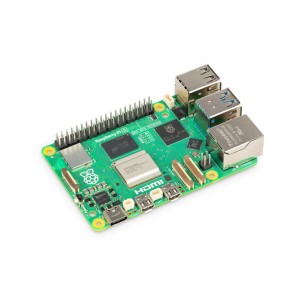
A mini-computer in version 5 with 4GB of RAM, equipped with two microHDMI ports, 2 USB 3.0 ports, and 2 USB 2.0 ports, as well as a USB-C power connector. The processor is a quad-core Broadcom BCM2712 clocked at 2.4GHz. The board also features dual-band WiFi, Bluetooth 5.0 with BLE support, PCI Express 2.0 interface, and a real-time clock. Raspberry Pi SC1111
No product available!
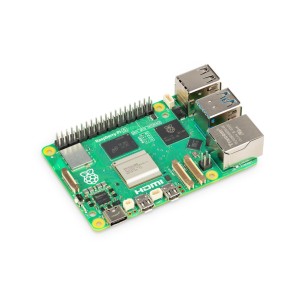
A mini-computer in version 5 with 8GB of RAM, equipped with two microHDMI ports, 2 USB 3.0 ports, and 2 USB 2.0 ports, as well as a USB-C power connector. The processor is a quad-core Broadcom BCM2712 clocked at 2.4GHz. The board also features dual-band WiFi, Bluetooth 5.0 with BLE support, PCI Express 2.0 interface, and a real-time clock. Raspberry Pi SC1111
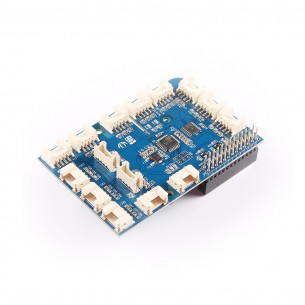
GrovePi + is an extension in the form of a HAT overlay intended for Raspberry Pi computers (B / B + / A + / 2/3/3 +). The module has 15 connectors to which modules / sensors compatible with the Grove standard can be connected. Seeed Studio 103010002
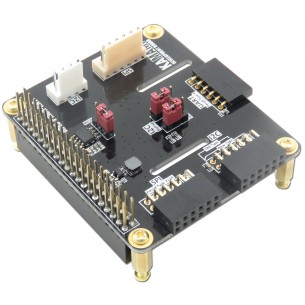
KAmodRPi-Pmod-HAT is a HAT for Raspberry Pi 5/4B/3B+/3B/2B/B+ minicomputers that allows use of the communication interfaces available on the 40-pin minicomputer connector
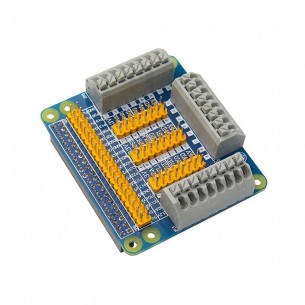
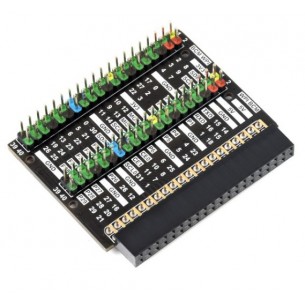
Universal GPIO expansion board compatible with Raspberry Pi 4/3/2 Model B and Model A with assembly kit required to mount the board to the Raspberry Pi minicomputer.
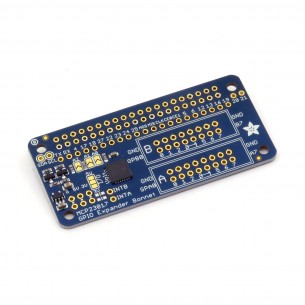
Module with 16-channel IO expander MCP23017 controlled by the I2C interface. Designed for minicomputers Raspberry Pi. Adafruit 4132
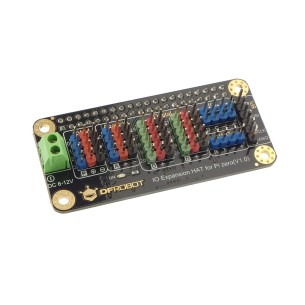
The DFRobot IO Expansion HAT module provides additional digital, analog, I2C, PWM, UART and SPI outputs. Thanks to its small size, it fits perfectly with Raspberry Pi Zero and Zero W. DFRobot DFR0604
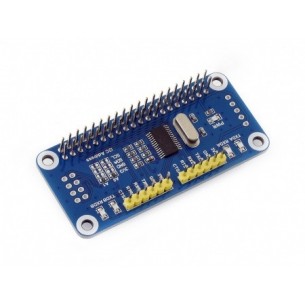
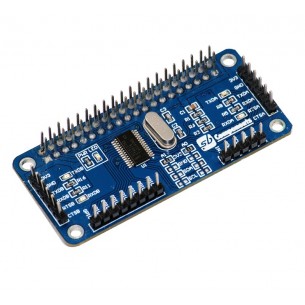
Expansion HAT from Waveshare is equipped with an I2C interface, 2-channel UART and 8 GPIO, which increase the functionality and capabilities of Raspberry Pi projects
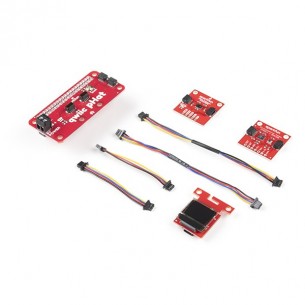
Starter kit with Qwiic modules designed to work with the Raspberry Pi. The set consists of an overlay for Raspberry Pi with a standard 40-pin connector and four Qwiic connectors, OLED display, VCNL4040 distance sensor and environmental sensors. SparkFun KIT-16841
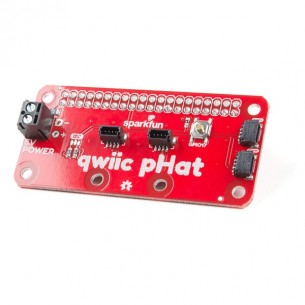
Shield with Qwiic connectors designed for Raspberry Pi minicomputers. It allows you to easily connect the minicomputer with the Qwiic sensor system. SparkFun DEV-15945
No product available!
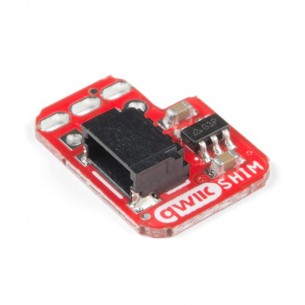
A mini module with a Qwiic connector designed for Raspberry Pi minicomputers. Qwiic SHIM uses a unique connector that snaps into the GPIO connector for a secure, solder-free connection. SparkFun DEV-15794
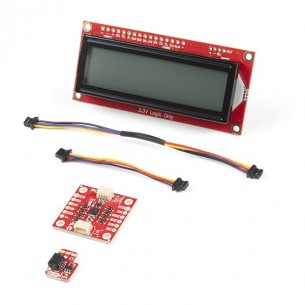
A set of accessories for connecting the Raspberry Pi minicomputer to the Qwiic ecosystem. Includes 16x2 LCD display module, IMU 9DOF module, SHIM board and Qwiic cables. SparkFun KIT-16987
No product available!
The expansion module is designed to work with a portable computer built into the Raspberry Pi 400 keyboard. The board has two 40-pin connector in a vertical position. Waveshare PI400-GPIO-ADAPTER-B
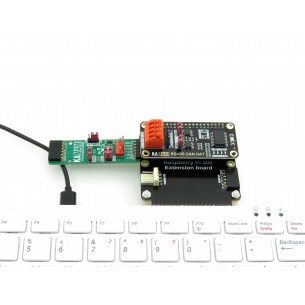
KAmodRPi400-ADP is a board designed for a Raspberry Pi 400 and Raspberry Pi 500 computer that allows you to conveniently connect modules designed for older versions of the Raspberry. Moreover, it allows to connect modules equipped with Pmod and Kamami I2C connectors.
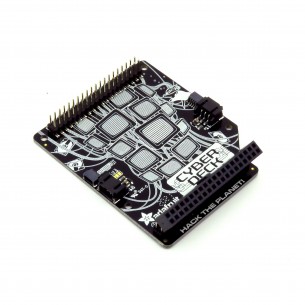
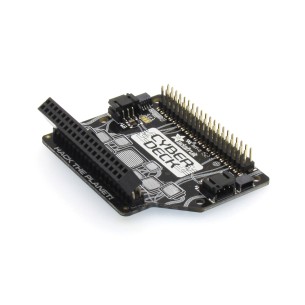
The expansion module is designed to work with the Raspberry Pi 400. The board has a 40-pin connector placed in a vertical position and a connector for RPI 400 at an angle of 45°. Adafruit 4863
The expansion module is designed to work with the Raspberry Pi 400. The board has a 40-pin connector placed in a vertical position and a connector for RPI 400 at an angle of 45°. Adafruit 4862
A pin expander designed to work with the Raspberry Pi. It provides 2 UART and 8 GPIO interfaces and communicates via the I2C bus. SB Components 14873
This compact expansion module easily adds a 4-pin JST SH (Stemma QT/Qwiic) connector to your Raspberry Pi or other single-board computer. It allows for quick, solderless connection of I2C sensors and devices, while providing stable power thanks to the built-in 3.3V regulator. The module includes a built-in power LED and 10kΩ pull-up resistors for the I2C lines. Adafruit 6365
This compact expansion module easily adds a 4-pin JST SH (Stemma QT/Qwiic) connector to your Raspberry Pi or other single-board computer. It allows for quick, solderless connection of I2C sensors and devices, while providing stable power thanks to the built-in 3.3V regulator. The module includes a built-in power LED and 10kΩ pull-up resistors for the I2C lines. Adafruit 6365