







.png)













zł4.50 tax excl.
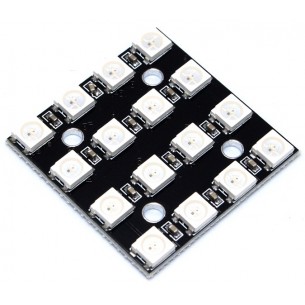
Matrix with 16 WS2812B RGB diodes controlled by a serial signal. The module can be powered with 5V, only one signal line is required for control
Matrix with 16 RGB WS2812B LEDs. Their special feature is the driver included in the structure, which interprets the signals from the LED input and shifts them to its output at the right moment or controls the LED structure. Each of the diodes is connected in series with the neighboring one (signal output to the input of the adjacent diode), thanks to which the whole creates a shift register. The matrix is controlled by means of a single wire, on which appropriately formed pulses are applied, addressing the next WS2812B diode. After addressing the entire matrix of diodes, there is an impulse that allows the content of each cell to be displayed, thus creating a 4x4 image.
The matrix has two connectors; input and output. The dies can be combined in rows (taking into account the technical limits of the control system and dies). It is also possible to connect the matrix with a tape or other module with WS2812B diodes.
Manufacturer
Responsible person
No product available!
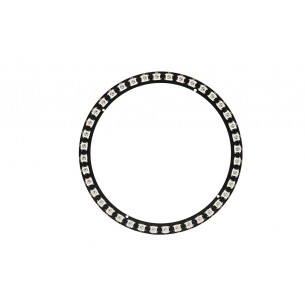
Light ring with 40 RGB LEDs, type WS2812, controlled by a serial signal. The module can be powered by 5V, only one signal line is required to control it.
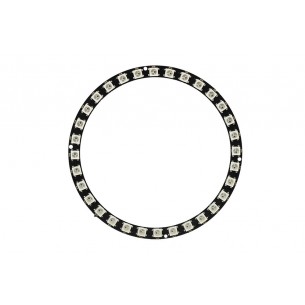
Light ring with 32 RGB LEDs, type WS2812, controlled by a serial signal. The module can be powered by 5V, only one signal line is required to control it.
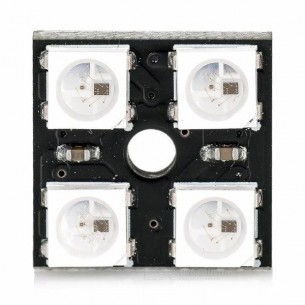
Matrix with 4 WS2812B RGB diodes controlled by a serial signal. The module can be powered with 5V, only one signal line is required for control
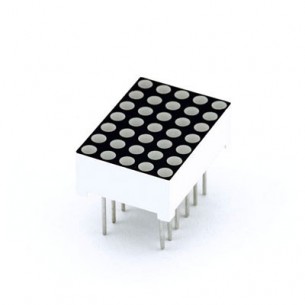
3 mm LED matrix. The matrix contains 35 LEDs (5x7 system) in red. Connection diodes are a common anode.
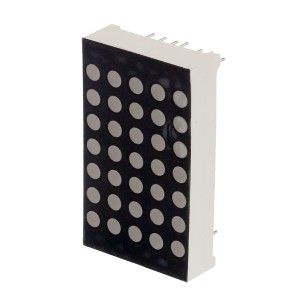
3 mm LED matrix. The matrix contains 35 LEDs (5x7 system) in red. The diodes are connected by a common cathode.
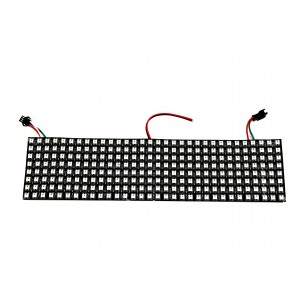
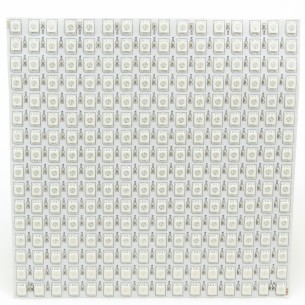
The Led 16x16 WS2812 matrix is made of flexible material on which RGB LEDs are arranged in the form of 16 rows and 16 columns, one microcontroller pin is enough to operate them. Each pixel can emit color from a 24-bit palette.
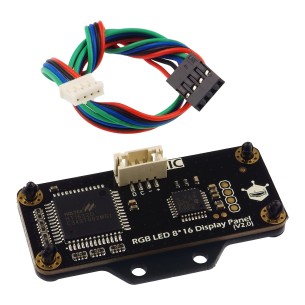
8x16 LED matrix equipped with colored LEDs and a driver. It is powered by 5 V and communicates via the I2C interface (Gravity connector). DFRobot DFR0522
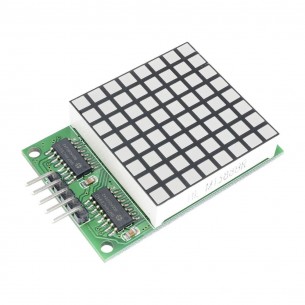
8x8 pixel LED matrix display with red LEDs. The module is equipped with the 74HC595 controller and communicates via the I2C interface
Matrix with 16 WS2812B RGB diodes controlled by a serial signal. The module can be powered with 5V, only one signal line is required for control
Matrix with 4 WS2812B RGB diodes controlled by a serial signal. The module can be powered with 5V, only one signal line is required for control
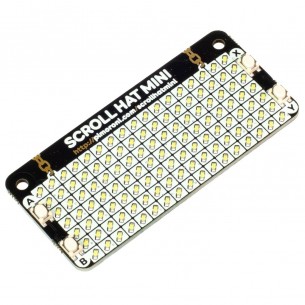
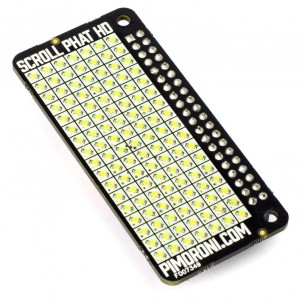
Module with 17x7 LED matrix display (119 LEDs) designed to work with the Raspberry Pi. It uses the IS31FL3731 driver and communicates via the I2C interface. Pimoroni PIM491
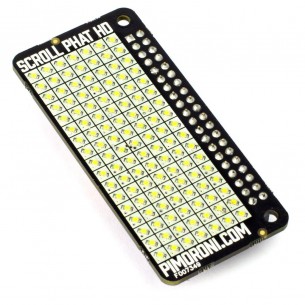
Module with 17x7 LED matrix display (119 LEDs) designed to work with the Raspberry Pi. It uses the IS31FL3731 driver and communicates via the I2C interface. Pimoroni PIM335
Module with 17x7 LED matrix display (119 LEDs) designed to work with the Raspberry Pi. It uses the IS31FL3731 driver and communicates via the I2C interface. Pimoroni PIM336
Module with 17x7 LED matrix display (119 LEDs) designed to work with the Raspberry Pi. It uses the IS31FL3731 driver and communicates via the I2C interface. Pimoroni PIM334
Module with 17x7 LED matrix display (119 LEDs) designed to work with the Raspberry Pi. It uses the IS31FL3731 driver and communicates via the I2C interface. Pimoroni PIM333
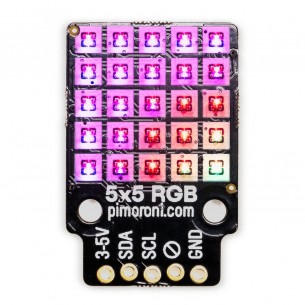
Module with 5x5 RGB LED matrix display (25 LEDs). It uses the IS31FL3731 driver and communicates via the I2C interface. Pimoroni PIM435
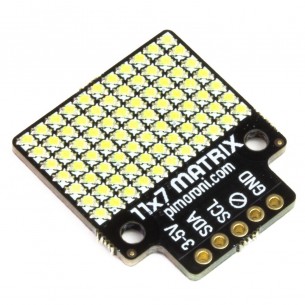
Module with 117x7 LED matrix display (77 LEDs). It uses the IS31FL3731 driver and communicates via the I2C interface. Pimoroni PIM442
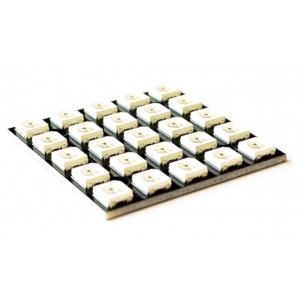
Matrix with 25 WS2812B RGB diodes controlled by a serial signal. The module can be powered by 5V, only one signal line is required for control
RGB LED matrix display with a resolution of 64x64 (4096 LED). It has cutouts at an angle of 45° to build an LED cube. Adafruit 5407
Matrix with 16 WS2812B RGB diodes controlled by a serial signal. The module can be powered with 5V, only one signal line is required for control