.png)



zł59.10 tax excl.
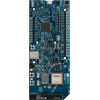
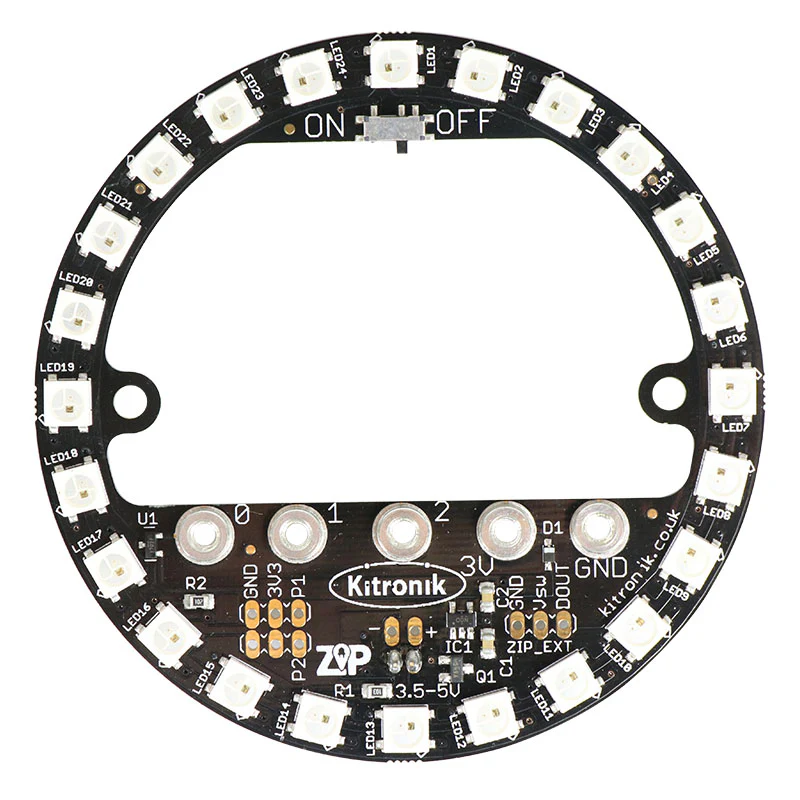
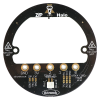
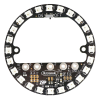
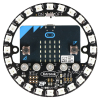
A circular board for the BBC micro:bit with 24 addressable ZIP LEDs, offering a full color spectrum and allowing for the creation of eye-catching lighting animations. Mounts directly to the micro:bit using screws, and additional pins allow for the connection of sensors or additional LEDs. Power is supplied via a JST socket or solder pads, and the built-in regulator also powers the micro:bit. The ZIP Halo is fully compatible with NeoPixel libraries and can be programmed in MakeCode or MicroPython. Kitronik 5625
Kitronik ZIP Halo is a circular expansion board for the BBC micro:bit, equipped with 24 individually addressable ZIP LEDs (RGB, compatible with WS2812B/NeoPixel). Each LED can display the full color spectrum, allowing for impressive animations, visualizations, and colorful lighting effects in educational and creative projects. The board is mounted directly to the micro:bit using five screws, ensuring a stable and solid connection. Additionally, the board provides access to P1 and P2 pins as well as power and ground (2.54 mm pitch), enabling the connection of additional components such as sensors or switches. Further expansion is possible by chaining additional ZIP LEDs.
The ZIP Halo is powered with a voltage range of from 3.5V to 5V, and the built-in regulator supplies the appropriate voltage to the BBC micro:bit. Power can be supplied via a JST connector (e.g., using a 3 × AAA battery pack or a LiPo battery) or by soldering wires directly to the pads. The LEDs are fully compatible with NeoPixel/WS2812B libraries, and programming is possible in the MakeCode editor (Blocks/JavaScript) or MicroPython.
Manufacturer
Responsible person
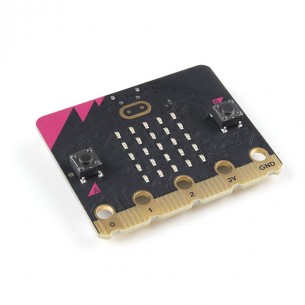
Educational micro:bit module with 32-bit ARM Cortex-M4 microcontroller. Manufactured to interest the youngest in computer engineering. SparkFun DEV-17287
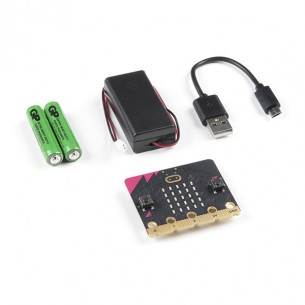
Starter kit with micro:bit v2. In addition to the micro:bit v2 board, the set includes a microUSB-USB cable, a battery basket and two AAA batteries. SparkFun DEV-17288
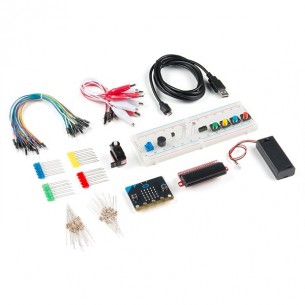
Starter kit with micro:bit v2. The set includes the most necessary elements needed to implement micro:bit projects: LEDs, buttons, potentiometer, servo, prototype board and a set of cables. SparkFun KIT-17362
No product available!
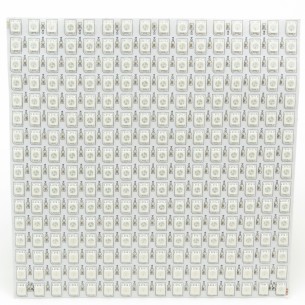
The Led 16x16 WS2812 matrix is made of flexible material on which RGB LEDs are arranged in the form of 16 rows and 16 columns, one microcontroller pin is enough to operate them. Each pixel can emit color from a 24-bit palette.
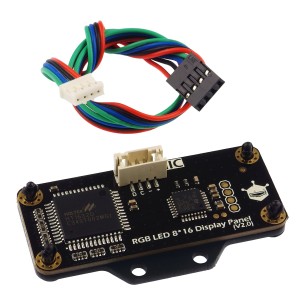
8x16 LED matrix equipped with colored LEDs and a driver. It is powered by 5 V and communicates via the I2C interface (Gravity connector). DFRobot DFR0522
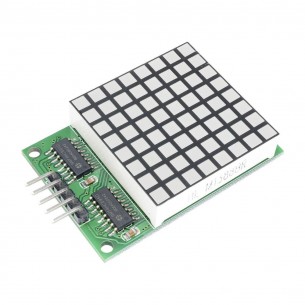
8x8 pixel LED matrix display with red LEDs. The module is equipped with the 74HC595 controller and communicates via the I2C interface
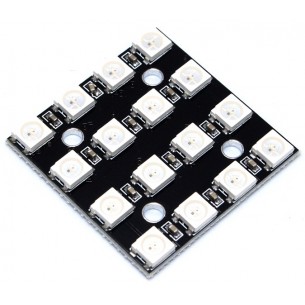
Matrix with 16 WS2812B RGB diodes controlled by a serial signal. The module can be powered with 5V, only one signal line is required for control
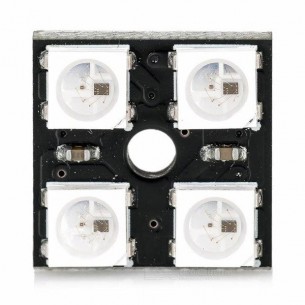
Matrix with 4 WS2812B RGB diodes controlled by a serial signal. The module can be powered with 5V, only one signal line is required for control
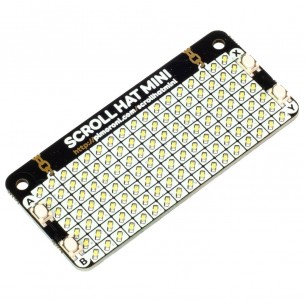
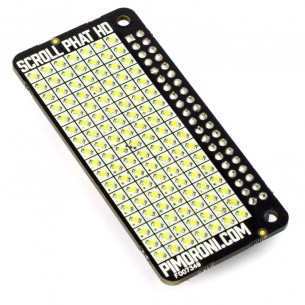
Module with 17x7 LED matrix display (119 LEDs) designed to work with the Raspberry Pi. It uses the IS31FL3731 driver and communicates via the I2C interface. Pimoroni PIM491
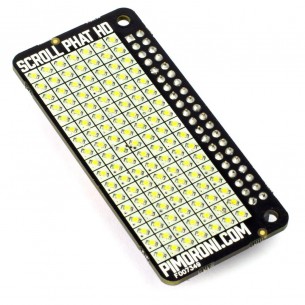
Module with 17x7 LED matrix display (119 LEDs) designed to work with the Raspberry Pi. It uses the IS31FL3731 driver and communicates via the I2C interface. Pimoroni PIM335
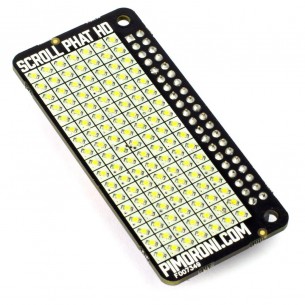
Module with 17x7 LED matrix display (119 LEDs) designed to work with the Raspberry Pi. It uses the IS31FL3731 driver and communicates via the I2C interface. Pimoroni PIM336
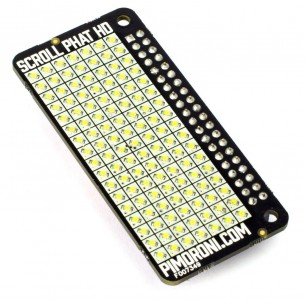
Module with 17x7 LED matrix display (119 LEDs) designed to work with the Raspberry Pi. It uses the IS31FL3731 driver and communicates via the I2C interface. Pimoroni PIM334
Module with 17x7 LED matrix display (119 LEDs) designed to work with the Raspberry Pi. It uses the IS31FL3731 driver and communicates via the I2C interface. Pimoroni PIM333
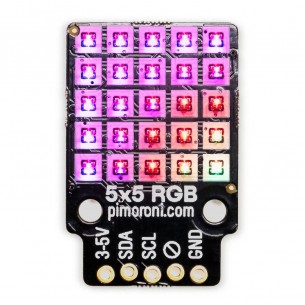
Module with 5x5 RGB LED matrix display (25 LEDs). It uses the IS31FL3731 driver and communicates via the I2C interface. Pimoroni PIM435
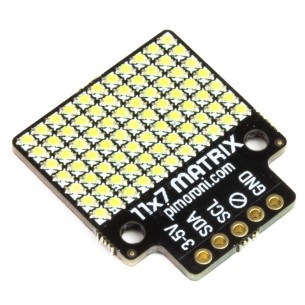
Module with 117x7 LED matrix display (77 LEDs). It uses the IS31FL3731 driver and communicates via the I2C interface. Pimoroni PIM442
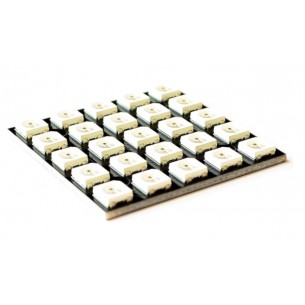
Matrix with 25 WS2812B RGB diodes controlled by a serial signal. The module can be powered by 5V, only one signal line is required for control
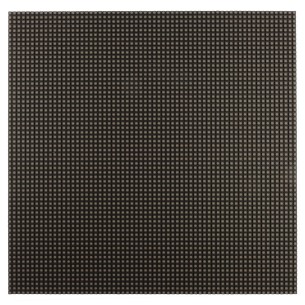
RGB LED matrix display with a resolution of 64x64 (4096 LED). It has cutouts at an angle of 45° to build an LED cube. Adafruit 5407
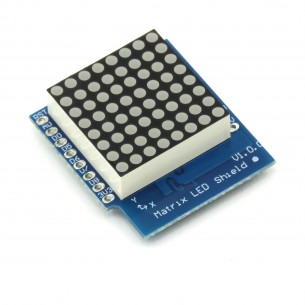
The module with an 8x8 LED matrix designed for Wemos D1 Mini
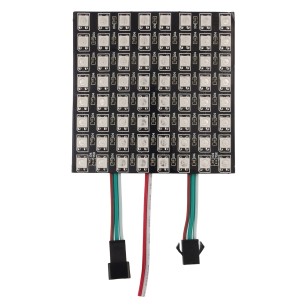
Flexible RGB 8x8 LED Matrix Module with Addressable WS2812B LEDs. modFlexMatrix8x8
A circular board for the BBC micro:bit with 24 addressable ZIP LEDs, offering a full color spectrum and allowing for the creation of eye-catching lighting animations. Mounts directly to the micro:bit using screws, and additional pins allow for the connection of sensors or additional LEDs. Power is supplied via a JST socket or solder pads, and the built-in regulator also powers the micro:bit. The ZIP Halo is fully compatible with NeoPixel libraries and can be programmed in MakeCode or MicroPython. Kitronik 5625