.png)





zł10.13 tax excl.
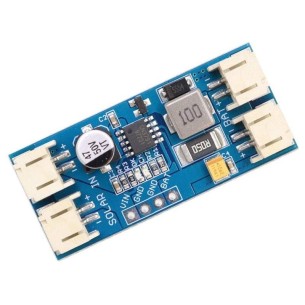
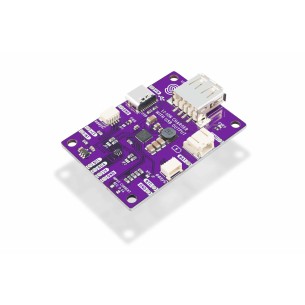
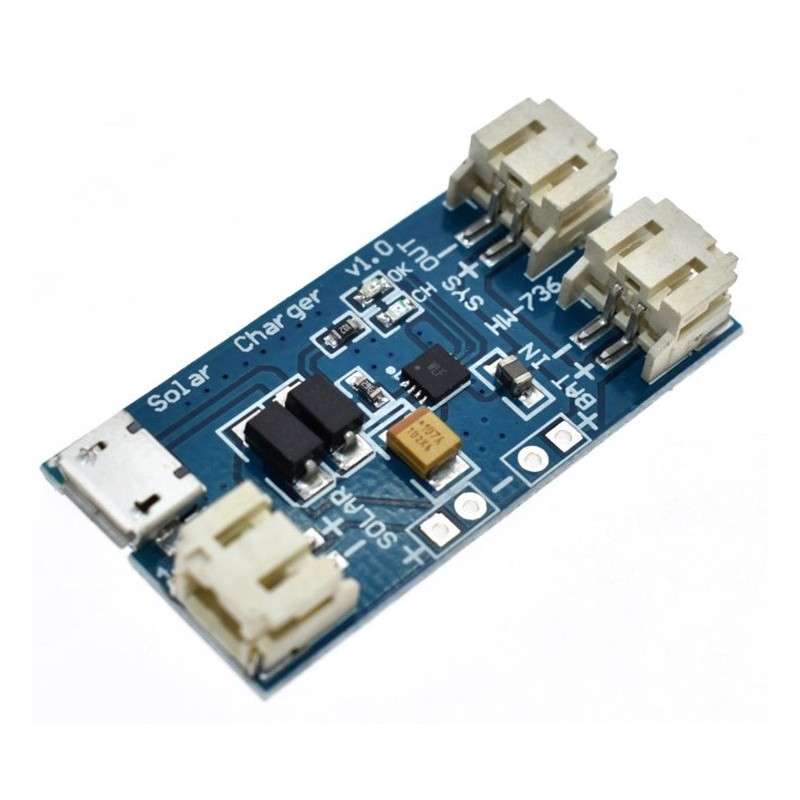
The Li-Ion battery charger module is designed to work with solar panels. The charger can supply a current of up to 500 mA. The module input voltage is in the range of 4.4 to 6 V.
The Li-Ion battery charger module is designed to work with solar panels. The module is based on the CN3065 chip. The charger can supply current up to 500 mA via 2-pin connectors for charging Li-Ion batteries or via the USB connector for charging other devices. The module input voltage is in the range of 4.4 to 6 V.
The CN3065 is a complete DC/DC in-line charger for Li-ion and Li-polymer batteries. The device contains a built-in power MOSFET. The built-in 8-bit ADC can automatically regulate the charging current. CN3065 is specially designed to operate within USB power specification.
Manufacturer
Responsible person
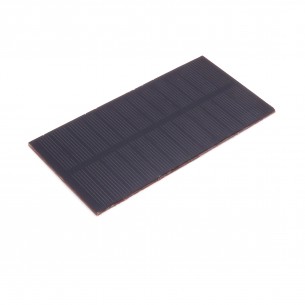
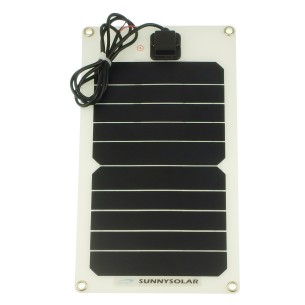
Photovoltaic panel allows conversion of solar radiation into electrical energy. It has 1W power and 6V output voltage, and its design has dimensions of 125 x 63mm. The panel is flooded with resin, which protects it against dirt and mechanical damage. Solar Panel 1W
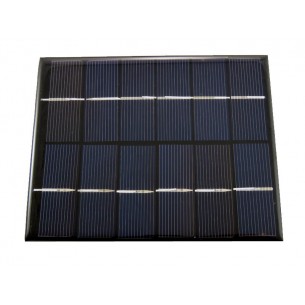
Photovoltaic panel allows conversion of solar radiation into electrical energy. It has 2W power and 6V output voltage, and its construction has dimensions of 136 x 110 mm. The panel is flooded with resin, which protects it against dirt and mechanical damage. Solar Panel 2W
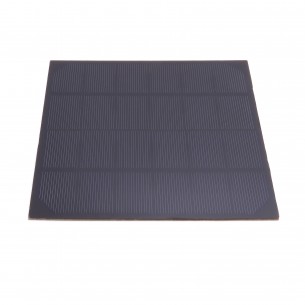
Monocrystalline Solar Panel is a monocrystalline solar panel with 5V output voltage and 1A current efficiency of 27.5 x 16 x 0.2cm. DFRobot FIT0601
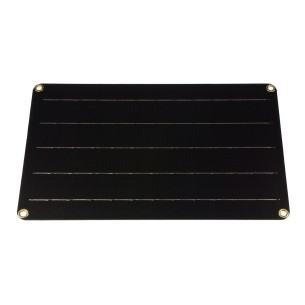
The Semi Flexible Monocrystalline Solar Panel is a flexible monocrystalline solar panel with a 5V output voltage and a current capacity of 1 x 29 x 15 x 0.135 cm. DFRobot FIT0600
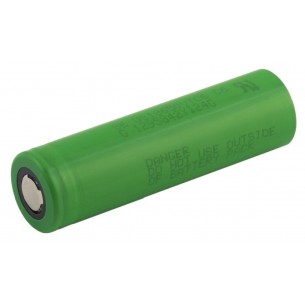
18650 Li-Ion battery with a nominal voltage of 3.7V and a capacity of 3000mAh. Sony US18650VTC6
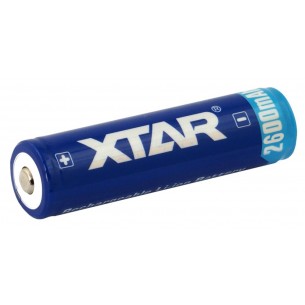
Li-Ion 18650 battery with a nominal voltage of 3.7V and a capacity of 2600mAh. It has protection against overcharging, excessive discharge, overload and short circuit.
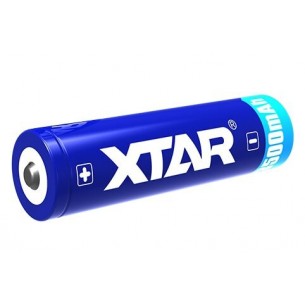
Li-Ion 18650 battery with a nominal voltage of 3.6V and a capacity of 3500mAh. It has protection against overcharging, excessive discharge, overload and short circuit.
Solar energy management module designed for photovoltaic panels. It allows you to charge LiPo 1S batteries with a rated voltage of 3.7 V
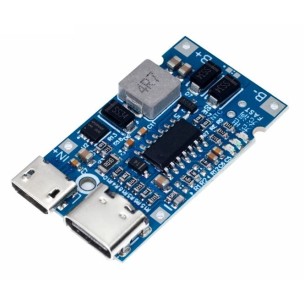
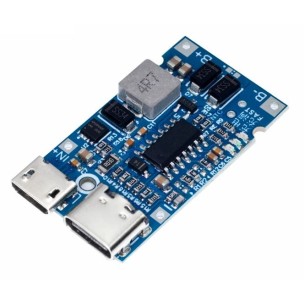
The charger module is designed for 2 Li-Ion cells. It is equipped with a micro USB and USB type C connector and supports fast charging (QC).
The charger module is designed for 3 Li-Ion cells. It is equipped with a micro USB and USB type C connector and supports fast charging (QC).
The charger module is designed for 4 Li-Ion cells. It is equipped with a micro USB and USB type C connector and supports fast charging (QC).
The charger module is designed for 5 Li-Ion cells. It is equipped with a micro USB and USB type C connector and supports fast charging (QC).
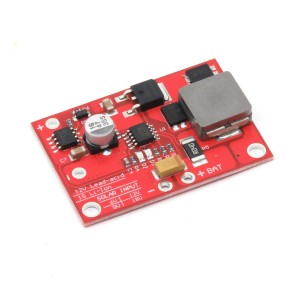
MPPT charge controller module for photovoltaic systems. It supports battery charging with 18V and 3A current, it can charge Lead Acid batteries.
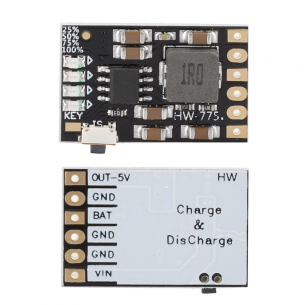
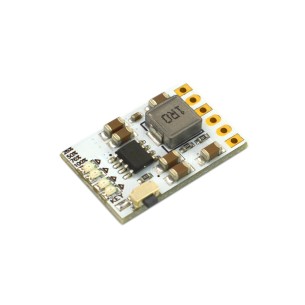
HW-775 module designed for charging single-cell 3.7 V Li-Ion / Li-Po batteries and boosting their voltage to a regulated 5 V output. It supports a charging current of up to 2.1 A and a discharge current of up to 2.4 A, while four LEDs indicate the battery charge level. HW-775
The DC charging and discharging module provides a stable 5V output with a maximum load current of 2A, regardless of the connected device. Equipped with a charge level indicator, push-button control and battery protection, it is suitable for projects such as DIY power banks, driving recorder power supply or charging mobile devices. DFRobot DFR1026
A versatile and compact 3.3V power solution, ideal for IoT and mobile device projects. It combines a functional LiIon/LiPo battery charger with a TPS62569 buck converter, providing a stable 3.3V from multiple sources – USB, DC (up to 18V) or solar panel. With PV charging optimization, Power Path and LED indication, the board provides reliable power without the need for additional modules. Adafruit 6092
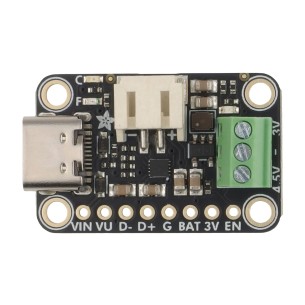
Compact charger module that allows you to power your electronics projects from USB-C, DC power (5-18V) or solar panel. Supports various cell types (LiIon, LiPoly, LiFePO4) and offers a choice of charging currents (250mA, 500mA, 1A), automatically optimizing energy harvest from solar panels without the need for an additional MPPT. With built-in power path management, status LEDs and regulated LOAD output (up to 4.5V), it is ideal for mobile and energy-independent projects. Adafruit 6091
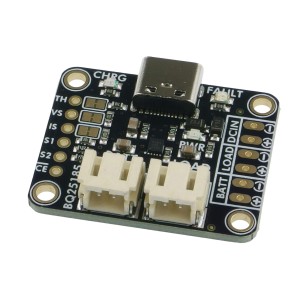
A boost charger module that allows you to charge batteries from USB, DC, or solar panels, and power devices requiring 5V. Equipped with the BQ25185 and TPS61023, it provides high efficiency, optimized power consumption, and support for 500mAh or larger batteries. Adafruit 6106
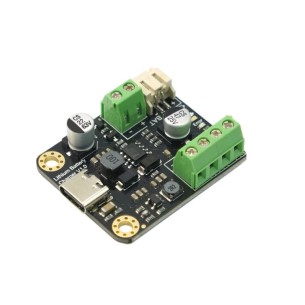
The DFRobot DFR0208 module is a compact charger designed for single-cell 3.7 V Li-Ion and Li-Po batteries, featuring a USB-C connector, a JST battery connector, and screw terminals. It supports adjustable charging current and provides additional 3.3 V and 5 V power outputs, allowing the battery to be charged while simultaneously powering other electronic circuits in a project. DFRobot DFR0208
Charger module designed for single-cell 3.7 V Li-Ion and Li-Po batteries, using the CC/CV charging method. It features a USB Type-C connector, a JST-PH 2 mm battery connector, and two LEDs indicating the charging status. Soldered 333013
No product available!
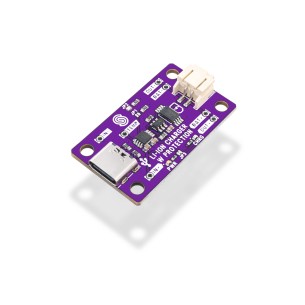
Charger module designed for Li-Ion batteries, using the CC/CV charging method. It features a USB Type-C connector for power input, a JST battery connector, a protection circuit, and LED indicators for monitoring the operating status. Soldered 333014
Charger module for single-cell Li-Ion and Li-Pol batteries, based on the BQ24295 IC. It supports CC/CV charging at up to 3 A, an input voltage range from 4.35 V to 17 V and power path management, allowing simultaneous battery charging and powering of the connected device. Soldered 333075
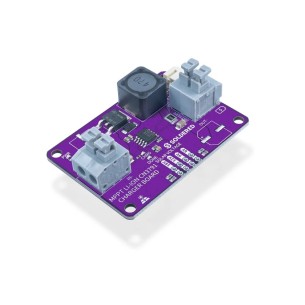
Solar Li-Ion battery charger board based on the CN3791 with maximum power point tracking (MPPT). It supports 6V, 9V, 12V and 18V solar panels, CC/CV charging up to 4.2V, spring terminals and a JST battery connector. Soldered 333136
The Li-Ion battery charger module is designed to work with solar panels. The charger can supply a current of up to 500 mA. The module input voltage is in the range of 4.4 to 6 V.