


zł86.80 tax excl.
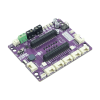
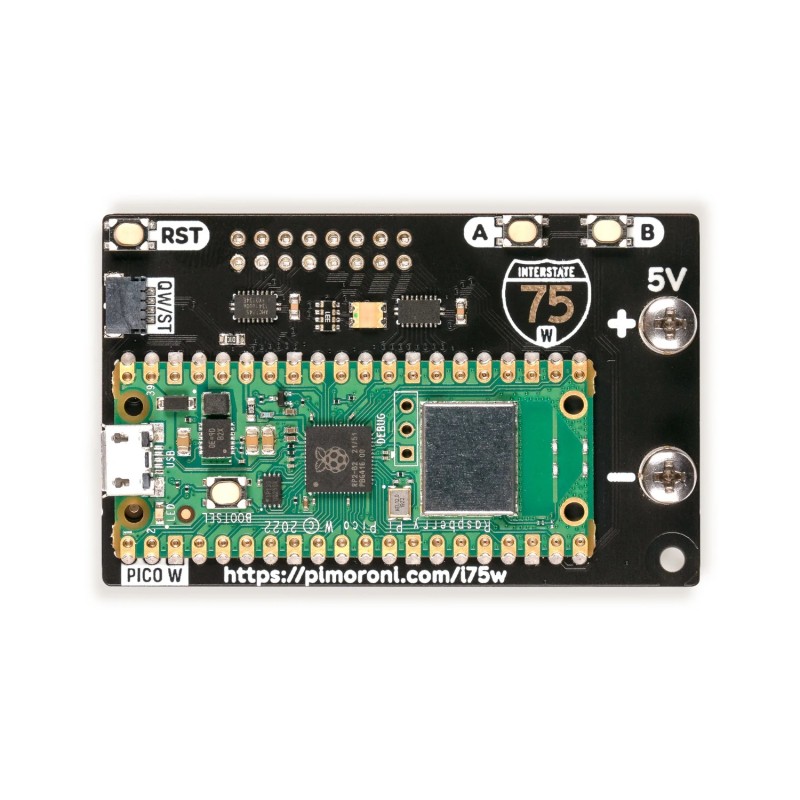
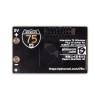
Raspberry Pi Pico W soldered board module dedicated to matrix displays with HUB75 interface. Pimoroni PIM662
Raspberry Pi Pico W soldered board module dedicated to matrix displays with HUB75 interface. It is powered by a micro USB connector, through which it can power one 64x64 panel. If more displays are used, power must be supplied to the module via screw connectors. An I2C STEMMA QT connector is provided on the board for connecting additional accessories. In addition, the user is provided with an RGB LED and buttons. The platform supports the popular programming languages MicroPython, CircuitPython and C/C++.
Data sheet
Manufacturer BTC Korporacja sp. z o. o. Lwowska 5 05-120 Legionowo Poland sprzedaz@kamami.pl 22 767 36 20
Responsible person BTC Korporacja sp. z o. o. Lwowska 5 05-120 Legionowo Poland sprzedaz@kamami.pl 22 767 36 20
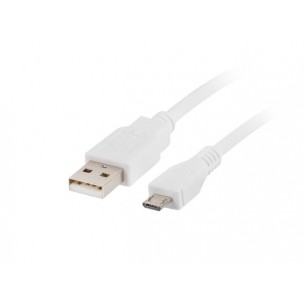
Cable with USB typ A and microUSB typ B connectors, cable length 1 m. LANBERG CCP-MUSB2-AMBM-W-1M
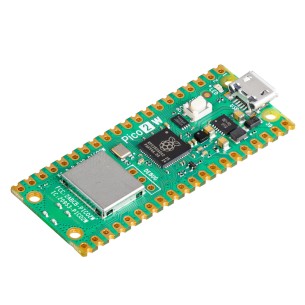
Raspberry Pi Pico 2W, based on the RP2350 microcontroller and has a built-in WiFi and Bluetooth communication module. Pi Pico 2W offers significantly increased performance and functionality thanks to the use of Cortex M33 and RISC-V cores, doubled SRAM memory and advanced security features, including Arm TrustZone. It is hardware and software compatible with previous models, making it an attractive choice for enthusiasts and professionals in the field of embedded systems
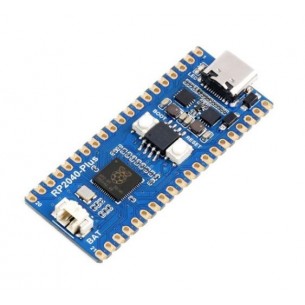
The board with the RP2040 microcontroller equipped with two ARM Cortex-M0+ cores, which work at a frequency of 133 MHz, 264 kB RAM. The board also has 4 MB of QSPI flash memory. The system can be programmed in C/C++ or MicroPython. Waveshare RP2040-Plus
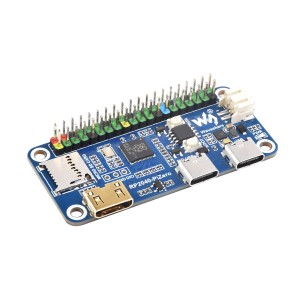
A board with an RP2040 microcontroller equipped with two ARM Cortex-M0+ cores that operate at a frequency of 133 MHz and 264 kB RAM. There is also 16 MB of QSPI Flash memory on the board. The system can be programmed in C/C++ or MicroPython. It offers a DVI connector, a micorSD card slot and a 40-pin GPIO connector. The module has a shape and connector arrangement similar to the popular Raspberry Pi Zero minicomputers. Waveshare RP2040-PiZero
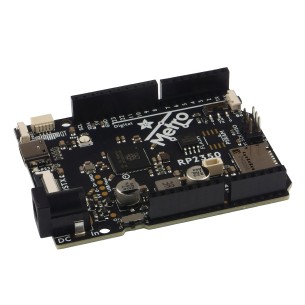
A powerful development board based on the Raspberry Pi RP2350 chip with a dual-core Cortex M33 150 MHz processor and 528 KB RAM, offering 37 GPIO pins and 16 MB of QSPI Flash memory. It supports power supply via USB-C or DC, has a DVI connector, microSD slot, Pico Probe debug port and programmable UF2 bootloader. Thanks to the wide support of programming languages (C/C++, MicroPython, CircuitPython, Arduino), it will be suitable for both educational projects and advanced embedded solutions. Adafruit 6003
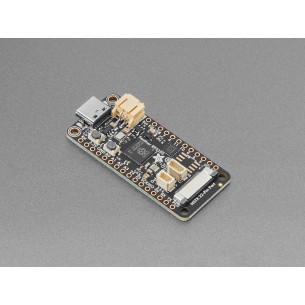
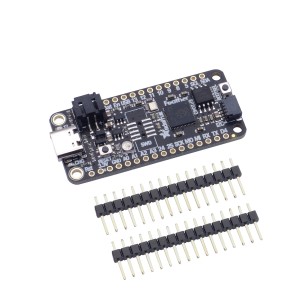
This modern development board features a dual-core Cortex-M33 microcontroller clocked at 150 MHz, 520 KB of RAM, and 8 MB of QSPI Flash. It features a rich set of interfaces, including I2C, SPI, UART, 24 PWM channels, and an HSTX port for high-speed differential data transfer. The board features a STEMMA QT connector, a built-in 200 mA+ LiPo charger, a USB-C port with a UF2 bootloader, and NeoPixel LEDs and a red LED for signaling. The Feather RP2350 is compatible with MicroPython, CircuitPython, Arduino, and C/C++. Adafruit 6000
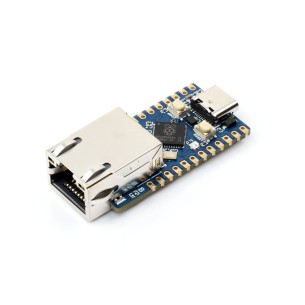
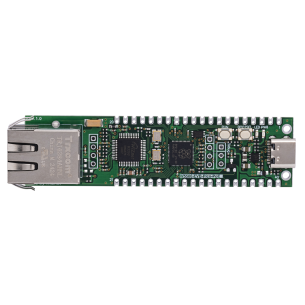
The RP2350-ETH development module combines the computing power of a dual-architecture microcontroller with Ethernet support, enabling the creation of compact and integrated network applications. Dedicated to projects utilizing TCP/IP transmission, it provides support for C/C++, MicroPython, and Arduino languages as well as a wide range of development resources. Thanks to its open architecture and compact form, it is suitable for IoT applications, communication gateways, and embedded systems requiring fast access to a local network.
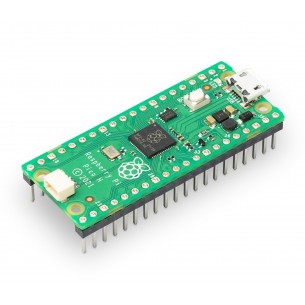
Module with the RP2040 microcontroller with two ARM Cortex-M0 + cores operating at 133 MHz, 256 kB RAM and 30 GPIO. The board also has 2 MB of external QSPI flash memory. Module can be programmed in C/C++ or microPython. Version with soldered connectors. Raspberry Pi SC0917
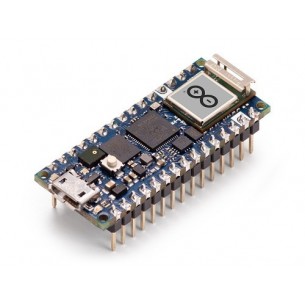
Arduino development board with RP2040 microcontroller. Equipped with WiFi and Bluetooth module, 6-axis IMU system with accelerometer and gyroscope, MEMS microphone, RGB LED diode and cryptographic system. Arduino ABX00053
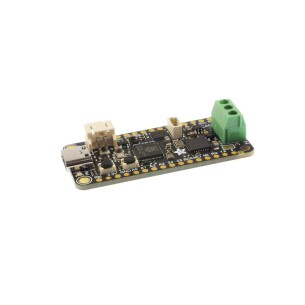
Board with RP2040 microcontroller and MCP2515 CAN controller. It has a built-in LiPo charging circuit and a STEMMA QT connector. It allows you to add communication based on the CAN bus to the project, commonly used in projects related to robotics and the automotive industry. Adafruit 5724
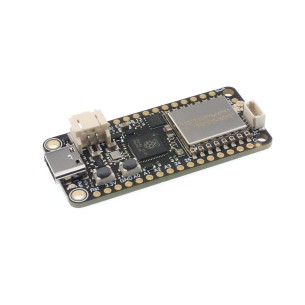
A board with an RP2040 microcontroller and a LoRa RF95 module operating in the 868 MHz frequency band. It has a built-in LiPo charging circuit and STEMMA QT connector. Ideal for IoT projects. Adafruit 5714
This RP2040-based evaluation board features an embedded W5500 Ethernet controller, providing hardware-based TCP/IP support without burdening the microcontroller. Its compact design, PoE support, and Raspberry Pi Pico-compatible interfaces make it ideal for IoT, automation, and networking projects. WIZnet W5500-EVB-Pico-POE
No product available!
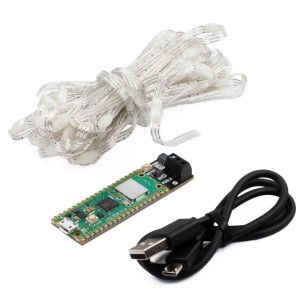
A kit containing an LED strip driver module and WS2812/Neopixel tape. Designed to easily and quickly create animations using popular RGB LED strips. Pimoroni PIM657
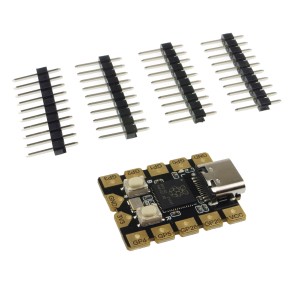
The RP2040 microcontroller board features two 133 MHz ARM Cortex-M0+ cores and 264 kB of RAM. The board also includes 2 MB of QSPI Flash memory. The chip can be programmed in C/C++, CircuitPython or MicroPython. DFRobot DFR0959
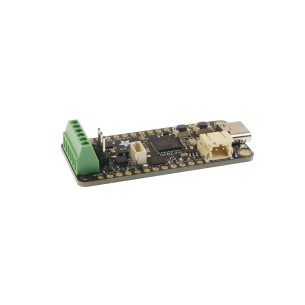
Board with RP2040 microcontroller and class D mono audio amplifier based on MAX98357 chip. It has a built-in LIS3DH three-axis accelerometer, an RGB NeoPixel LED, a LiPo charging circuit, and a STEMMA QT connector. Adafruit 5768
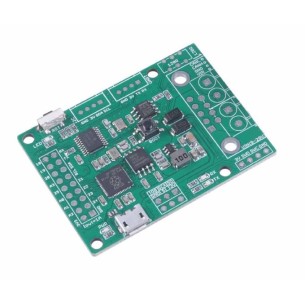
CAN 2.0 module based on the MCP2551 and MCP2515 systems, equipped with the RP2040 microcontroller. Seeed Studio 102991596
The board with the RP2040 microcontroller equipped with two ARM Cortex-M0+ cores, which work at a frequency of 133 MHz, 256 kB RAM. The board also has 8 MB of QSPI flash memory. The system can be programmed in C/C++ or MicroPython. Adafruit 4884
Raspberry Pi Pico W soldered board module dedicated to matrix displays with HUB75 interface. Pimoroni PIM662