.png)


zł527.93 tax excl.
Solarbotics K SV Sumovore Mini Sumo Kit
Solarbotics K SV Sumovore Mini Sumo Kit
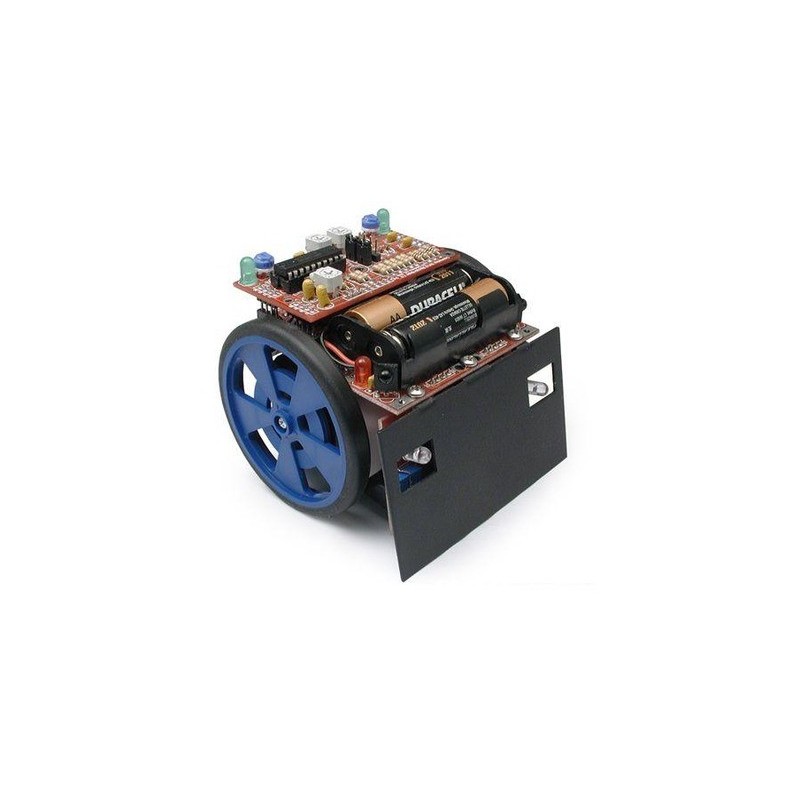
If you have been thinking about getting your own mini sumo robot but were waiting for the right kit to come along, we might just have the one for you! No programming is necessary to get the Sumovore going: it has a sumo wrestling mode and a line following mode, and assembly is easy with the step-by-step instructions written just for beginners. This robot outperforms many other robots, even in its standard configuration, and there are options to expand on its basic capabilities.
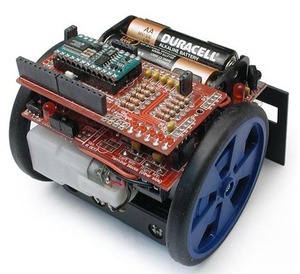 |
The Solarbotics Sumovore is a great entry-level kit that can serve as an exciting introduction to the world of mini robot sumo and robotics. The Sumovore is mainly designed for mini sumo competitions, but it also includes a bonus line following mode so you can enter it in line-following contests, too. No programming is necessary because the Sumovore doesn’t use a microcontroller. Instead, it uses a discrete "brainboard" made up of analog circuits to control it’s motions. However, if you want the ability to program your bot, upgrading to a microcontroller brain is possible (see Expansion Capabilities).
Assembling the brainboard and the rest of the robot is explained in the instructions (2MB pdf), which include many detailed pictures to step beginners through every component in the robot. Assembly takes a few hours, and basic electronics tools, such as a soldering iron, wire strippers, diagonal cutters, long-nose pliers, and small screwdrivers are required (see page 4 of the instructions (2MB pdf) for a full list of the required tools). Don’t worry if you don’t have any soldering experience: the instructions begin with a soldering tutorial explaining what you need to know to get your robot up and fighting. (If you insist on practicing your soldering on something else, first, you might consider the learn to solder kit.)
The Sumovore sumo robot features two obstacle-detecting sensors on its front (for detecting your opponent) and four reflectance sensors on its bottom (for sensing the edges of the ring, and for line following). The GM8 gearmotors give the robot more speed than competing products that use modified-RC-servos, and the robot has outperformed other stock mini-sumo robots including programmable robots.
Note: The Solarbotics Sumovore robot is a kit that requires soldering; before using it, you will need to assemble the robot. Six AA batteries are required but not included. Wheel and front scoop colors may vary from the picture shown.
Manufacturer
Responsible person
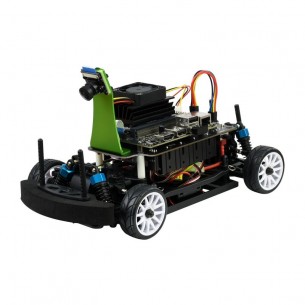
A set of accessories for the construction of an autonomous racing robot based on the popular NVIDIA Jetson Nano development kit. Waveshare JetRacer Pro 2GB AI Kit Acce
No product available!
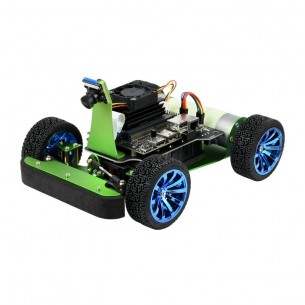
A set of accessories for the construction of an autonomous racing robot based on the popular NVIDIA Jetson Nano development kit. Waveshare JetRacer 2GB AI Kit Acce
No product available!
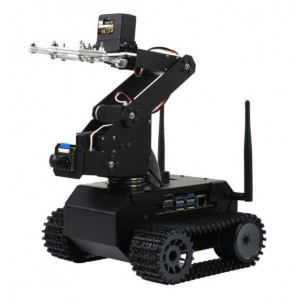
A set of accessories for building a multi-tasking robot with a crawler chassis, based on the popular NVIDIA Jetson Nano development kit. Waveshare JETANK AI Kit Acce
No product available!
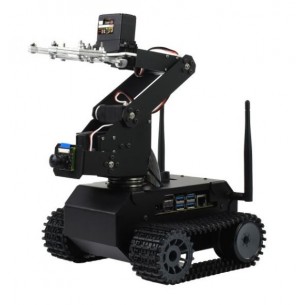
A set for building a multi-tasking robot with a crawler chassis, based on the popular NVIDIA Jetson Nano development kit. Waveshare JETANK AI Kit
No product available!
Zumo 32U4 OLED main robot control board. It is included as part of the Zumo 32U4 OLED robot kit and built into the assembled versions of the Zumo 32U4 OLED robot. Threaded elements, magnetic encoder disks and mounting elements are included. Pololu 4994
No product available!
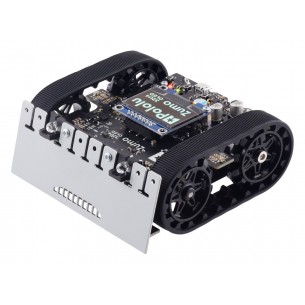
Kit for building a minisumo robot on a crawler chassis. It has a bulldozer, control board and a set of caterpillars. Robot version for self-assembly, requires additional motors and four AA batteries. Pololu 4990
No product available!
A minisumo robot on a tracked chassis with Pololu 100:1 HP motors. Fully assembled robot, additionally requires four AA batteries. Pololu 4993
No product available!
A minisumo robot on a tracked chassis with Pololu 75:1 HP motors. Fully assembled robot, additionally requires four AA batteries. Pololu 4992
No product available!
A minisumo robot on a tracked chassis with Pololu 50:1 HP motors. Fully assembled robot, additionally requires four AA batteries. Pololu 4991
No product available!
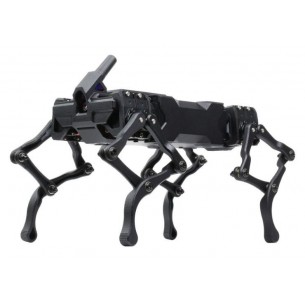
A bionic dog that is an ideal tool for learning programming and studying the movement of four-legged robots. Dedicated to work with Raspberry Pi 4B minicomputers. Waveshare WAVEGO (EU)
No product available!
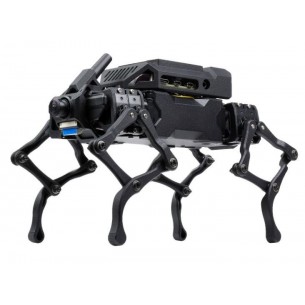
A bionic dog that is an ideal tool for learning programming and studying the movement of four-legged robots. Dedicated to minicomputers Raspberry Pi 4B or ESP32 modules. Waveshare RPI WAVEGO ACCE (EU)
No product available!
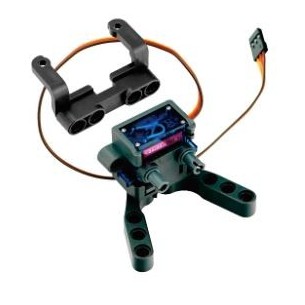
A robotic gripper based on the SG92R servo. It has an opening and closing angle of 90° and mounting holes compatible with Lego. M5Stack U102
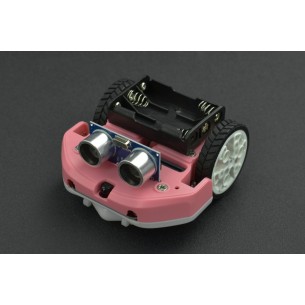
Educational robot for learning programming based on the micro:bit module. Equipped with a red protective case. DFRobot ROB0148-EN-LR
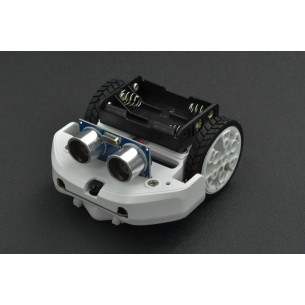
Educational robot for learning programming based on the micro:bit module. Equipped with a white protective case. DFRobot ROB0148-EN-LW
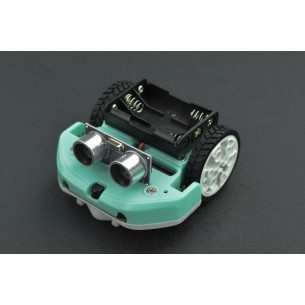
Educational robot for learning programming based on the micro:bit module. Equipped with a green protective case. DFRobot ROB0148-EN-LG
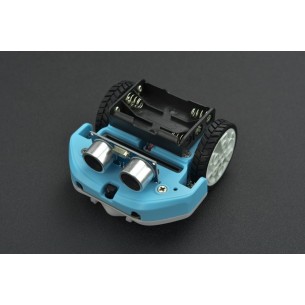
Educational robot for learning programming based on the micro:bit module. Equipped with a blue protective case. DFRobot ROB0148-EN-LB
Solarbotics K SV Sumovore Mini Sumo Kit