
.png)




Category: MECHANICS
Mechanics - Structural Components, Drives and Accessories
The Mechanics category includes components for building drive systems, mechanical structures, robots, machines, electronic devices, and automation systems. The range includes motors, servos, linear actuators, wheels, tracks, robot chassis, mounting components, enclosures, grippers, electromagnets, solenoid valves, and pumps. Available components can be used to generate motion, transfer mechanical power, build actuating mechanisms, and construct and protect complete devices.
Subcategories



There are 2269 products.
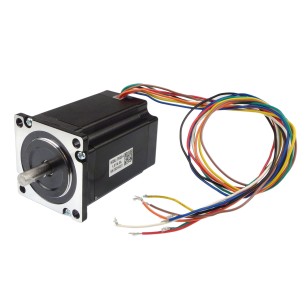
NEMA23 bipolar/unipolar stepper motor. It has a resolution of 200 steps/rotation (1.8° per step), a voltage rating of 36 V and draws a current of 5.6 A per coil. 57HS22
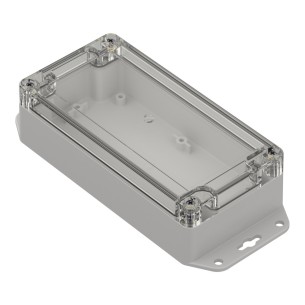
Hermetic enclosure ZP160.80.45 made of polycarbonate with transparent cover and poured gasket enables protection of electronic systems in conditions requiring IP67 rating. Brass inserts and ear mounting support integration in industrial and automation installations.
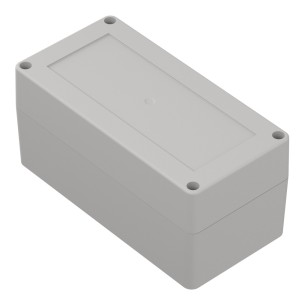
Plastic enclosure ZP160.80.75 made of ABS with brass inserts intended for standard electronic applications. It enables convenient mounting of internal components without the need to ensure tightness.
Permanent cylindrical neodymium magnet with a diameter of 4 mm and a height of 1,5 mm. Set of 10 pcs
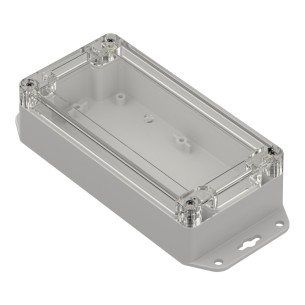
Plastic enclosure ZP160.80.45 made of polycarbonate in the version with brass inserts and mounting ears intended for standard electronic applications. It is suitable where increased enclosure tightness is not required.
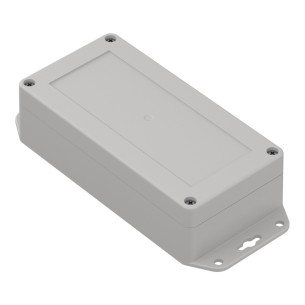
ZP160.80.45UJH TM is a hermetic enclosure by Kradex with mounting ears, a gasket, and brass inserts, designed to protect electronics in industrial environments and installation applications.
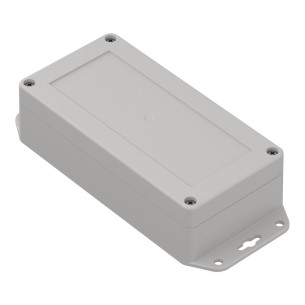
Plastic enclosure ZP160.80.45 made of polycarbonate in the version with brass inserts and mounting ears intended for standard electronic applications. It is suitable where increased enclosure tightness is not required.
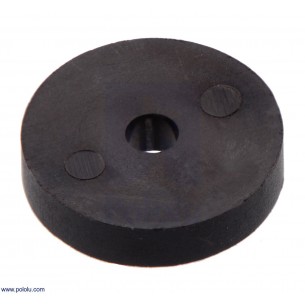
Pololu - 3498
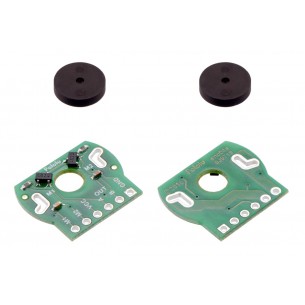
Add quadrature encoders to your 20D mm metal gearmotors (extended back shaft version required) with this kit that uses a magnetic disc and Hall effect sensors to provide 20 counts per revolution of the motor shaft. The sensors operate from 2.7 V to 18 V and provide digital outputs that can be connected directly to a microcontroller or other digital circuit.
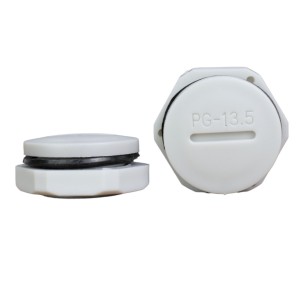
The ZCG PG13.5J PLUG PA66 cap is made of light gray polyamide and is designed for permanent or temporary sealing of PG13.5 threaded openings in enclosures and electrical junction boxes. With resistance to temperatures ranging from -40°C to +85°C and compliance with the UL 94V-2 standard, it provides reliable sealing and protection against dust and moisture.
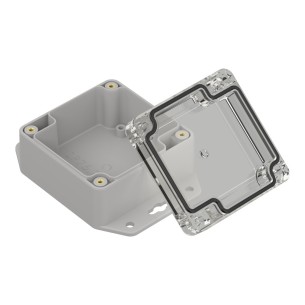
The ZP75.75.45SUJp-IP67 TM ABS-PC hermetic enclosure is a two-part design with dimensions of 75 x 75 x 45 mm, featuring a light-colored base made of ABS and a transparent polycarbonate cover. Equipped with mounting lugs, a molded gasket, and brass inserts, it provides IP67 protection and ensures easy installation.
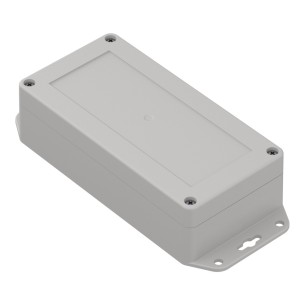
Plastic enclosure ZP160.80.45 made of ABS in the version with brass inserts and mounting ears intended for standard electronic installations. It is suitable for projects not requiring increased enclosure tightness.
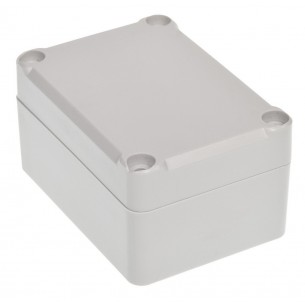
Hermetic enclosure Z96 lightgray with gasket PS
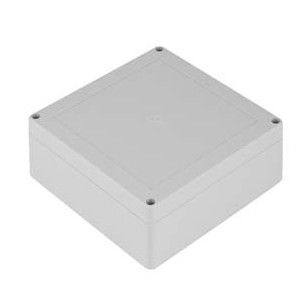
ZP120.120.60JpH TM ABS-PC - Hermetic enclosure ZP120.120.60 lightgray, transparent lid with gasket and brass bushing ABS-PC
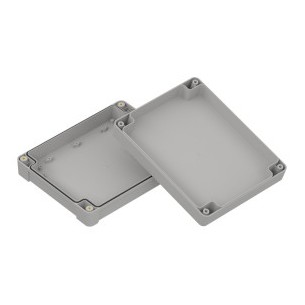
ZP240.190.60SJ-IP67 TM PC - Enclosure hermetically sealed ZP240.190.60 lightgray with brass bushing PC
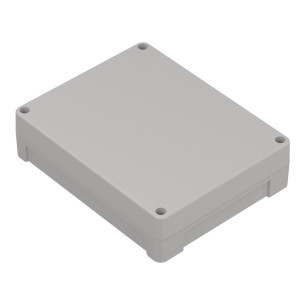
ZP240.190.60JH TM PC - Hermetic enclosure ZP240.190.60 lightgray with gasket and brass bushing PC
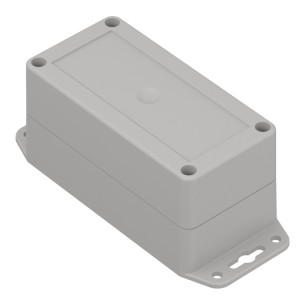
ZP150.50.60UJH TM PC enclosure made of durable polycarbonate offers full protection (IP68) and impact resistance (IK08), making it suitable for industrial, field, and outdoor installations. The design with a gasket and brass inserts allows stable and sealed mounting of internal components.
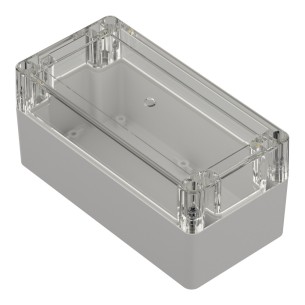
Plastic enclosure ZP160.80.75 made of polycarbonate with transparent cover and brass inserts intended for electronic installations where viewing internal components and stable mounting are important.
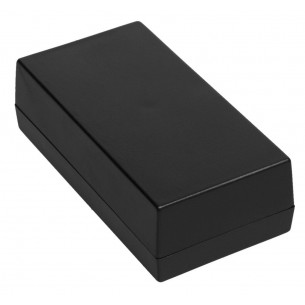
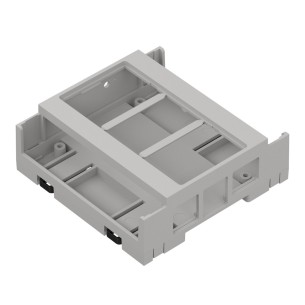
IOT.ZD3005 Pi5J ABS V0 - Din rail enclosure iot.ZD3005 pi5 lightgray ABS V0
Motors, Servos and Actuators
Motors, servos, and actuators provide motion for robots, machines, and actuating mechanisms. Depending on the system design, DC motors, BLDC motors, stepper motors, servos, and linear actuators can be selected according to supply voltage, speed, torque, travel range, and control method.
Wheels, Tracks and Robot Chassis
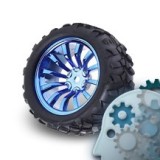
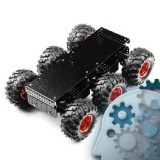
Drive system components enable the construction of mobile platforms and robots designed to move across different surfaces. Wheels, tracks, ball casters, and robot chassis can be used to assemble mobile platforms and match the mechanical structure to the propulsion system, required load capacity, and intended movement characteristics.
Mounting Components and Brackets
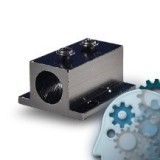
Mounting components provide mechanical connections between parts and support the construction of complete devices. Brackets, mounts, and other structural accessories can be used to install motors, sensors, electronic boards, and additional components in robotics, automation, and prototyping projects.
Grippers, Electromagnets and Actuating Components
Grippers and electromagnets can be used to build mechanisms for gripping, holding, and moving objects. Combined with suitable drives and control systems, they can be integrated into robotic manipulators, automation mechanisms, and prototype systems.
Pumps and Solenoid Valves
Pumps and solenoid valves are used in systems requiring the transfer or control of liquids and gases. Parameters such as supply voltage, flow rate, pressure, connection diameter, and compatible medium help determine suitability for pneumatic, hydraulic, dosing, and cooling systems.
Enclosures and Structural Accessories
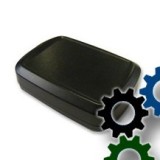
Enclosures protect electronics and other device components against mechanical damage and environmental conditions within the protection capabilities of a particular design. Enclosure accessories and mounting components facilitate the installation of circuit boards, cables, connectors, and other components inside a device.
Selecting Mechanical Components
Mechanical components should be selected according to dimensions, mounting method, material, load requirements, and mechanical and electrical compatibility. For drive systems, additional parameters such as torque, speed, supply voltage, and the method of transferring mechanical power should also be considered.