.png)


- New

zł1,137.40 tax excl.
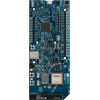
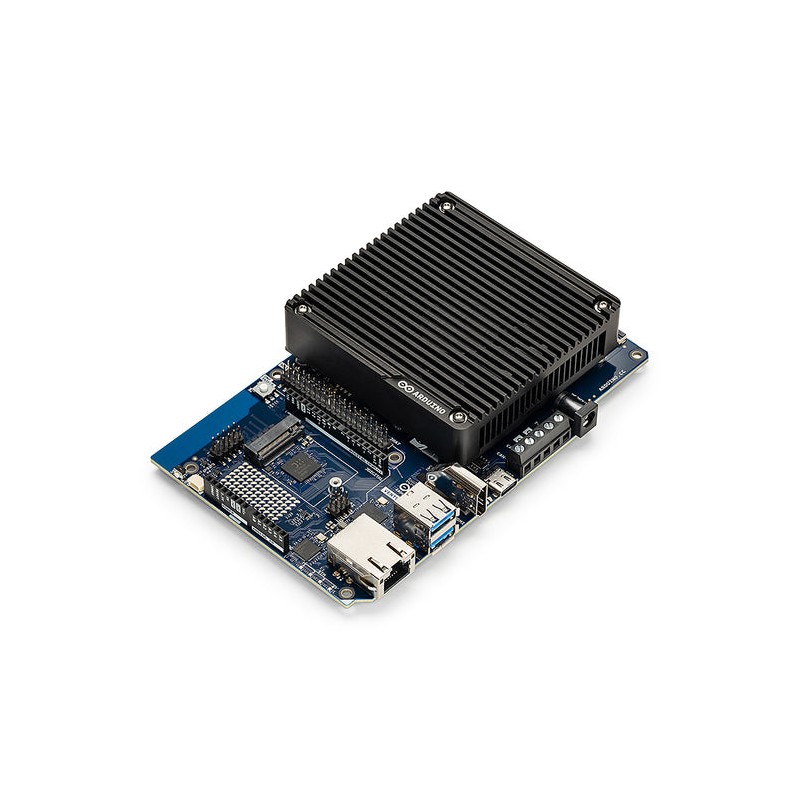
Edge AI computer for advanced artificial intelligence, robotics, automation and machine vision projects, using a Dual-Brain architecture with a Qualcomm Dragonwing IQ8 processor and an STM32H5F5 real-time microcontroller. It offers a Hexagon AI accelerator with performance of up to 40 dense TOPS, 16 GB of LPDDR5 memory and 64 GB of eMMC storage, as well as WiFi 6, Bluetooth 5.3 and 2.5 Gb/s Ethernet. Three MIPI CSI connectors support camera integration, while HDMI, USB 3.0, CAN-FD, Qwiic, M.2 NVMe, Arduino UNO Shield connectors and a 40-pin Raspberry Pi HAT header support the development of advanced Edge AI systems. Arduino ABX00181 VENTUNO Q
The Edge AI computer combines a Qualcomm Dragonwing IQ8 QCS8275 application processor with an STM32H5F5 real-time microcontroller, allowing compute-intensive tasks to run in parallel with precise control of inputs, motors and actuators. The octa-core Qualcomm Kryo processor operates at up to 2.36 GHz, while the Hexagon Tensor AI Processor, Adreno 623 GPU and Adreno VPU 623 provide hardware acceleration for AI, graphics and video processing. The STM32H5F5 microcontroller uses an Arm Cortex-M33 core running at up to 250 MHz, 4 MB of Flash memory and 1.5 MB of RAM, and runs Arduino Core on Zephyr. Both processors communicate through Arduino Bridge using an RPC mechanism.
The ABX00181 configuration includes 16 GB of LPDDR5 memory and 64 GB of built-in eMMC storage for the operating system and data. The application processor runs Ubuntu Linux, while the documentation also anticipates Debian support. The M.2 Key M 2230 connector enables storage expansion using an NVMe Gen 4 drive connected to the processor through four PCIe Gen 4 lanes. VENTUNO Q can be used as a platform for local LLM and VLM models, vision systems, autonomous robots, motion control, industrial monitoring, automated inspection, and research and education projects.
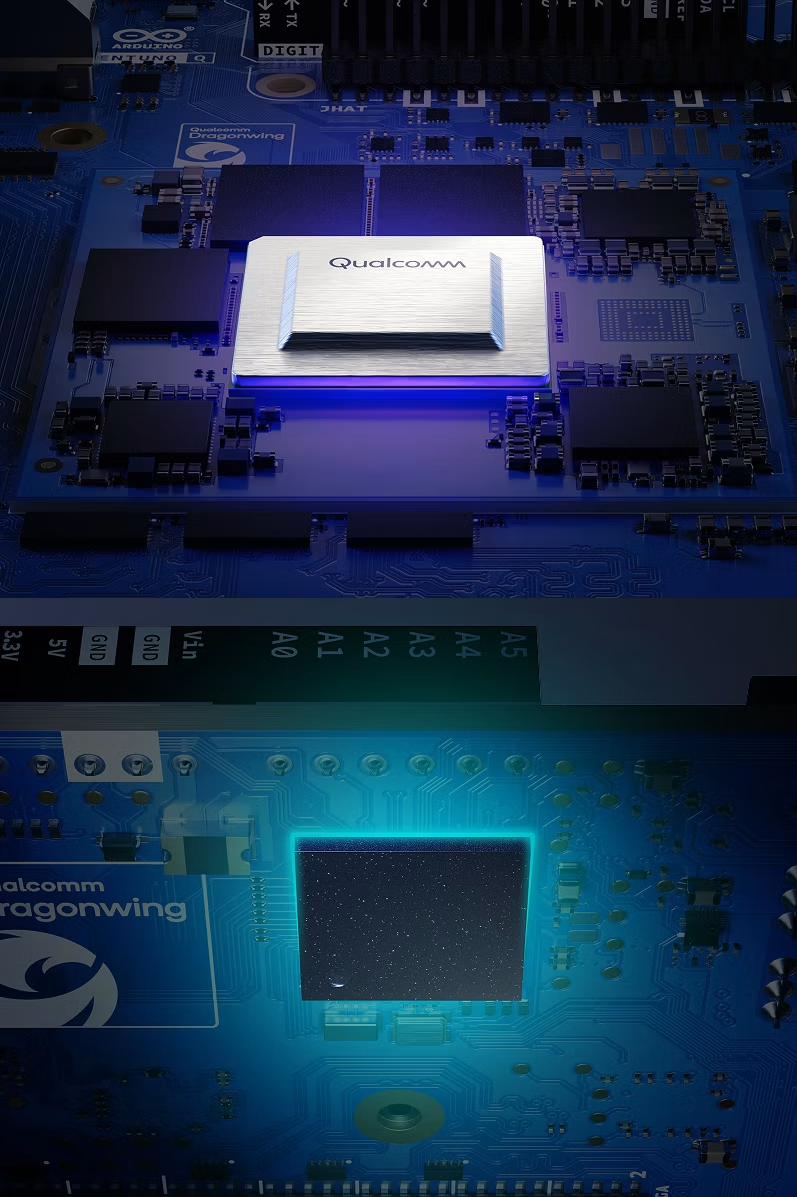
Dual-Brain architecture - AI and real-time control - Qualcomm Dragonwing IQ8 QCS8275 handles Linux, AI processing, multimedia and high-speed interfaces, while STM32H5F5 performs tasks requiring predictable response times. The MCU handles functions including ADC, PWM, timers, the LED matrix, RGB LEDs and CAN-FD interfaces. Separating high-level computing from real-time control enables local image analysis or language models to run without sacrificing fast control of drives, sensors and industrial equipment.
Communication between the processors is handled by Arduino Bridge with an RPC layer, enabling service calls between the Linux environment and the program running on the microcontroller. Software running on the STM32 side can use Linux services, while applications running on the Qualcomm processor can exchange data with the circuit responsible for inputs and outputs.
AI acceleration up to 40 dense TOPS - The Hexagon Tensor AI Processor provides performance of up to 40 dense TOPS for local execution of neural networks, LLMs, VLMs and advanced computer vision algorithms. The accelerator works with Qualcomm AI Stack, while the documentation indicates support for models prepared using TensorFlow Lite, ONNX Runtime and PyTorch. Integration with Edge Impulse Studio supports deployment of custom Edge AI models.
The Adreno 623 GPU provides hardware acceleration for 3D graphics and GPGPU computing, while the Adreno VPU 623 supports hardware video processing. The Qualcomm Spectra 692 ISP handles the imaging pipeline used in vision applications. The combined computing resources support systems for object detection and classification, Visual SLAM, local AI assistants, quality control and autonomous mobile platforms.
Three MIPI CSI connectors enable simultaneous connection of three cameras in the standard board configuration. Each connector uses a 22-pin FPC interface and supports MIPI CSI-2 cameras with up to four data lanes. USB cameras can also be connected through USB Type-A or USB Type-C ports.
Video output is provided through HDMI and DisplayPort Alt Mode over USB Type-C. MIPI DSI lines are also available on the JMEDIA connector, while HDMI and MIPI DSI operation share the corresponding lines. The configuration supports standalone vision systems with a local monitor, unattended network-connected applications and devices using multiple cameras to observe the surrounding environment.
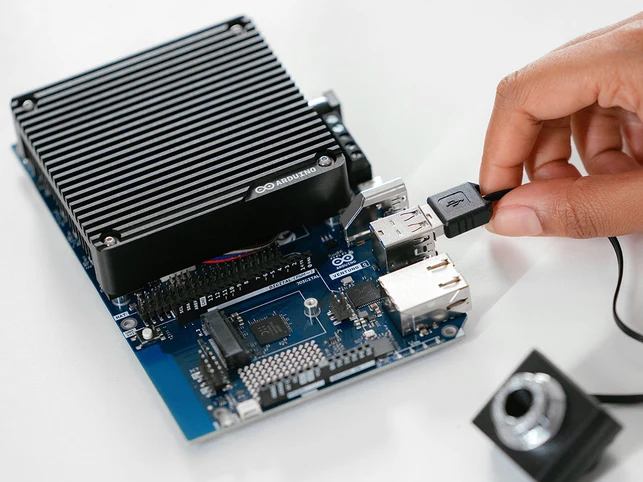

WiFi 6, Bluetooth 5.3 and 2.5 Gb/s Ethernet - Wireless connectivity includes tri-band WiFi 6 operating in the 2.4 GHz, 5 GHz and 6 GHz bands, together with Bluetooth 5.3. The WiFi module uses two built-in antennas, while Bluetooth has a dedicated onboard antenna. Wired communication is provided by an RJ45 Ethernet port with a throughput of 2.5 Gb/s.
High-speed network connections support transmission of camera data, communication with services running on the local network, headless operation and integration of VENTUNO Q with robotic and industrial infrastructure. The platform can operate locally without cloud access, which is useful in applications requiring low latency or data processing directly at the source.
USB 3.0, HDMI, M.2 NVMe and audio interfaces - The USB Type-C port supports host/device roles, USB Power Delivery and DisplayPort Alt Mode video output. The board also includes two USB 3.0 Type-A ports, while two additional USB 3.0 interfaces are available through the JOMEGA connector. When DisplayPort Alt Mode is active, the high-speed USB-C lanes are switched to video output and USB data transmission through the USB-C port is reduced to USB 2.0 speed.
Built-in MAX98091 audio codec - The codec provides microphone input as well as line, headphone and speaker outputs through expansion connectors. VENTUNO Q can therefore handle local speech recognition, audio synthesis, voice assistant and audio interface applications without requiring a separate computer.
Arduino UNO Shield, Raspberry Pi HAT and Qwiic - The connectors retain the mechanical Arduino UNO Shield layout, allowing the use of many expansions designed for the UNO form factor. The logic level of the standard MCU connectors is 3.3 V, while most digital inputs tolerate 5 V. Analog inputs A0 and A1 are not 5 V tolerant and require signals within the 3.3 V input range.
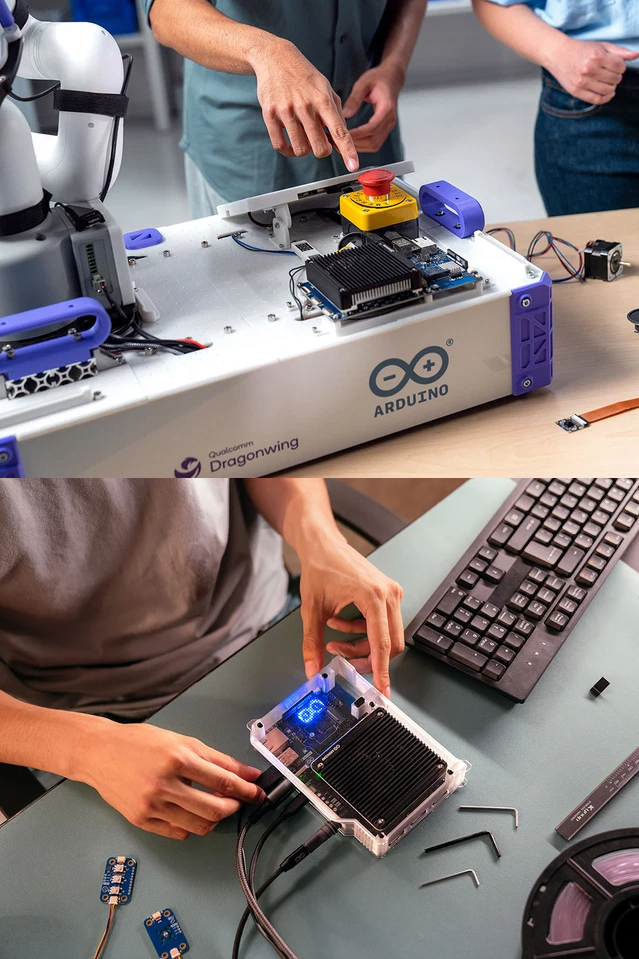

The additional 40-pin JHAT connector maintains compatibility with Raspberry Pi HAT mechanics and logic levels, while level translators convert Qualcomm processor signals from the 1.8 V domain to 3.3 V. The Qwiic connector provides a 3.3 V I2C bus for connecting Arduino Modulino modules and compatible sensors. The design also includes extended JOMEGA, JMEDIA, JMISC and JCTL connectors for additional interfaces, multimedia and debugging.
CAN-FD for robotics and automation - The board includes one CAN-FD interface with a physical transceiver routed to a screw terminal. CAN-H and CAN-L lines include TVS protection, while the bus uses built-in split termination. Three additional CAN-FD interfaces without a physical layer are available on JOMEGA, and another interface without a transceiver is routed to the UNO Shield connectors.
CAN-FD support through STM32H5F5 allows integration with drives, controllers, industrial equipment and robotic systems requiring deterministic data exchange. The integrated transceiver on the main CAN port reduces the number of additional components required during prototyping.
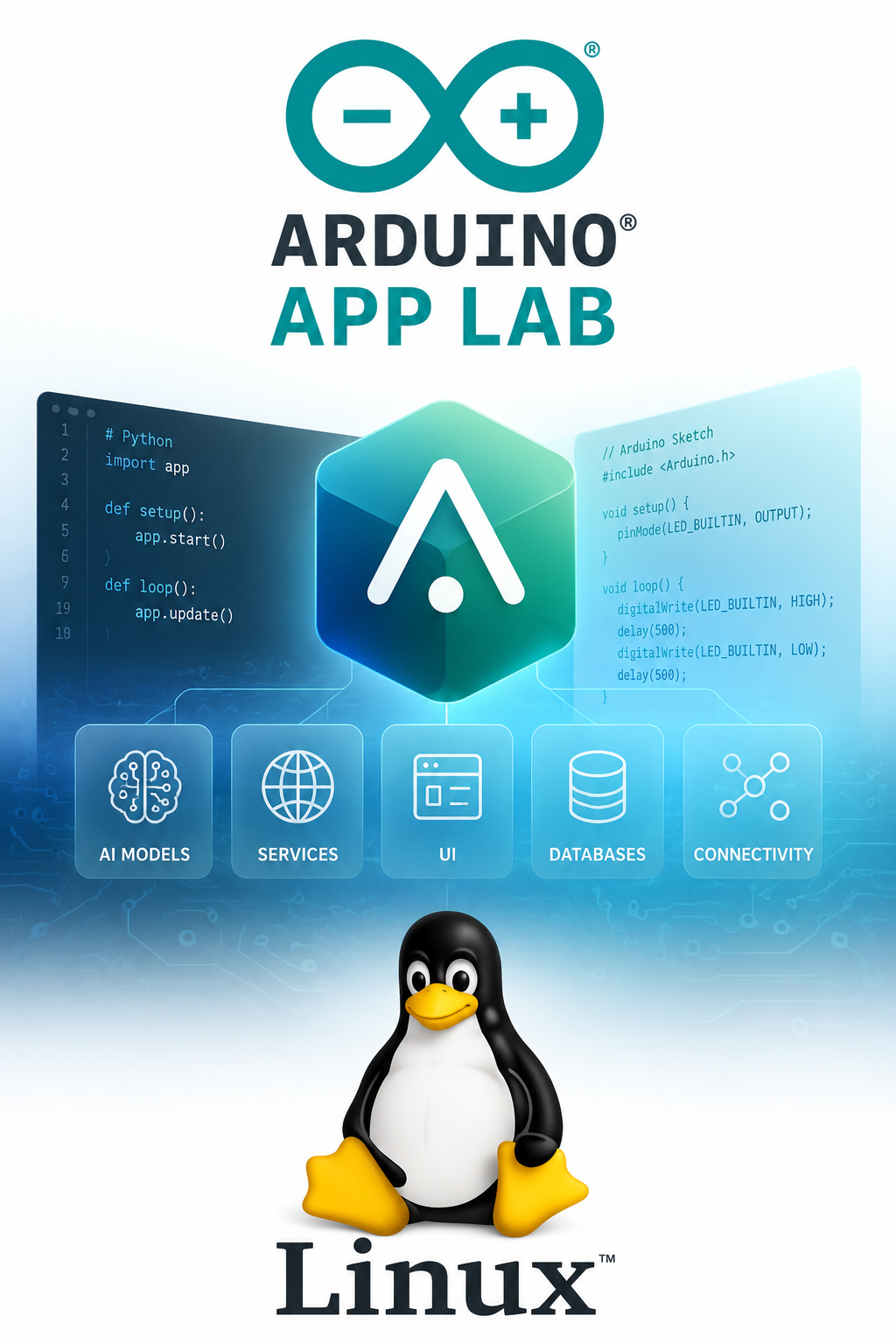
Arduino App Lab and Linux environment - Arduino App Lab combines Arduino programming, Python, Linux and Edge AI within a single environment. A project can contain a Python script running on the Qualcomm processor, a classic Arduino Sketch executed by STM32H5F5 and additional Bricks running on the Linux side. Bricks include prepared services, AI models, user interfaces, databases and network integrations.
VENTUNO Q can operate in several configurations - Arduino App Lab can run directly on the board after connecting a monitor, keyboard and mouse, can be accessed from a computer through USB or a network connection, or can be used in headless mode over WiFi or Ethernet. Standard Linux tools also remain available, including VS Code, custom IDEs, Docker and the apt package manager.
LED matrix and user interface elements - The built-in blue 8 x 13 LED matrix consists of 104 points and is controlled directly by STM32H5F5. During Linux startup it can display a boot animation, and after the application starts it remains available as a programmable interface element. Four independent RGB LEDs can indicate application status, communication activity or events.

Flexible USB-C PD and 7-24 V DC power supply - Power can be supplied through USB Type-C with Power Delivery in the 9-20 V range, through a 5.5 x 2.1 mm DC connector in the 7-24 V range, or through a 7-24 V screw terminal. USB-C supports up to 3 A, the DC connector up to 5 A, and the screw terminal input up to 10 A. The power system uses TVS protection as well as reverse-polarity and reverse-current protection.
For applications involving intensive AI workloads, USB devices and Arduino or Raspberry Pi expansions, the manufacturer recommends providing sufficient power headroom. The documentation indicates a power supply rated at least 60 W for demanding configurations and gives 12 V / 5 A or 24 V / 3 A as examples when powering through the DC connector.
The board measures 160 x 100 x 25.8 mm without including the SoM heatsink and fan. Mounting holes support installation on standoffs and integration with enclosures and mechanical structures. The UNO connector format and 40-pin JHAT simplify the use of ready-made expansion boards.
VENTUNO Q can operate in temperatures from -10°C to 60°C. The platform is designed for local AI systems, autonomous and mobile robots, robotic arms, Visual SLAM systems, predictive maintenance, infrastructure monitoring, quality control, smart buildings, smart city applications and research and educational workstations.
Data sheet
Manufacturer
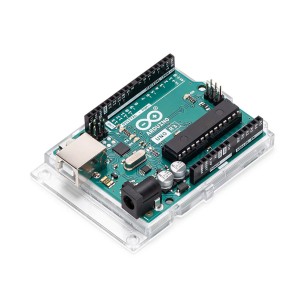
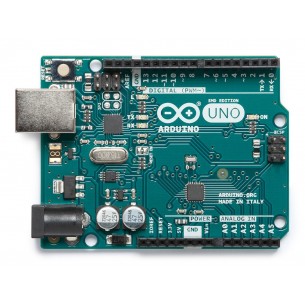
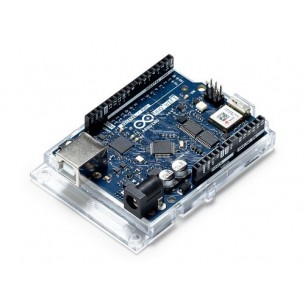
Arduino Uno Rev3 is a popular board with Atmel ATmega328 microcontroller from the AVR family, there are 14 I / O lines, 6 PWM channels and 6 analog inputs. The additional ATmega16U4 microcontroller realizes communication via the USB interface. Arduino A000066
No product available!
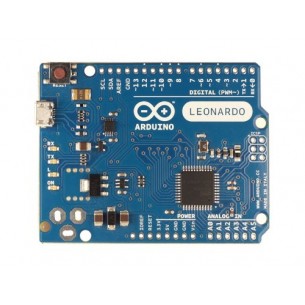
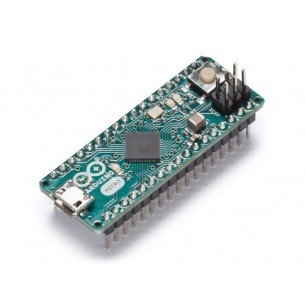
Development board with ATmega32u4 microcontroller (AVR), 20 I / O lines, 7 PWM channels, 16 MHz quartz, micro-USB. Easy-to-use USB support libraries, sensors, displays, etc. are available. A000052
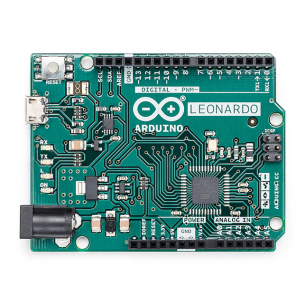
Development board with ATmega32u4 microcontroller (AVR), 20 I / O lines, 7 PWM channels, 16 MHz quartz, micro-USB. Easy-to-use USB support libraries, sensors, displays, etc. are available. A000057
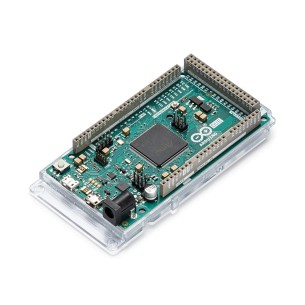
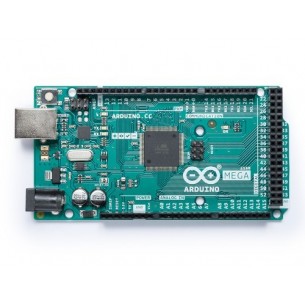
A set with ATmega2560 microcontroller (256 kB Flash, 8 kB RAM, 4 kB EEPROM) clocked at 16 MHz. The user has, among others: 54 I / O lines, 14 PWM channels, 16 analog inputs. Arduino A000067
The Arduino Uno SMD R3 is a microcontroller board based on the ATmega328. It has 14 digital input/output pins (of which 6 can be used as PWM outputs), 6 analog inputs, a 16 MHz crystal oscillator, a USB connection, a power jack, an ICSP header, and a reset button. It contains everything needed to support the microcontroller. Arduino A000073
No product available!
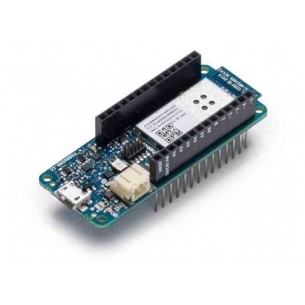
Arduino MKR1000 Wifi with Headers
Development board with SAMD21 microcontroller (ARM Cortex® M0+), 22 I/O lines, 12 PWM channels, micro-USB. The module has a built-in SD connector with dedicated SPI (SPI1) interfaces that allow you to play music files. Arduino MKR Zero ABX00012
No product available!
Development board with SAMD21 microcontroller (ARM Cortex® M0+), 8 I/O lines, 12 PWM channels, micro-USB. The board is equipped with an ESP32 module enabling the implementation of communication via WiFi. Arduino MKR WiFi 1010 ABX00023
No product available!
Development board with SAMD21 microcontroller and FPGA system. Equipped with micro HDMI and MIPI connectors, QSPI memory, WiFi and BLE module. Arduino MKR Vidor 4000 ABX00022
No product available!
Development board with SAMD21 microcontroller (ARM Cortex® M0+), 22 I / O lines, 12 PWM, UART interfaces, I2C, SPI. The board is equipped with the UBLOX SARA-R410M-02B module enabling the implementation of communication in NB IoT networks. Arduino MKR NB 1500 ABX00019
No product available!
Board with the ATmega4809 microcontroller from the AVR family and the u-blox W102 WiFi module. There are 14 I/O lines, 5 PWM channels, 6 analog inputs and the IMU LSM6DS3TR system at your disposal. Arduino ABX00021
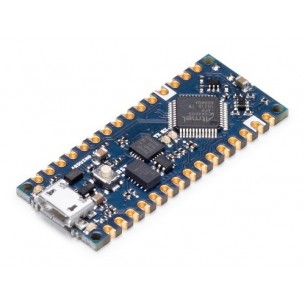
Module with the ATMega4809 microcontroller from the AVR family (48 KB Flash, 6 KB SRAM, 256 B EEPROM). The module has two 15-pin connectors equipped with GPIO, SPI, I2C, PWM, USART, DAC and ADC. Arduino ABX00028
No product available!
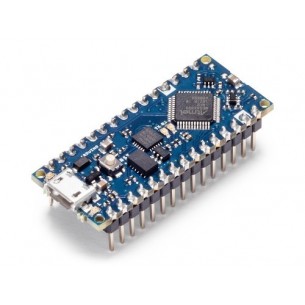
Module with the ATMega4809 microcontroller from the AVR family (48 KB Flash, 6 KB SRAM, 256 B EEPROM). The module has two 15-pin connectors equipped with GPIO, SPI, I2C, PWM, USART, DAC and ADC. Module with headers. Arduino ABX00033
No product available!
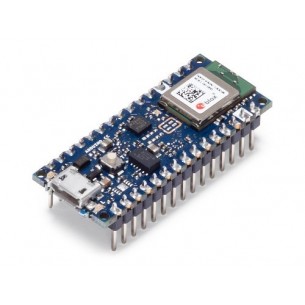
Board with nRF52840 microcontroller with Cortex M4F core (64 MHz, 1 MB Flash, 256 kB RAM). Equipped with BT 5.0 and IMU LSM9DS1 module. Module with headers. Arduino ABX00034
Edge AI computer for advanced artificial intelligence, robotics, automation and machine vision projects, using a Dual-Brain architecture with a Qualcomm Dragonwing IQ8 processor and an STM32H5F5 real-time microcontroller. It offers a Hexagon AI accelerator with performance of up to 40 dense TOPS, 16 GB of LPDDR5 memory and 64 GB of eMMC storage, as well as WiFi 6, Bluetooth 5.3 and 2.5 Gb/s Ethernet. Three MIPI CSI connectors support camera integration, while HDMI, USB 3.0, CAN-FD, Qwiic, M.2 NVMe, Arduino UNO Shield connectors and a 40-pin Raspberry Pi HAT header support the development of advanced Edge AI systems. Arduino ABX00181 VENTUNO Q