.png)









zł63.54 tax excl.
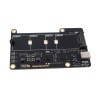
Modern SSDs are most commonly equipped with a high-speed NVMe interface, implemented through an NGFF connector with an M-key, known as M.2 M-key. The KAmod USB-PCIE-M2 adapter allows you to connect an M.2 M-key SSD to a computer via a USB port.
The KAmod USB-PCIE-M2 adapter allows for the connection of an NVMe M.2 M-key SSD to a computer or Raspberry Pi via a USB-C port. Equipped with the JMS583 controller, it provides PCIe Gen 3 x2 communication, delivering high performance and compatibility with USB 3.1 Gen 1 and Gen 2, as well as legacy USB 2.0.
Data sheet
Manufacturer
Responsible person
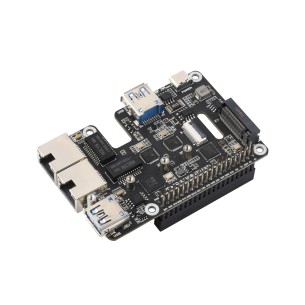
PCIe TO M.2 USB ETH HAT+ Add-on Board – Expansion for Raspberry Pi 5 providing USB 3.2 ports, 2.5G Ethernet, and an M.2 slot for high-speed NVMe drives. Enables significant operational and communication performance upgrades for embedded systems and Raspberry Pi-based servers.
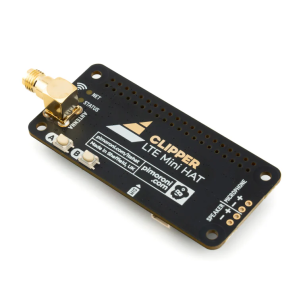
Compact 4G LTE HAT for Raspberry Pi, ideal for remote IoT projects operating without Wi-Fi. Includes SIMCom A7683E modem, SIM connector, SMA antenna, user buttons and Qw/ST port for easy expansion. No soldering required and great for mobile or field installations. Pimoroni PIM717
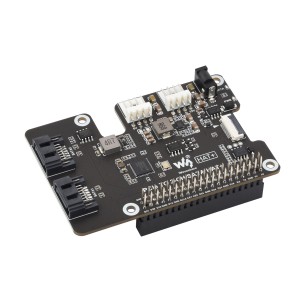
This adapter allows you to connect two SATA 3.0 drives to the Raspberry Pi 5 via a 16-pin PCIe interface. The device operates as a HAT+ and is automatically detected by the Raspberry Pi OS without the need for driver installation. It supports 2.5" and 3.5" drives, offers speeds of up to 6 Gb/s, and is fully compliant with AHCI 1.2 and NCQ. Ideal for building NAS servers, data storage systems, and IoT projects. Waveshare 31882
No product available!
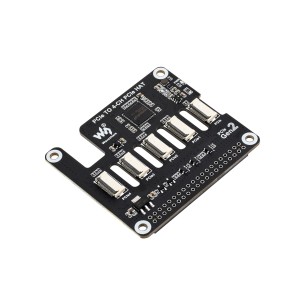
HAT expansion board designed to split the single PCIe interface of the Raspberry Pi 5 into four PCIe FFC connectors, enabling simultaneous connection and stacking of multiple PCIe HATs. Waveshare PCIe TO 4-CH PCIe HAT
No product available!
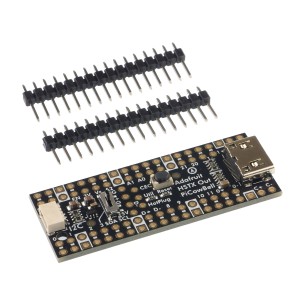
This expansion module allows you to display the Raspberry Pi Pico display on a monitor or TV with an HDMI input. Equipped with a mini HDMI port, an HSTX interface, and a STEMMA QT/Qwiic connector, it ensures fast and stable data transfer. Compatible with Pico 1 and Pico 2, it offers resolutions up to 800x480 pixels and works with the Arduino and CircuitPython libraries. Adafruit 6363
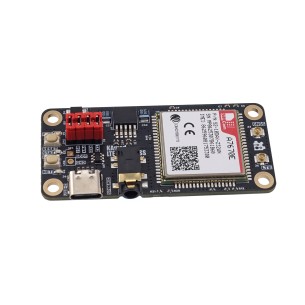
LTE CAT-1 HAT communication module with integrated GNSS receiver, based on the SimCom A7670E-FASE modem, designed for Raspberry Pi. Enables data transmission in LTE and GSM networks and precise GPS positioning in IoT and industrial applications. KAmod LTE CAT1-GNSS
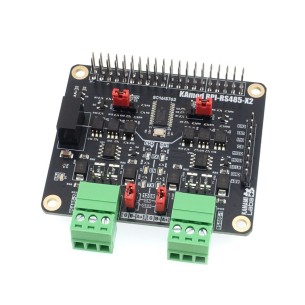
Module for Raspberry Pi with two RS485 interfaces, controlled via SPI, featuring galvanic isolation, line protection, and communication support up to 500 kbps
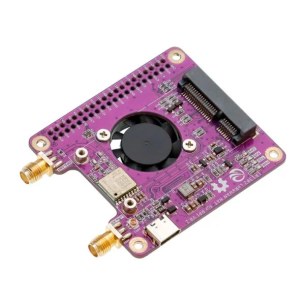
An expansion module based on the SX1302 chip that transforms the Raspberry Pi into a complete LoRaWAN gateway. Equipped with GPS, a real-time clock (RTC), and a cooling fan, it ensures stable and precise operation in IoT applications. It supports the 868 MHz and 915 MHz bands and is compatible with most Raspberry Pi models. Its compact design and support for GPS, GLONASS, and BeiDou systems make it ideal for smart city projects, agriculture, and environmental monitoring. The Elecrow LR1302 868M/915M LoRaWAN Gateway
Dual PCIe 2.0 HAT module for Raspberry Pi 5 supporting NVMe M.2 storage and Hailo8 / Hailo8L AI accelerators. Seeed Studio 103110064
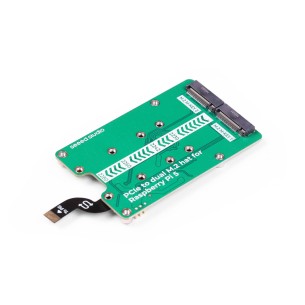
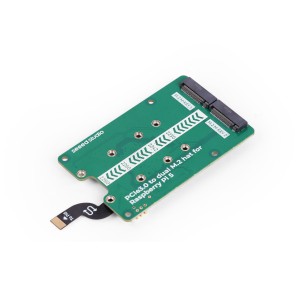
PCIe 3.0 adapter with two M.2 slots designed for Raspberry Pi 5, allowing simultaneous connection of two NVMe SSDs or AI accelerators including Hailo8/8L and Google Coral. The module uses the ASM2806 PCIe switch, supports M.2 2230 / 2242 / 2260 / 2280 devices, and mounts underneath the board while keeping the GPIO header accessible for further expansion. Seeed Studio PCIe3.0 to dual M.2 hat
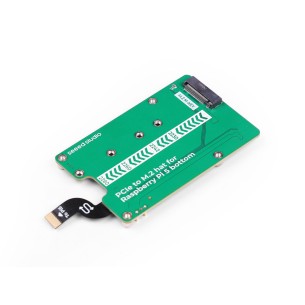
HAT-type module with a PCIe interface for Raspberry Pi 5, enabling connection of an NVMe M.2 drive or a Hailo8 / Hailo8L AI accelerator. Seeed Studio 103110063
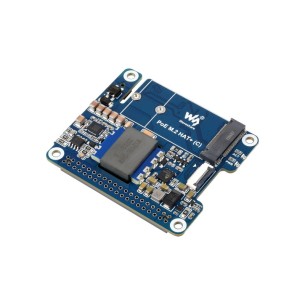
HAT+ module intended for Raspberry Pi 5 enabling power supply via Ethernet in the PoE standard and connection of an M.2 NVMe drive via the PCI Express interface. Waveshare 31536
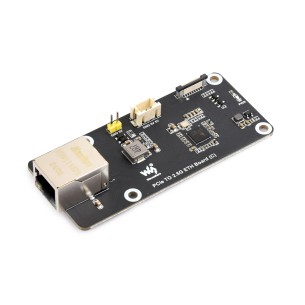
PCIe TO 2.5G ETH Board (C) designed for Raspberry Pi 5, enabling expansion with a 2.5G Ethernet port. Supports Raspberry Pi OS, operates driver-free, and works in plug and play mode. The RTL8125 controller and PCIe interface ensure straightforward integration and high network throughput. Waveshare PCIe TO 2.5G ETH Board (C)
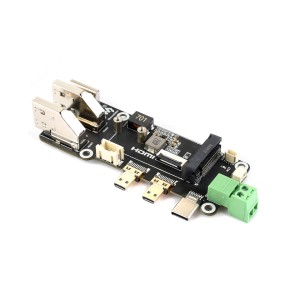
Multifunctional PCIe to M.2 adapter compatible with Raspberry Pi 5, enabling connection of NVMe M.2 solid state drives and convenient breakout of HDMI ports. Supports dual 4K display outputs, offers two power supply methods, and significantly expands the functionality of Raspberry Pi 5 for desktop and embedded applications. Waveshare Pi5 Connector Adapter (C)
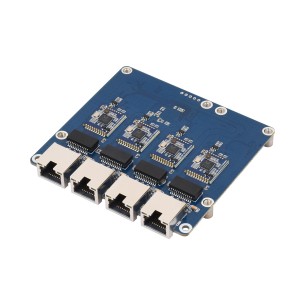
PCIe expansion module for Raspberry Pi 5 with four 2.5G Ethernet RJ45 ports, operating in plug and play mode without driver installation, compatible with Raspberry Pi OS. Waveshare PCIE TO 4-CH 2.5G ETH Board (B)
No product available!
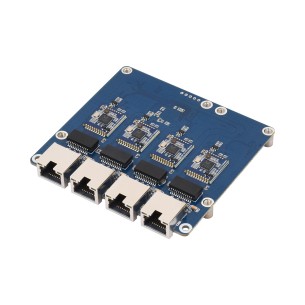
PCIe expansion module for Raspberry Pi 5 with four Gigabit Ethernet RJ45 ports, operating in plug and play mode without driver installation, compatible with Raspberry Pi OS. Waveshare PCIE TO 4-CH Gigabit ETH Board (B)
No product available!
Modern SSDs are most commonly equipped with a high-speed NVMe interface, implemented through an NGFF connector with an M-key, known as M.2 M-key. The KAmod USB-PCIE-M2 adapter allows you to connect an M.2 M-key SSD to a computer via a USB port.