
.png)











zł99.52 tax excl.
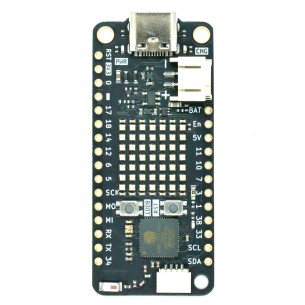
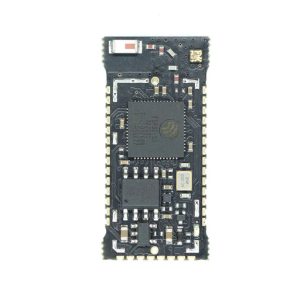
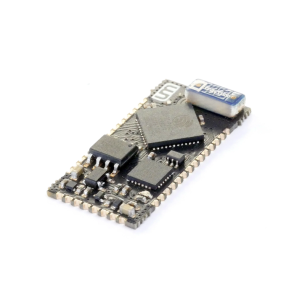
This compact development board, powered by the ESP32-S3 chip, is equipped with a dual-core 240 MHz Xtensa LX7 processor, a RISC-V coprocessor, 8 MB of Flash, and 8 MB of PSRAM, making it ideal for IoT projects and wireless applications. It features 2.4 GHz Wi-Fi, Bluetooth 5.0 + Mesh, LiPo battery charging with health monitoring, and an RGB LED for signaling. Featuring a 3D high-gain antenna, a u.FL connector, and a USB-C interface with USB Serial JTAG support, the TinyS3[D] combines functionality and a miniature form factor in one versatile platform.
TinyS3[D] is the latest version of the highly popular Tiny development board series. It combines powerful computing capabilities, a rich set of peripherals, and a compact design while maintaining the same size as the original TinyPICO. The board integrates features from previous TinyS3 and TinyS3 uFL models, so users no longer have to choose between them — full functionality is now available in one platform. Additionally, instead of the classic VBAT ADC sense pin, a modern I2C Battery Fuel Gauge has been implemented for accurate battery monitoring. TinyS3[D] is fully compatible with earlier TinyS3 versions, with its length increased by only 1.3 mm to accommodate all new features while maintaining excellent RF design.

At its core, the board features an ESP32-S3 chip with dual Xtensa LX7 cores clocked up to 240 MHz and a low-power RISC-V coprocessor, providing excellent performance with minimal energy consumption. TinyS3[D] supports Wi-Fi 2.4 GHz (802.11b/g/n) and Bluetooth LE 5.0 + Mesh, making it ideal for IoT and wireless communication projects. It comes equipped with 8 MB Flash memory and 8 MB PSRAM, enabling the development of complex, data-heavy applications. The board includes a 3.3V 700 mA voltage regulator and supports LiPo battery charging with pads for a JST PH connector. The built-in RGB LED allows easy status indication and signaling functions. The new design also features a built-in 3D High Gain antenna and a u.FL connector for external antenna connection — switching between antennas is done programmatically via the integrated RF switch.
The board uses a USB-C connector and features a native USB Serial JTAG port for simplified programming and debugging. With 17 GPIO lines, TinyS3[D] offers flexible expansion options for connecting sensors and peripheral modules. The design remains compatible with TinyPICO and TinyS2, allowing seamless migration between device versions. It boasts ultra-low power consumption in deep sleep mode, making it ideal for battery-powered and mobile applications. Its compact dimensions make it one of the smallest yet most capable boards in the ESP32-S3 family. TinyS3[D] is a perfect choice for IoT developers, engineers, hobbyists, and anyone who needs a powerful microcontroller in a miniature form factor.

Manufacturer
Responsible person
Development board based on the high-performance ESP32-P4 microcontroller, featuring a 100 Mbps RJ45 Ethernet port and a rich set of multimedia and communication interfaces. The ESP32-P4-ETH-M version includes only the board with factory-soldered pin headers and is intended for standalone integration in HMI, edge computing, and IoT projects. Waveshare ESP32-P4-ETH-M
No product available!
Development board based on the high-performance ESP32-P4 microcontroller, equipped with a 100 Mb/s RJ45 Ethernet port and a wide range of multimedia and communication interfaces. The Waveshare 32086 version includes only the ESP32-P4-ETH board without soldered pin headers, intended for custom assembly and integration in HMI, edge computing and IoT projects. Waveshare ESP32-P4-ETH
No product available!
This development board combines Wi-Fi, Bluetooth, and LoRa technologies, ideal for IoT projects requiring long-range communication. Equipped with a dual-core 240 MHz processor and an 868 MHz SX1262 modem, it provides a transmission range of up to several kilometers with low power consumption. It features a built-in 0.96-inch OLED display, a CP2102 USB-to-UART converter, and a lithium battery charging circuit for mobile operation. Heltec Lora32-V3 868MHz
An intelligent AI development kit based on the ESP32-S3-WROOM-1-N16R16VA chip, designed for building advanced voice and multimedia interaction systems. The device supports 2.4 GHz Wi-Fi, Bluetooth 5 (LE), and offers integration with AI frameworks such as OpenAI and Gemini, enabling full-duplex voice communication. It features a 1.85-inch 360x360 touchscreen, dual microphones with sound source localization, and a 3W speaker for high-quality audio. With 16MB of Flash, 16MB of PSRAM, a microSD slot, 5V/3.7V power, and a USB-C connector, the EchoEar provides a comprehensive platform for building modern AI and IoT devices.
This compact development board, powered by the ESP32-S3 chip, is equipped with a dual-core 240 MHz Xtensa LX7 processor, a RISC-V coprocessor, 8 MB of Flash, and 8 MB of PSRAM, making it ideal for IoT projects and wireless applications. It features 2.4 GHz Wi-Fi, Bluetooth 5.0 + Mesh, LiPo battery charging with health monitoring, and an RGB LED for signaling. Featuring a 3D high-gain antenna, a u.FL connector, and a USB-C interface with USB Serial JTAG support, the TinyS3[D] combines functionality and a miniature form factor in one versatile platform.
The FeatherS3[D] is a development board based on the ESP32-S3 in the popular Feather form factor, combining the advantages of the previous FeatherS3 and FeatherS3 uFL models. Equipped with a dual-core Xtensa LX7 240MHz processor, a RISC-V coprocessor, 16MB Flash, and 8MB PSRAM, it delivers high performance and the ability to implement complex projects. The board supports 2.4GHz Wi-Fi, Bluetooth 5.0 + Mesh, two 3.3V regulators, a LiPo battery charging system with health monitoring, and an RGB LED.
No product available!
This ESP32-S3 development board is designed for demanding IoT and embedded systems projects. Equipped with a dual-core 240 MHz processor, a RISC-V coprocessor, 16 MB of Flash, and 8 MB of PSRAM, it offers high performance and flexibility. It also includes two 3.3 V regulators, a LiPo charging circuit with battery monitoring, a STEMMA QT connector, and a software antenna switch between the 3D High Gain antenna and u.FL. ProS3[D]
This ESP32-S3 development board features an M.2 B-Key connector for quick, solderless installation and upgrades. It features a dual-core 240MHz processor, a RISC-V coprocessor, 8MB of Flash, and 2MB of PSRAM for high performance and energy efficiency. The module supports 2.4GHz Wi-Fi, Bluetooth 5.0 + Mesh, and includes a software antenna switch between a 3D High Gain antenna and an external u.FL antenna. EdgeS3[D]
This ESP32-S3-based development board combines high processing power with energy efficiency and rich functionality. Equipped with a dual-core Xtensa LX7 processor (240 MHz), a RISC-V coprocessor, 8 MB of Flash, and 2 MB of PSRAM, it ensures smooth operation even in advanced IoT projects. The module supports 2.4 GHz Wi-Fi and Bluetooth 5.0 + Mesh, and thanks to the built-in LiPo charging circuit and battery monitoring, it can operate for extended periods in low-power mode. OMGS3
This ESP32-S3-based development board features a dual-core 32-bit 240 MHz processor, 8 MB of Flash memory, and 2 MB of PSRAM. Equipped with 2.4 GHz Wi-Fi with a 3D antenna, a built-in 7x7 RGB LED matrix, and 22 GPIO pins, it enables the creation of advanced IoT projects, visualizations, and interactive interfaces. The module includes a LiPo battery management circuit, two 3.3V 700 mA regulators, and a USB-C connector with protection. FeatherS3 Neo
This development board, based on the ESP32-C6 RISC-V microcontroller, combines high performance with energy efficiency. Equipped with a dual-core processor running at up to 160 MHz, it supports modern connectivity standards such as Wi-Fi 6, Bluetooth 5.3 LE, Zigbee, and Thread, making it an excellent platform for IoT projects and intelligent systems. The module features 8 MB of flash memory, a USB-C connector with short-circuit protection, and a LiPo battery charging circuit with voltage monitoring. TinyC6 ESP32-C6
No product available!
This compact development board, featuring the ESP32-S3 module, offers high performance thanks to the Xtensa LX7 dual-core processor and a RISC-V coprocessor. Equipped with 8MB of Flash, 8MB of PSRAM, and 27 GPIO pins, it\'s ideal for IoT, AI, and memory-intensive applications. The module supports 2.4GHz Wi-Fi, Bluetooth 5.0 with Mesh, and a native USB interface with OTG and JTAG support for easy programming and debugging.
This compact development board, featuring the ESP32-S3 module, offers high performance thanks to the Xtensa LX7 dual-core processor and a RISC-V coprocessor. Equipped with 8MB of Flash, 8MB of PSRAM, and 27 GPIO pins, it\'s ideal for IoT, AI, and memory-intensive applications. The module supports 2.4GHz Wi-Fi, Bluetooth 5.0 with Mesh, and a native USB interface with OTG and JTAG support for easy programming and debugging.
The ESP32-PICO-D4 development board combines the high performance of a dual-core 240MHz processor with Wi-Fi and Bluetooth BLE 4.2 connectivity. Equipped with the CH9102F USB-UART chip, a 3.3V (700mA) regulator, 4MB of PSRAM, and an on-board LiPo battery management system, it delivers powerful functionality with minimal power consumption. Compatible with the Arduino IDE, MicroPython, CircuitPython, and ESP-IDF. TinyPICO V3 USB-C
The ESP32-PICO-D4 development board combines the high performance of a dual-core 240MHz processor with Wi-Fi and Bluetooth BLE 4.2 connectivity. Equipped with the CH9102F USB-UART chip, a 3.3V (700mA) regulator, 4MB of PSRAM, and an on-board LiPo battery management system, it delivers powerful functionality with minimal power consumption. Compatible with the Arduino IDE, MicroPython, CircuitPython, and ESP-IDF. TinyPICO V3 USB-C
This compact ESP32-based board offers full functionality in a package measuring just 13 x 27 mm. Equipped with a 3.3 V regulator (700 mA), 4 MB of PSRAM, a battery charger, and 27 GPIO pins, it delivers high performance with minimal power consumption. Separate 5 V and 3.3 V power paths and automatic disconnection of unused components increase energy efficiency. The TinyPICO NANO works with the Arduino IDE, MicroPython, and ESP-IDF.
This compact development board, powered by the ESP32-S3 chip, is equipped with a dual-core 240 MHz Xtensa LX7 processor, a RISC-V coprocessor, 8 MB of Flash, and 8 MB of PSRAM, making it ideal for IoT projects and wireless applications. It features 2.4 GHz Wi-Fi, Bluetooth 5.0 + Mesh, LiPo battery charging with health monitoring, and an RGB LED for signaling. Featuring a 3D high-gain antenna, a u.FL connector, and a USB-C interface with USB Serial JTAG support, the TinyS3[D] combines functionality and a miniature form factor in one versatile platform.