.png)





zł66.08 tax excl.
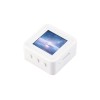
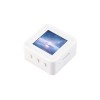
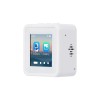
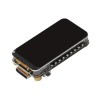
An IoT module that combines a microcontroller with an ARM-Cortex M3 core, WiFi and NFC. It can be programmed in the Arduino IDE or in the Micropython language. DFRobot DFR0477
Ameba-RTL8195AM is an IoT module developed by Realtek. It combines a microcontroller with an ARM-Cortex M3 core, WiFi and NFC (Near Field Communication). Provides high-speed communication interfaces such as USB 2.0 host, USB 2.0 device, SDMMC HS, SDIO device and MII / RMMII interfaces. It also comes with a range of configurable GPIOs that can be used as digital peripherals for a variety of applications. What's more, the system also has serial communication interfaces SPI, I2C, UART and analog ADC and DAC interfaces. The Ameba-RTL8195AM module offers high stability and reliability. It can be programmed in the Arduino IDE or in the Micropython language. It is an energy-saving IoT chip integrating WiFi and NFC, which is an interesting solution for use in IoT projects.
Data sheet
Manufacturer
Responsible person
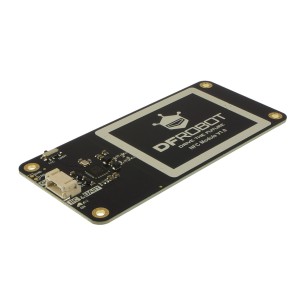
NFC module with built-in antenna on the board. The module has a Gravity connector. Memory communication can be done through one of the serial interfaces: UART or I2C. DFRobot DFR0231-H
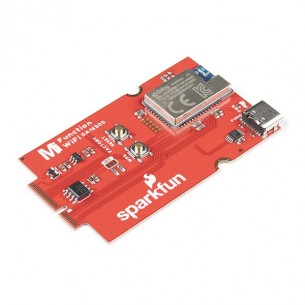
Function module designed for MicroMod boards. It allows you to add WiFi wireless communication based on the DA16200 chip to the project. SparkFun WRL-18594
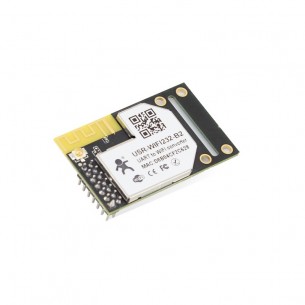
UART to Wi-Fi 802.11 b/g/n converter module with external antenna, which can connect traditional serial device and MCU controlled device to Wi-Fi network for control and management. USR-WIFI232-B2
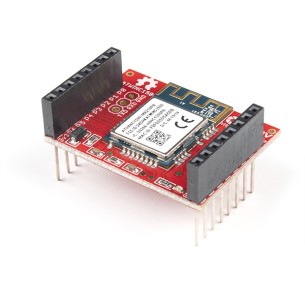
Board with the DA16200 WiFi module. It is equipped with a Qwiic connector and is an excellent solution for IoT projects. SparkFun WRL-19696
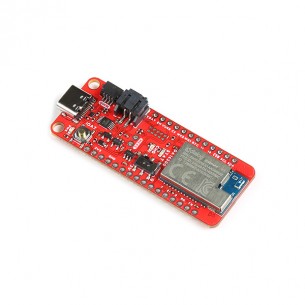
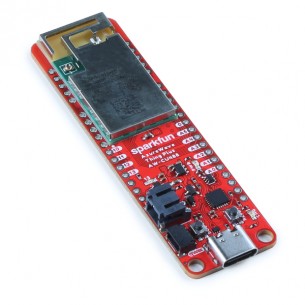
Development board in Feather format equipped with AW-CU488. The module has an integrated WiFi wireless communication controller, LiPo charging circuit and Qwiic connector. SparkFun DEV-19957
No product available!
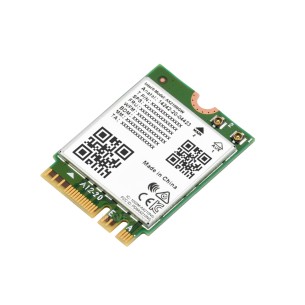
Intel\'s AX210 wireless communication module. It supports 802.11AX Wi-Fi Generation 6E and Bluetooth 5.2, and comes with an M.2 A/E Key connector. Waveshare Wireless-AX210
No product available!
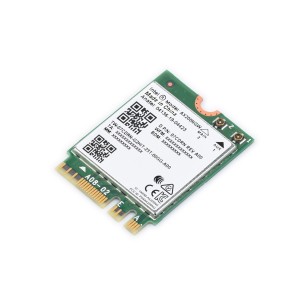
Intel\'s AX200 wireless communication module. It supports the 802.11AX Wi-Fi Generation 6 standard and Bluetooth 5.2, and features an M.2 A/E Key with NGFF interface. Waveshare Wireless-AX200
No product available!
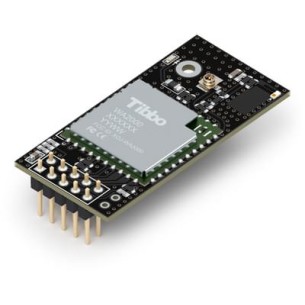
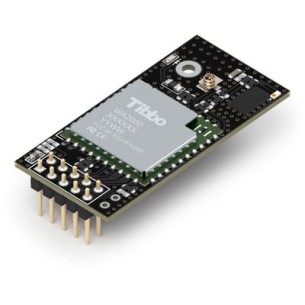
WiFi/BLE module that supports both the 2.4 GHz and 5 GHz WiFi bands, as well as Bluetooth Low Energy (BLE 4.2) communication. It has a u.FL connector dedicated to connecting an external antenna and a connector with a 2.54 mm pitch, which greatly facilitates prototyping. Tibbo WA2000U
WiFi/BLE module that supports both the 2.4 GHz and 5 GHz WiFi bands, as well as Bluetooth Low Energy (BLE 4.2) communication. It has a built-in chip antenna and 2.54 mm pitch connectors, which greatly facilitate prototyping. Tibbo WA2000C
A WiFi overlay designed for the OpenMV camera that adds wireless internet connectivity. It is equipped with an ATWINC1500 WiFi module. SparkFun WRL-16776
No product available!
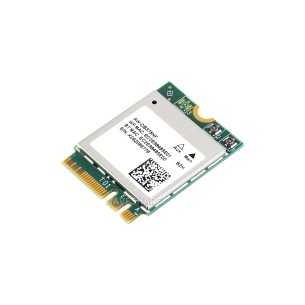
AW-CB375NF wireless communication module. It supports 802.11 a/b/g/n/ac Generation 5 Wi-Fi and Bluetooth 5.0 and features an M.2 A/E Key connector. Waveshare Wireless-AW-CB375NF
No product available!
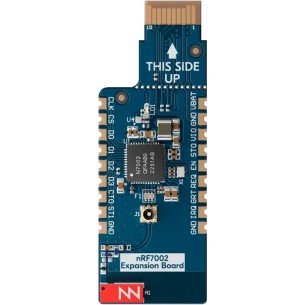
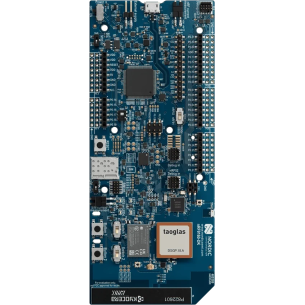
The nRF7002 is a board that allows you to add Wi-Fi connectivity to the Nordic Thingy:53 development kit. It connects to the Thingy:53 edge connector and enables the development of Wi-Fi 6 applications for low-power applications. Nordic Semiconductors nRF7002-EB
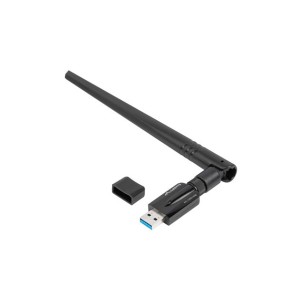
Lanberg NC-1200-WIE is a wireless USB 3.0 network card supporting the AC1200 standard, offering stable connections in the 2.4 GHz and 5 GHz bands, with a maximum speed of up to 1200 Mbps. Thanks to the external detachable antenna with a gain of 5 dBi, it provides excellent range and connection reliability, ideal for streaming 4K video, online games and fast downloading of large files
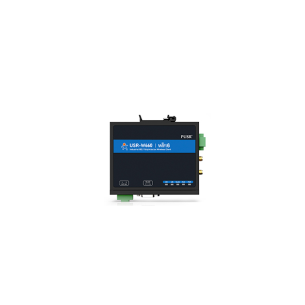
The USR-W660 converter converts a serial signal into a fast and stable Wi-Fi 6 connection, supporting IEEE 802.11a/b/g/n/ac/ax standards and 2.4 GHz and 5 GHz bands. Equipped with an RS232/RS485 interface, it offers advanced management functions, remote configuration and high security with WPA/WPA2/WPA3 protocols, ideal for industrial and automation applications.
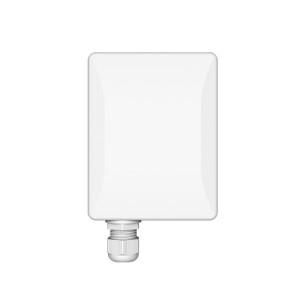
Wi-Fi bridge for short to medium-range network transmission. With the advanced iPoll 3 protocol and support for multiple services, it is ideal for various video surveillance scenarios. Its IP-66 rated housing ensures weather resistance
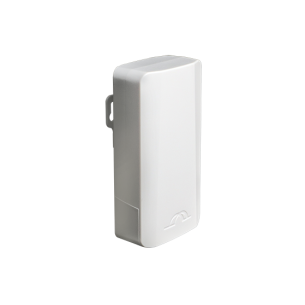
Compact Wi-Fi bridge for short to medium-range network transmission. With the advanced iPoll 3 protocol and support for multiple services, it is ideal for various video surveillance scenarios. Its IP-66 rated housing ensures weather resistance
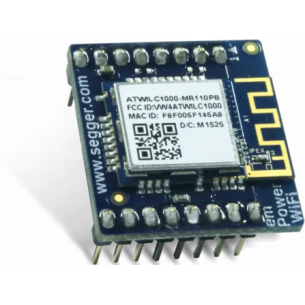
WiFi controller supporting IEEE 802.11b/g/n standards in the 2.4GHz band, ideal for integration with embedded systems requiring reliable wireless communication. With SPI and UART interfaces and the ability to easily update the software, it is a versatile and energy-efficient solution that works well in IoT applications, automation systems and mobile devices. Segger emPower WiFi Module - Atmel ATWILC1000 (6.37.01)
No product available!
An IoT module that combines a microcontroller with an ARM-Cortex M3 core, WiFi and NFC. It can be programmed in the Arduino IDE or in the Micropython language. DFRobot DFR0477