.png)





zł23.19 tax excl.
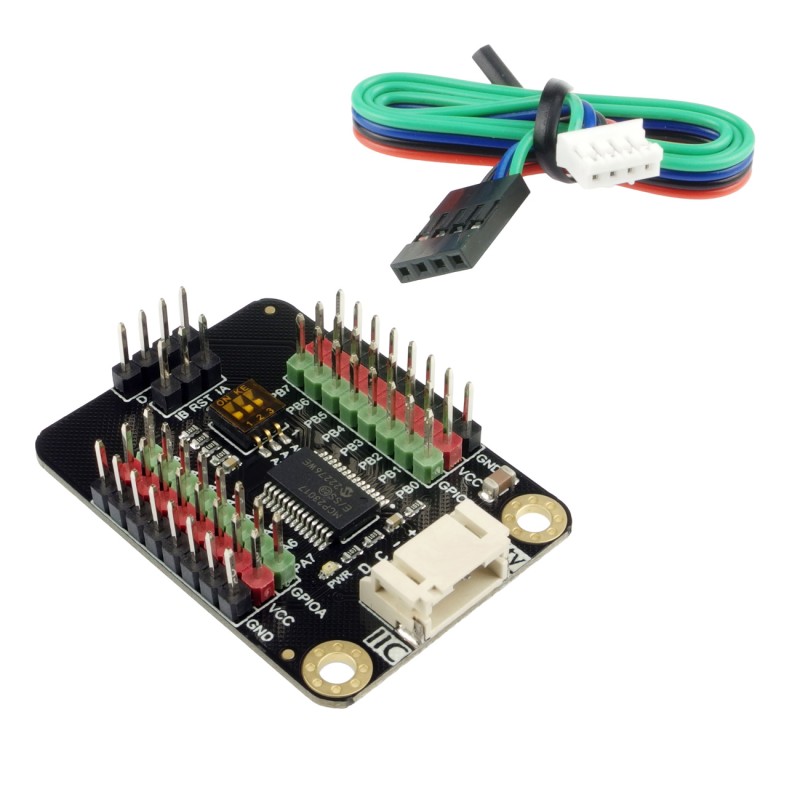
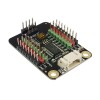
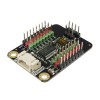
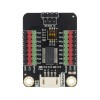
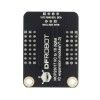
A module with a 16-channel input/output port expander controlled by an I2C interface. It was based on the MCP23017 chip and equipped with a Gravity connector. DFRobot DFR0626
A 16-channel input/output port expander module controlled via I2C interface. It is based on the MCP23017 chip. Each IO pin can be configured as input, output, pull-up input with 100 kΩ resistor or input with interrupt function. In addition, the module has 2 interrupt indication pins: IA and IB. IA is used to detect an interrupt on the GPIOA pins, and IB on GPIOB. The user has 8 I2C addresses, which means that 8 modules can be connected to one bus. The maximum output current should not exceed 20 mA, and the pins are compatible with 3.3 V and 5 V. The expander will prove useful in LED lighting or matrix display projects. Full documentation is available on the product wiki page.
Manufacturer
Responsible person
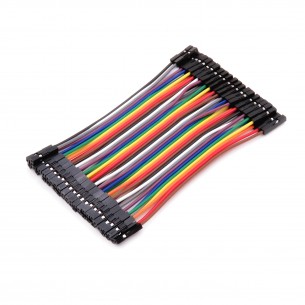
A set of 40 pieces of female-female connecting cables in various colors, 10 cm long
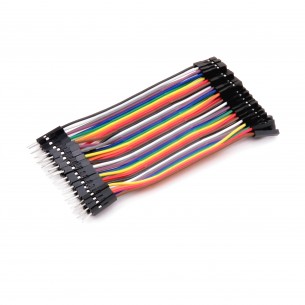
A set of 40 pcs of male-female connecting cables in various colors, 10 cm long
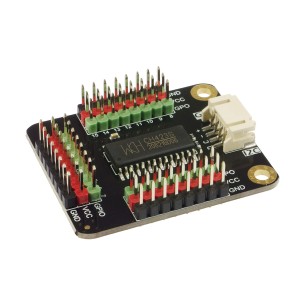
A 24-channel input/output port expander module controlled by an I2C interface. It was based on the CH423 chip and equipped with a Gravity connector. DFRobot DFR0979
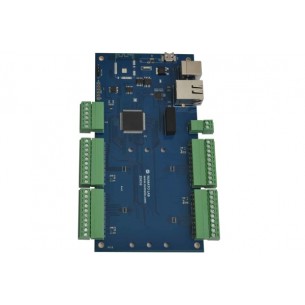
Module with 32 IO pins and 14 analog inputs. It communicates via the RS485, USB or Ethernet interface and supports the Modbus RTU/TCP protocol. Numato Lab NLGM1002-A
No product available!
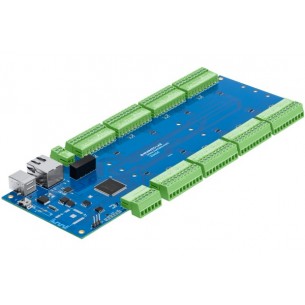
Module with 64 IO pins and 32 analog inputs. It communicates via the RS485, USB or Ethernet interface and supports the Modbus RTU/TCP protocol. Numato Lab NLGM1003-A
No product available!
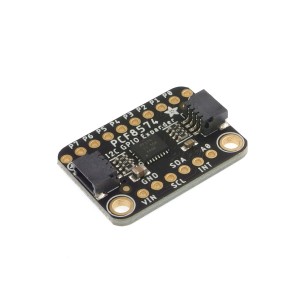
Module with 8-channel PCF8574 IO expander controlled by the I2C interface. Equipped with a STEMMA QT connector. Adafruit 5545
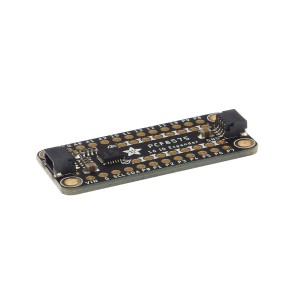
Module with 16-channel PCF8575 IO expander controlled by the I2C interface. Equipped with a STEMMA QT connector. Adafruit 5611
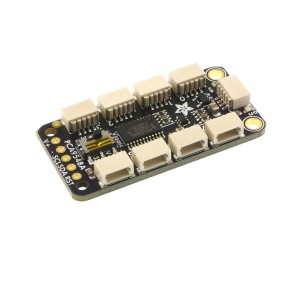
8-channel I2C expander module based on the PCA9548 chip. Allows communication with multiple I2C devices that have the same address. Equipped with STEMMA QT connectors. Adafruit 5626
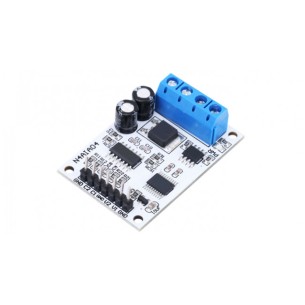
Measurement module with RS485 interface. It has two voltage measurement inputs in the range of 0 to 5 V and 0 to 10 V and two current measurement inputs in the range of 0 to 20 mA. Supports the Modbus RTU protocol
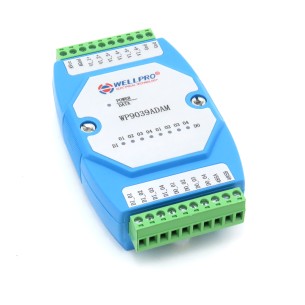
Module with 4 digital inputs, 4 outputs and 6 analog inputs. It communicates via the RS485 interface and supports the Modbus RTU protocol. The board is enclosed in an industrial housing. Wellpro WP9039ADAM
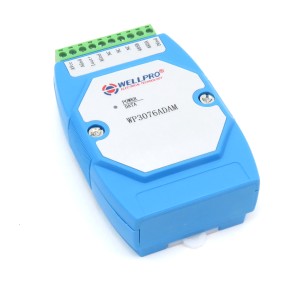
Module with analog output 0-20 mA or 4-20 mA. It communicates via the RS485 interface and supports the Modbus RTU protocol. The board is enclosed in an industrial housing. Wellpro WP3076ADAM
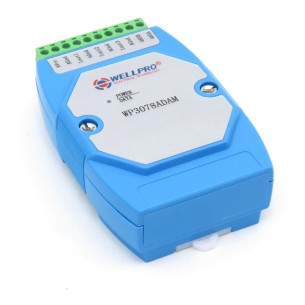
Module with three 4-20 mA analog outputs. It communicates via the RS485 interface and supports the Modbus RTU protocol. The board is enclosed in an industrial housing. Wellpro WP3078ADAM
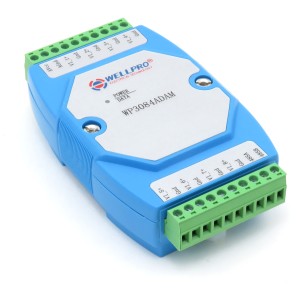
Module with 8 analog inputs for voltage measurement in the range from 0 to 10 V. It communicates via the RS485 interface and supports the Modbus RTU protocol. The board is enclosed in an industrial housing. Wellpro WP3084ADAM
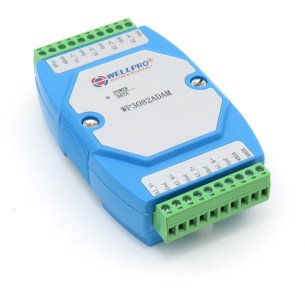
Module with 8 analog inputs for current measurement in the range of 0 to 20 mA or 4 to 20 mA. It communicates via the RS485 interface and supports the Modbus RTU protocol. The board is enclosed in an industrial housing. Wellpro WP3082ADAM
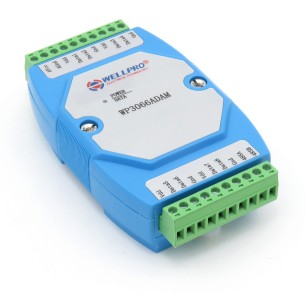
Module with 8 inputs for data acquisition from DS18B20 temperature sensors. It communicates via the RS485 interface and supports the Modbus RTU protocol. The board is enclosed in an industrial housing. Wellpro WP3066ADAM
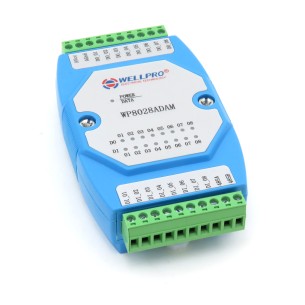
Module with 8 digital inputs and 8 digital outputs. It communicates via the RS485 interface and supports the Modbus RTU protocol. The board is enclosed in an industrial housing. Wellpro WP8028ADAM
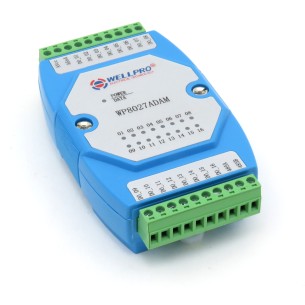
Module with 16 digital outputs. It communicates via the RS485 interface and supports the Modbus RTU protocol. The board is enclosed in an industrial housing. Wellpro WP8027ADAM
No product available!
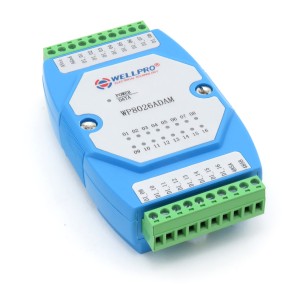
Module with 16 digital inputs. It communicates via the RS485 interface and supports the Modbus RTU protocol. The board is enclosed in an industrial housing. Wellpro WP8026ADAM
No product available!
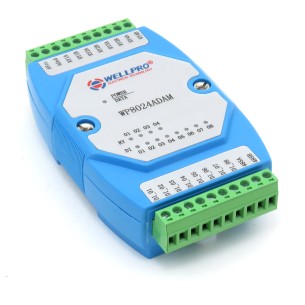
Module with 8 digital inputs and 4 relays with a maximum switching current of 2 A. It communicates via the RS485 interface and supports the Modbus RTU protocol. The board is enclosed in an industrial housing. Wellpro WP8024ADAM
A module with a 16-channel input/output port expander controlled by an I2C interface. It was based on the MCP23017 chip and equipped with a Gravity connector. DFRobot DFR0626